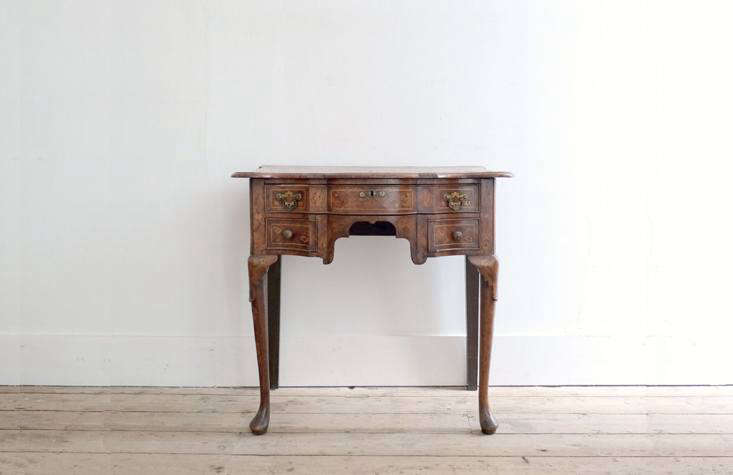
If furniture could smirk, the eighteenth-century Dutch lowboy would absolutely do it. It sits lower than a chest, smaller than a grand cabinet, and yet somehow manages to steal the room with one curvy front, a burst of marquetry flowers, and legs that look like they were caught mid-dance. This is not shy furniture. It is furniture with opinions.
For collectors, decorators, and antique lovers, the eighteenth-century Dutch lowboy is one of those pieces that rewards a second look. At first glance, it may seem like a simple side table with drawers. Then you notice the shaped apron, the serpentine front, the inlaid flowers, the warm walnut glow, the brass pulls, and the compact scale that makes it surprisingly flexible in modern rooms. Suddenly, you are no longer looking at “just a table.” You are looking at a small masterpiece of Dutch taste, trade, craftsmanship, and domestic life.
This guide explains what an eighteenth-century Dutch lowboy really is, why the name can be a little slippery, how to recognize the best examples, and why this elegant survivor from the Dutch Republic still looks perfectly at home in a twenty-first-century interior.
What Is an Eighteenth-Century Dutch Lowboy?
In the broadest sense, a lowboy is a low dressing table or chestlike table fitted with drawers and raised on legs. In English and American furniture history, the term often overlaps with dressing table, toilet table, or dressing bureau. That matters because many Dutch pieces now marketed as lowboys probably served similar practical functions: they offered storage, supported grooming objects, and sat at a convenient height for daily use.
But the Dutch version often has a stronger decorative personality than its British or American cousins. While English and colonial lowboys can be wonderfully restrained, Dutch examples frequently lean into movement, veneer, inlay, and visual charm. Think less “I am here to hold your combs” and more “I am here to hold your combs and quietly outclass the rest of your furniture.”
Another wrinkle: in today’s antique trade, the term Dutch lowboy can describe more than one closely related form. Some are clearly dressing tables with two or three drawers. Some have a kneehole arrangement. Some read more like side tables with drawer storage. And some pieces sold under the label are later descendants or have later elements. That does not make the category useless; it just means the buyer should read descriptions with a sharp eye and a healthy respect for nuance.
The Historical World Behind the Piece
To understand the eighteenth-century Dutch lowboy, it helps to step into the wider world of Dutch domestic luxury. Dutch interiors had long balanced practicality with polish. The Netherlands was deeply connected to international trade, and that global commercial reach influenced household furnishings. Exotic woods, imported luxuries, and refined decorative ideas circulated through Dutch markets and workshops. Furniture did not exist in a vacuum; it belonged to homes where ceramics, textiles, mirrors, paintings, and polished wood all worked together to create an atmosphere of cultivated comfort.
By the eighteenth century, furniture design across northern Europe had become increasingly curvilinear and comfort-oriented. Straight, heavy, earlier forms did not vanish overnight, but shaped fronts, cabriole legs, and softer silhouettes became fashionable. Dutch makers participated in that shift while preserving their own love of surface decoration. That combination is one reason Dutch furniture from the period can feel both continental and distinctive.
Dutch marquetry also deserves a standing ovation. Floral marquetry traditions associated with Dutch furniture had already established a reputation for lively, naturalistic ornament. Cabinetmakers worked with contrasting veneers and dyed woods to create bouquets, scrolling leaves, birds, urns, and symmetrical decorative fields. On a lowboy, those effects could turn a humble storage piece into something theatrical without tipping into bad manners. The result is compact furniture with a surprisingly grand visual voice.
Defining Features of a Dutch Lowboy
1. A Low, Useful, Graceful Form
The first clue is scale. A Dutch lowboy sits low enough to feel intimate and domestic. It is not towering, ceremonial, or bulky. This smaller profile made it practical in bedrooms, dressing areas, and multipurpose rooms. Today, that same compact footprint makes it especially attractive for apartments, hallways, and layered interiors where every inch counts.
2. Serpentine or Shaped Fronts
Many notable Dutch examples have a serpentine or softly undulating front. That waviness is not an accident. It creates shadow, depth, and movement. A flat facade is content to exist; a serpentine facade performs. In Dutch furniture, this curving outline often appears with shaped aprons and molded tops, giving the whole piece a rippling elegance.
3. Drawers with Purpose
Most lowboys offer practical storage in a compact footprint. You may see one long drawer paired with smaller side drawers, two broader drawers across the front, or a central kneehole flanked by drawers. Historically, those drawers could hold grooming tools, textiles, papers, or the household odds and ends that always seem to migrate toward any flat surface with storage beneath it.
4. Cabriole Legs and Decorative Feet
One of the most appealing features is the leg structure. Cabriole legs, with their outward curve at the knee and inward taper below, lend the piece a light, elegant stance. Feet vary. Some end in pad feet, others in paw feet, and some examples marketed today show ball-and-claw forms. The point is not just the foot type but the overall effect: the case seems to rise with poise rather than squat with weight.
5. Carved Aprons and Shell Motifs
Look beneath the drawers and you often find the drama continues. Shaped aprons, shell carving, and scrolling details animate the lower edge. A shell motif, especially when centered, gives the lowboy a refined rococo flavor without overwhelming the form. It is the furniture equivalent of excellent cufflinks: small, deliberate, and impossible to unsee once noticed.
6. Walnut, Burr Walnut, Oak Carcasses, and Mahogany
Dutch lowboys often feature walnut or burr walnut veneers over an oak carcass, though mahogany appears as well, especially in later or altered market examples. Walnut gives warmth and a soft, luxurious figure. Burr walnut adds visual excitement through swirling grain. Oak, used structurally, contributes strength. Mahogany can add a darker, richer tone and aligns with the broader eighteenth-century move toward that prized imported wood.
7. Floral Marquetry and Inlay
If there is one feature that makes many Dutch examples instantly memorable, it is marquetry. Vases of flowers, birds, foliage, scrolls, featherbanding, and patterned borders transform the surface into decoration as well as structure. This is where the Dutch lowboy stops being merely useful and becomes a conversation piece. Good marquetry brings rhythm and color to the wood itself, avoiding heavy applied ornament in favor of imagery built into the surface.
How Dutch Lowboys Differ from English and American Lowboys
Because the term lowboy is more common in English-language furniture history than in period Dutch vocabulary, comparison helps. English and American lowboys were often dressing tables associated with matching high chests. They could be exquisite, but many examples place greater emphasis on silhouette, proportion, and carved detail than on complex marquetry.
Dutch lowboys, by contrast, frequently push surface decoration further. The case itself becomes a stage for veneers and inlay. Serpentine fronts may feel more emphatic. Decorative woods play a starring role. Even when the overall dimensions remain modest, the visual impact is richer and more continental. In short, an American lowboy often charms with proportion; a Dutch lowboy often charms with proportion and peacocking. Nicely done peacocking, of course.
Why Collectors and Designers Still Love Them
The best antiques solve modern problems better than some modern furniture, and the Dutch lowboy is a fine example. It has drawers. It has a usable top. It fits into smaller rooms. It works beside a bed, in an entry hall, under a mirror, between windows, or as a statement piece in a living room. It also offers that rare design combination: historical substance plus decorative sparkle.
In contemporary interiors, an eighteenth-century Dutch lowboy can do at least four jobs at once. It can function as storage. It can anchor a vignette. It can soften a room full of rectilinear furniture. And it can introduce pattern without adding another textile. That last point is important. Marquetry gives you visual complexity through wood, which feels sophisticated rather than cluttered.
Designers also love contrast. A Dutch lowboy under a modern abstract painting looks smart. A Dutch lowboy beside a plain linen sofa looks even smarter. A Dutch lowboy in a white room says, “Yes, minimalism is lovely, but have you considered one excellent antique with flowers made of wood?”
How to Shop for One Without Losing Your Mind
Check the Form First
Look at the overall silhouette before falling in love with the marquetry. Is the piece balanced? Are the proportions pleasing? Does the serpentine line feel natural? Good old furniture has rhythm. Awkward old furniture has age, which is not the same thing as beauty.
Study the Surface
On Dutch furniture, veneer and inlay condition matter enormously. Small repairs are normal. Extensive patching, lifting veneer, crude replacements, or overly aggressive refinishing should lower your enthusiasm and probably your offer. Patina is your friend. Glossy over-restoration is usually not.
Examine Hardware Carefully
Original brass pulls and escutcheons add value and credibility, but replacements are common. The question is whether they suit the piece and whether the drawer fronts show evidence of changed hardware positions. A lowboy with excellent old brass has a different presence than one wearing shiny hardware from a catalog in 1998.
Look at the Secondary Woods and Construction
Oak carcasses, drawer linings, drawer runners, and joinery can tell you as much as the showy front. Antique dealers and auction houses often mention oak structures beneath walnut veneers for a reason: the hidden parts reveal whether the glamorous face is supported by period construction or a later fantasy.
Read Labels with Caution
One useful lesson from auction records is that “Dutch lowboy” can cover true eighteenth-century pieces, altered examples, and later descendants. If a description says “eighteenth century and later,” take that seriously. If a piece seems unusually crisp in every detail, ask why. Antiques are allowed to have wrinkles. In fact, that is part of the charm.
Styling an Eighteenth-Century Dutch Lowboy Today
The simplest approach is usually best. Let the top breathe. A mirror above it is classic. A lamp and one ceramic object are enough. A stack of giant coffee-table books, three candles, a tray, coral, ten perfume bottles, and a moody bust may be fun, but that is not styling; that is a hostage situation.
Because Dutch lowboys already bring pattern, curve, and shine, they pair beautifully with quieter materials: plaster walls, linen drapes, matte paint, wool rugs, and simple upholstery. If your room is already ornate, the lowboy can still work, but it needs space around it. If your room is modern, it becomes an instant dose of character. Either way, treat it like jewelry, not background noise.
Experiences of Living with an Eighteenth-Century Dutch Lowboy
Living with an eighteenth-century Dutch lowboy is different from owning a generic old table. The experience begins the first time you walk past it and realize it changes with the light. In the morning, the walnut may look mellow and honeyed. By late afternoon, the burr grain wakes up, the brass pulls flash, and the marquetry starts acting like it deserves its own spotlight. It is one of those pieces that refuses to become invisible, which is probably why people keep falling for them.
Collectors often talk about the “double take” effect. You see the piece once, register that it is attractive, and move on. Then you come back. Maybe it was the shaped front. Maybe it was the flowers inlaid into the drawer fronts. Maybe it was the way the cabriole legs made the whole thing look lighter than it had any right to be. Whatever the trigger, the second look tends to become a long look. That is usually when trouble begins for your wallet.
There is also a very practical pleasure in using one. The drawers are small enough to encourage order and large enough to be genuinely useful. In a bedroom, they hold accessories, stationery, or folded linens. In a hallway, they collect the everyday clutter that modern life invents at Olympic speed. In a living room, they can hide remotes, coasters, and chargers while pretending they have never heard of such things. That contrast is part of the fun: the piece looks aristocratic but works hard.
Owners also learn quickly that a Dutch lowboy changes the mood of a room. Put it in a plain space and the room feels more layered. Put it in a busy room and it brings a sense of intention, as though the whole scheme suddenly has a better editor. Antique dealers love to say that one good piece can elevate everything around it, and with a Dutch lowboy that cliché turns out to be annoyingly true.
Then there is the tactile experience. Old brass pulls feel different in the hand. The drawer movement may not be as slick as modern cabinetry, but that slight resistance is part of the pleasure. The wood has depth. The finish has softness. The edges tell you, quietly, that this object has survived centuries of touching, opening, polishing, moving, neglect, admiration, and rescue. Good antiques do not just occupy space; they carry time.
Even the maintenance becomes part of the relationship. You learn where sunlight falls too strongly. You start using coasters like a civilized adult. You stop balancing wet glasses on old veneer because you finally understand consequences. You become the sort of person who notices humidity and quietly adjusts the blinds. In return, the lowboy keeps doing what it has always done: standing there with compact elegance, being useful, and looking a little smug about its superior bone structure.
Perhaps the best experience of all is that an eighteenth-century Dutch lowboy does not feel trendy. It feels chosen. It suggests that someone cared enough to look past disposable furniture and bring home a piece with wit, craftsmanship, and endurance. And really, that may be the secret of its appeal. It is practical enough to live with every day, beautiful enough to admire for years, and distinctive enough to make you feel like your room has learned some manners.
Final Thoughts
The eighteenth-century Dutch lowboy sits at a happy intersection of utility, artistry, and personality. It borrows the useful logic of the dressing table, then upgrades the whole idea with better curves, richer veneers, and floral marquetry that feels almost painterly. Its small scale makes it easy to place. Its craftsmanship makes it hard to ignore. And its history gives it more depth than most furniture sold today with inspirational names and assembly instructions that read like emotional warfare.
If you are shopping for one, focus on form, surface, condition, and construction. If you already own one, give it room to shine. And if you are simply admiring from afar, you can at least enjoy the fact that a relatively modest piece of eighteenth-century furniture still knows how to make a modern room look instantly more intelligent.