Editor’s note: This article is based on publicly available information from company profiles, interviews, portfolio announcements, and investment coverage. Source links are not inserted in the article body to keep the page clean for web publication.
In venture capital, “doubling down” is not just a catchy phrase founders like to hear after a strong board meeting. It is a philosophy. It means backing conviction with capital, staying close when the market gets noisy, and believing that the best companies are not built by tourists with term sheets, but by obsessed operators with scars, speed, and a suspiciously high tolerance for hard problems.
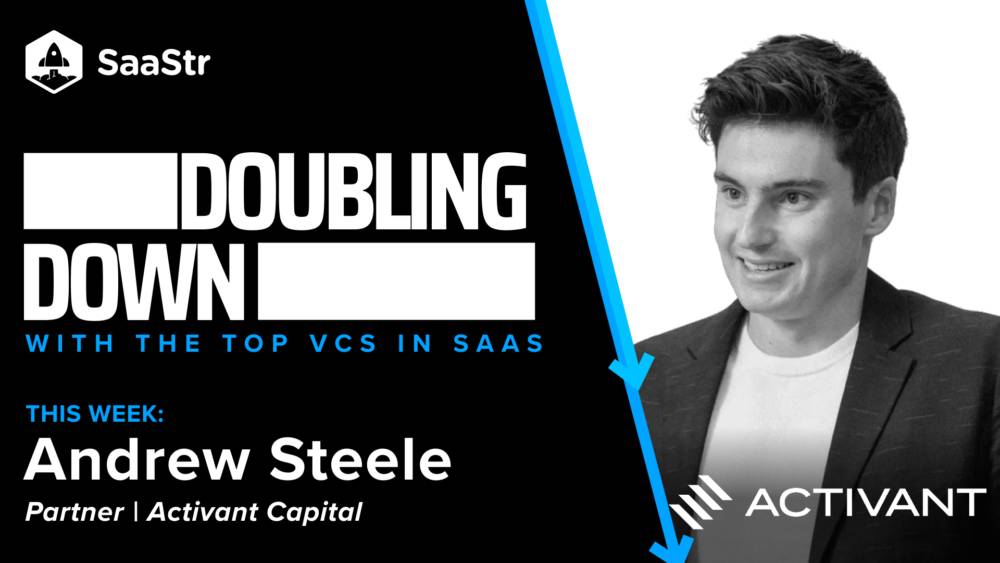
That makes the title “Doubling Down: Andrew Steele, Partner at Activant Capital” especially fitting. Andrew Steele has become closely associated with the kind of growth investing that does not chase every shiny software trend like a golden retriever at a tennis-ball convention. His work at Activant Capital centers on high-growth companies transforming commerce, fintech, logistics, automation, B2B software, and the infrastructure that helps businesses move money, goods, data, and decisions faster.
Steele’s public interviews and investment activity reveal a clear pattern: he is interested in founders who build durable systems, not decorative software. He looks for markets large enough to support category-defining outcomes, products that remove real operational pain, and teams that can scale without turning the org chart into a modern art installation.
Who Is Andrew Steele?
Andrew Steele is a Partner at Activant Capital, a research-led growth investment firm founded in 2015. Activant partners with high-growth companies and founders working to transform commerce. The firm has described itself as focused on “relentless founders,” which is venture-speak for people who willingly choose the emotional obstacle course known as building a company.
Steele’s background helps explain his operating empathy. He grew up in Portadown, Northern Ireland, later moved to the United States, and attended Harvard University, where he studied economics with a secondary focus in psychology. That combination matters. Economics helps investors understand incentives, markets, and capital allocation. Psychology helps them understand why founders keep working on impossible problems even after the universe politely suggests they stop.
Before becoming an investor, Steele co-founded IvyMinded, an education technology company focused on personalized critical-thinking curriculum. He ran the company for about two and a half years before joining Activant during its first fund. That early founder experience appears to shape his investment approach: he knows that building a company is not a spreadsheet exercise. It is product calls, hiring decisions, customer pressure, fundraising stress, and the occasional existential moment over bad coffee.
Activant Capital’s Investment Lens
Activant Capital sits in the growth equity world, typically investing in companies that have already found meaningful market traction but still have plenty of room to scale. In SaaStr’s “Doubling Down” interview, Steele described Activant’s focus as enterprise software and commerce infrastructure, including fintech and logistics. He also noted that the firm often leads Series B rounds, while occasionally investing earlier or later depending on the company and market.
That sweet spot is important. Series B is often the stage where a company has proven that something real is happening. Customers are buying. Revenue is growing. The product has escaped the “interesting demo” zone and entered the “this could become infrastructure” zone. But the company is also still fragile. Hiring, go-to-market strategy, product expansion, pricing, customer success, and capital discipline can either turn momentum into a machine or turn momentum into a very expensive lesson.
Steele has also emphasized Activant’s research-led model. Instead of waiting passively for deals to arrive, the firm studies markets deeply, identifies gaps in the technology stack, and builds conviction before a company becomes obvious to everyone else. That approach is especially useful in commerce infrastructure, where the biggest opportunities often hide inside boring workflows. Payments, risk, checkout, accounts receivable, logistics, compliance, and restaurant operations may not sound glamorous at first glance. But neither did cloud accounting, digital payments, or warehouse automationuntil they became giant markets.
Owner.com and the Case for Vertical Commerce Software
In the SaaStr interview, Steele identified Owner.com as his most recent disclosed investment at the time. Owner.com helps restaurants regain control of digital customer relationships, online ordering, and operations. The appeal is easy to understand: restaurants have been squeezed by third-party platforms, rising costs, and fragmented customer data. Many local operators know how to make excellent food but are forced to become part-time software strategists, digital marketers, and delivery economists before lunch service even starts.
Owner.com’s pitch is powerful because it gives restaurants tools to build direct relationships with diners. Instead of renting customers from marketplaces forever, restaurants can own more of the ordering experience, collect better data, and improve margins. For an investor like Steele, that is more than a software story. It is a commerce infrastructure story.
The later Owner.com Series C announcement, which described a $120 million round and a $1 billion valuation, shows how vertical software can compound when it solves an urgent problem for a large market. The lesson is not simply “restaurants need apps.” The bigger point is that many industries still run on fragmented systems, manual workarounds, and third-party platforms that capture too much of the value chain. When a focused software platform gives operators control, the market tends to pay attention.
Why Sardine Fits the “Doubling Down” Theme
Sardine is another useful example of Steele’s investment style. The company builds fraud, compliance, and risk infrastructure for financial services and digital commerce. In 2025, Sardine announced a $70 million funding round led by Activant Capital. The company’s platform uses device intelligence, behavioral signals, machine learning, and AI agents to help organizations detect fraud, streamline compliance, and manage risk.
This is the kind of problem that becomes more important as digital commerce grows. Every new payment rail, onboarding flow, wallet, marketplace, and fintech product creates opportunitybut also risk. Fraudsters love innovation too. Unfortunately, they do not use it for inspiring LinkedIn posts about teamwork.
Steele’s public commentary on Sardine framed the company as an AI-first risk platform that improves with every transaction. That thesis fits neatly into Activant’s broader interest in systems of intelligence: software that does not just record work, but actively helps perform, automate, and improve it. In risk and compliance, the old model often involved static rules, manual review queues, and disconnected signals. The newer model uses richer data, adaptive systems, and automated agents to detect patterns faster.
Vartana and the B2B Payments Opportunity
Vartana, a B2B sales closing and financing platform, offers another window into the Activant worldview. The company raised a $20 million Series B round led by Activant Capital, with Andrew Steele joining its board. Vartana focuses on making enterprise sales and financing smoother, especially for large software and hardware purchases.
Why does that matter? Because B2B purchasing can still feel like fax-machine cosplay. Buyers need flexible payment terms. Sellers want deals to close faster. Finance teams need clarity. Sales teams want less friction. Legal teams, naturally, would like everyone to read paragraph 17 again. Platforms like Vartana aim to modernize that process by bringing consumer-grade fintech expectations into enterprise transactions.
The investment also reflects a broader trend: B2B commerce is being rebuilt. Many consumer transactions became digital years ago, but B2B workflows are often slower, more complex, and more fragmented. That creates opportunities for companies that can simplify checkout, financing, underwriting, procurement, payments, and customer onboarding.
Steele’s Advice to Founders: Keep the Bar High
One of Steele’s clearest pieces of advice to SaaS founders is to keep the bar high. That sounds simple, but it cuts against a pattern that dominated parts of the venture market for years: grow headcount, raise bigger rounds, celebrate speed, and worry about efficiency later. The market has changed. Investors now want durable growth, cleaner unit economics, sharper teams, and products that create measurable value.
Steele has pointed to smaller, leaner teams creating outsized value through alignment and performance. That idea has only become more relevant as automation and AI tools improve. A modern startup does not necessarily need a huge team to move quickly. It needs excellent people, clear priorities, strong systems, and a culture that does not treat meetings as a recreational sport.
For founders, “keep the bar high” applies to hiring, product quality, customer selection, fundraising, and internal decision-making. It means avoiding the temptation to fill seats just because capital is available. It means hiring people who raise the standard, not just reduce the workload. It also means building products that customers would miss if they disappeared tomorrow.
Cautious Optimism in Venture Markets
Steele has described the venture market with cautious optimism. That phrase may sound like something a finance person says when they are excited but still own a calculator. Yet it is a useful description of the current environment. The easy-money era cooled, but the opportunity for technology builders did not disappear. If anything, the pressure to build real businesses has made the best founders more focused.
AI, automation, data infrastructure, fintech components, developer tools, and middleware have made it easier for small teams to build sophisticated products. At the same time, customers are more demanding. They want software that saves money, creates revenue, reduces risk, improves workflow speed, or unlocks capabilities they could not achieve before. “Nice to have” software is having a rough time. “Please take this operational headache away from me” software is doing much better.
This is where Activant’s focus becomes relevant. Commerce infrastructure is full of problems that are expensive, recurring, measurable, and deeply embedded in daily business operations. When a company solves those problems well, it can become more than a vendor. It can become part of the operating system for an industry.
What Founders Can Learn From Andrew Steele’s Investment Pattern
1. Solve a Painful, Expensive Problem
The companies Steele discusses most often are not selling vague productivity magic. They solve specific problems: restaurant customer ownership, fraud detection, B2B financing, accounts receivable automation, global business payments, and workflow automation. Founders should ask a blunt question: is this problem painful enough that customers will act now?
2. Build in a Market That Can Become Huge
Activant’s approach favors large markets with structural change. Restaurants moving online, B2B commerce digitizing, risk teams adopting AI, and global companies needing better payment infrastructure are not tiny niches. They are major shifts. A good startup finds the wedge; a great startup expands from the wedge into a platform.
3. Earn the Right to Scale
Growth is wonderful, but sloppy growth is just chaos wearing a blazer. Steele’s emphasis on lean, high-performance teams suggests that founders should scale only when the foundation is strong. Product-market fit, customer retention, repeatable sales motion, and efficient operations matter more than vanity metrics.
4. Use Research as a Weapon
Activant’s research-led model shows how deep market understanding can create an edge. Founders can apply the same principle. Know the customer’s workflow better than the customer expects. Understand the budget owner, the buyer, the end user, the incumbent alternatives, and the hidden costs of doing nothing.
5. Think Like Infrastructure
The best commerce software often becomes infrastructure. It starts as a tool and becomes a dependency. That is the dream: not software people try once, but software businesses rely on every day. Founders should design products that integrate deeply, improve over time, and become harder to replace as usage grows.
Experiences and Practical Reflections Related to “Doubling Down”
The most interesting lesson from Andrew Steele’s investing approach is that “doubling down” is not reckless confidence. It is earned conviction. In startup life, people often confuse energy with evidence. A founder can be charismatic, a market can sound enormous, and a product demo can sparkle like a Las Vegas lobby. But conviction should come from deeper signals: customer behavior, retention, usage intensity, market timing, founder learning speed, and the company’s ability to turn complexity into a simple product experience.
For operators, this is a valuable mindset. Imagine a restaurant owner evaluating whether to invest in better digital ordering tools. The decision is not really about software. It is about owning customer relationships, protecting margins, and building a business that is less dependent on platforms that may change fees or policies overnight. That is the same logic behind the Owner.com thesis. The best technology investments give operators more control, not more dashboards to ignore.
For fintech founders, the Sardine example offers another experience-based lesson: risk is not a back-office inconvenience anymore. It is part of the customer experience. If onboarding is too strict, good customers leave. If it is too loose, fraud walks in wearing sunglasses. Modern risk infrastructure must balance speed, trust, compliance, and accuracy. That is hard, which is exactly why it can become valuable.
For B2B software teams, Vartana’s category highlights how much opportunity still exists in workflows that outsiders consider boring. Enterprise purchasing, financing, invoicing, collections, and approvals are not glamorous dinner-party topics unless you attend very specific dinner parties. But these workflows control how money moves through the economy. Improving them can create enormous value.
One practical takeaway for founders is to document customer pain in plain English. Do not say, “We optimize multi-stakeholder workflow interoperability.” Say, “Sales teams lose deals because financing takes too long.” Do not say, “We enable next-generation risk orchestration.” Say, “We help financial companies catch fraud faster without blocking good users.” Clear pain creates clear urgency.
Another experience-based lesson is that investors like Steele appear to value founder intensity paired with discipline. Intensity alone can become noise. Discipline alone can become slow. The magic is both: a team moving fast, learning constantly, and refusing to lower standards just because the market is competitive. That matters more in 2026 than it did during the peak of the growth-at-all-costs cycle.
Finally, “doubling down” is also a relationship strategy. Activant has publicly emphasized investing multiple times in founders. That matters because great companies rarely move in a straight line. There are hiring mistakes, product resets, customer surprises, pricing debates, and market shocks. A useful investor is not merely a logo on a pitch deck. A useful investor helps founders think clearly when the easy answer is unavailable.
In that sense, Andrew Steele’s story is not just about venture capital. It is about how modern company-building is changing. The best founders are expected to be leaner, sharper, more customer-obsessed, and more technically ambitious. The best investors are expected to bring more than capital. They bring research, pattern recognition, recruiting help, market insight, and the patience to support companies through multiple chapters.
Conclusion
Andrew Steele’s work at Activant Capital offers a useful lens into where growth investing is headed. The center of gravity has shifted away from hype and toward durable business quality. Commerce infrastructure, fintech, automation, AI-driven systems, logistics, and B2B software remain rich areas for company creation because they solve problems that businesses cannot afford to ignore.
The phrase “Doubling Down: Andrew Steele, Partner at Activant Capital” captures more than one interview. It captures an investment philosophy: study markets deeply, back exceptional founders, stay active after the first check, and keep standards high even when everyone else is tempted to chase shortcuts. For founders, the message is refreshingly direct. Build something customers need, prove it with real usage, hire with discipline, and choose partners who understand the size of the mission.
In a market full of noise, Steele’s approach is a reminder that the best investments often come from doing the unglamorous work before conviction becomes obvious. Or, to put it less politely: by the time everyone sees the opportunity, the best investors may already be on the board, in the data room, and ordering another coffee.