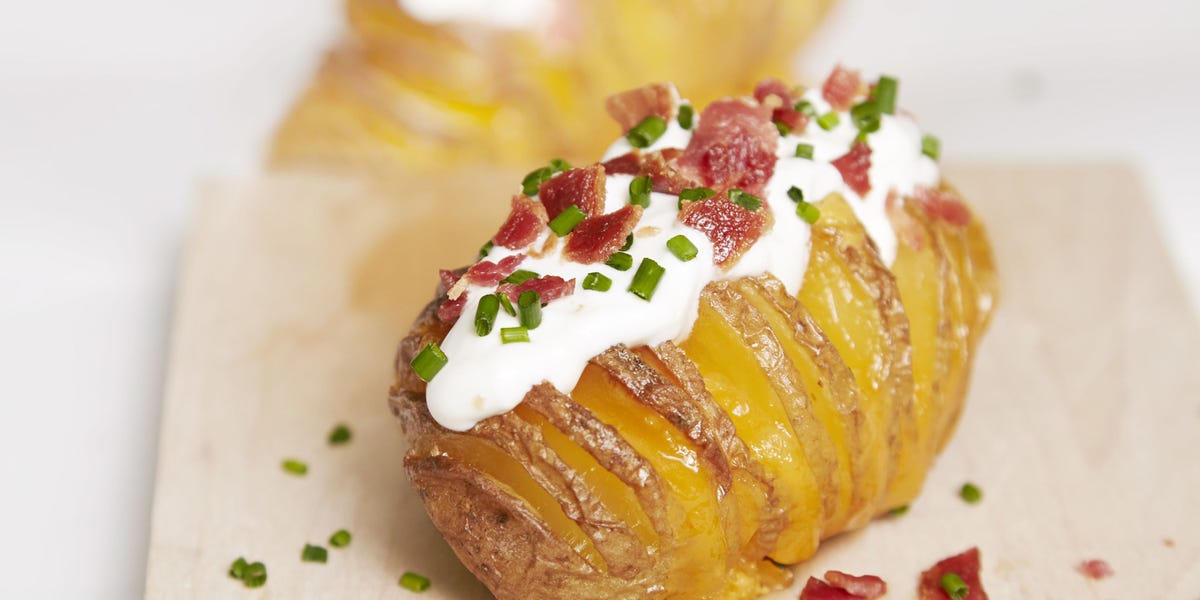
Some potato dishes quietly sit beside the main course and behave themselves. Cheesy Hasselbacks are not among them. These golden, accordion-shaped potatoes arrive with crisp edges, tender centers, bubbling cheese, garlic butter, and enough visual drama to make the roast chicken wonder whether it is still the star of dinner.
The Hasselback method transforms an ordinary whole potato through a series of thin crosswise cuts that stop just before the bottom. As the potato bakes, the slices spread into a fan, exposing dozens of edges to the oven’s heat. Those edges become crisp while the connected base remains soft and fluffy. The technique is commonly associated with Stockholm’s Restaurant Hasselbacken and is also why the dish is sometimes called an accordion potato.
This cheesy version adds layers of cheddar, Monterey Jack, Parmesan, garlic, butter, herbs, and optional toppings. The result combines the best parts of a baked potato, potato chips, and potatoes au gratinwithout requiring three separate pans or a diplomatic meeting between side dishes.
Why Cheesy Hasselbacks Work So Well
A whole baked potato has a fluffy interior but relatively little crisp surface. French fries offer plenty of crunch but not much creamy softness. Hasselback potatoes land directly between those two extremes.
Thin cuts create additional surface area, allowing hot air and cooking fat to reach deep into the potato. Repeated brushing distributes butter and oil between the expanding layers. Adding cheese near the end gives it enough time to melt and brown without turning hard or bitter.
Reliable Hasselback recipes from major cooking publications generally use the same core principles: make thin partial cuts, coat the potatoes with fat, roast until the layers open, baste again, and add delicate ingredients during the final stage. Baking times vary with potato size, but medium potatoes typically require approximately 60 to 75 minutes.
Choosing the Best Potatoes
Russet Potatoes
Russets are the best choice when maximum crispness and a light, fluffy center are the priorities. Their relatively high starch and lower moisture content help the exposed slices brown beautifully. Their elongated shape also makes them easy to stabilize and slice.
Choose medium russets that are fairly uniform in size. Matching potatoes cook more evenly, so one guest does not receive a perfect golden fan while another gets a potato that appears to have joined the meal halfway through. High-starch russets are widely recommended for baking because they develop a dry, fluffy interior.
Yukon Gold Potatoes
Yukon Gold potatoes produce a creamier, denser center with a naturally buttery flavor. Their thinner skin can become pleasantly crisp, and their waxy-starchy balance helps the sliced potato remain intact. They are particularly good for smaller Hasselbacks intended as appetizers or party food.
Avoid potatoes with green areas, deep cuts, soft spots, or extensive sprouting. Whichever variety you select, scrub and dry the skins thoroughly because peeling would remove one of the crispiest parts of the finished dish.
Cheesy Hasselbacks Recipe
Yield: 6 servings
Preparation time: 20 minutes
Cooking time: 65 to 75 minutes
Total time: Approximately 1 hour 35 minutes
Ingredients
- 6 medium russet or Yukon Gold potatoes of similar size
- 4 tablespoons unsalted butter, melted
- 2 tablespoons olive oil
- 3 garlic cloves, finely minced or grated
- 1 teaspoon chopped fresh thyme
- 1 teaspoon chopped fresh rosemary
- 1 teaspoon kosher salt, plus more to taste
- 1/2 teaspoon freshly ground black pepper
- 1/2 teaspoon smoked paprika
- 1 cup freshly shredded medium cheddar cheese
- 1/2 cup freshly shredded Monterey Jack cheese
- 1/4 cup finely grated Parmesan cheese
- 2 tablespoons chopped chives or green onions
- Sour cream, cooked bacon, or additional herbs for serving, optional
Equipment
- Sharp chef’s knife
- Two wooden chopsticks or thin wooden spoon handles
- Rimmed baking sheet or shallow baking dish
- Pastry brush
- Parchment paper or aluminum foil
How to Make Cheesy Hasselback Potatoes
1. Prepare the Oven and Potatoes
Preheat the oven to 425°F. Line a rimmed baking sheet with parchment paper or foil. Scrub the potatoes under cool running water, remove any blemishes, and dry them completely.
Moisture on the surface slows browning, so do not send dripping potatoes into the oven and expect a crisp miracle. A clean kitchen towel solves the problem in seconds.
2. Make the Hasselback Cuts
Place one potato lengthwise between two chopsticks. Cut crosswise slices approximately 1/8 inch apart, allowing the chopsticks to stop the knife before it reaches the cutting board. Leave roughly 1/4 inch of the potato connected along the bottom.
Repeat with the remaining potatoes. The slices do not need to be mathematically identical. They simply need to be thin enough to crisp and deep enough to open while the potato stays connected. Chopsticks are a widely recommended guardrail because they reduce the chance of accidentally turning a Hasselback into a pile of potato coins.
3. Mix the Garlic-Herb Butter
Combine the melted butter, olive oil, garlic, thyme, rosemary, salt, black pepper, and smoked paprika in a small bowl.
The combination of butter and olive oil provides rich flavor while helping coat the potatoes evenly. Herbs and garlic season the expanding layers, and paprika adds warm color without making the dish noticeably spicy.
4. Apply the First Coating
Arrange the potatoes cut side up on the prepared baking sheet. Brush approximately half of the butter mixture over them, covering the tops, sides, and bottoms.
Do not force the mixture deeply between closed slices yet. The potatoes will be easier to season after the first stage of roasting, when the layers have softened and begun to separate.
5. Begin Roasting
Bake for 30 minutes. Remove the pan and gently brush the potatoes again, guiding the remaining garlic-herb butter between the opened slices. A pastry brush works especially well for this step and is frequently used in established Hasselback methods.
Return the potatoes to the oven and roast for another 25 to 35 minutes. They are ready for cheese when the edges are golden and a thin knife can enter the center with little resistance.
6. Add the Cheese
Mix the cheddar and Monterey Jack. Carefully tuck small pinches into several of the larger openings. Sprinkle the remaining cheese over the tops, followed by the Parmesan.
Use freshly shredded cheese when possible. Pre-shredded cheese often contains anti-caking ingredients that can make the melt less smooth. Medium cheddar provides good flavor and reliable melting, while Monterey Jack brings creaminess and Parmesan contributes a salty, browned finish. Very aged cheddar contains less moisture and may separate more readily when heated.
7. Finish Baking
Return the potatoes to the oven for 8 to 10 minutes, or until the cheese is fully melted and beginning to bubble around the edges.
For additional browning, switch the oven to broil for 30 to 90 seconds. Watch continuously. Broilers can move from “beautiful golden cheese” to “small dairy-related emergency” with impressive speed.
8. Garnish and Serve
Let the potatoes rest for five minutes, then sprinkle them with chives or green onions. Serve with sour cream, bacon, extra Parmesan, hot sauce, or additional herbs.
Tips for Crispier, Cheesier Results
Keep the Cuts Narrow
Thin slices create more crisp edges. Aim for approximately 1/8 inch between cuts. Wider sections remain softer and produce an appearance closer to a sliced baked potato than a delicate accordion.
Use Potatoes of Similar Size
Uniform potatoes finish cooking at roughly the same time. When shopping, take an extra moment to select potatoes with comparable length and thickness.
Baste More Than Once
The initial coating flavors the exterior. The second coating reaches between the slices after they open. This two-stage method improves browning and helps prevent dry interior layers.
Do Not Add Cheese Too Early
Potatoes take considerably longer to cook than shredded cheese. Adding cheese at the beginning can leave it dry, dark, and chewy before the centers become tender. The final 8 to 10 minutes are usually sufficient.
Give the Potatoes Room
Leave space between each potato so hot air can circulate. Crowding traps steam, and steam is wonderful for dumplings but less helpful when the goal is crisp potato edges.
Season Between the Layers
Once the cuts open, direct some seasoned butter into the spaces. Surface seasoning alone may leave the centers bland, especially with large russets.
Cheese Combinations Worth Trying
Classic Cheddar and Jack
Medium cheddar supplies tangy flavor, while Monterey Jack melts smoothly. This dependable combination works with bacon, chives, sour cream, barbecue sauce, or jalapeños.
Mozzarella and Parmesan
Low-moisture mozzarella creates long, stretchy strands. Parmesan adds saltiness and browning. This combination is excellent with Italian seasoning, marinara sauce, or pepperoni.
Gruyère and Parmesan
Gruyère brings nutty depth and a luxurious texture. Pair it with thyme, caramelized onions, or a small amount of Dijon mustard for a French-inspired variation.
Pepper Jack and Cheddar
Pepper Jack adds gentle heat without requiring a separate sauce. Finish with cilantro, green onions, pickled jalapeños, and a spoonful of sour cream.
Smoked Gouda and Bacon
Smoked Gouda gives the potatoes a barbecue-like character. Use a modest amount because its smoky flavor can dominate more delicate herbs.
Easy Cheesy Hasselback Variations
Loaded Baked Potato Hasselbacks
Use cheddar and Monterey Jack, then finish with crumbled bacon, sour cream, chives, and black pepper. These can function as either a substantial side dish or a casual main course.
Garlic-Parmesan Hasselbacks
Increase the garlic to four cloves and use Parmesan with mozzarella. Add parsley and a squeeze of lemon after baking to balance the richness.
Buffalo Cheesy Hasselbacks
Mix two tablespoons of Buffalo sauce into the finishing butter. Top the potatoes with cheddar and Jack, then serve with ranch or blue cheese dressing.
Broccoli-Cheddar Hasselbacks
Add finely chopped steamed broccoli during the last few minutes of baking. Keep the pieces small so they settle between the slices instead of rolling across the pan like tiny green escapees.
Mini Party Hasselbacks
Use baby Yukon Gold potatoes and shorten the roasting time. Mini Hasselbacks offer a high ratio of crispy edges to creamy centers and can be served as finger food with dipping sauces.
What to Serve With Cheesy Hasselbacks
These potatoes pair naturally with roasted chicken, grilled steak, pork tenderloin, meatloaf, baked ham, or salmon. They also work with vegetarian dishes such as roasted mushrooms, lentil loaf, grilled vegetables, or a crisp green salad.
Because the potatoes are rich, consider serving them with something acidic or fresh. A lemony salad, vinegar-dressed slaw, tomato relish, pickled onions, or steamed green beans can keep the meal from feeling overly heavy.
For a casual gathering, create a topping bar with sour cream, bacon, chopped herbs, jalapeños, salsa, caramelized onions, hot sauce, and extra cheese. Guests can customize their potatoes, and the host gets credit for an interactive dining experience without having to purchase tiny decorative chalkboards.
Make-Ahead, Storage, and Reheating
The potatoes can be washed and sliced several hours ahead. Keep them submerged in cold water to limit discoloration, then drain and dry them thoroughly before adding butter and roasting. Potatoes prepared in advance must be completely dry to achieve crisp edges.
For partial make-ahead preparation, roast the potatoes without cheese until nearly tender. Cool and refrigerate them, then reheat at 400°F before adding the cheese during the final 8 to 10 minutes.
Refrigerate cooked leftovers within two hours. Store them in a covered container for up to three or four days. USDA food-safety guidance recommends prompt refrigeration and reheating leftovers thoroughly.
For the best texture, reheat Cheesy Hasselbacks in a 400°F oven or air fryer until hot and crisp. A microwave is faster, but it softens the edges. The potatoes will still taste good; they simply lose some of their accordion-based swagger.
Troubleshooting Common Problems
The Potato Broke Apart
The knife probably reached the bottom. Use chopsticks as cutting guides and avoid pushing down aggressively. A partially separated potato can still be baked; place the pieces close together and allow melted cheese to perform some delicious structural engineering.
The Slices Did Not Open
The cuts may be too shallow or too widely spaced. The potato may also need more time. After the first 30 minutes, gently separate a few slices with the pastry brush while applying additional butter.
The Edges Are Browning Before the Center Is Tender
Loosely cover the potatoes with foil and continue baking until the centers soften. Large potatoes may need an additional 10 to 20 minutes.
The Potatoes Are Soft but Not Crisp
Surface moisture, overcrowding, insufficient fat, or low oven heat may be responsible. Dry the potatoes carefully, leave space around them, and use a fully preheated 425°F oven.
The Cheese Became Oily
Overheating or using a very aged cheese can cause fat separation. Choose a good melting cheese, shred it freshly, and add it only near the end of cooking.
The Experience of Making Cheesy Hasselbacks
Making Cheesy Hasselbacks is one of those kitchen projects that looks intimidating from across the internet but becomes pleasantly straightforward once the first potato is sliced. The initial cuts demand attention, especially when trying not to drive the knife completely through the base. After two or three potatoes, however, the movement becomes rhythmic: slice, lift, move, repeat. Chopsticks remove much of the anxiety and make the process feel less like precision surgery performed on a russet.
The most satisfying moment arrives after the first half hour of baking. Potatoes that entered the oven looking tightly closed begin to spread into neat golden fans. The softened layers accept garlic butter much more readily, and brushing between them produces an immediate burst of rosemary, thyme, and roasted garlic aroma. This is also the point when an ordinary baked potato becomes something that looks intentionally fancy.
Patience matters more than complicated technique. It can be tempting to add cheese as soon as the potatoes begin to open, especially when hungry people are wandering through the kitchen and asking highly constructive questions such as, “Are those ready yet?” Waiting until the centers are tender produces much better results. Cheese added too soon may brown long before the potato finishes cooking, while cheese added late stays creamy and develops attractive golden spots.
Different potato varieties noticeably change the experience. Russets create dramatic fans with light interiors and crisp, almost chip-like edges. Yukon Golds feel richer and hold together particularly well, although their centers remain denser. Smaller potatoes require more slicing but cook quickly and are easier to serve at parties. Larger potatoes create an impressive steakhouse presentation but demand additional roasting time and more seasoning between the layers.
The cheese mixture also rewards experimentation. Cheddar alone delivers bold flavor but can become slightly oily when overheated. Combining it with Monterey Jack creates a smoother melt. Parmesan is less useful as the main filling but excellent as a finishing cheese because it browns quickly and adds a savory crust. A small quantity of cheese tucked inside the slices is usually more effective than packing every opening until the potato resembles an overfilled filing cabinet.
Serving the finished Hasselbacks creates a useful lesson in food presentation: people react enthusiastically to familiar ingredients arranged in an unexpected way. A potato, butter, garlic, and cheese are hardly mysterious, yet the accordion shape makes the dish feel festive. Guests can pull away crisp sections with a fork while the base remains soft enough to scoop with sour cream.
The experience is also forgiving. Uneven cuts disappear beneath melted cheese. A broken section can be pressed against the potato and baked alongside it. Extra-crisp edges are usually considered a bonus rather than a failure. Even imperfect Cheesy Hasselbacks retain the essential combination of crunchy potato, creamy center, herbs, and melted cheesewhich is a remarkably comfortable safety net for any recipe.
Most importantly, the dish encourages customization. One batch can be smoky with bacon and Gouda, another spicy with pepper Jack and jalapeños, and another elegant with Gruyère and thyme. The basic technique stays the same while the personality changes. Once the slicing method feels familiar, Cheesy Hasselbacks stop being a special-occasion challenge and become a dependable way to make an everyday dinner look as though it has dressed up for company.
Final Thoughts
Cheesy Hasselbacks prove that a humble potato does not need complicated ingredients to become memorable. Thin cuts create the contrast between crisp and tender textures, repeated basting carries flavor into every layer, and a late addition of carefully chosen cheese provides the bubbling finish.
Use evenly sized potatoes, keep the slices narrow, protect the base with chopsticks, and allow enough roasting time before adding the cheese. Follow those principles and the recipe is remarkably flexible. Serve it with a holiday roast, place it beside a weeknight salad, or load it with toppings and call it dinner. No one is likely to object while the cheese is still bubbling.
Note: Potato size, shape, moisture, and oven calibration can affect cooking time. Judge doneness by texture as well as the clock: the center should be easily pierced, the layers should be open, and the edges should be deeply golden before serving.