Imagine this: you blow the dust off an old console, slide in one mysterious cartridge, and suddenly the screen offers a buffet of games. Not one game. Not two. Dozens, hundreds, sometimes thousands. It feels like discovering a tiny plastic treasure chest, except instead of gold coins, it contains platformers, puzzle games, racing titles, RPGs, homebrew experiments, fan translations, and the occasional game that looks like it was programmed by a raccoon with a deadline.
The idea behind all the games in one cartridge is simple, powerful, and a little magical: put a whole library of playable titles onto a single physical cartridge. In the 1980s and 1990s, that usually meant multicarts packed with several games burned onto ROM chips. Today, it often means a modern flash cartridge that uses an SD or microSD card to load game files on original hardware. The dream is the same either way: fewer cartridges, more games, less shelf space, and fewer moments spent wondering where you put that one copy of Tetris.
But the story is bigger than convenience. Multi-game cartridges sit at the intersection of nostalgia, hardware engineering, collector culture, game preservation, and copyright law. They also reveal something charming about gamers: we love having choices, but we love having them in a chunky gray cartridge even more.
What Does “All The Games In One Cartridge” Actually Mean?
At its most basic level, a multi-game cartridge is a cartridge that gives players access to more than one game. That can happen in several ways. Some cartridges contain a fixed set of games chosen by the manufacturer. Others, often called flash cartridges or flash carts, let users load compatible game files from removable storage. A third category includes official compilation cartridges, such as two-in-one or anniversary releases, where publishers bundle multiple titles together in a legal, polished package.
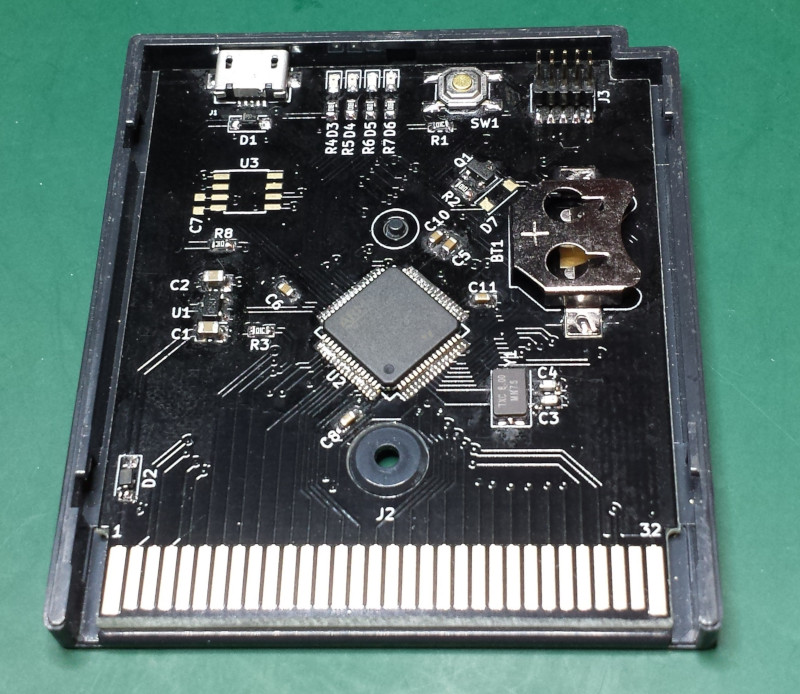
The phrase can mean different things depending on the console generation. For the Atari 2600, NES, Famicom, Game Boy, Sega Genesis, SNES, and Game Boy Advance, cartridge hardware played a direct role in how the console read and ran games. A cartridge was not merely a storage device; it could include special chips, memory, battery-backed saves, mapper hardware, or extra circuitry. That is why one “all-in-one” cartridge has to do more than store files. It has to behave like many different cartridges convincingly enough that the original console says, “Sure, I’ll allow it.”
The Early Multicart Era: 4-in-1, 52-in-1, and the Wild West of Plastic
Long before modern flash carts became the darling of retro enthusiasts, multicarts were already floating around flea markets, game shops, and mysterious mall kiosks. Many were unlicensed cartridges for systems like the Famicom and NES. They promised eye-popping numbers: 31-in-1, 52-in-1, 100-in-1, sometimes even 999999-in-1, because apparently mathematics took a coffee break.
The reality was often less glamorous. A cartridge claiming hundreds of games might include the same handful of titles repeated with minor changes. One version of a game might start at level one, another at level five, another with extra lives, and another with a title screen that looked like it had been translated by a toaster. Still, these multicarts became legendary because they offered variety at a time when buying individual games was expensive.
For families, a multicart could feel like an incredible bargain. Instead of saving up for one new game, you could bring home a cartridge that appeared to contain an entire arcade. Quality varied wildly, but the idea stuck: players wanted access, variety, and the thrill of browsing a menu full of possibilities.
Official Multi-Game Cartridges: When Publishers Joined the Party
Not every multi-game cartridge came from the gray market. Official compilation carts have existed for decades. Publishers often combined sequels, arcade ports, sports titles, or themed collections onto one cartridge. These releases made sense commercially: older games could find new audiences, collectors could get more value, and companies could squeeze extra life from proven titles.
A famous example in Nintendo history is the Nintendo World Championships 1990 cartridge. It was not an “all games” cartridge in the usual consumer sense, but it did combine customized competition versions of Super Mario Bros., Rad Racer, and Tetris into one timed challenge. The cartridge became one of the most famous and valuable NES collectibles, partly because so few were made and partly because rare Nintendo items have a way of making collectors behave like treasure hunters with spreadsheets.
More recently, retro-inspired hardware bundles and official rereleases have kept the multi-game concept alive. Modern retro consoles sometimes ship with two-in-one cartridges or support original cartridge libraries while adding conveniences like HDMI output and USB-C power. The cartridge remains a nostalgic object, but the experience around it keeps evolving.
Modern Flash Cartridges: The Library in Your Pocket
The modern version of “all the games in one cartridge” is usually the flash cartridge. Popular examples include products in the EverDrive family, the Harmony Cartridge for Atari 2600, and other system-specific flash carts designed for classic consoles and handhelds. These devices typically let users place legally obtained game backups, homebrew titles, demos, translations, or development builds onto an SD or microSD card.
Instead of swapping thirty physical cartridges, a player can open a menu, select a title, and run it on original hardware. For retro gamers, this is a big deal. Original hardware has its own feel: the real controller ports, the timing quirks, the audio behavior, and the satisfying clunk of turning on a machine that has somehow survived since the Reagan administration.
Why Flash Carts Are More Than Lazy Convenience
Convenience is the obvious benefit, but it is not the only one. Flash cartridges are also useful for developers, collectors, preservationists, speedrunners, and repair technicians. A homebrew developer can test a new Game Boy or NES project on real hardware instead of relying only on emulators. A collector can keep rare cartridges safely stored while playing personal backups. A speedrunner can practice specific versions of a game. A repair hobbyist can use diagnostic ROMs to test consoles.
For systems with aging cartridges, failing batteries, dirty contacts, and rising prices, a flash cartridge can reduce wear on original games. That matters when some classic titles now cost more than a used couch, and in certain cases, are less comfortable.
How One Cartridge Can Pretend to Be Many
A classic console expects a cartridge to respond in very specific ways. The console asks for data; the cartridge provides it. Simple games may be easy to replicate, but many later games used extra cartridge hardware to expand what the console could do. On the NES, for example, mapper chips helped games access more memory, switch banks of data, create visual effects, and support larger worlds. On other systems, cartridges might include save memory, real-time clocks, enhancement chips, or special audio features.
A good flash cartridge must account for these differences. Some use programmable logic or FPGA-based designs to mimic the behavior of many cartridge types. Others rely on dedicated firmware and compatibility lists. The best flash carts feel almost invisible: you choose a game, it loads quickly, and the console behaves as if the original cartridge is inserted.
That “almost” matters. Compatibility is a constant topic in the retro scene. Some unusual games, special chips, clone consoles, FPGA handhelds, or hardware revisions may create problems. A flash cart that works beautifully on one original console may behave differently on a clone system or a newer FPGA-based device. Retro gaming is fun, but it is also occasionally a group project involving firmware updates, forum posts, and someone named Dave saying, “Try formatting the card again.”
The Preservation Argument: Why Access Matters
One reason multi-game cartridges remain relevant is that classic games are not always easy to buy. Many older titles are unavailable through modern storefronts. Licensing problems, expired music rights, defunct publishers, closed digital shops, and abandoned hardware can make legitimate access difficult. Preservation groups have repeatedly warned that a large percentage of classic games released in the United States are no longer commercially available.
That does not automatically make every ROM download legal. It does, however, explain why the conversation is emotional. Games are culture. They are art, software, industrial design, music, memory, and history wrapped in one interactive package. When old games disappear, we lose more than entertainment. We lose design lessons, regional variations, technical experiments, and the weird little dead ends that make gaming history so wonderfully messy.
Flash cartridges can help people experience older games on original hardware, especially when used with legally owned backups, homebrew software, public-domain releases, or officially authorized files. Museums, archivists, and researchers also care about these tools because original media can degrade, hardware can fail, and software locked to obsolete systems becomes harder to study over time.
The Legal and Ethical Side: Fun, But Don’t Be a Goblin
Here is the part nobody wants to read but everyone should: copyright still matters. A flash cartridge is a tool. Like many tools, it can be used responsibly or irresponsibly. Loading homebrew games, your own development builds, public-domain software, fan projects with permission, or personal backups made within applicable law is very different from downloading entire commercial libraries from random websites.
Major publishers, especially Nintendo, have long taken a strict stance against unauthorized ROM distribution. U.S. copyright rules and anti-circumvention law are complicated, and preservation exemptions are limited. In recent DMCA rulemaking, preservation advocates pushed for broader access rules, while industry groups argued for stronger control over copyrighted works. The debate continues because both sides see real stakes: cultural preservation on one side, intellectual property protection on the other.
The safest practical rule is simple: buy legitimate games when they are available, support official rereleases, support homebrew developers, dump your own cartridges only where lawful, and do not treat a flash cart as a free ticket to someone else’s entire catalog. Retro gaming is more fun when it does not come with legal indigestion.
Why Collectors Still Love Original Cartridges
If one cartridge can hold a whole library, why do people still buy original games? Because collecting is not only about utility. It is about objects, memories, artwork, manuals, labels, regional variants, and the tiny thrill of finding a cartridge in the wild. A flash cart can play a game, but it cannot fully replace the experience of holding the original box, reading the manual, or discovering a previous owner wrote “BRIAN” on the back in permanent marker.
Original cartridges also have historical value. They show manufacturing differences, board revisions, label changes, and distribution history. Some contain unique save files, prototypes, unreleased builds, or regional code variations. Preservationists often care deeply about the physical object and the data inside it.
That is why many serious collectors use both. They preserve, display, and study original cartridges while using flash carts for everyday play. It is the retro equivalent of owning a classic car but using a modern commuter vehicle for groceries. Except the groceries are boss fights and the car is shaped like a Super Nintendo cartridge.
Homebrew, Hacks, and Fan Translations: The Bright Side of One Cartridge
One of the best reasons to own a multi-game cartridge is access to the modern homebrew scene. Developers continue to make new games for old systems, often pushing hardware in ways that would have shocked players decades ago. There are new NES platformers, Game Boy puzzle games, Atari 2600 experiments, Genesis shooters, SNES demos, and handheld projects made by creators who clearly looked at modern game engines and said, “No thanks, I prefer pain and tile limits.”
Flash cartridges make homebrew testing and playing easier. They also help fan translations and improvement patches reach audiences who want to experience games in new ways. A Japanese RPG that never received an American release can become playable for English-speaking fans through a translation patch, provided users apply it responsibly to their own legally obtained copy. Quality-of-life patches can fix bugs, restore cut content, or make brutally difficult games slightly less determined to ruin your weekend.
Original Hardware vs Emulation: Which Is Better?
The answer depends on what you want. Emulation is convenient, affordable, and flexible. It can offer save states, visual filters, rewind features, controller customization, and instant access across many systems. For casual play, emulation is often excellent.
Original hardware with a flash cartridge offers a different appeal. It gives players the console’s real timing, original controllers, authentic video output options, and the tactile ritual of using physical equipment. Some players swear they can feel the difference. Others simply like the ceremony: cartridge in, power switch on, childhood activated.
FPGA-based devices sit somewhere in the middle. Systems like modern cartridge-compatible handhelds and consoles attempt to recreate hardware behavior at the logic level rather than through traditional software emulation. Many of these devices support original cartridges, adapters, or open development ecosystems. They are not magic, and compatibility issues can still happen, but they show how the “one device, many games” idea continues to evolve.
What Makes a Good All-in-One Cartridge?
A good all-in-one cartridge should be reliable, compatible, easy to update, and respectful of the original system. Fast loading matters. Save support matters. Menu navigation matters more than people expect, because nobody wants to scroll through 900 files named with underscores like they are defusing a bomb.
For older systems, mapper compatibility is crucial. For handhelds, battery behavior and save management matter. For disc-based cartridge hybrids, support for larger storage and accurate hardware recreation becomes important. Build quality also counts. Cheap clone carts may work for some users, but poor components, bad voltage behavior, or unstable firmware can create frustration. Saving money is nice; losing a 20-hour RPG save because the cart had the electrical manners of a haunted toaster is less nice.
The Best Use Case: A Curated Personal Library
The most satisfying way to use one cartridge for many games is not to dump thousands of files onto a card and call it a day. That sounds great until you spend more time browsing than playing. The better approach is curation. Build folders by genre, favorites, system region, homebrew, translations, prototypes, or “games I actually intend to finish before the sun explodes.”
A curated library turns a flash cartridge into a personal museum. You can include childhood favorites, rare games you own but do not want to wear out, homebrew discoveries, unreleased demos, and practical test tools. Suddenly, the cartridge is not just a storage device. It becomes a guided tour through your gaming taste.
Experiences Related to “All The Games In One Cartridge”
The first time someone uses a multi-game cartridge, the reaction is usually the same: disbelief followed by menu paralysis. You turn on the console expecting one title screen, and instead you get a list. Maybe it has twenty games. Maybe it has two hundred. Maybe it has a suspicious number of entries that look like the same game wearing a fake mustache. Either way, it feels like opening a secret door.
For many players, the experience begins with nostalgia. A person who grew up with a handful of cartridges suddenly has access to the broader library they only saw in magazine ads, rental-store shelves, or a cousin’s bedroom. That changes how retro gaming feels. Instead of treating each cartridge like a rare event, you can explore. You can sample forgotten sports games, strange puzzle titles, import curiosities, and licensed games that make you wonder whether anyone involved had actually watched the movie.
There is also a practical joy in reducing clutter. Original cartridges are wonderful, but a large collection takes space, organization, cleaning, and patience. A single cartridge with a microSD card can sit in the console and become the daily driver. The original collection can stay protected on the shelf, where it can look impressive and silently judge your cable management.
Another memorable experience is discovering homebrew. Many players buy a flash cart for old commercial games and end up falling in love with new games made for old hardware. There is something delightful about seeing a brand-new Game Boy game running on an actual Game Boy, complete with that greenish screen and the faint sense that batteries are plotting against you. Homebrew reminds players that old systems are not dead. They are just very picky about file formats.
Flash cartridges also make family gaming easier. Instead of explaining to a child why a fragile thirty-year-old cartridge must be handled like museum glass, you can load a game from a menu and let them play. They get the real controller and the real console experience without the constant fear of bent pins, dirty contacts, or a cartridge label meeting a juice box. For parents who grew up with these systems, that can be surprisingly emotional. It is not just “here is an old game.” It is “here is a piece of my childhood, now please do not lick the controller.”
For collectors, the experience is different but equally valuable. A flash cartridge can become a testing tool. Before buying an expensive title, a collector can learn whether the game is actually enjoyable or just famous for being rare. This is healthy. Not every expensive retro game is a masterpiece. Some are rare because nobody bought them, and sometimes nobody bought them because they controlled like a shopping cart with three broken wheels.
The best experience, though, is the feeling of continuity. A multi-game cartridge connects past and present. It lets old consoles stay useful, gives forgotten games another chance, and makes retro libraries easier to explore. It is not a perfect replacement for original cartridges, official rereleases, or responsible preservation work. But when used thoughtfully, it is one of the most enjoyable bridges between gaming history and modern convenience.
Conclusion: One Cartridge, Many Stories
All The Games In One Cartridge is more than a catchy retro-gaming fantasy. It is a symbol of what players have always wanted: access, variety, preservation, and the freedom to explore. From old unlicensed multicarts to modern flash cartridges, the concept has changed with technology, but the appeal remains beautifully simple. Put the cartridge in, choose a game, and play.
The best version of this idea is responsible and curated. It respects creators, supports legitimate releases, celebrates homebrew, protects original media, and helps keep gaming history playable. A single cartridge cannot solve every preservation problem, and it should not be treated as a shortcut around copyright. But in the right hands, it can become a tiny archive, a development tool, a family time machine, and a weekend-destroying menu of excellent choices.
And really, that is the charm. One cartridge. Many games. Endless excuses to say, “Just one more round,” while knowing full well that bedtime lost this battle thirty years ago.
Note: This article is based on synthesized information from reputable U.S.-accessible gaming, technology, preservation, copyright, and retro-hardware sources, including official product materials, game-history organizations, established gaming journalism, and public legal-policy discussions.