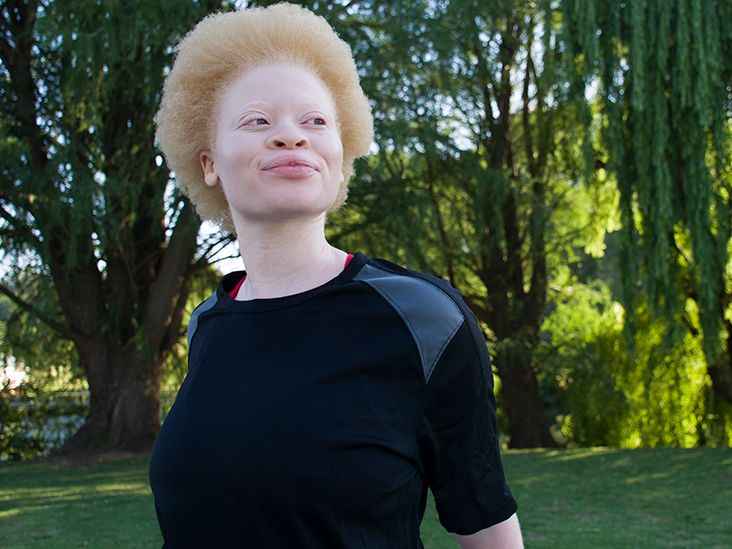
Albinism is often described as a condition that causes unusually light skin, hair, or eyes. That description is not entirely wrong, but it leaves out the most medically important part of the story: albinism also affects how the eyes and visual pathways develop.
People with albinism are born with genetic changes that reduce the production, distribution, or function of melanin. Melanin is not merely the body’s paint department. It contributes to skin and hair color, helps protect the skin from ultraviolet radiation, and supports normal development of the retina and optic nerves. When melanin production is reduced, the effects can range from subtle pigmentation differences to significant visual impairment and sun sensitivity.
Albinism occurs in every racial and ethnic group. A person does not need to have completely white hair or very pale blue eyes to have it. Some people have blond, yellow, red, brown, or reddish-brown hair, while others have skin coloring that is only slightly lighter than that of close relatives. In the United States, estimates suggest that approximately one in 18,000 to 20,000 people has some form of albinism.
What is albinism?
Albinism is a group of inherited conditions involving reduced or absent melanin. It is present from birth, is not contagious, and cannot be acquired by spending time with someone who has it. Albinism is also different from vitiligo, which generally causes pigment loss in patches after birth.
The word albinism covers several genetic conditions rather than one single disorder. The two main nonsyndromic categories are:
- Oculocutaneous albinism, or OCA: affects the eyes, skin, and hair.
- Ocular albinism, or OA: primarily affects the eyes and vision, with little or no obvious change in skin and hair pigmentation.
Albinism can also appear as part of a broader genetic syndrome that affects blood clotting, the immune system, lungs, digestive tract, or nervous system. Identifying these syndromic forms matters because they require more than routine eye and skin care.
What are the main types of albinism?
Oculocutaneous albinism
Oculocutaneous albinism is the most familiar and common category. It affects melanin in the skin, hair, iris, and retina. Clinicians recognize several genetically distinct forms, commonly labeled OCA1 through OCA8. The appearance and severity can vary even among people with the same subtype.
OCA1 is associated with variants in the TYR gene, which provides instructions for making tyrosinase, an enzyme needed for melanin production. In OCA1A, tyrosinase activity is absent, resulting in very little or no melanin throughout life. In OCA1B, some enzyme activity remains, so pigmentation may gradually increase.
OCA2 is linked to variants in the OCA2 gene. Pigmentation is usually greater than in OCA1A, although vision problems and sun sensitivity can still be significant.
OCA3 is associated with the TYRP1 gene and may produce reddish-brown skin and hair, particularly in people with African ancestry. OCA4, linked to SLC45A2, can resemble OCA2 and is reported more frequently in some East Asian populations.
Rarer nonsyndromic types involve genes including SLC24A5, LRMDA, and DCT. Genetic terminology can change as research improves, which is one reason a modern multigene panel may be more useful than trying to identify a subtype by appearance alone.
Ocular albinism
Ocular albinism mainly affects the eyes. Skin and hair coloring may look typical or only slightly lighter than that of family members, so the condition can be missed without a detailed eye examination.
The most recognized form is caused by a variant in the GPR143 gene and follows an X-linked inheritance pattern. It therefore affects males more often and more noticeably. Females who carry the gene variant are commonly unaffected, although an ophthalmologist may detect subtle pigment patterns in the retina or iris.
Syndromic albinism
In syndromic albinism, reduced pigmentation occurs with other medical problems. Two important examples are Hermansky-Pudlak syndrome and Chediak-Higashi syndrome.
Hermansky-Pudlak syndrome can cause oculocutaneous albinism and a bleeding tendency. Depending on the genetic subtype, some people also develop pulmonary fibrosis, inflammatory bowel disease, or immune dysfunction. Frequent nosebleeds, unexplained bruising, unusually heavy menstrual bleeding, or prolonged bleeding after dental work should never be dismissed as someone simply being “a dramatic bleeder.”
Chediak-Higashi syndrome may involve partial albinism, recurrent or severe infections, easy bleeding, and neurological complications. It is rare but potentially serious, making early diagnosis and specialist management essential.
What are the symptoms of albinism?
Skin and hair differences
Skin pigmentation may be much lighter than that of relatives, but the difference is not always dramatic. Hair may be white, blond, yellow, golden, red, light brown, or reddish-brown. In some forms, hair and skin become darker with age as small amounts of melanin accumulate.
Because melanin helps absorb ultraviolet radiation, people with cutaneous albinism may burn quickly. Sun exposure can also lead to freckles, moles, lentigines, rough sun-damaged patches, and skin cancer. A tan is not reliable armor, and “I was only outside for twenty minutes” is unfortunately not a scientifically recognized sunscreen.
Eye and vision symptoms
Eye findings are central to albinism. They can include:
- Reduced visual acuity or blurred vision
- Nystagmus, or involuntary rhythmic eye movements
- Strabismus, in which the eyes do not align properly
- Photophobia, meaning discomfort or difficulty in bright light
- Nearsightedness, farsightedness, or astigmatism
- Reduced depth perception
- Foveal hypoplasia, or incomplete development of the central retina
- Unusual routing of optic nerve signals between the eyes and brain
- Iris transillumination caused by reduced pigment in the iris
- An abnormal head position used to find the clearest point of vision
People with albinism do not necessarily have red eyes. Eye color can be pale blue, gray, hazel, or brown. Under certain lighting, reduced iris pigment may allow reflected light from inside the eye to create a reddish or pink appearance in photographs.
Is albinism genetic?
Yes. Albinism is genetic and is usually inherited from one or both biological parents. However, the inheritance pattern depends on the type.
Autosomal recessive inheritance
Most nonsyndromic forms of oculocutaneous albinism are inherited in an autosomal recessive pattern. A person must usually inherit one disease-causing variant in the same gene from each parent.
Parents who carry only one altered copy generally have typical pigmentation and vision. This explains why a baby may be the first visibly affected person in a family. Genetics occasionally enjoys making an entrance without sending an invitation.
When both parents carry variants in the same OCA-associated gene, each pregnancy generally has:
- A 25% chance that the child will have albinism
- A 50% chance that the child will be an unaffected carrier
- A 25% chance that the child will inherit neither familial variant
These probabilities reset with every pregnancy. Having one affected or unaffected child does not change the mathematical odds for the next pregnancy.
X-linked inheritance
GPR143-related ocular albinism is X-linked. Males have one X chromosome, so a disease-causing variant on that chromosome is more likely to produce symptoms. Females have two X chromosomes and are more often carriers, although some may show subtle or occasionally meaningful eye findings.
A genetic counselor can explain how the pattern applies to a particular family. Counseling is especially useful before pregnancy, after a new diagnosis, or when genetic test results include a variant whose significance is uncertain.
How is albinism diagnosed?
Diagnosis often begins during infancy when a clinician notices light pigmentation, nystagmus, poor visual tracking, or unusual sensitivity to light. Mild cases may not be recognized until a child has difficulty seeing classroom materials or an adult undergoes a detailed eye examination.
The evaluation may include:
- A medical and family history
- Comparison of skin and hair pigmentation with close relatives
- A complete ophthalmologic examination
- Measurement of visual acuity and refractive errors
- Assessment of nystagmus, strabismus, and head posture
- A slit-lamp examination of the iris
- Retinal imaging with optical coherence tomography
- Visual evoked potential testing when optic nerve routing is unclear
- Genetic testing using a single-gene test, multigene panel, exome, or genome analysis
Doctors should also ask about easy bruising, recurrent infections, chronic cough, shortness of breath, seizures, developmental concerns, or digestive symptoms. These clues may point toward syndromic albinism and change the recommended follow-up.
How is albinism treated?
There is currently no established cure that restores typical melanin production or reverses the developmental eye differences caused by albinism. Treatment focuses on improving usable vision, reducing glare, protecting the skin, detecting complications early, and supporting participation at school, work, and home.
Vision care
Prescription glasses or contact lenses can correct nearsightedness, farsightedness, and astigmatism. They cannot completely correct vision loss caused by foveal hypoplasia or optic nerve misrouting, but even a modest improvement can make reading, mobility, and classroom work easier.
Other options may include magnifiers, electronic enlargement software, handheld telescopes, bioptic devices, high-contrast materials, tinted lenses, transition lenses, and carefully positioned lighting. Children should be evaluated early for amblyopia, which may require patching in addition to optical correction.
Surgery may help selected patients with strabismus, significant nystagmus-related head posture, or eye muscle problems. It does not eliminate the genetic condition or rebuild the retina, so expectations should be realistic.
Skin protection
Sun protection is a lifelong part of albinism management. A practical routine usually includes broad-spectrum, water-resistant sunscreen with a high sun protection factor, frequent reapplication, UV-protective sunglasses, wide-brimmed hats, long sleeves, tightly woven clothing, and shade during periods of intense sunlight.
Regular skin examinations are important. A dermatologist should evaluate sores that do not heal, rough or scaly growths, new lesions, or moles that change in size, color, shape, or texture. Skin cancer is generally easier to treat when discovered early.
Treatment for syndromic forms
People with a syndromic form may need coordinated care involving hematology, pulmonology, immunology, gastroenterology, neurology, and medical genetics. Treatment depends on the specific syndrome and may include infection management, bleeding precautions, lung monitoring, or therapy for inflammatory bowel disease.
Are new treatments being researched?
Researchers continue to study medications, gene-based approaches, and methods of increasing pigmentation or improving visual development. For example, small studies have explored nitisinone in certain forms of OCA1B. These approaches remain investigational for albinism and should not be used outside qualified medical supervision. A promising laboratory result is exciting, but it is not the same thing as a treatment available at the neighborhood pharmacy.
Everyday experiences of living with albinism
Medical descriptions tend to organize albinism into genes, symptoms, and treatment plans. Daily life is less cooperative. It happens in classrooms with tiny writing on distant boards, offices with aggressively cheerful fluorescent lights, outdoor events scheduled at noon, and conversations with strangers who occasionally forget their manners at home.
For many children, vision is the first practical challenge. A student may be able to read a book comfortably at close range but struggle to recognize a teacher’s facial expression or copy information from a whiteboard. Sitting near the front can help, but it should not be the entire accommodation plan. Digital copies, enlarged text, tablets, high-contrast worksheets, permission to photograph presentations, and access to low-vision technology can reduce fatigue and allow the student to focus on learning rather than constantly chasing visual information.
People with nystagmus may turn or tilt their heads to find a position where their eyes move less and vision feels clearer. This posture is functional, not a bad habit waiting for an adult to correct it. Forcing the head straight without medical guidance can make seeing more difficult and turn an ordinary school day into a long exercise in neck tension.
Sun protection also becomes part of the daily calendar. Sunscreen may live in a backpack, car, desk drawer, and several mysterious household locations where lip balm traditionally disappears. Outdoor plans may be arranged for mornings or late afternoons. Shade, hats, protective clothing, and reapplication reminders are practical health tools, not evidence that someone dislikes fresh air.
Social experiences vary widely. Some people with albinism enjoy answering respectful questions. Others are tired of becoming an unpaid genetics lecturer while buying groceries. Staring, unsolicited photographs, jokes, invasive questions, bullying, and the use of dehumanizing labels can cause genuine emotional harm. Person-first language, such as “a person with albinism,” is often preferred, although individuals should be allowed to describe themselves in their own way.
Workplace needs may include larger monitors, screen-magnification software, adjustable lighting, glare reduction, seating away from bright windows, flexible transportation arrangements, or accessible digital documents. These changes do not lower professional standards. They remove unnecessary obstacles so an employee can meet those standards.
Driving eligibility depends on visual acuity, local licensing rules, available adaptive equipment, and individual function. Some people drive with restrictions or specialized lenses, while others use public transportation, rideshares, cycling, walking, or support from family and friends. Independence has more than one transportation department.
Parents of a newly diagnosed baby may initially worry about development, education, safety, and the child’s future. Connecting with knowledgeable ophthalmologists, dermatologists, genetic counselors, early-intervention specialists, and albinism support organizations can replace vague fear with practical planning. Albinism does not generally affect intelligence, personality, ambition, or the ability to form relationships and pursue meaningful careers.
The most useful approach is neither to minimize the condition nor to treat it as a tragedy. Vision impairment, UV vulnerability, discrimination, and syndromic complications are real. So are adaptability, expertise, community, humor, and the ordinary variety of human lives. A person with albinism is not a walking medical illustration. They are a person who may also know considerably more about sunscreen than everyone else at the picnic.
Outlook and when to contact a healthcare professional
Nonsyndromic albinism usually does not shorten life expectancy. Visual differences are generally lifelong, while skin-related risks can be substantially reduced through consistent protection and screening. The outlook for syndromic albinism depends on the additional organs and body systems involved.
Medical evaluation is appropriate when an infant has very light pigmentation, involuntary eye movements, poor visual tracking, or unusual light sensitivity. A person already diagnosed with albinism should promptly report worsening vision, a new eye symptom, recurrent infections, abnormal bleeding, unexplained breathing problems, or a new or changing skin lesion.
Conclusion
Albinism is an inherited group of conditions that reduces melanin in the eyes and, in many types, the skin and hair. Its effects are far more varied than the familiar image of white hair and very pale skin. Some people have subtle pigmentation changes, but nearly all recognized forms involve characteristic eye findings.
Although there is no current cure for albinism itself, regular eye care, low-vision support, thoughtful accommodations, sun protection, skin screening, and genetic counseling can make an enormous difference. Additional symptoms such as abnormal bleeding or frequent infections require careful investigation for a syndromic form. With accurate healthcare, accessible environments, and basic human decencya treatment society can provide without FDA approvalpeople with albinism can lead full and independent lives.