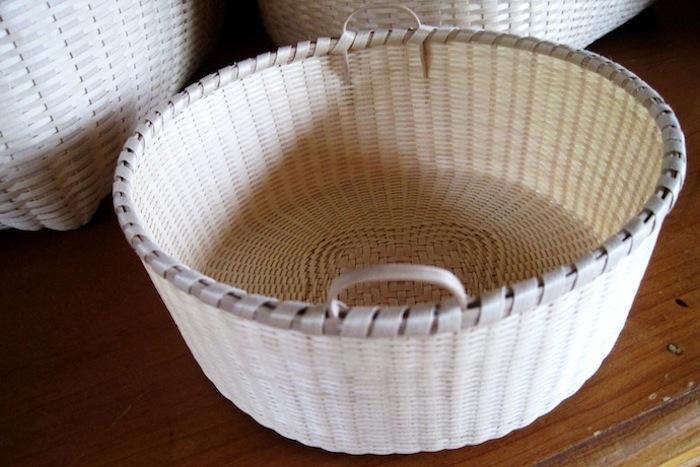
Some people are born with perfect pitch. Some are born knowing exactly how much maple syrup a pancake can handle before it becomes soup. And then there are rare makers like Alice Ogden, a traditional black ash basket maker in New Hampshire, whose hands seem to understand wood the way a musician understands rhythm. Her baskets are not just containers. They are tools, heirlooms, sculptures, forest stories, and quietly stubborn arguments in favor of slowing down.
In a world that can deliver a plastic storage bin to your porch before you finish your coffee, handmade baskets ask a better question: what if useful things could also be beautiful, local, and deeply human? That is the charm of New Hampshire basket making. It is practical enough for a farmer’s market and refined enough for a museum shelf. It belongs in the mudroom, the kitchen, the garden, and the collector’s cabinet.
This article explores the life, process, tradition, and appeal of a natural-born basket maker in New Hampshire, with a special focus on black ash basketry, the craft culture of the Granite State, and the hands-on experience of seeing this kind of work up close.
Who Is the Natural-Born Basket Maker in New Hampshire?
The phrase “natural-born basket maker” points beautifully toward Alice Ogden, a New Hampshire artisan known for traditional black ash baskets. Based in the Salisbury and Franklin area, Ogden has spent decades transforming materials gathered from nearby woods and swamps into handmade baskets prized by collectors, craft lovers, and anyone who has ever looked at a mass-produced basket and thought, “Well, that has the personality of a cardboard sandwich.”
Ogden’s story has the makings of a good New England craft legend. She caned her first chair when she was young, supported herself through weaving commissions, and eventually found her long-term creative home in basket making. Her work is often described as traditional, but traditional does not mean frozen in time. It means disciplined. It means every splint, rim, handle, and curve has a job to do.
Her baskets are made from black ash and white oak, materials that connect the finished object directly to New Hampshire’s forests. Unlike craft projects that begin with a trip to the hobby store, Ogden’s process begins with trees, tools, weather, patience, and the kind of physical effort that makes the final basket feel almost suspiciously calm by comparison.
Why Black Ash Basketry Matters
Black ash basketry is one of North America’s most meaningful craft traditions. Black ash, also called brown ash in some regions, has a special structure that allows its annual growth rings to be separated into flexible splints. These splints can be woven into baskets that are strong, light, and elegant. In plain English: this tree knows how to become a basket.
The tradition is especially important to many Indigenous communities in the Northeast and Great Lakes regions, where black ash basket making carries cultural, spiritual, and economic significance. Abenaki and Wabanaki basketry in New Hampshire and neighboring regions has long connected land, family knowledge, tourism, utility, and artistic expression. Baskets were not merely decorative. They carried food, tools, harvests, household goods, and identity.
For non-Indigenous and contemporary craft artists working in black ash, respect for the material and the broader tradition is essential. The best makers understand that basketry is not a shortcut to “rustic style.” It is a living discipline with deep roots. Every well-made basket is an object of patience, not a weekend fling with twigs.
New Hampshire: A Perfect Home for Traditional Craft
New Hampshire has a long reputation for supporting fine craft. The League of New Hampshire Craftsmen, founded in the early twentieth century, helped build a statewide culture where handmade objects could be judged by quality, not trendiness. That matters because a basket is easy to underestimate. It does not shout. It does not blink, beep, or require a software update. It simply works.
The state’s craft identity is tied to rural knowledge: woodworking, fiber arts, pottery, metalwork, glass, furniture, and basketry. In this environment, a handmade black ash basket feels perfectly at home. It reflects the same values people associate with New Hampshire itself: durability, independence, practicality, and a sense that if something can be made well, it should not be made badly just to save seven minutes.
Ogden’s work fits into this larger New Hampshire craft tradition because it is both local and exacting. The materials are harvested and prepared by hand. The handles and rims are shaped with care. The forms are functional, but the precision gives them quiet elegance. These are baskets that look equally natural holding onions, garden tools, yarn, kindling, or nothing at all.
From Forest to Basket: How the Process Works
Harvesting the Right Tree
The process starts with black ash logs selected for basket-quality material. Not every tree is suitable. A good basket tree needs the right growth, texture, and flexibility. This is where experience becomes more valuable than any instruction manual. A skilled basket maker reads the tree before the first strip is ever woven.
Pounding and Separating the Splints
After the log is harvested and prepared, it is pounded to loosen the growth rings. This is one of the signature steps in black ash basketry. The pounding separates the wood into long, flexible layers. It is physical work, and it is also oddly poetic: the tree’s years become visible, then usable.
Once separated, the splints are refined, trimmed, and sorted. Wider splints may be used for structural areas, while finer splints create delicate patterns. This is the part where the basket maker’s standards quietly take over. A splint that looks “fine” to most people may not be fine enough for a master craftsperson.
White Oak Rims and Handles
Ogden is known for hand-whittled white oak rims and handles. These details matter because they give the basket strength, proportion, and personality. Handles are not afterthoughts. They are the handshake of the basket. A weak handle makes a basket feel nervous. A well-shaped handle makes it feel ready for work.
Weaving the Form
The weaving itself requires tension, rhythm, and judgment. Too loose, and the basket lacks structure. Too tight, and the material may warp or strain. The maker balances flexibility and firmness, guiding the splints into a shape that feels inevitable when finished. That “effortless” look is, naturally, the result of a great deal of effort.
Designs That Blend Utility and Art
Traditional black ash baskets come in many forms: market baskets, berry baskets, onion baskets, nesting baskets, work baskets, garden baskets, trays, tubs, and miniature baskets. Each design has its own logic. A berry basket needs to be light and carryable. A market basket needs strength and presence. A nesting basket set must be precise enough that each piece relates to the next like a family that actually gets along at Thanksgiving.
Ogden’s designs often show the beauty of repetition: splints crossing, patterns tightening, rims framing the shape, handles arching cleanly overhead. This is where handmade basketry becomes more than utility. The maker’s choices determine whether the object feels clunky, graceful, humble, formal, playful, or quietly luxurious.
Collectors are drawn to black ash baskets because they preserve evidence of the hand. Slight variations do not weaken the work; they make it alive. In a factory object, variation is a defect. In a handmade basket, variation can be a signature.
The Environmental Challenge: Emerald Ash Borer
No serious article about black ash basket making can ignore the emerald ash borer. This invasive insect has devastated ash trees across large parts of North America, including the Northeast. For basket makers, the threat is not abstract. It affects the future supply of black ash, the continuity of cultural traditions, and the health of wetland forests where black ash plays an ecological role.
In New Hampshire, forest health experts, universities, landowners, and public agencies have paid close attention to emerald ash borer management. The insect attacks true ash species, and black ash is among the trees at risk. The issue is not only about losing trees. It is about losing a material that carries knowledge across generations.
This makes every black ash basket more meaningful. It is not just a pretty object for a farmhouse table. It is a reminder that craft depends on ecosystems. When the forest changes, the workshop changes. When the material disappears, the tradition must fight harder to survive.
Why Handmade Baskets Still Matter in a Plastic World
Let’s be honest: modern life has no shortage of containers. We have bins for bins. We have drawer organizers for the drawer organizers. We have mystery boxes in closets that may contain either tax documents or holiday lights from 2009. So why does a handmade basket still matter?
Because a handmade basket is not only storage. It is storage with memory. It carries the story of its material, maker, region, and use. A black ash basket can hold apples, but it also holds evidence of a tree, a swamp, a family skill, a craft tradition, and a maker’s eye.
There is also a sensory pleasure to real materials. Black ash has warmth. White oak has strength. The weave has texture. Pick up a good handmade basket and it feels balanced. It does not apologize for being useful. It has no interest in becoming “smart.” It is already wise.
What Makes Alice Ogden’s Work Stand Out?
Several qualities make Ogden’s baskets distinctive. First is material integrity. Her baskets are made from natural materials collected and prepared with care. Second is technical consistency. The forms are clean, the rims are confident, and the handles show the patience of someone who knows that small details are not small.
Third is her connection to place. These baskets are not generic “country decor.” They are rooted in New Hampshire’s forests and craft community. That local identity gives the work depth. A basket made from local black ash and white oak carries the landscape into the home.
Finally, Ogden’s work stands out because it honors function. Many beautiful objects are difficult to use. Many useful objects are difficult to love. Her baskets sit in the rare middle: useful enough for daily life, beautiful enough to make you clean the table before setting one down.
How to Appreciate a Handmade Black Ash Basket
Look at the Splints
Notice the evenness of the wood strips. Are they smooth? Are they consistent? Do they turn corners gracefully? Good splints are the bones of the basket.
Study the Rim
The rim should feel secure and visually balanced. It frames the basket and protects the edges from wear.
Hold the Handle
A handle reveals a lot. It should feel comfortable, strong, and proportionate. If it feels like it wants to quit the job, that is a problem.
Consider the Shape
A strong basket form has harmony. The base, sides, rim, and handle should relate to one another. Good basketry has architecture.
Respect the Time
Handmade baskets are often more expensive than mass-produced ones because they contain labor most buyers never see. Harvesting, pounding, splitting, shaving, soaking, shaping, weaving, and finishing all take time. The price reflects not just the object, but the knowledge inside it.
Experiences Related to A Natural-Born Basket Maker in New Hampshire
Experiencing the world of a New Hampshire basket maker is different from simply reading about craft. On the page, basket making sounds orderly: harvest the tree, prepare the splints, weave the basket, attach the rim, admire the result. In real life, the process feels more like a conversation between muscle, material, and patience. The wood does not care about your schedule. The splints do not politely cooperate because you watched one tutorial. Basketry is humbling in the most useful way.
Picture walking into a rural New Hampshire workshop where the air carries the clean, slightly sweet smell of wood. There may be baskets stacked on shelves, handles gathered in groups, splints arranged by size, and tools that look simple until you realize how much skill they require. Nothing about the space feels fake. This is not “rustic” as a decorating theme. This is rustic because real work happens here.
A beginner watching a black ash basket take shape might first notice the rhythm. The maker does not rush. A strip goes over, under, around, and back again. The pattern grows slowly, almost like a sentence being written in wood. Then comes the surprise: the basket begins to hold itself. What looked like loose strips becomes a structure. The sides rise. The corners sharpen. The form appears, and suddenly the whole thing feels slightly magical, though the magic is mostly discipline wearing comfortable shoes.
Trying basket weaving for the first time can be both satisfying and mildly embarrassing. Your fingers may feel too large. The splint you were sure was behaving will wander off at an angle. The rim may expose every shortcut you hoped nobody would notice. But that is the gift of the craft. It teaches respect quickly. A handmade basket is easy to admire after you have attempted even the simplest version yourself.
In New Hampshire, that experience is tied to place. The woods are not background scenery. They are part of the supply chain, the classroom, and the story. When a maker explains that the material came from local swamps and forests, the finished basket changes in your mind. It becomes less like a product and more like a landscape made portable.
There is also a quiet emotional pull in seeing traditional craft passed from one person to another. In a workshop or demonstration, students may arrive for a pleasant day of making something useful. They leave with sore hands, a finished basket, and a better understanding of why old skills deserve new attention. The basket becomes proof: they slowed down, followed the material, made mistakes, corrected them, and carried something home that did not exist that morning.
That is the lasting experience of encountering a natural-born basket maker in New Hampshire. You begin by looking at baskets. You end by looking differently at trees, tools, hands, time, and the everyday objects we choose to live with.
Conclusion: A Basket Is Never Just a Basket
A natural-born basket maker in New Hampshire reminds us that craftsmanship is not nostalgia. It is knowledge in motion. Alice Ogden’s black ash baskets show how a maker can turn local materials into objects that are practical, collectible, and deeply connected to place. They also show why handmade work still matters in a world crowded with disposable things.
Black ash basketry asks for patience from the maker and attention from the viewer. It depends on forests, tools, tradition, and trained hands. It carries the influence of New Hampshire’s craft culture and the broader history of basket making in the Northeast. Most importantly, it proves that beauty does not have to be fragile or fussy. Sometimes beauty has a sturdy handle, a clean rim, and enough room for apples.
In the end, a handmade basket is a small act of resistance against hurry. It says that useful objects can have soul. It says that regional craft deserves respect. And it says that somewhere in New Hampshire, a maker can still take a tree’s growth rings and weave them into something that feels timeless.