Japan can make an ordinary object feel like a small philosophical event. A tea cup is not merely a cup; it is clay, fire, touch, proportion, and the quiet possibility that you might finally stop checking your phone. A bookstore can become an architectural destination. A rural inn can make an empty wall seem more luxurious than a chandelier.
That thoughtful approach to everyday life lies at the heart of Asako Ueno’s perspective. Based in Brooklyn, Ueno is a writer, curator, buying director, and the creative force behind Anzu New York, an online shop known for its carefully selected Japanese ceramics, kitchenware, vintage pieces, and handcrafted household objects. Her background includes years of writing about interiors and culture, consulting on product buying, and introducing Japanese makers to international audiences. Anzu New York describes its collection as a selection of well-designed, time-honored objects made to remain useful and loved rather than briefly fashionable.
Seen through Ueno’s eyes, a design trip to Japan is not a sprint between famous monuments. It is a slower investigation of materials, meals, rooms, gardens, shops, and rituals. The best souvenirs are not necessarily the biggest or most expensive. They are the objects that quietly improve breakfast for the next 20 years.
Who Is Asako Ueno?
Asako Ueno operates at the intersection of Japanese craftsmanship and New York design culture. From her Park Slope base, she has written about lifestyle, interiors, food, and culture for Japanese publications while curating household goods through Anzu New York. Her résumé includes work as a buying consultant for New York Takashimaya and experience sourcing ceramics, glassware, textiles, antiques, and practical domestic objects.
That combination makes her an especially useful guide. She understands Japan as a native cultural observer, but she also understands what international design enthusiasts notice when they arrive: the quality of the paper wrapping, the proportions of a bowl, the grain of a counter, the choreography of tea service, and the curious fact that even a humble dustpan may look ready for a museum retrospective.
Her recommendations favor places where design is lived rather than simply displayed. Shops may also contain cafés. Restaurants may feel like private homes. Historic buildings may house contemporary fashion. A rural ryokan may communicate more about architecture through light and silence than a dozen glossy lectures ever could.
The Design Principles to Notice Before You Go
Beauty and Utility Are Not Enemies
One of the clearest lessons of Japanese design is that useful things deserve thoughtful forms. A ladle, tray, brush, teapot, or storage box may be shaped around repeated daily movements. Comfort comes not from decorative excess but from details that make an object pleasant to hold, clean, store, and use.
This philosophy is visible in Japan’s long craft traditions, where knowledge of wood, clay, metal, paper, lacquer, and textiles is passed between generations while adapting to contemporary life. Institutions examining Japanese craft frequently emphasize this relationship between inherited techniques and modern functionality.
Imperfection Can Be Part of the Design
Wabi-sabi is often reduced online to “buy a beige vase with a crack in it,” which is not quite the whole story. At its core, the sensibility values modesty, transience, natural variation, and the beauty of materials that reveal age and use. A handmade bowl may be slightly asymmetrical. A wooden surface may deepen in color. A vintage cabinet may carry small scars from another household.
In architecture and interiors, this can mean embracing natural materials, subdued palettes, irregular textures, and objects that become more expressive as they age. Museums and design publications connect these ideas to the development of tea culture and its preference for quiet, rustic simplicity over polished display.
Space Is an Active Ingredient
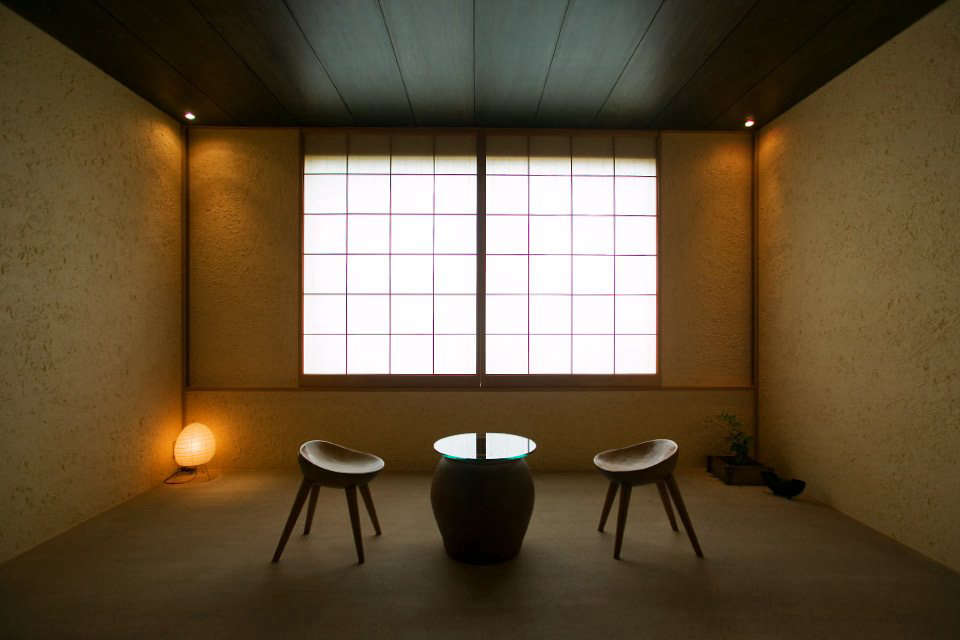
Japanese rooms often use emptiness as deliberately as furniture. Open areas allow light to change, doors to slide, people to move, and a single object to command attention. The result is not emptiness for its own sake. It is visual breathing room.
Traditional features such as internal courtyards, timber frames, concealed storage, screens, and carefully framed garden views continue to influence contemporary Japanese architecture. The lesson for travelers is simple: pay attention not only to what a room contains, but also to what its designer wisely decided to leave out.
Tokyo: Design at Every Scale
Tokyo is a city of extreme contrasts: tiny bars beneath elevated railways, serene tea counters above busy shopping streets, century-old crafts beside experimental fashion, and buildings so narrow they seem to have inhaled before construction. For design lovers, the city rewards neighborhood wandering more than checklist tourism.
Begin with CASICA
One of Ueno’s notable Tokyo selections is CASICA, a spacious complex combining vintage furniture, household goods, exhibitions, food, and coffee. The appeal is not merely the inventory. It is the way objects, architecture, and hospitality share the same environment.
CASICA illustrates a recurring Japanese retail idea: shopping does not have to be separated from eating, learning, or lingering. You may arrive intending to inspect a stool and leave after lunch with a ceramic plate, a notebook, and several strong opinions about shelving.
Study the Ceramics of Yumiko Iihoshi
Yumiko Iihoshi’s tableware is recognized for restrained forms, subtle colors, and an ability to work comfortably in both Japanese and Western settings. Ueno has carried Iihoshi’s ceramics through Anzu New York, making the designer a natural stop for travelers interested in contemporary Japanese pottery.
Look closely at proportions rather than decoration. A shallow rim, gentle curve, muted glaze, or slightly unusual diameter can change how food appears on the table. This is useful design disguised as quiet elegancethe ceramic equivalent of someone who never raises their voice but somehow organizes the entire room.
Visit Call for Textiles, Interiors, and Everyday Poetry
Call, associated with designer Akira Minagawa and the Minä Perhonen label, brings together fashion, textiles, food, art, and interior design. Minagawa’s work is known for original fabrics that balance repeated motifs with handmade variation. His textile designs have also entered museum collections, demonstrating the broader cultural importance of his approach.
A visit offers more than clothing inspiration. Observe how fabrics interact with lighting, furniture, glass, packaging, and food presentation. The environment demonstrates that a brand can create a coherent world without making every object match like a nervous furniture showroom.
Slow Down at Sakurai Japanese Tea Experience
For an introduction to contemporary Japanese tea culture, Sakurai Japanese Tea Experience combines deep technical knowledge with a calm, modern setting. Its approach includes careful brewing, blending, roasting, tasting courses, and seasonal sweets. The experience feels current without treating tradition as a costume.
Tea culture is itself a complete design education. At its most developed, chanoyu brings together architecture, garden design, ceramics, calligraphy, flower arrangement, food, and carefully practiced movement. Even the pause between actions matters.
Browse Daikanyama T-Site
Daikanyama T-Site and Tsutaya Books remain essential stops for anyone who believes a bookstore should feel like a cultural living room. The complex is known for its architecture, art and design publications, music, stationery, gifts, and generous spaces for browsing.
The pleasure lies in moving without urgency. Explore Japanese magazines even when you cannot read every word; their layouts, photography, paper stocks, and typography can communicate plenty. Design inspiration is wonderfully inconsiderate about language barriers.
Eat in a Room You Will Remember
Ueno’s selections have included Higashi-Yama, a Tokyo restaurant whose domestic atmosphere helps the meal feel intimate rather than theatrical. This reflects an important principle of Japanese hospitality: the setting supports the food instead of shouting over it.
When choosing restaurants, consider the entire compositionentrance, threshold, lighting, utensils, counter height, seasonal flowers, serving rhythm, and sound. A small bowl placed precisely on a wooden tray may leave a stronger memory than a dining room containing enough gold leaf to alarm a dragon.
Beyond Tokyo: Where Craft, Landscape, and Architecture Meet
Kanazawa and the Culture of Making
Kanazawa is one of Japan’s strongest destinations for travelers interested in craft. The city combines historic districts, gardens, contemporary art, ceramics, lacquerware, textiles, glass, and gold-leaf traditions. It offers a more manageable scale than Tokyo while still providing enough design stimulation to keep a notebook very busy.
Ueno has repeatedly traveled there to visit artists. Her recommendations include Factory Zoomer, which presents the work of glass artist Kazumi Tsuji, and a Minä Perhonen shop set within a traditional house. The architecture is part of the merchandise: old timber, gardens, original details, and contemporary objects are allowed to converse rather than compete.
Also make time for the 21st Century Museum of Contemporary Art and Kenroku-en. The circular museum offers openness, natural light, and multiple approaches, while the garden demonstrates how paths, water, stones, trees, and framed views can direct attention over time. Japanese garden design does not simply decorate land; it edits perception.
Stay at Beniya Mukayu
Near Kanazawa, Beniya Mukayu in Yamashiro Onsen represents the kind of lodging that turns rest into a design experience. Its restrained architecture, gardens, hot-spring bathing, natural materials, and controlled views encourage guests to become aware of light, texture, weather, and time. The property continues to operate as an intimate ryokan in Kaga.
A ryokan stay is most rewarding when you stop asking what you are supposed to “do.” Wear the provided robe. Notice how dinnerware changes with each course. Sit near the window. Take a bath. Repeat. The absence of an aggressive entertainment schedule is not a service failure; it is the point.
Make a Sweet Detour to Toraya Kobo
Toraya Kobo in Gotemba places Japanese confectionery within a bamboo-rich landscape and beautifully considered architecture. Seasonal wagashi are closely connected to nature, often echoing flowers, leaves, fruits, weather, and regional traditions through form and color.
The visit reveals how packaging, pathways, ingredients, architecture, and service can become one continuous experience. It is also proof that dessert tastes more sophisticated when approached through bamboo, although science has been suspiciously quiet on the matter.
Find Stillness in Yamagata
Ueno has also recommended Yudonoan, a traditional inn in Yamagata surrounded by rice fields and shaped by local food, family hospitality, and hot-spring culture. She contributed to its interior design, giving the recommendation a particularly personal connection. Nearby, the Ken Domon Museum of Photography adds another layer of architectural and visual interest.
This kind of rural stay expands the definition of Japanese design travel. Design is not confined to famous studios. It can be found in the placement of a window toward a field, a regional meal served on local pottery, or an old building maintained carefully enough to remain useful without losing its character.
Visit Evam Eva Yamanashi
Evam Eva Yamanashi brings together fashion, food, gallery programming, landscape, and views toward Mount Fuji. It is another example of a destination where commercial activity is softened by nature and a slower pace.
Rather than rushing through the shop, observe the transitions between spaces. Notice where flooring changes, how clothing is spaced, how windows are framed, and how the restaurant presents seasonal ingredients. The most valuable purchase may be a better understanding of restraintwhich, conveniently, fits in carry-on luggage.
How to Shop for Japanese Design Responsibly
Buy Fewer, Better Objects
Choose items that will be used regularly rather than displayed briefly and forgotten. A tea cup, serving spoon, linen cloth, tray, small vase, kitchen brush, or hand-thrown bowl can bring Japanese design principles into daily life without turning your home into a themed restaurant.
Ask About the Maker and Material
Learn whether an object was handmade, where it was produced, how it should be cleaned, and how its finish may change over time. This information creates a relationship between user and object. It also prevents the tragic international incident known as putting delicate lacquerware in a dishwasher.
Accept Natural Variation
Handmade pieces may differ in glaze, grain, shape, or surface. These differences are often evidence of process rather than defects. Select an item in person when possible and handle it carefully. The right piece should feel comfortable, not merely photogenic.
Leave Room in Your Itinerary
Many memorable studios, galleries, and independent shops have limited schedules or require appointments. Confirm opening hours before visiting, but avoid planning every hour. Tokyo and Kanazawa reward detours, side streets, quiet cafés, neighborhood bakeries, and stores discovered because someone needed to find a restroom.
A Design Traveler’s Experience: What the Journey Actually Feels Like
A design-focused day in Tokyo begins differently from a conventional sightseeing marathon. Instead of racing toward the largest landmark, you might start on a residential street before the shops are fully awake. Delivery bicycles pass quietly. A restaurant worker sweeps the pavement. Someone waters a row of plants in mismatched pots. Nothing has been arranged for tourists, yet almost everything seems arranged.
At the first shop, the entrance creates a deliberate pause. You step off the street, adjust to softer light, and notice how widely the objects are spaced. There may be only three bowls on a shelf where another retailer would have stacked 30. That empty space makes you inspect each one more carefully. You begin comparing rims, glaze pools, weight, and the way the foot of the bowl meets the table. Ten minutes earlier, you did not know you had opinions about bowl feet. Now you are apparently an expert.
Lunch may arrive on a tray composed like a small landscape. The ceramic dishes do not match, but they relate through color and scale. Pickles brighten one corner. Soup occupies another. The arrangement makes a modest meal feel generous because attention, not quantity, is the main ingredient. You notice how the server places each item and how the table leaves enough room for hands to move comfortably.
In the afternoon, a tea counter changes the speed of the day. Water temperature is measured. Leaves are weighed. The first infusion is concentrated; the next reveals different aromas. A seasonal sweet arrives with a shape that echoes a flower or weather pattern. Conversation becomes quieter, partly because the tea deserves concentration and partly because nobody wants to be the person clattering around in a room this serene.
The experience continues after leaving Tokyo. On the train toward Kanazawa, dense buildings give way to mountains, fields, and stretches of water. In a traditional district, aged wood and plaster surfaces reveal that preservation does not mean freezing a place in time. Old buildings contain cafés, galleries, and shops. Contemporary objects look surprisingly comfortable against weathered beams.
At a ryokan, the room initially appears almost too empty. Then the details emerge: the texture of tatami, the sound of a sliding screen, a low table positioned toward the garden, a flower arrangement using only a few stems, and bedding stored out of sight until evening. The room changes function throughout the day without accumulating furniture.
Dinner becomes another design lesson. Each course arrives on different tableware chosen for the season, temperature, color, and texture of the food. A rough ceramic plate may hold something delicate. A lacquer bowl may conceal soup beneath a fitted lid. The meal creates anticipation through sequence rather than spectacle.
By the end of the trip, the most lasting impressions are rarely isolated objects. They are relationships: cup to hand, building to garden, fabric to movement, food to season, and host to guest. You return home less interested in copying a Japanese “look” and more interested in improving how your own rooms and belongings work. You may clear a crowded shelf, repair a favorite chair, use the good dishes on a weekday, or place one branch in a vase instead of purchasing a decorative object shaped like 14 branches.
That is the deeper value of traveling through Japan with Asako Ueno’s design perspective. The journey does not simply tell you what to buy. It teaches you how to notice.
Final Thoughts
Asako Ueno’s guide to Japan offers an alternative to tourism built around famous names and frantic schedules. Her selections connect modern retail, inherited craftsmanship, thoughtful food, rural hospitality, contemporary art, tea culture, and architecture that respects its surroundings.
The common thread is care. Care appears in how a potter shapes a rim, how a gardener directs a view, how a shopkeeper wraps a purchase, how a cook chooses a plate, and how an architect leaves space for silence. Japanese design can appear minimal, but it is rarely empty of meaning.
Travel slowly, ask questions, support independent makers, and choose objects that will become part of your life. The best design souvenir may be a ceramic cup. It may also be the decision to own fewer things and pay closer attention to the ones you already have.