Guns in pop culture are rarely just props. On screen, on album covers, in comic books, in video games, and even in toy aisles, they often become symbols: danger, rebellion, justice, fear, fantasy, style, power, or sometimes a giant neon sign that says, “This character makes terrible decisions.” From the dusty six-shooter of the classic Western to the glowing sci-fi blaster that somehow never needs a sensible charger, fictional firearms have shaped how audiences understand heroes, villains, antiheroes, and entire genres.
But here is the fascinating part: many of the most famous pop culture guns are not famous because of mechanics. They are famous because of storytelling. A revolver can tell us a character lives by an old code. A sleek spy pistol can suggest elegance and secrecy. A ray gun can make the future feel playful, weird, and slightly chrome-plated. A video game weapon can turn into a shared memory for millions of players who spent the 1990s arguing over who was allowed to pick Oddjob.
This article explores 10 fascinating facts about guns in pop culture, focusing on movies, television, toys, video games, science fiction, and the behind-the-scenes reality of prop safety. No instructions, no glorification, no “try this at home” nonsense. Just cultural history, memorable examples, and a few laughs at Hollywood’s long-running belief that every warehouse must contain 400 conveniently exploding barrels.
1. Westerns Helped Turn The Gun Into A Storytelling Shortcut
Long before modern action blockbusters, the Western made guns one of cinema’s most recognizable visual symbols. The genre grew alongside early filmmaking, and its images became instantly readable: the lone rider, the dusty street, the saloon door, the tense stare, and the holstered revolver waiting for a dramatic close-up.
In Westerns, a gun often represents more than violence. It can stand for law, revenge, survival, frontier justice, personal honor, or the collapse of all those things at once. That is why the same type of prop can feel heroic in one scene and terrifying in another. A sheriff wearing a sidearm in a classic town square suggests order. An outlaw twirling one in a saloon suggests someone is about to ruin everyone’s evening, including the piano player’s.
Why Western Guns Became So Iconic
Western films used firearms as part of a larger myth about America: open land, individualism, danger, moral choice, and the thin line between civilization and chaos. Whether audiences saw those myths as inspiring, exaggerated, troubling, or all three, the imagery stuck. That is why later genres constantly borrow from Western gun language. Space smugglers, post-apocalyptic wanderers, comic-book vigilantes, and even cyberpunk heroes often walk, pose, and confront enemies like descendants of old frontier characters.
In other words, the Western did not just give pop culture “cowboy guns.” It gave pop culture a visual grammar. The slow reach for a holster became a sentence. The standoff became punctuation. The empty street became a paragraph break before trouble.
2. Some Sci-Fi Blasters Are Built From Real-World Inspiration
Science fiction loves to pretend it has escaped Earth, but its props often have very earthly roots. Many famous sci-fi weapons were designed by modifying or reimagining existing objects so they looked futuristic without becoming visually confusing. The result is a strange and wonderful pop culture magic trick: something familiar enough to feel believable, but altered enough to belong in another galaxy.
Han Solo’s blaster is one of the most famous examples. Fans recognize it instantly because it fits the character perfectly. It is not shiny and ceremonial. It looks worn, practical, and a little improvised, like something a charming smuggler would keep nearby while insisting he has everything under control. Spoiler: he does not always have everything under control, which is part of the charm.
The Best Props Tell You Who A Character Is
A sci-fi gun that looks too polished can make a character seem official, military, or elite. A battered blaster suggests history. It says this object has been carried, dropped, repaired, argued over, and possibly used to win a card game that everyone remembers differently. Good production design uses that visual information to build character without stopping the movie for a five-minute lecture.
That is why guns in pop culture are often discussed not simply as objects, but as costume pieces, world-building tools, and character signatures. A prop can help define whether someone is a soldier, spy, outlaw, bounty hunter, space cop, rebel, or person who definitely did not read the safety manual.
3. Ray Guns Were Pop Culture Stars Before Space Travel Felt Real
Before audiences watched real astronauts walk on the moon, pop culture had already filled the future with ray guns, rocket pistols, atomic blasters, and space toys that looked like they were designed by someone who believed every household object needed fins. The early Buck Rogers era was especially important in turning futuristic weapons into toys, collectibles, and symbols of science-fiction adventure.
The National Air and Space Museum’s space-pop-culture collections show how toy ray guns captured the overlap between the Atomic Age and the Space Age. These toys were not realistic in the modern sense. That was the point. They were shiny, dramatic, noisy, and wonderfully theatrical. They made the future feel like something children could hold in their hands, even if that “future” mostly went “pop!” and scared the family dog.
Why Toy Ray Guns Matter
Ray guns helped shape the visual identity of science fiction. They suggested that the future would be sleek, strange, and powered by mysterious energy beams. Their influence continued through comic books, movie serials, television, and later franchises where “blaster,” “phaser,” and “laser pistol” became part of the genre vocabulary.
The funny thing is that many ray guns look less like practical technology and more like kitchen appliances from an optimistic alien diner. Yet that is exactly why they endure. They belong to a version of the future filled with imagination, chrome, exaggerated curves, and complete confidence that tomorrow would arrive with better buttons.
4. James Bond Made One Small Pistol Feel Like A Tuxedo Accessory
Few fictional characters have tied personal branding to a firearm as strongly as James Bond. Bond’s association with the Walther PPK became part of his larger image: tailored suits, dry wit, high-stakes espionage, impossible escapes, and drinks ordered with the confidence of a man who has never had to compare prices at a grocery store.
What makes Bond’s gun culturally interesting is not size or spectacle. It is restraint. Compared with the oversized weapons of many action heroes, Bond’s signature sidearm appears compact, discreet, and professional. It fits the spy fantasy: hidden danger beneath elegance. The character does not need to stomp into a scene like a walking fireworks warehouse. He can adjust his cufflink and still imply trouble.
The Power Of A Signature Object
Pop culture loves signature objects because they make characters instantly recognizable. Indiana Jones has a whip. Captain America has a shield. Thor has a hammer. Bond has a tuxedo, a watch, a car, and, in many stories, a compact spy pistol. These objects create continuity across decades, actors, reboots, and changing audience expectations.
The Bond example also shows how pop culture can turn a relatively small prop into a major symbol. The object becomes shorthand for the franchise itself. Viewers do not need a technical explanation. They understand the mood immediately: espionage, danger, sophistication, and a strong chance that someone will say something icy before the music kicks in.
5. Dirty Harry Turned A Revolver Into A Movie Legend
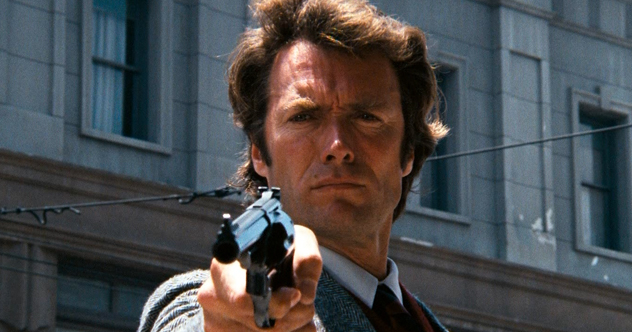
Clint Eastwood’s Harry Callahan in Dirty Harry gave pop culture one of its most famous firearm associations. The Smith & Wesson Model 29 became inseparable from the character’s hard-edged image, and the film helped cement the idea of the oversized police sidearm as a symbol of 1970s screen toughness.
What is especially interesting is how much the gun’s fame depends on dialogue, framing, and character attitude. The revolver is memorable not merely because it appears on screen, but because the film builds a myth around it. The camera, the performance, and the famous lines combine to make the object feel larger than life. Hollywood loves larger than life. Sometimes Hollywood also loves larger than pockets.
Controversy Is Part Of The Legacy
Dirty Harry was not just a hit; it was controversial. Its story about a rule-bending police officer landed in a politically tense era, and the character became a flashpoint in debates about justice, authority, fear, and vigilantism. That complexity is important. Guns in pop culture often become symbols in cultural arguments, not just accessories in entertainment.
The film’s legacy shows how a fictional firearm can become part of a broader discussion about law, order, power, masculinity, and moral ambiguity. The prop may sit in a character’s hand, but the meaning sits in the audience’s imagination.
6. Video Games Turned Pop Culture Guns Into Interactive Icons
Movies made guns visual. Video games made them interactive. That changed everything. In games, fictional weapons became part of mechanics, strategy, identity, competition, and memory. Players did not just watch a character use a gadget; they selected it, learned its quirks, blamed it for losing, praised it for winning, and occasionally accused a sibling of screen-peeking.
GoldenEye 007 for the Nintendo 64 is a landmark example. Released in the late 1990s, it helped prove that first-person shooters could thrive on home consoles, not just PCs. Its split-screen multiplayer became a defining social experience for many players. The game’s weapons, missions, stealth elements, and Bond atmosphere turned digital gunplay into living-room pop culture.
Why GoldenEye Still Matters
The Strong National Museum of Play recognized GoldenEye 007 as part of video game history, and its influence is still discussed because it helped shape expectations for console shooters. More importantly, it created shared memories. For many fans, the phrase “GoldenEye multiplayer” does not simply describe a game mode. It describes a room, a couch, a CRT television, four controllers, and at least one person insisting the rules were unfair.
Video game guns are not culturally important because they imitate reality perfectly. They matter because designers use them to create pacing, risk, reward, tension, and personality. A clumsy weapon can become beloved because it is funny. An overpowered one can become infamous because everyone complains and still picks it.
7. “Gun Fu” Changed The Way Action Scenes Move
In many modern action films, guns are choreographed less like simple props and more like dance partners in elaborate fight scenes. This style is often called “gun fu,” a blend of firearms-based action staging and martial-arts-inspired movement. Its roots are strongly associated with Hong Kong action cinema, especially the balletic, highly stylized work of filmmakers such as John Woo.
Hollywood absorbed and remixed that influence through movies like The Matrix and later the John Wick series. These films made action feel rhythmic, physical, and carefully designed. The appeal is not realism. It is choreography. Viewers watch the movement the way they might watch a dance sequence, except with darker suits and far more broken furniture.
Style Can Be A Character Trait
In the John Wick films, the way the main character moves tells the audience who he is: precise, exhausted, disciplined, and frighteningly focused. The action is not random noise. It is part of characterization. Every movement suggests training, grief, survival, and a man who would really prefer everyone stop making his day worse.
This is one reason gun fu became so influential. It turns action into visual storytelling. When done well, viewers are not just counting shots or explosions. They are reading rhythm, space, exhaustion, skill, and consequence.
8. Prop Guns Are A Serious Safety Issue Behind The Scenes
On screen, firearms can look effortless. Behind the scenes, responsible productions treat them as serious safety concerns. Entertainment-industry guidance emphasizes trained professionals, strict control, inspections, communication, and clear rules about blanks, dummy rounds, replicas, and live ammunition. In theater, safety organizations likewise stress that weapons must be checked, controlled, and never handled casually.
This part of pop culture is not glamorous, but it is essential. A movie set is full of pressure: schedules, lighting, camera angles, sound, performance, weather, budget, and the mysterious disappearance of someone’s coffee. When firearms or firearm-like props are involved, safety systems exist because assumptions can be dangerous.
The Audience Sees Drama; The Crew Needs Procedure
Good filmmaking can make action look spontaneous. Safe filmmaking is the opposite of spontaneous. It depends on planning, qualified personnel, rehearsals, communication, and boundaries. That does not make movies less magical. It makes them possible.
Recent industry conversations have also pushed many productions toward alternatives such as non-firing replicas, visual effects, and other safer methods. The cultural takeaway is simple: the best prop is the one that helps tell the story while protecting the people who tell it.
9. Pop Culture Often Makes Guns Look Louder, Cleaner, And Simpler Than Reality
One of the biggest facts about guns in pop culture is that entertainment constantly simplifies them. Movie and TV firearms often have endless dramatic timing, impossible accuracy, bottomless ammunition, and sound effects that seem designed to wake up three counties. Characters rarely deal with logistics unless the plot needs a tense reload. Action heroes also recover from chaos with hair that remains suspiciously excellent.
This exaggeration is not limited to guns. Pop culture exaggerates everything: hacking, car chases, courtroom speeches, medical miracles, cooking competitions, and the ability of detectives to enhance blurry security footage until it reveals a license plate on the moon. Guns simply stand out because their real-world implications are serious.
Why Media Literacy Matters
Audiences benefit from understanding that fictional gun use is staged, edited, designed, and often unrealistic. A film scene is built for emotion and clarity, not technical accuracy. A video game weapon is balanced for gameplay, not real-world behavior. A comic-book blaster may exist mainly because it looks cool in a splash panel.
That does not mean viewers cannot enjoy action stories. It means they should recognize the difference between storytelling and reality. Pop culture is best enjoyed with imagination switched on and critical thinking kept nearby, preferably in a holster labeled “common sense.”
10. The Most Famous Pop Culture Guns Are Really About Identity
When a fictional gun becomes iconic, it is usually because it represents a character or world. Dirty Harry’s revolver suggests blunt-force authority and moral controversy. Bond’s compact spy pistol suggests sophistication and secrecy. Han Solo’s blaster suggests roguish independence. Star Trek’s phasers suggest futuristic exploration mixed with defense. Western revolvers suggest frontier myth. Video game weapons suggest player choice and shared competition.
That is the real reason guns in pop culture remain such a powerful topic. They are not neutral decorations. They gather meaning from genre, history, design, dialogue, performance, and audience memory. Sometimes they symbolize protection. Sometimes they symbolize danger. Sometimes they symbolize fantasy. Sometimes they symbolize a franchise’s entire personality.
Objects Become Legends When Stories Attach To Them
Pop culture turns ordinary objects into legends by attaching emotion to them. A hat becomes Indiana Jones. A lightsaber becomes destiny. A shield becomes courage. A blaster becomes swagger. A phaser becomes the future. The object matters because the story teaches us how to read it.
That is why lists of iconic movie guns, TV guns, sci-fi weapons, and video game firearms continue to attract fans. People are not only ranking objects. They are ranking memories, scenes, characters, eras, and feelings. They are remembering the first time a movie made them gasp, a game made them cheer, or a sci-fi show convinced them the future might come with better sound effects.
Pop Culture Guns: Fun, Symbolic, And Worth Discussing Carefully
Talking about guns in pop culture requires balance. On one hand, they are everywhere in entertainment history. Ignoring them would be like discussing pirate movies without ships or superhero movies without emotionally complicated capes. On the other hand, real firearms involve real risks and real social consequences, so thoughtful discussion matters.
The best approach is to study them as cultural symbols. What do they say about the hero? What do they reveal about the villain? Why did a certain prop become famous? How does a genre use firearm imagery to create tension, fantasy, satire, or critique? What safety responsibilities exist behind the scenes? These questions are more interesting than simply asking which fictional weapon looks coolest, although, yes, sci-fi designers have given us some wonderfully ridiculous contenders.
Personal Experiences And Reflections Related To Guns In Pop Culture
For many people, the first experience with guns in pop culture does not come from a gritty crime drama or a serious historical film. It comes from play. Maybe it was a plastic space blaster, a cartoon laser, a comic-book panel, a video game controller, or a Saturday afternoon Western playing on television while someone in the house folded laundry. These early encounters are often wrapped in imagination rather than realism. The “gun” is not understood as an object of real danger; it is part of a story about heroes, aliens, sheriffs, spies, or villains with terrible aim.
As viewers grow older, the experience changes. The same scenes that once looked simply exciting may start to seem more complicated. A classic Western standoff becomes not just “cool,” but a performance of masculinity, fear, and social order. A spy film becomes a lesson in branding and elegance. A crime film reveals anxiety about cities, policing, corruption, and justice. A sci-fi blaster becomes evidence of how designers imagine the future through the materials of the present.
One of the most interesting personal experiences many fans share is recognizing a prop before remembering the plot. Someone might forget the details of a movie but instantly remember Bond’s sleek sidearm, Han Solo’s battered blaster, or the exaggerated weapons from a favorite video game. That is the strange power of pop culture design. A well-chosen object can outlive scenes, sequels, and sometimes even common sense.
Video games create another kind of memory. Players remember not just what weapons looked like, but how they felt within the rules of the game. The excitement of finding a rare item, the frustration of using an inaccurate weapon, the comedy of chaotic multiplayer matches, and the debates over “cheap” tactics all become part of the culture around fictional guns. In that environment, the object is not only visual. It is interactive, social, and emotional.
There is also a valuable lesson in revisiting older entertainment with modern eyes. Some portrayals now feel cartoonish. Others feel irresponsible. Some remain powerful because they treat consequences seriously. The difference often comes down to tone. A thoughtful film understands that a gun changes the emotional temperature of a scene. A careless one treats it like a noise machine. Audiences are increasingly aware of that distinction, which is a good thing.
Behind-the-scenes knowledge can deepen appreciation, too. Learning that prop departments, armorers, stunt teams, visual effects artists, editors, and sound designers all shape what appears to be a simple action moment makes the scene more impressive, not less. It reminds us that pop culture is constructed. A famous gun scene is not just an actor and a prop. It is choreography, lighting, blocking, safety planning, camera placement, editing rhythm, sound design, and performance all working together.
The most responsible way to enjoy guns in pop culture is to keep fantasy and reality separate. Appreciate the design. Analyze the symbolism. Enjoy the suspense. Laugh at the impossible reloads. Admire the craft of safe, well-made action filmmaking. But remember that real life is not edited, scored, rehearsed, or protected by plot armor. That awareness does not ruin entertainment. It makes the conversation smarter.
Conclusion
Guns in pop culture are fascinating because they sit at the intersection of design, storytelling, history, fantasy, controversy, and memory. From Western revolvers and spy pistols to ray guns, phasers, blasters, and video game arsenals, fictional firearms often reveal more about characters and culture than about the objects themselves. They can symbolize justice, danger, rebellion, fear, style, nostalgia, or moral conflict. They can also expose the gap between entertainment and reality.
The best pop culture analysis does not simply celebrate iconic guns or condemn their presence. It asks better questions. Why did this object become famous? What emotion does it create? What values does it suggest? How did filmmakers, designers, writers, and game developers use it to build a world? And how can audiences enjoy action stories while staying aware that real safety matters?
That is what makes the topic so rich. Guns in pop culture are not just props. They are storytelling tools, visual shortcuts, historical artifacts, brand symbols, and sometimes accidental comedians. After all, nothing says “movie logic” like a character walking away from total chaos with perfect hair, a dramatic one-liner, and absolutely no concern for paperwork.