There are stories that make the internet angry for a day, and then there are stories that stop people cold. This was the second kind. When news broke that an 11-year-old girl in Muskogee County, Oklahoma, had given birth at home without medical assistance, public reaction was immediate, emotional, and deeply suspicious. Online commenters did not need long to ask the same question: how does a child become heavily pregnant, carry to term, receive no prenatal care, deliver at home, and somehow the adults around her claim they did not know?
That question got even heavier when prosecutors later said DNA testing confirmed the girl’s stepfather was the baby’s father. By early 2026, the case had moved beyond online outrage and into a courtroom, where prosecutors argued there was probable cause to move forward on multiple abuse and neglect charges. In other words, what began as one of those “how is this even possible?” stories became something even darker: a case study in child sexual abuse, neglect, missed warning signs, and the terrifying consequences of isolation.
This article looks beyond the headline shock. Because as jaw-dropping as the case sounds, the most important part is not the internet’s horror. It is what the story reveals about child protection failures, the medical danger of an unassisted birth, and why so many readers instantly focused on the stepfather long before DNA results made that suspicion official.
What Happened in the Oklahoma Case?
According to public reporting, the 11-year-old gave birth at home in August 2025. Authorities said she had not seen a doctor in more than a year and had received no prenatal care. Initial charges centered on child neglect after investigators learned the child had gone through pregnancy and labor without proper medical attention or adult protection. That alone was horrifying enough. Then came the update that transformed public suspicion into a criminal allegation with forensic backing: prosecutors said DNA testing identified the stepfather as the baby’s father.
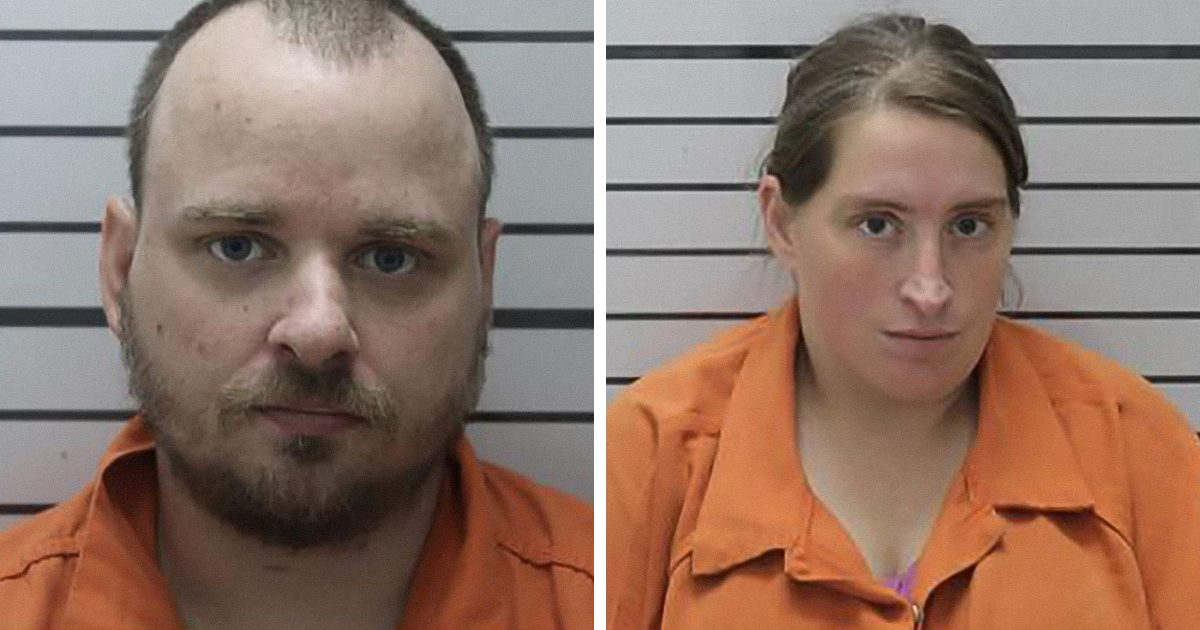
By January 2026, a Muskogee County judge found probable cause to bind over three defendants for further proceedings. The stepfather faced charges that included sexual abuse of a minor, while the mother and another family member faced multiple neglect-related allegations. At that hearing, a Department of Human Services agent reportedly described the home as deplorable and testified that Child Protective Services had not been allowed inside despite multiple attempts. That detail matters, because it turns the case from a horrifying one-time crisis into a broader portrait of concealment, control, and systemic failure.
And yes, that is why people online pointed fingers at the stepfather so quickly. Not because the internet is always wise, but because pregnancy in an 11-year-old is not a mystery to be solved with a shrug. It is a flashing red emergency light.
Why Netizens Immediately Focused on the Stepfather
Public reaction may have sounded blunt, but it was not irrational. In cases involving very young children, pregnancy itself is evidence that something profoundly wrong has happened. There is no innocent explanation hiding behind “we didn’t notice.” An 11-year-old is not merely “young.” She is a child in elementary-school territory, nowhere near physical, emotional, or legal readiness for pregnancy or childbirth.
That is also why readers were skeptical of the family’s early claim that nobody knew. A child does not become 36 weeks pregnant overnight. Even if symptoms can be hidden in some situations, the total picture in this case, including no prenatal care, no routine medical checkups, and later testimony about the home environment, made the adults’ explanation sound less like confusion and more like a collapse of basic caregiving.
There is another reason online suspicion landed where it did. Child sexual abuse is often committed by someone the child knows, not by a stranger jumping out of a metaphorical alleyway like an old crime show cliché. That is one of the most stubborn and painful realities in child protection work. In other words, when people heard “11-year-old,” “home birth,” “no medical care,” and “family household,” many immediately suspected the danger was inside the home. Prosecutors later said the DNA evidence supported exactly that.
This Was Not a “Home Birth” in the Lifestyle-Brand Sense
One thing worth clearing up immediately: this was not the cozy, curated version of “home birth” that sometimes circulates online beside candles, playlists, and carefully folded towels. This was an unassisted delivery involving a child, no prenatal care, and no medical team. Calling that merely a “home birth” risks flattening a medical emergency into a lifestyle choice. It was not a wellness decision. It was a dangerous failure of care.
That distinction matters because major U.S. medical organizations are very clear about birth settings. The American College of Obstetricians and Gynecologists says hospitals and accredited birth centers are the safest places to give birth. The American Academy of Pediatrics has taken a similar position, emphasizing that hospitals and accredited birth centers remain the safest settings for births in the United States. Mayo Clinic guidance also notes that even planned home births carry higher risks for infant death and neurological complications than planned hospital births.
Now add the facts of this case: no prenatal care, no ongoing medical supervision, and a labor involving an 11-year-old body. The level of risk was not just high. It was staggering.
Why Prenatal Care Matters So Much Here
Prenatal care is not just a box to check. It is the difference between “we are monitoring a pregnancy” and “we are flying blind in a storm.” U.S. health guidance repeatedly stresses that early and regular prenatal care improves the chances of a healthier pregnancy and healthier birth. It helps identify complications, monitor fetal growth, track maternal health, and prepare for emergencies before they become catastrophic.
Without prenatal care, warning signs can go unnoticed until labor, or worse, until after labor. Conditions such as high blood pressure, anemia, infection, growth restriction, malpresentation, preterm labor, hemorrhage risk, and newborn distress may not be caught in time. Federal women’s health guidance has long warned that babies born to mothers without prenatal care face substantially higher risks, including low birth weight and death.
And that is in the context of typical adult pregnancy. In a child as young as 11, the medical and developmental concerns become even more serious. This is not the kind of case where anyone should be debating personal preference or birth aesthetics. The issue was emergency-level vulnerability.
The Child Protection Failures Are the Real Story Beneath the Headline
If the public’s first reaction was horror, the second was a grim kind of math: how many opportunities were missed before this reached a hospital? That question gets to the heart of why the story hit so hard. People were not just reacting to a single event. They were reacting to what the event implied about everything that came before it.
For a child to carry a pregnancy nearly to term, multiple systems usually have to fail at once, or be successfully kept at a distance. Medical care was missing. Outside oversight appeared limited. Prosecutors said the family may have been homeschooling the children, which added another layer to public concern, not because homeschooling itself causes abuse, but because any form of family isolation can reduce a child’s contact with teachers, nurses, counselors, coaches, and other adults who might notice obvious warning signs.
Mandatory reporting laws exist for a reason. Child welfare agencies and many professionals are required to report suspected abuse or neglect because children are often not in a position to protect themselves, explain what is happening clearly, or even recognize what they are experiencing as abuse. A child may be scared, coached into silence, confused, ashamed, dependent on the abuser, or all of the above. When adults around that child ignore warning signs, minimize them, or block outside contact, danger tends to compound.
This is why the story resonated so far beyond Oklahoma. It touched a nerve that many Americans already feel: the fear that abuse can hide in plain sight until something catastrophic makes it impossible to ignore.
Why the Public Response Was So Furious
Internet outrage is often messy, overcaffeinated, and not always useful. But in this case, the anger came from a place many readers instantly understood. An 11-year-old should be worrying about school, snacks, sleepovers, and whether her backpack is too heavy. She should not be surviving labor at home. She should not need a paternity test in a criminal investigation. She should not be the center of a story that reads like a legal filing crossed with a nightmare.
That is why people recoiled so strongly from any suggestion that the adults simply “didn’t know.” The public was not just reacting to the pregnancy. It was reacting to the collapse of adult responsibility. Parenting requires noticing. Protection requires intervention. Medical emergencies require care. When every one of those functions appears absent, people naturally begin asking whether the failure was negligence, denial, active concealment, or something worse.
In this case, prosecutors say the answer is much worse.
What Cases Like This Tell Us About Abuse and Secrecy
Stories like this also force a hard truth into the open: child abuse often survives on secrecy more than force alone. Secrecy can look like isolation. It can look like adults controlling where a child goes, who sees the child, and what explanations get repeated to outsiders. It can look like missed doctor visits, limited schooling oversight, normalized chaos inside the home, or other family members being pressured not to talk.
That is one reason these cases can seem unbelievable once they surface. From the outside, people ask how everyone missed it. From the inside, abuse often grows in an environment where noticing is dangerous, inconvenient, or actively discouraged. By the time the truth emerges, the obvious red flags can feel blinding in retrospect.
There is no cheerful pivot here, and there should not be. This is not a story about gossip-worthy scandal. It is a story about what happens when a child’s safety is surrendered to silence.
Experiences Related to Cases Like This: What They Often Feel Like in Real Life
In survivor accounts, frontline health-care stories, and child advocacy work, one pattern appears again and again: abuse inside a family rarely arrives wearing a label. For the child, it may feel confusing long before it feels criminal. Many survivors describe not having the language to explain what was happening to them, especially when the abusive adult was also a caregiver, step-parent, or other authority figure in the home. The child may know something feels wrong, but still believe the adult’s version of events, or fear that telling the truth will blow up the only home life they know.
Another common experience is delayed recognition by outsiders. A teacher may later remember a child who seemed withdrawn. A relative may look back and think, “I knew something was off, but I didn’t know what.” A neighbor may recall noises, absences, or unusual behavior that did not make sense until the full story became public. In many abuse cases, the warning signs are visible in fragments, but nobody sees the whole picture soon enough. That is part of what makes these stories so haunting after the fact.
Medical workers often describe another layer: the emotional whiplash of treating a child in crisis while realizing the crisis should never have been allowed to reach that point. It is one thing to care for a patient during labor. It is another thing entirely when the patient is a child who should have been protected months earlier. Doctors, nurses, social workers, and advocates frequently talk about the same mix of reactions: urgency, heartbreak, anger, and a grim determination to document everything carefully because medical care may suddenly become part of a criminal case.
There is also the experience of the wider public, which should not be dismissed entirely. Readers, viewers, and commenters often feel helpless rage because the facts violate their deepest expectations about what adults are supposed to do. They are not just horrified by one abusive person. They are shaken by the possibility that an entire web of adults, institutions, and routines failed to stop the harm sooner. That collective reaction can sometimes sound chaotic online, but at its core is a very old moral instinct: children must be protected, and when they are not, society feels the rupture.
For survivors, though, the aftermath is rarely as neat as public outrage. There may be trauma, medical complications, court proceedings, foster placement questions, therapy, family fracture, and years of trying to build a life that is not defined by what happened. That is why the most responsible response to a case like this is not just to gasp at the headline or rage-post for a few hours. It is to pay attention to the warning signs, take suspected abuse seriously, support systems that protect children, and remember that behind every viral case is a real child who has to live with the consequences long after the internet scrolls on.
Conclusion
The Oklahoma case drew massive attention because it sounded almost impossible. But that is exactly why it matters. An 11-year-old child gave birth at home without medical assistance, and prosecutors later said DNA testing confirmed the stepfather was the father. Strip away the headline drama, and the core truth is devastatingly simple: this was not just a shocking story. It was a warning about what can happen when abuse is hidden, prenatal care is absent, and outside intervention never arrives in time.
If there is any useful takeaway from the public outrage, it is this: trust the alarm bells. A pregnancy in a child is an emergency. Repeated missed medical care is an emergency. A child being cut off from outside eyes is an emergency. Silence is not neutral in situations like these. It is often the air abuse breathes.
And if someone suspects a child is being abused or neglected, that suspicion should not stay trapped in a group chat, a comment section, or a private feeling of dread. It should become a report to the appropriate authorities or a call to a child abuse hotline. Because in stories like this, the scariest part is never the headline itself. It is how long the truth may have been waiting for someone to act.