Getting dirt in your eye is one of life’s rudest little surprises. One second you’re gardening, biking, sweeping the garage, or just existing near an enthusiastic gust of wind, and the next your eyeball feels like it has entered a personal feud with a grain of sand. The good news: a tiny speck of dirt in the eye is often a minor problem that can be handled with calm, clean first aid. The less-good news: panic-rubbing your eye like you’re trying to start a fire is not a treatment plan.
This guide walks you through how to get dirt out of your eye safely, when to stop trying home care, and how to spot signs that something more serious may be going on, such as a corneal abrasion or a stuck foreign object. If the irritation is from simple dust or dirt, these steps can help. If it’s metal, glass, chemicals, or anything that hit your eye at high speed, skip the DIY heroics and get medical help right away.
Before You Start: Know When Not to DIY
Not every “something’s in my eye” moment belongs in the home-remedy category. If the object seems embedded, your eye is bleeding, your vision is blurry, the pain is significant, or the particle may be metal, glass, or from a power tool, you should seek urgent medical care. A simple speck of dirt is one thing. A fast-moving fragment from a weed trimmer is a completely different movie, and it does not have a cheerful ending if handled badly.
Also important: if the problem is actually a chemical splash, the rule changes. Flush the eye immediately and continuously with clean water for at least 20 minutes, then get emergency care. Dirt and chemicals are not cousins. They are not even friendly neighbors.
How to Get Dirt Out of Your Eye: 12 Steps
Step 1: Stop rubbing your eye immediately
This is the big one. The most natural reaction is to rub, but that can drag the dirt across the surface of your eye and scratch the cornea. In other words, what started as “annoying” can become “why does light suddenly feel illegal?” Keep your hands away from your eye and take a breath.
Step 2: Wash your hands first
Before you touch your eyelids, lashes, or the area around your eye, wash your hands with soap and water. You are trying to remove dirt, not introduce a sequel. Clean hands lower the chance of adding bacteria, makeup residue, lotion, or more debris into the situation.
Step 3: Blink several times and let your tears help
Your eye actually has a built-in cleanup system, and it’s not bad at its job. Blink several times to encourage natural tearing. For very small particles, tears alone may wash the dirt toward the corner of the eye or out entirely. This is the rare moment when your body says, “I got this,” and you should let it try.
Step 4: Go to a mirror in bright light
Head to a mirror with good lighting. Look carefully to see whether the speck is visible and whether it appears to be floating on the eye’s surface, caught on the lower lid, or hiding under the upper lid. Do not poke at the eye. The goal here is inspection, not amateur excavation.
Step 5: Pull down your lower eyelid and look up
Many bits of dirt get trapped inside the lower eyelid. Gently pull the lower lid down while looking up. If you can see the particle sitting on the inner lid or near the tear line, that is a promising sign. It means the dirt may be removable with gentle flushing rather than a trip to urgent care.
Step 6: Flush your eye with clean, lukewarm water or sterile saline
This is usually the safest and most effective next step. Use a gentle stream of clean, lukewarm tap water or sterile saline solution to rinse the eye. You can use an eyecup, a clean small glass, or simply lean over a sink and let water flow across the eye from the inner corner outward. Keep the eyelids open as best you can while flushing.
If you do not have saline, clean tap water is generally fine for a minor dirt-in-eye situation. The goal is gentle irrigation, not pressure washing. Your eye is sensitive tissue, not patio furniture.
Step 7: Try the shower method if the sink method isn’t working
If the dirt still feels stuck, step into the shower and let a gentle stream of lukewarm water run over your forehead into the affected eye while you hold the eyelid open. This can be especially helpful when the particle is tiny, hard to see, or apparently committed to being dramatic.
Keep flushing for several minutes. If the discomfort steadily improves, you are likely moving in the right direction.
Step 8: Remove contact lenses if you wear them
If you have contact lenses in, remove them if it is easy to do so, especially after you have started rinsing. Dirt can get trapped under a lens and continue scraping the eye. Once the lens is out, flush again. Do not put the same lens back in right away, even if you feel better. Give the eye time to calm down, and use glasses instead for the rest of the day if possible.
Step 9: Gently lift the upper lid over the lower lid
If the irritation seems to be under the upper eyelid, you can try a classic trick: gently pull the upper lid out and over the lower lid, then release it. The lower lashes may help sweep the particle away. Blink a few times afterward. This move is elegant, low-tech, and much safer than going anywhere near your eyeball with tweezers, a tissue corner, or a cotton swab. Please do not bring crafting energy to eye care.
Step 10: Rest the eye and avoid extra irritation
Once the dirt seems to be out, let the eye rest. Avoid rubbing, wearing contact lenses, applying eye makeup, or exposing the eye to smoke, dust, or wind for the rest of the day. A little residual irritation can happen even after the particle is gone, especially if the surface of the eye got mildly scratched. Artificial tears may feel soothing, but skip medicated drops unless a clinician has told you to use them.
Step 11: Watch for red flags over the next several hours
If the eye stays red, painful, watery, or sensitive to light, or if you feel like something is still in there after thorough rinsing, you may have a scratch on the eye or a retained foreign body. Blurry vision is another reason to get checked. A tiny speck can sometimes leave behind a surprisingly rude amount of irritation.
You should also get medical help if the dirt came from yard tools, grinding metal, drilling, sanding, or any activity where particles may have entered the eye at speed. High-velocity debris can do more damage than it first appears to do.
Step 12: Get professional eye care when home treatment isn’t enough
Call an eye doctor, urgent care clinic, or emergency department if:
- the object appears stuck in the eye
- you cannot remove the dirt after flushing
- your eye pain is significant or getting worse
- you have blurred vision or light sensitivity
- the eye is very red, swollen, or keeps tearing
- you were wearing contact lenses and symptoms persist
- the object may be metal, glass, or anything from a power tool
- you suspect a chemical exposure instead of simple dirt
A clinician may use special dye and a blue light to check for a corneal scratch or hidden foreign body. This is one of those times when letting a professional take over is not weakness. It is excellent strategy.
What Not to Do
When you are dealing with dirt in your eye, a short list of don’ts matters just as much as the step-by-step plan:
- Do not rub the eye.
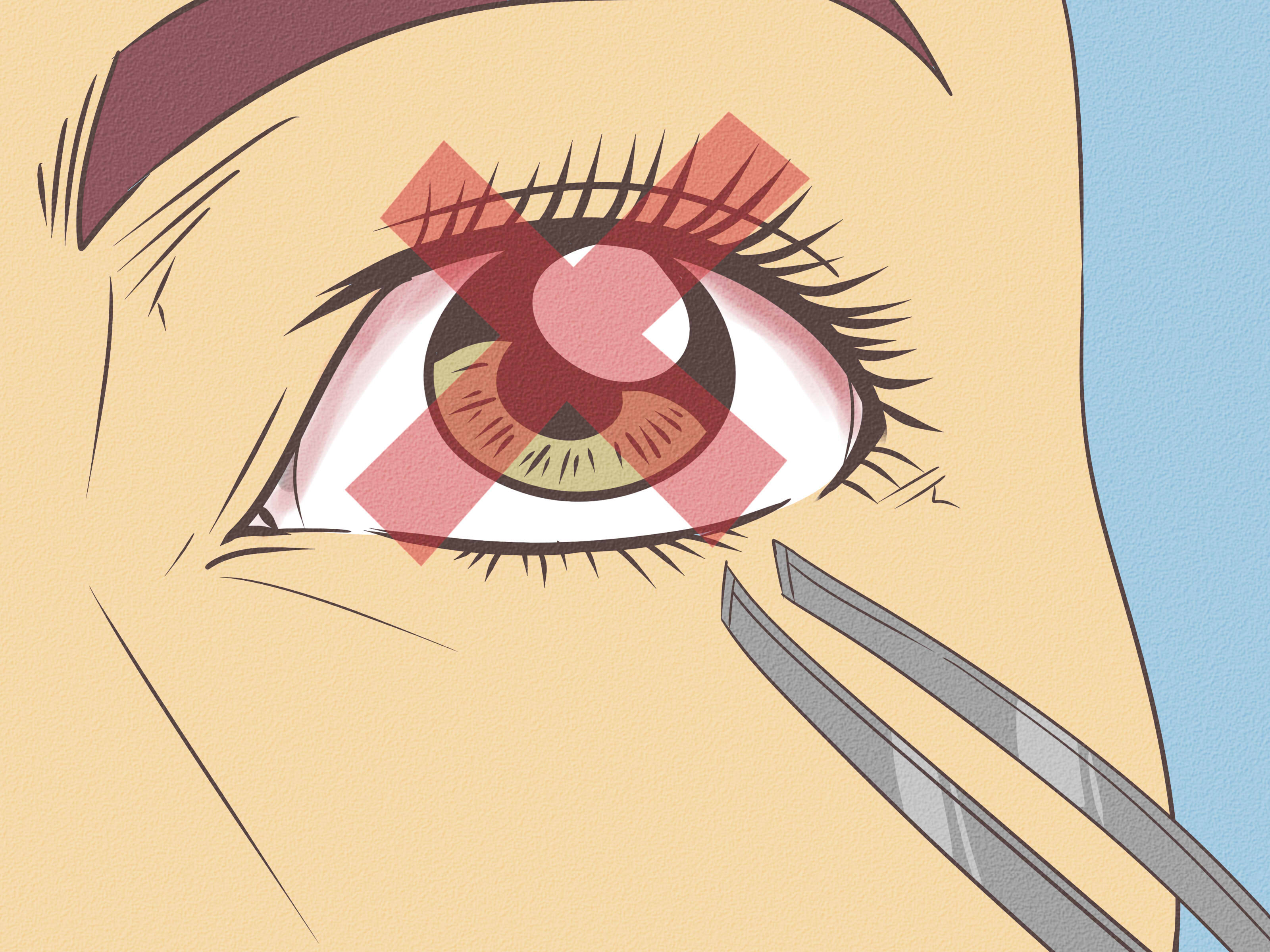
- Do not use tweezers, fingernails, tissue corners, or cotton swabs on the eyeball.
- Do not keep re-inserting contact lenses into an irritated eye.
- Do not use redness-relief drops as your main solution.
- Do not ignore persistent pain, blurred vision, or light sensitivity.
- Do not try to remove an object that looks embedded.
Why Dirt in the Eye Can Feel Worse Than It Looks
The surface of the eye is extremely sensitive. Even a tiny grain of dust can feel enormous because it constantly brushes against the cornea or eyelid with every blink. That sensation may be out of proportion to the size of the particle, which is why people often say, “It was just a speck, but it felt like a boulder.” Honestly, the eye has excellent public relations for discomfort.
Sometimes the dirt is gone, but the scratch remains. That can leave a foreign body sensation, where the eye still feels like something is stuck even when the actual particle is gone. If that sensation does not improve, get examined.
How to Prevent Dirt from Getting in Your Eye Again
Prevention is not glamorous, but neither is spending your afternoon blinking at the ceiling while googling “why does my eye hate me?” A few habits can make a big difference:
- Wear protective eyewear when mowing, drilling, sanding, sweeping, or gardening.
- Use wraparound sunglasses on windy days.
- Wash hands before touching contacts.
- Keep children away from dusty play areas without eye protection.
- Avoid glitter-heavy cosmetics or loose powders too close to the eyes.
Common Experiences People Have With Dirt in the Eye
One of the most common stories starts in the yard. Someone trims a hedge, shakes out a plant pot, or pulls weeds without eye protection. A little dirt flies up, and suddenly one eye starts watering like it just watched the ending of a sad movie. The first instinct is almost always to rub. The smarter move, as many people learn the hard way, is to go straight inside, wash hands, and rinse the eye. In a lot of these everyday cases, a few minutes of flushing solves the problem. The lesson is simple: the sooner you stop rubbing, the less likely you are to turn a tiny speck into an irritated scratch.
Another very familiar experience happens on a windy day at the beach, on a bike ride, or during a walk near construction dust. The grit often feels like it moves every time you blink, which makes people think the particle is huge. Usually, it is not. It is just in an obnoxious location. People often say the eye keeps tearing, blinking feels weird, and they cannot stop thinking about it. Once they rinse the eye thoroughly with clean water or saline, the sensation usually improves. What surprises many people is how long the eye can still feel “off” afterward. A mild scratch can leave lingering irritation even when the dirt is gone.
Contact lens wearers have their own special version of this adventure. A tiny particle can get trapped under the lens and feel much worse than expected. Many people report that rinsing alone did not help until they removed the contact. After that, things improved quickly. Others discover that the irritation sticks around because the lens or the dirt has already irritated the cornea. That is why wearing glasses for the rest of the day is often the better choice. Your eye is not asking for fashion sacrifice; it is asking for peace and quiet.
Then there is the garage or workshop scenario, which is the one that teaches caution fast. Someone is cutting metal, sanding wood, or using a string trimmer and gets hit in the eye. At first, it can seem like plain dust, but the risk is much higher when debris is moving fast. People in these situations often describe sharp pain, persistent tearing, and the sense that something is truly stuck. This is exactly where home treatment should stop early and professional care should begin. The biggest takeaway from these experiences is that context matters. A little garden dirt and a metal fragment are not handled the same way.
Parents also run into this problem with kids, who are talented at getting mystery debris in their eyes and then explaining it with the precision of a raccoon. A child may say, “It hurts,” while rubbing furiously, which can make everything worse. In many cases, calm rinsing, reassurance, and keeping little hands away from the eye is enough. But if the child cannot open the eye, keeps crying with pain, or still complains after flushing, it is worth getting checked. A tiny eye problem can look dramatic in a child, but it can also be genuinely important.
The overall pattern in real-life experiences is pretty consistent: most minor dirt-in-the-eye episodes get better with gentle flushing and patience, while persistent pain, vision changes, or high-speed debris deserve professional attention. The eye is small, but it is not an area for stubborn guesswork.
Final Thoughts
If you are wondering how to get dirt out of your eye, the safest answer is also the least exciting: stop rubbing, wash your hands, blink, rinse gently with clean water or saline, remove contact lenses if needed, and pay close attention to warning signs. Most simple cases improve quickly. The ones that do not are your cue to get help.
Your eye usually does not need bravery. It needs clean water, a little patience, and for you to stop treating your face like a scratch-off ticket.