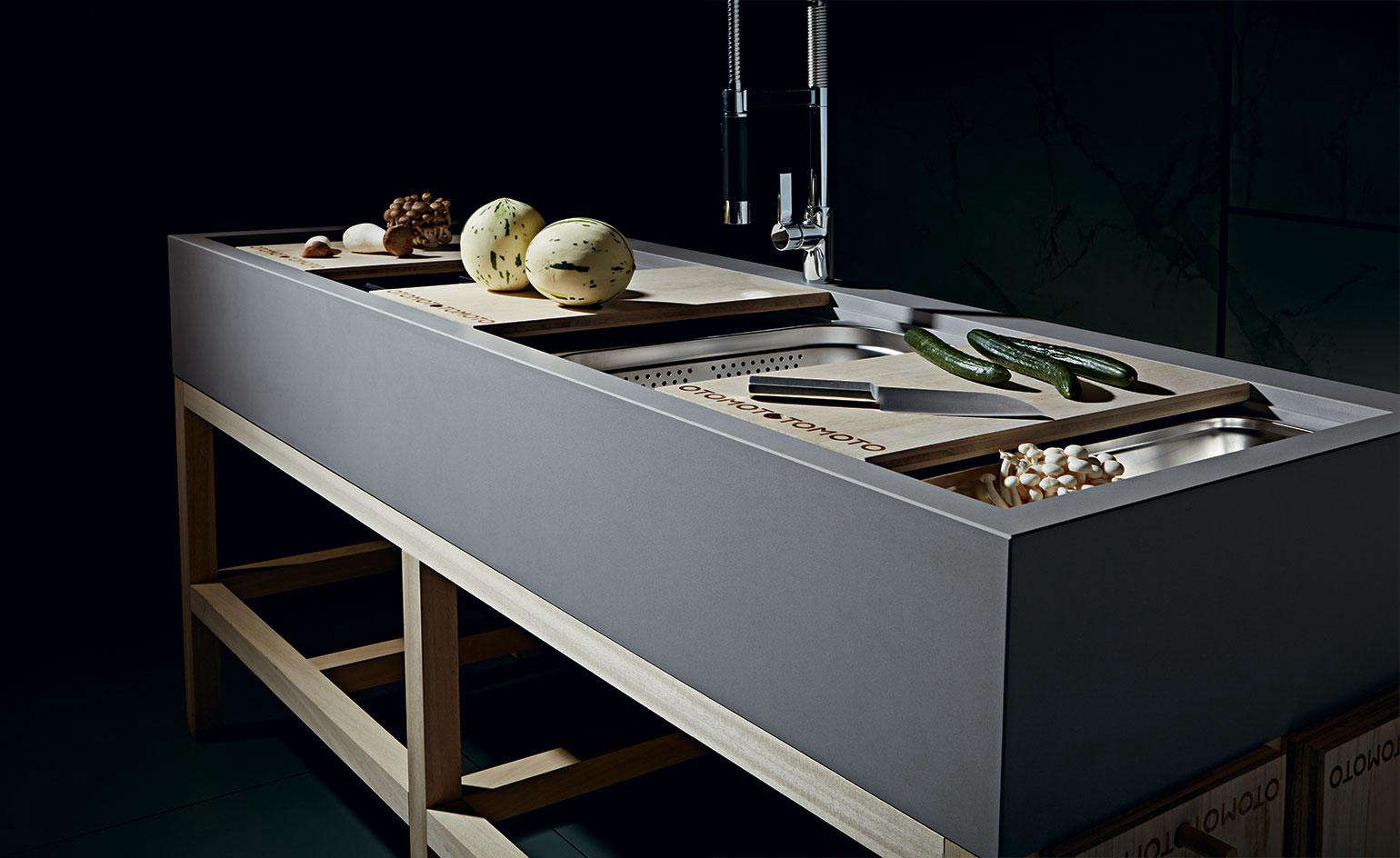
Some kitchens try to impress you with a marble island the size of a modest aircraft carrier. Others seduce you with seventeen pendant lights, three ovens, and a refrigerator that appears to have its own retirement plan. Then there is the Japanese-inspired kitchen from Otomoto, a compact, clever, almost philosophical answer to a very ordinary question: what if the sink stopped being the sad puddle zone of the kitchen and became the heart of the whole operation?
That is the charm of this project. Created by British artist Ryan Gander and creative director Tony Chambers, Otomoto is not simply selling a kitchen sink. It is proposing a different kitchen rhythm: prep, rinse, chop, organize, cook, clean, and reset without pacing back and forth like a contestant on a cooking show who has lost the onions. Inspired by compact kitchen systems often found in Japan, the Otomoto kitchen sink system turns the most overlooked part of the room into a flexible workstation with a calm, disciplined personality.
For homeowners who love Japanese kitchen design, Japandi interiors, compact living, and minimalist kitchen ideas, this project is a small-space masterclass. It proves that “less” does not have to mean “bare,” “cold,” or “where did I put the cutting board again?” Done well, less means closer at hand, easier to use, and more enjoyable every day.
What Is Otomoto?
Otomoto is a UK-based design and ideas platform founded by artist Ryan Gander and creative director Tony Chambers, formerly associated with Wallpaper*. The brand began with a compact, ergonomically designed kitchen sink system launched around the design world’s favorite playgrounds, including Milan’s Salone del Mobile and Clerkenwell Design Week in London.
The name Otomoto is derived from a Japanese phrase often interpreted as “close at hand,” and that phrase explains almost everything. This kitchen is not about making the cook perform dramatic laps around the room. It is about bringing the tools, surfaces, containers, and cleaning zone into one efficient system. In plain English: fewer steps, fewer drips on the floor, fewer “Where did I put that?” moments.
The Design Idea: Everything and the Kitchen Sink
The Otomoto system centers on a full-length sink made with Cosentino’s Silestone material and set on a simple wood frame. Along the long sides of the sink are two built-in lips, or runners, that support different accessories. The upper level holds up to six Paulownia wood chopping boards, which can sit side by side to form a temporary worktop. The lower level supports modular Gastronorm containers, the practical metal pans used in professional kitchens.
That may sound like a technical detail, but it is actually the entire magic trick. Need a prep surface? Slide in the boards. Need to rinse greens? Move one board aside. Need to separate scraps, chopped herbs, washed vegetables, or clean utensils? Drop in a container. Need to hide the evidence of a highly emotional pasta night? The sink is already involved, and frankly, it has seen worse.
Why the Japanese Inspiration Works
Japanese-inspired kitchen design is often misunderstood. It is not about adding a paper lantern, a bonsai, and a ceremonial spoon rest, then calling the room “Zen.” True Japanese influence in interiors is more practical and more subtle. It values proportion, quiet materials, empty space, visible craftsmanship, and daily rituals that feel intentional rather than chaotic.
Otomoto captures that spirit by focusing on usefulness first. The design borrows from compact Japanese kitchen units where every inch has to earn its rent. In many urban homes, especially apartments, there simply is no room for huge islands, sprawling pantries, or appliance garages big enough to hide a small scooter. The Japanese approach treats limited space as a design challenge, not a tragedy.
This is also where the broader Japandi kitchen trend enters the conversation. Japandi style blends Japanese minimalism with Scandinavian warmth, often using natural materials, muted colors, clean lines, and practical storage. Otomoto is not a decorative Japandi kitchen in the Pinterest sense. It is more interesting than that. It is Japandi as a working philosophy: calm, efficient, tactile, and quietly beautiful.
Materials: Calm, Durable, and Not Too Precious
A Japanese-inspired kitchen needs materials that can handle real life. The Otomoto system uses Silestone for the sink, giving it a durable, refined surface with a smooth modern character. The chopping boards are made from Paulownia wood, a lightweight Japanese wood valued for its practicality. The combination of engineered stone, wood, and metal containers creates a satisfying balance: hard and soft, industrial and domestic, precise and warm.
That balance matters. Too much stone can make a kitchen feel like a very expensive dental office. Too much wood can become fussy if it is not well planned. Too much stainless steel may make you feel like you should be wearing clogs and shouting “Yes, chef!” Otomoto avoids these extremes by letting each material do a job. The stone is sturdy. The wood is touchable. The metal containers are flexible. Nobody is just standing around looking pretty.
A Sink That Changes the Kitchen Workflow
Most kitchens treat the sink as a fixed utility: wash here, stack dishes there, hope no one notices the sponge. Otomoto treats the sink as the main stage. The result is a kitchen sink system that changes the workflow by merging preparation and cleanup into one continuous process.
Think of washing herbs. In a standard kitchen, you might rinse them at the sink, carry them dripping to a board, chop them, scoop them into a bowl, and then carry the scraps back to the trash or compost. In the Otomoto system, the rinsing, chopping, sorting, and cleanup can happen in one zone. The cutting board sits over the sink. Containers sit below or beside it. Water, scraps, and ingredients stay contained. Your counter does not become a crime scene involving parsley.
Small-Space Kitchen Lessons Worth Borrowing
1. Make the Sink Work Harder
The easiest lesson from Otomoto is that the sink should not be a single-purpose hole in the countertop. Add-ons such as cutting boards, drying racks, colanders, and fitted containers can turn even a modest sink into a compact prep station. This is especially useful in apartments, galley kitchens, accessory dwelling units, and older homes where counter space is limited.
2. Use Layers Instead of Sprawl
Instead of spreading tasks across a giant kitchen, Otomoto stacks function vertically. Boards sit on one level; containers sit below. This layered logic is brilliant for compact kitchen design because it creates more usable space without expanding the footprint.
3. Keep Tools Close, Not Crowded
Japanese-inspired organization is not about owning nothing. It is about owning what you use and giving it a sensible place. The best kitchen storage keeps frequent tools within easy reach while hiding visual clutter. Open shelves can be beautiful, but only if they do not look like a yard sale hosted by coffee mugs.
4. Choose Natural, Quiet Materials
Wood, stone, bamboo, ceramic, linen, and matte finishes all help create the calm associated with Japandi kitchen design. The goal is not to make the kitchen bland. It is to let texture do the talking instead of shouting through high-gloss finishes and aggressive hardware.
5. Design for Reset
A great kitchen should be easy to return to order. Otomoto’s integrated system makes cleanup part of cooking rather than a punishment served at the end. That is an underrated luxury. A room that resets quickly is a room you are more likely to use happily.
Why This Kitchen Feels Modern
The Otomoto kitchen feels modern because it questions a very common assumption: bigger is better. For years, luxury kitchen design has often meant expanding the kitchen into a social arena. Islands became larger. Pantries became rooms. Appliance walls became command centers. There is nothing wrong with that if you have the space and the budget. But Otomoto asks a sharper question: what if luxury is not size, but intelligence?
That idea feels especially relevant now. Many people live in apartments, townhouses, smaller homes, or older houses with awkward layouts. Even in larger homes, not everyone wants a kitchen that looks like it requires a staff meeting. A compact, Japanese-inspired kitchen can feel more personal, more sustainable, and more humane.
The design also fits the way many people cook today. We prep quickly, cook in smaller batches, use flexible containers, value easy cleanup, and often want the kitchen to look calm because it is visible from the living area. Otomoto supports that lifestyle without pretending we all have time to hand-polish copper pans while a loaf of sourdough cools in linen. Some of us are just trying to rinse spinach before it becomes compost in the refrigerator drawer.
The Aesthetic: Minimal, But Not Miserable
One risk with minimalist kitchens is that they can become too sterile. You know the type: gorgeous in photos, but you are afraid to make toast in case crumbs violate the architectural concept. The Otomoto system avoids this by being visibly useful. The wood frame has a workshop honesty. The chopping boards invite handling. The metal containers look ready for actual food. This is minimalism with sleeves rolled up.
That is why the Japanese inspiration feels convincing. The design is not performing calm; it is producing calm through better function. When objects have a reason to be there, the room naturally feels quieter. When the workflow makes sense, cooking becomes less frantic. When cleaning is integrated, the after-dinner mess loses some of its villain energy.
Who Would Love an Otomoto-Style Kitchen?
This kind of kitchen is ideal for design lovers who cook regularly, small-space dwellers who need every inch to work, and minimalists who still believe in dinner. It is especially appealing to people who enjoy precise systems: the cutting board person, the labeled-container person, the “I know exactly where the peeler lives” person. We salute you, organized heroes.
It may be less ideal for homeowners who want a traditional kitchen with lots of closed cabinetry, multiple appliance zones, and a large decorative island. Otomoto is not trying to be a farmhouse kitchen, a chef’s theater, or a suburban command center. It is a compact culinary engine with a design-school brain and a surprisingly domestic soul.
How to Get the Look Without Buying the Whole System
Even if you are not installing the Otomoto sink, you can borrow its best ideas. Start with a large single-basin sink or workstation sink with fitted accessories. Add a cutting board that sits securely over the sink. Use stackable stainless steel containers for prep. Store your most-used tools near the sink and main prep zone. Choose wood accents to soften stone or quartz surfaces. Keep the color palette calm: warm white, soft gray, pale oak, charcoal, sand, clay, and muted green all work beautifully.
Lighting matters too. Japanese-inspired kitchens benefit from soft, layered light rather than one harsh ceiling fixture interrogating the vegetables. Use under-cabinet lighting for tasks, warm pendants for atmosphere, and natural light wherever possible. The final goal is simple: a kitchen that lets you cook without visual noise.
Experience Notes: Living With a Japanese-Inspired Kitchen Mindset
The most memorable thing about an Otomoto-style kitchen is not the sink itself. It is the way the kitchen changes your behavior. At first, you notice the obvious benefits: more prep space, fewer wet trails across the counter, and a satisfying sense that everything has a role. But after a few meals, the deeper shift appears. You begin to cook more neatly because the design encourages it. You rinse as you go. You chop with less clutter. You stop using every bowl in the house just to make a salad.
That kind of kitchen creates a quiet discipline. Not the scary kind involving a whistle and a clipboard, but the gentle kind that makes daily life easier. When the cutting board sits over the sink, scraps naturally fall where they should. When containers are nearby, ingredients get organized before they hit the pan. When the sink is generous and central, cleanup does not feel like a separate moral reckoning after dinner.
A Japanese-inspired kitchen also teaches you to edit. You start asking sharper questions: Do I need five spatulas? Why do I own a citrus zester I fear? Why is the blender in front of the rice when I use the rice twice a week and the blender twice a presidential administration? This editing process is not about deprivation. It is about creating a kitchen that respects your actual habits.
In a compact kitchen, every object either supports the routine or interrupts it. That sounds strict, but it can be surprisingly freeing. A smaller number of better tools makes cooking feel smoother. A calmer palette makes the room easier to enter in the morning. Natural textures, such as wood boards or ceramic bowls, add warmth without clutter. Even a small herb pot by the window can feel intentional rather than decorative filler.
The best experience comes when the kitchen begins to reset itself through habit. After breakfast, the board gets rinsed and dried. After dinner, containers stack away. The counter clears in minutes because the workflow never exploded across six surfaces. It is not magic; it is design doing its job. And yes, there will still be days when a spoon somehow ends up in the freezer. We remain human.
For anyone planning a remodel, the Otomoto lesson is worth taking seriously. Do not begin with finishes. Begin with movement. Where do you rinse? Where do you chop? Where does the hot pan land? Where do scraps go? Where do clean dishes dry? Once those answers are clear, style becomes easier. Beauty follows function, puts on a nice linen shirt, and looks effortless.
Conclusion: A Small Kitchen With Big Ideas
The Japanese-inspired kitchen from Otomoto is compelling because it does not confuse luxury with excess. It makes the sink smarter, the workflow tighter, and the cooking process calmer. It borrows from Japanese compact living without turning into a theme. It celebrates thoughtful simplicity in a world where kitchens can become oversized, overstuffed, and oddly exhausting.
As a design idea, Otomoto is both practical and poetic. It reminds us that the best kitchen is not always the biggest one. Sometimes the best kitchen is the one where everything is close at hand, every surface earns its keep, and washing lettuce does not require a cross-room expedition. That may not sound glamorous, but after a long day, a kitchen that simply works can feel like the highest form of luxury.