Modern computers are fast, thin, powerful, and, let’s be honest, often about as emotionally stirring as a tax form in airplane mode. They arrive as sealed rectangles: aluminum here, glass there, a logo glowing or not glowing depending on the brand’s current mood. Then along comes Mythic I, also known as “Vulcan,” a handmade computer that looks less like a device pulled from a warehouse shelf and more like something a thoughtful craftsperson might place in a quiet study, beside a fountain pen and a suspiciously well-behaved cup of coffee.
Mythic I is not trying to win the usual race. It is not screaming about benchmark scores, refresh rates, or how many browser tabs it can hold before sounding like a tiny jet engine. Instead, it asks a stranger question: what if a computer could feel personal again? What if the machine used for writing, thinking, and making was built with the care usually reserved for furniture, musical instruments, or heirloom tools?
That question sits at the center of artisanal computing, a design philosophy that treats computers not only as tools but also as objects with character, material presence, and cultural meaning. Mythic I is one of the clearest examples of this idea: a functional computer shaped from walnut, hard maple, Tuscan full-grain leather, shellac, and beeswax, unlocked with a key and awakened by a toggle switch. It is both practical and poetic, which is a rare sentence to write about a computer without immediately being escorted out by the productivity police.
What Is Mythic I?
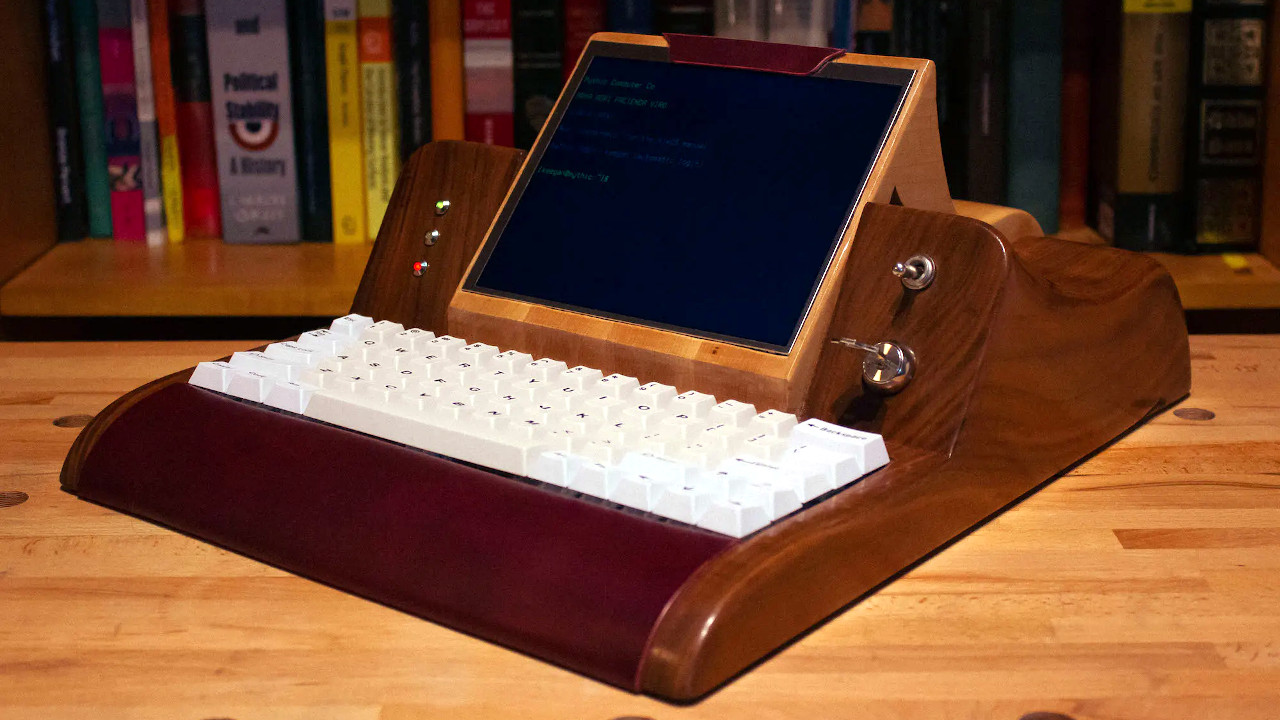
Mythic I is the first major work from Mythic Computer, the one-person computer atelier founded by Keegan McNamara. Officially named “Vulcan,” the machine is described as a personal artifact and remains in use at the Mythic workshop. Unlike a typical desktop PC hidden beneath a desk or a laptop designed to disappear into a backpack, Mythic I is meant to be noticed. It has a curved wooden body, a leather palm rest, a small integrated screen, and a startup ritual that feels closer to operating a cherished instrument than waking a commodity device.
The machine’s materials matter. Walnut and hard maple give it warmth and visual depth. Tuscan full-grain leather turns the palm rest into a tactile surface rather than an afterthought. Blonde shellac and beeswax connect the object to traditional finishing methods, making the computer feel closer to fine furniture than consumer electronics. In a market where “premium” often means “slightly colder metal,” Mythic I quietly replies, “Have you considered wood?”
Technically, Mythic I is not built to replace a full modern workstation. It has been reported as using an Intel NUC with a minimal Linux setup, designed especially for focused writing. Networking is disabled, and file transfer is handled through simple scripts and USB storage. In other words, Mythic I is a computer that refuses to become a carnival. No social feed is waiting in the corner. No algorithm is tapping your shoulder. No browser tabs are multiplying like digital rabbits wearing tiny productivity badges.
The Big Idea Behind Artisanal Computing
Artisanal computing is not nostalgia with a keyboard attached. It is not simply making a computer look old-fashioned, nor is it a rejection of modern technology. At its best, artisanal computing asks designers and users to reconsider scale, ownership, repair, beauty, and intention. It suggests that a computer can be local, personal, slow where slowness helps, limited where limits protect attention, and beautiful because beauty changes how we behave around objects.
Personal computing began with a strong culture of experimentation. Early hobby computers invited users to assemble, modify, learn, and tinker. Over time, the industry became more polished, more powerful, and more standardized. That standardization gave the world incredible benefits: lower prices, reliable components, global software ecosystems, and machines that can edit video, train models, and play games that look better than real life on a rainy Tuesday.
But something was also lost. Many modern devices are difficult to repair, hard to customize, and designed to be replaced rather than reimagined. Artisanal computing pushes back against that pattern. It does not say every computer should be handmade from wood. That would be charming for about twelve minutes and then logistically impossible. Instead, it says computers can exist along a wider spectrum: mass-produced machines for everyday needs, modular devices for long-term ownership, and handmade works for people who want technology with a soulor at least with fewer fingerprints and more walnut.
Design: When a Computer Stops Looking Like a Spreadsheet
The design of Mythic I is striking because it breaks away from the dominant language of modern computing. Most contemporary devices communicate efficiency through flatness, thinness, and visual silence. Mythic I communicates care. Its sweeping form rises and falls like a small wooden landscape. The key, switch, and lights create a sense of ceremony. Starting the machine becomes an intentional act, not a nervous poke at a power button while hoping updates do not ruin the next forty minutes.
This ritual matters because computers shape behavior. A phone that wakes instantly and offers infinite distraction trains one kind of attention. A handcrafted writing computer with no network connection trains another. Mythic I’s physical design says, before a single word is typed, that this is a place for deliberate work. It is a desk object that helps create a mood.
That may sound decorative, but design has always influenced how people use tools. A heavy fountain pen can slow handwriting. A well-made chair can support longer reading. A quiet room can improve thinking. Mythic I applies the same logic to computing. The computer is no longer only a portal to software; it becomes part of the user’s physical and emotional environment.
Why Limited Computing Can Be Powerful
One of the most interesting choices in Mythic I is its limitation. In mainstream technology marketing, limitations are usually treated as flaws. A machine that cannot browse the web, stream video, or run every application sounds incomplete. But limitation can be a design feature when it protects the task the machine is meant to serve.
For writing, a distraction-free computer can be more useful than a supercomputer with 300 notifications and a browser history that starts with “research” and somehow ends with videos of raccoons stealing snacks. Mythic I embraces the idea that a dedicated tool can produce better attention than a universal tool. It is not less because it does less. It is more focused because it does less.
This idea connects with a broader movement in computing that values appropriate technology. Not every task needs the latest processor, the brightest screen, or the most complex operating system. Sometimes the best tool is the one that performs the desired function clearly and quietly. Mythic I shows how hardware, software, and physical form can be aligned around one purpose: thoughtful creation.
Mythic I and the Return of the Computer as an Object
For many users, computers have become invisible infrastructure. They are boxes, slabs, and screens through which software happens. The device itself is often treated as temporary. It will be replaced in three or four years, traded in, recycled, forgotten, or shoved into a drawer with old chargers that no longer fit anything except regret.
Mythic I challenges that disposable rhythm. It is designed to be remembered. Its materials age in visible ways. Wood gains patina. Leather softens. Small imperfections become part of the story rather than evidence of failure. This is radically different from the glossy perfection of mass-market devices, where the first scratch can feel like a personal betrayal.
That does not make Mythic I more practical for everyone. A handmade computer is expensive, slow to produce, and highly specific. But its value lies partly in proving that alternatives are possible. A computer can be more than a sealed appliance. It can be a crafted object, a conversation piece, a focused tool, and a personal companion in the old sense of personal computing.
The Sustainability Question
Artisanal computing also invites a serious conversation about sustainability. The electronics industry depends on complex supply chains, mined materials, energy-intensive manufacturing, and global logistics. A handcrafted wooden computer does not magically erase those realities. Mythic I still contains modern electronics, and no amount of beeswax can turn a motherboard into a carrot.
However, the philosophy behind artisanal computing overlaps with important sustainability principles: use devices longer, design for repair, reduce unnecessary replacement, and build objects people want to maintain. The U.S. Environmental Protection Agency emphasizes the value of reducing material use, extending product life, refurbishing, reusing, and recycling electronics. Repair advocates also point out that repairability requires more than a screwdriver; it needs parts, documentation, accessible design, and fewer artificial barriers.
Mythic I contributes to this conversation symbolically and practically. Symbolically, it asks users to value a computer as an object worth keeping. Practically, its use of a relatively standard internal computing unit suggests a path where the outer artifact may outlive the internal electronics. Imagine a computer body built like furniture, with internal components updated over time. That is not yet the mainstream model, but it is a compelling direction: fewer throwaway shells, more durable objects, and a healthier relationship between technology and ownership.
How Mythic I Compares With Modular and Repairable Computing
Mythic I is not alone in challenging the sealed-device era. Companies focused on modular laptops and repairable hardware are also pushing back against disposable design. Framework, for example, has built its identity around laptops that users can customize, upgrade, and repair. iFixit has helped popularize the language of repairability by showing how product design affects whether people can fix their own devices.
The difference is that Mythic I approaches the issue from the side of craft and meaning, while modular laptop makers approach it from practical ownership. Both matter. Repairable devices help people keep machines longer. Handmade devices help people imagine computers differently. One says, “You should be able to replace the battery.” The other says, “You should be able to love the object enough to want to replace the battery.” Together, they form a quiet rebellion against disposable computing.
In that sense, Mythic I is less a product category than a provocation. It is not telling Dell, Apple, Lenovo, or HP to turn every laptop into a wooden sculpture. It is asking why computers became so visually narrow, why so many are hard to repair, and why personal technology often feels strangely impersonal.
Specific Lessons Designers Can Learn From Mythic I
1. Materials Change Behavior
Materials are not decoration after the fact. They shape how an object is perceived and used. Wood, leather, shellac, and wax make Mythic I feel slower, warmer, and more deliberate. Designers of mainstream devices may not choose the same materials, but they can learn from the emotional intelligence behind those choices.
2. Ritual Can Improve Focus
The key and toggle switch are not strictly necessary. That is exactly why they are interesting. They create a beginning. They tell the user, “You are entering work mode now.” In a world where devices are always half-awake, ritual can help restore boundaries.
3. Constraints Can Be Humane
Removing networking from a writing machine sounds extreme until you remember how often “just checking one thing” becomes a 45-minute tour through news, email, and someone’s dramatic sandwich review. Constraints can protect attention, and attention is one of the rarest materials in modern computing.
4. Beauty Is Not the Enemy of Function
Technology culture sometimes treats beauty as a luxury bonus. Mythic I argues that beauty can be functional because it changes the relationship between user and tool. People care for beautiful things differently. They place them differently, use them differently, and often keep them longer.
The Criticism: Is Artisanal Computing Practical?
There are fair criticisms of Mythic I. It is not cheap. It is not easy to scale. It is not the most ergonomic solution for every user. It will not satisfy someone who wants a thin laptop, a giant monitor, cloud sync, and the ability to run three design apps while pretending not to hear a video call. Artisanal computing can also risk becoming luxury theater if it focuses only on expensive materials and ignores accessibility, repair, and real usability.
Those criticisms are useful because they keep the conversation honest. The goal is not to pretend that everyone needs a handmade wooden computer. Most people need reliable, affordable machines that are easy to service and powerful enough for school, work, creativity, and daily life. But practical criticism does not erase conceptual value. A concept car is not useful for grocery shopping either, yet it can influence future design. Mythic I works similarly. It expands the imagination of what a computer could be.
Why Mythic I Matters In 2026
The timing of Mythic I feels important because computing is becoming more cloud-centered, AI-driven, and subscription-shaped. More of our work happens through platforms we do not control. More devices are designed as gateways to services rather than as independent tools. Against that background, a handmade, focused, locally meaningful computer feels almost rebellious.
Mythic I reminds us that personal computing should still be personal. That does not mean rejecting AI, cloud tools, or modern convenience. It means asking who the machine serves. Does it serve the user’s attention, creativity, and long-term ownership? Or does it mostly serve upgrade cycles, engagement metrics, and the sacred business ritual of making every object thinner until ports become endangered species?
The best future for computing may not be one future at all. It may be many futures: high-performance workstations, repairable laptops, low-power devices, local-first software, handcrafted machines, educational kits, and minimalist writing tools. Mythic I matters because it makes that variety visible. It gives permission to imagine computers as cultural objects again.
Experiences And Reflections Related To Mythic I
Using or even thinking seriously about a machine like Mythic I changes the way one understands computing. Most people approach a computer by asking, “What can it do?” Mythic I encourages a different question: “What kind of attention does it create?” That distinction is powerful. A general-purpose laptop can do almost anything, which is both its miracle and its trap. A focused artisanal computer narrows the field. It says: write here, think here, make something here, and please stop checking whether the internet has invented a new argument while you were away.
The experience of artisanal computing begins before the screen turns on. The hand meets material first. Wood has temperature, grain, and slight variation. Leather responds to pressure and time. A toggle switch gives physical feedback. These details are small, but they add up to a sense of presence. The computer becomes less like a portal to elsewhere and more like a place. That is especially valuable for creative work, where environment can shape mood as much as software can shape output.
There is also a surprising psychological effect in using a tool that clearly took time to make. Handmade objects tend to slow people down, not because they are inefficient, but because they invite respect. You do not slam a handcrafted writing desk in the same way you might abuse a cheap folding table. You do not treat a carefully made instrument like a disposable toy. Mythic I brings that feeling into computing. It suggests that digital work can have a physical dignity.
For writers, programmers, designers, and students, the lesson is not necessarily to buy or build a wooden computer. The lesson is to design a better relationship with the tools already available. A distraction-free writing profile, a repairable laptop, a dedicated keyboard, a clean desk, local backups, fewer notifications, and a more intentional startup routine can all borrow from the Mythic I philosophy. The artisanal mindset is not only about handmade luxury. It is about care, boundaries, and purpose.
Imagine setting up a “Mythic-style” workspace with ordinary tools: a laptop on a sturdy stand, a mechanical keyboard chosen for comfort, a plain text editor, no social apps during writing hours, and a rule that the browser opens only after the draft exists. Nothing about that requires walnut or shellac, though they certainly improve one’s chances of feeling like a wizard with a deadline. What matters is the shift from passive consumption to deliberate creation.
Mythic I also encourages users to think about ownership. When a machine feels personal, people are more likely to maintain it, repair it, and adapt it. That mindset is urgently needed in a world overflowing with discarded electronics. The best computer is not always the newest one. Sometimes it is the one that remains useful, understandable, and loved for years.
In the end, Mythic I is compelling because it is both a real computer and a beautifully unreasonable argument. It argues that computers can be warmer. It argues that limits can be generous. It argues that craft still has a place in a digital world obsessed with scale. And it argues, with a perfectly straight wooden face, that maybe the future of computing does not have to look like every other rectangle on the table.
Conclusion
Mythic I is not the future of all computing, and that is exactly why it matters. It is a focused, handmade counterpoint to mass-produced sameness. By combining wood, leather, minimal software, intentional limitation, and a sense of ritual, it shows that computers can be more than fast machines. They can be meaningful tools.
For designers, Mythic I is a reminder that technology does not have to choose between function and feeling. For users, it is an invitation to build healthier relationships with devices. For the broader tech industry, it is a small but elegant challenge: make computers worth keeping, worth repairing, and perhaps even worth admiring when they are turned off.
Note: This article is written for web publication and is based on publicly available information about Mythic I, artisanal computing, repairability, sustainable electronics, and the history of personal computing. No source links or citation placeholders are included inside the article body.