Reality has always had a suspiciously plain crust. It arrives every morning like toast: flat, warm if we are lucky, slightly burned if we checked the news too early. Then imagination walks in, wearing slippers, holding a spoon, and says, “Wonderful. But what if we added marmalade?”
The title “If Reality Is A Piece Of Bread I Have Some Marmalade” sounds like a tiny philosophical joke, a surreal breakfast menu, and a creative manifesto all at once. It asks a surprisingly useful question: if daily life is made of ordinary ingredients, what do we spread on top to make it meaningful? Art? Humor? Memory? A better playlist? A jar of citrus jam with an attitude problem?
At its heart, this phrase belongs to the world of surreal thinking: the art of taking familiar objects and rearranging them until the ordinary starts blinking back at us. A piece of bread becomes the base layer of existence. Marmalade becomes personal interpretation. Together, they create a delicious metaphor for how human beings survive, create, and occasionally pretend that cleaning the kitchen counts as cardio.
The Meaning Behind the Bread and Marmalade Metaphor
Bread is one of humanity’s oldest comfort symbols. It suggests survival, routine, work, sharing, home, and the basic “please let there be something edible in the pantry” drama of human life. Bread is dependable. It does not usually burst into song. It does not ask for a five-year plan. It simply shows up.
Marmalade, however, is a different character. Marmalade is bright, sticky, sweet, bitter, and full of citrus peel. It has complexity. It is not just sugar wearing an orange costume. It has tang. It wakes up the tongue. As a metaphor, marmalade represents imagination, personality, creativity, and the way we flavor what life hands us.
So when we say, “If reality is a piece of bread, I have some marmalade,” we are saying: life may be ordinary, but I am not obligated to experience it blandly. I can add color. I can add interpretation. I can take the plain facts of a Tuesday morning and turn them into something with sparkle, bite, and a little breakfast-table rebellion.
Reality Is Not as Plain as It Looks
We often talk about reality as if it is a fixed object: solid, obvious, and impossible to argue with. But human experience is more layered than that. The world sends us sights, sounds, textures, smells, and problems with confusing email subject lines. Our brains organize those signals into meaning. Perception is not a passive camera; it is more like an editor with strong opinions.
Two people can walk through the same city block and experience two different worlds. One notices cracked sidewalks, late buses, and parking tickets. Another notices bakery steam, window reflections, and a dog wearing a sweater with more confidence than most adults. The physical street is the bread. Attention is the marmalade.
This is why art matters. Art reminds us that reality is not only what is present. Reality is also what we notice, what we compare, what we remember, and what we dare to rearrange. A surreal collage, a poem, a photograph, or a strange sentence can pull the curtain aside and reveal that the “normal” world has been weird all along. It was just wearing a sensible cardigan.
Surrealism: When the Ordinary Starts Misbehaving
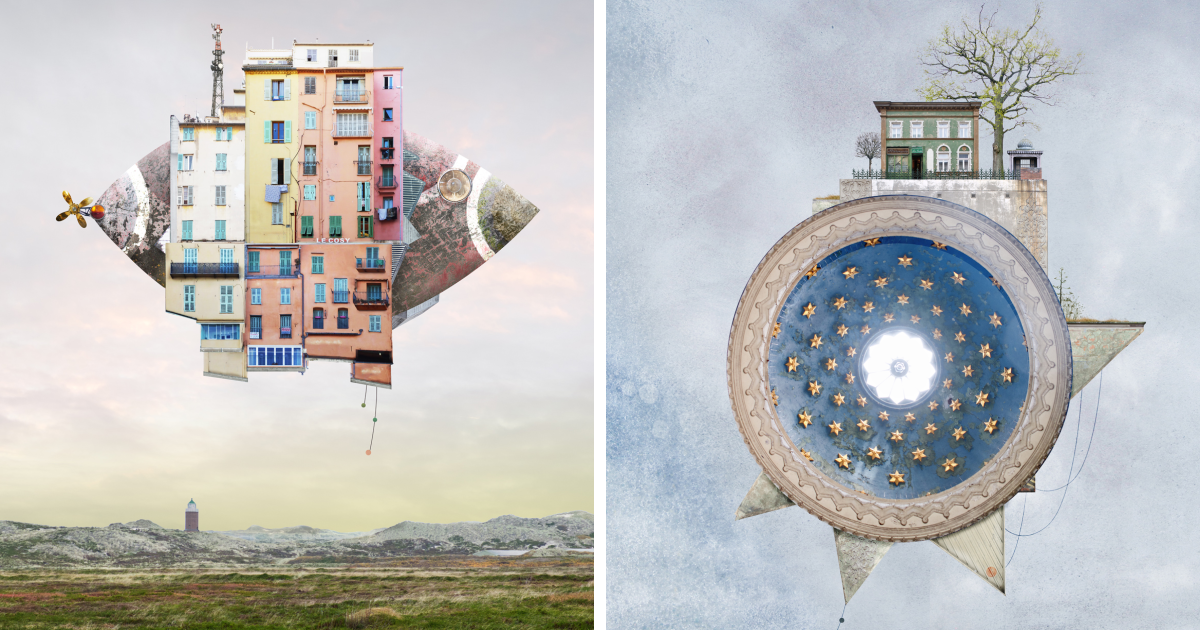
Surrealism thrives on unexpected combinations. A house floats. A door opens into the sea. A spoon becomes a moon. A piece of bread becomes reality, and marmalade becomes the human response to existence. The point is not nonsense for the sake of nonsense. The point is liberation: freeing the mind from automatic habits of seeing.
Surreal art often works because it keeps one foot in the familiar and one foot in the impossible. If everything is strange, we may feel lost. If everything is ordinary, we may feel bored. But when an ordinary thing behaves strangely, attention snaps awake. A teacup covered in fur, a train coming out of a fireplace, or a staircase that forgets gravity can make viewers ask: what else have I accepted too quickly?
The bread-and-marmalade metaphor does the same thing with language. It takes a breakfast object and stretches it into a philosophy. Suddenly, the kitchen table becomes a stage for big questions: What is real? What is chosen? What is added by the mind? And who left crumbs in the butter?
Why Everyday Objects Make Powerful Art
Everyday objects are useful because everyone knows them. Bread, coffee, doors, chairs, windows, spoons, shoes, oranges: these are not elite symbols locked inside a museum basement. They are part of common life. When artists transform them, the surprise becomes instantly accessible.
A floating castle may be beautiful, but a floating kitchen chair can be more unsettling because we know exactly how a chair is supposed to behave. It should sit there. It should support us. It should not drift across a cloudy sky like it has an appointment with destiny. The humor comes from the broken rule; the meaning comes from asking why the rule felt so natural in the first place.
That is the magic of “If Reality Is A Piece Of Bread I Have Some Marmalade.” It uses two humble objects to make a bigger claim. Reality may be basic, but imagination can make it layered. Life may give us structure, but creativity gives us flavor. The ordinary is not the enemy of wonder; it is the raw material.
The Philosophy of Spreading Something Sweet on Existence
There are many ways to respond to reality. Some people analyze it. Some resist it. Some accept it. Some turn it into spreadsheets, which is brave and slightly alarming. The marmalade approach is different: it says we should not deny reality, but we should participate in shaping our experience of it.
This is not toxic positivity. Marmalade does not pretend the bread is cake. It does not say, “Everything is perfect!” while the toaster is smoking and the rent is due. Instead, it says, “This is what exists. What can I add that is honest, beautiful, useful, or funny?”
That distinction matters. Creativity is not escape only. Sometimes it is repair. Sometimes it is translation. Sometimes it is the small act of taking a plain moment and giving it enough color to become bearable. A sketch in a notebook, a song hummed while washing dishes, a joke during a hard week, or a rearranged room can be a form of marmalade.
How Humor Helps Us Handle the Crusty Parts of Life
Humor is one of the finest marmalades available, and it requires no refrigeration. When life becomes too heavy, humor does not remove the weight, but it changes how we carry it. A funny metaphor gives the mind a little elbow room. It lets us look at a problem sideways instead of staring at it like a tax document with teeth.
Consider the difference between saying, “I am overwhelmed,” and saying, “My brain has opened 47 tabs and one of them is playing circus music.” The second sentence does not solve the problem, but it makes the experience visible. It turns stress into an image. Once stress has a costume, we can talk to it. Maybe not politely, but effectively.
The bread-and-marmalade line works because it is playful without being empty. It admits that reality is real, but refuses to let reality be boring. That is a valuable survival skill in a world where daily life includes both cosmic mystery and software updates.
Creativity as a Way of Seeing, Not Just Making
Many people think creativity belongs only to artists, writers, musicians, designers, and children with glitter glue. But creativity is not limited to making objects. It is also a way of seeing. It is the habit of asking, “What else could this mean?”
A creative person can look at rain and see inconvenience, atmosphere, memory, romance, laundry failure, or a free percussion concert on the roof. None of those interpretations cancels the others. They are layers. The rain is bread. The interpretation is marmalade.
This kind of seeing can be practiced. Look at a familiar object and describe it as if it came from another planet. A coffee mug becomes a ceramic cave for dark energy. A lamp becomes a domesticated sun. A sock lost in the dryer becomes evidence of a textile-based escape plan. Silly? Absolutely. Useful? More than we admit. Play loosens perception, and loosened perception is where new ideas sneak in wearing fake mustaches.
Why the Bitterness Matters
Marmalade is not only sweet. Good marmalade has bitterness from citrus peel. That bitterness is important because it keeps the sweetness from becoming flat. The same is true in art and life. A purely cheerful interpretation can feel dishonest. A purely bitter one can become exhausting. Depth often comes from the mix.
The best creative work usually contains contrast: beauty and unease, humor and sadness, order and disorder, bread and sharp citrus. That contrast feels human. We are not single-flavor creatures. We can laugh during grief, feel bored during success, feel hopeful in confusion, and crave toast at midnight like philosophers with low blood sugar.
When the title pairs bread with marmalade, it accidentally offers a balanced worldview. Reality gives us substance. Imagination gives us taste. Bitterness gives the sweetness credibility. Without the peel, it is just sugar. Without the bread, it has nowhere to land.
Digital Collage and the Art of Rebuilding the World
Digital collage is one of the clearest visual cousins of this idea. A collage artist takes pieces of real photographs, textures, buildings, skies, landscapes, and objects, then rearranges them into a world that feels impossible yet strangely believable. The result is not a rejection of reality. It is reality reassembled.
This matters because modern life already feels collaged. Our days combine physical spaces, digital screens, memories, advertisements, private worries, public news, and random videos of raccoons behaving like tiny criminals. We live inside overlapping fragments. Collage simply makes that condition visible.
In that sense, marmalade is a collage too. It holds peel, juice, sugar, heat, patience, and transformation in one jar. It is fruit reorganized into brightness. A surreal image does the same with perception: it cooks the familiar until it becomes something spreadable across the mind.
Practical Ways to Put Marmalade on Reality
1. Rename the ordinary
Choose one dull part of your day and give it a better title. “Commute” becomes “The Daily Parade of Brake Lights.” “Laundry” becomes “Textile Negotiations.” “Inbox cleanup” becomes “Dragon Taming with Attachments.” A new name can create a new relationship.
2. Collect small absurdities
Keep a list of strange things you notice: a pigeon staring into a bakery, a cloud shaped like a confused potato, a sign with bad punctuation, a chair abandoned on a sidewalk like it has seen too much. These details train the mind to find wonder in plain sight.
3. Make tiny art from real life
Take a photo, write a sentence, sketch a shape, or combine two unrelated ideas. You do not need a gallery. You need attention. Art begins when noticing becomes deliberate.
4. Add flavor without denying facts
If a day is difficult, do not force it to be cheerful. Add one honest improvement: music, fresh air, a good meal, a clean corner, a kind message, or five minutes of doing absolutely nothing with professional dedication.
5. Let contradiction exist
You can be tired and grateful. Worried and amused. Practical and dreamy. Bread and marmalade are not enemies. They are breakfast collaborators.
Experience Section: Living as Though Reality Needs Marmalade
There are days when reality arrives like dry toast. Nothing dramatic happens, but everything feels beige. The alarm rings with the emotional range of a microwave. The coffee is fine, but not heroic. The inbox contains messages that seem bred in captivity. Outside, the sky looks like it was designed by a committee trying not to offend anyone. On those days, the idea of adding marmalade to reality becomes less like a poetic slogan and more like basic emotional nutrition.
My own experience with this idea begins in small moments. Once, during a stressful workday, I noticed a slice of toast on a plate beside my laptop. It had cooled into something halfway between breakfast and building material. I was answering emails, overthinking a deadline, and generally behaving like a person who had mistaken urgency for personality. Then I added orange marmalade. The smell changed the room. The color changed the plate. The taste changed my mood just enough to remind me that a day is not only made of obligations. It is also made of sensory details waiting to be invited back in.
That is the practical power of the metaphor. “Marmalade” can be any small act that restores texture to life. It can be opening a window before starting work. It can be writing a ridiculous sentence at the top of a serious to-do list. It can be wearing bright socks to a meeting where everyone is discussing budgets in voices that sound stapled together. It can be taking a different route home and pretending, for ten minutes, that you are an explorer rather than a person trying to remember whether there is milk in the fridge.
Creative people often describe inspiration as a lightning strike, but most days it is closer to spreading something on bread. It is simple, repetitive, almost humble. You add one layer. Then another. You notice a phrase. You save an image. You laugh at an odd coincidence. You connect two ideas that were not previously speaking to each other. Suddenly the plain surface of reality has depth.
The metaphor also helps during difficult seasons. When life is painful, the goal is not to decorate suffering with fake sweetness. Nobody needs motivational marmalade slathered over real grief. But even in hard times, small flavors matter. A walk matters. A warm drink matters. A joke from a friend matters. A song that understands you for three minutes matters. These things do not erase reality; they help us remain human inside it.
In daily life, I think the best marmalade is attention. The more closely we look, the less flat the world becomes. A cracked wall becomes a map. A stranger’s laugh becomes music. Morning light on a kitchen counter becomes a tiny museum. Even boredom can become material if we treat it with curiosity. The bread was never only bread. We were simply hungry in a hurry.
Conclusion: Bring Your Own Marmalade
“If Reality Is A Piece Of Bread I Have Some Marmalade” is more than a quirky title. It is a compact philosophy of creative living. It tells us that the world may be built from ordinary things, but our experience of those things is alive, flexible, and deeply personal.
Reality gives us the slice: work, weather, routine, gravity, deadlines, dishes, headlines, and the occasional mysterious noise from the refrigerator. Imagination gives us the spread: humor, art, memory, attention, tenderness, rebellion, and wonder. Together, they make existence more flavorful.
The lesson is not to escape the real world. The lesson is to meet it with a spoon in hand. Add color where you can. Add wit when possible. Add beauty without apology. And when life seems plain, remember that even a humble piece of bread can become breakfast, comfort, metaphor, or masterpiece with the right marmalade.
Note: This article synthesizes real ideas from art history, surrealism, perception science, creativity research, and food culture, while presenting them in original language for web publication.