Note: HTML body only; SEO tags are included as JSON at the end.
Some people collect postcards. Some people bring home fridge magnets. And then there are the wonderfully patient artists who look at a mint tin and think, “Yes, this could hold the Rocky Mountains.” Tiny landscapes in mint tins turn American travel into something you can cradle in one hand: a desert sunset, a foggy Appalachian ridge, a granite cliff, a coastal path, or a wildflower meadow tucked inside a metal box that once held breath mints.
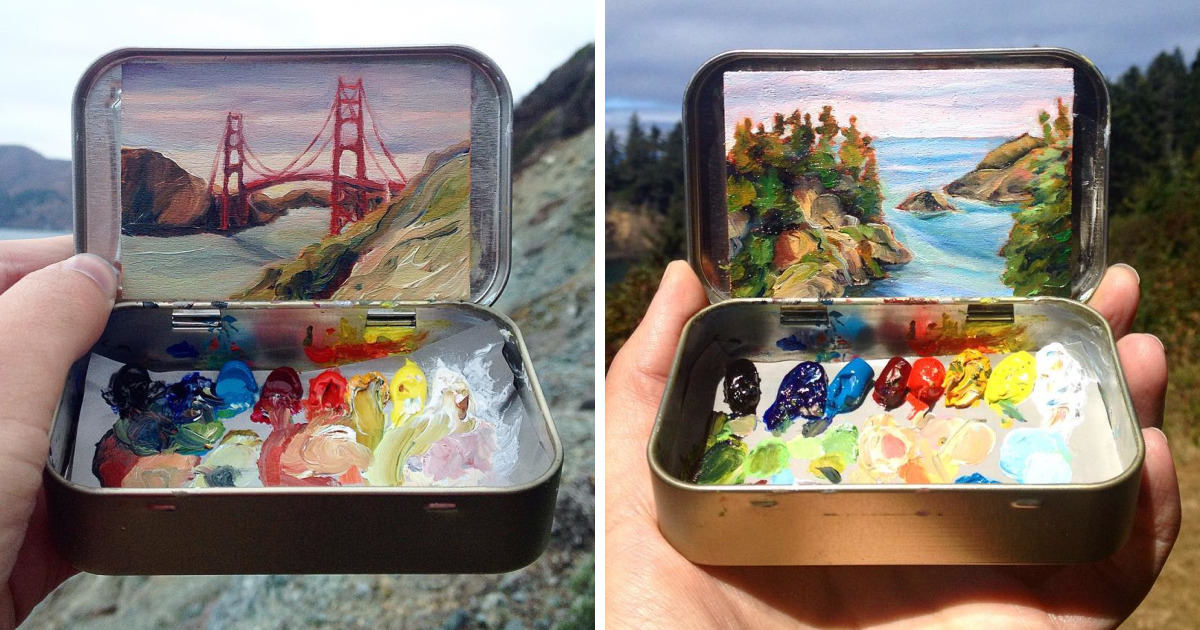
The idea sounds whimsical, but the craft is surprisingly serious. Artists such as Colorado-based Heidi Annalise helped popularize the magic of painting miniature landscapes inside old mint tins, transforming the lid into a tiny canvas and the base into a practical paint-mixing tray. Other miniature plein-air artists, including Remington Robinson, have taken the concept outdoors, painting small American scenes on location with the tin doubling as both studio and keepsake. The result is part travel journal, part fine art, part “how did someone paint an entire mountain range in something smaller than a sandwich?”
For DIY lovers, collectors, travelers, and miniature art fans, these tiny mint tin landscapes offer a fresh way to experience the USA. They are portable, personal, nostalgic, and surprisingly emotional. A landscape does not have to be huge to feel vast. Sometimes, the smallest version of a place is the one that makes you look the longest.
What Are Tiny Landscapes in Mint Tins?
Tiny landscapes in mint tins are miniature paintings or diorama-style scenes created inside small hinged metal containers, often recycled candy or mint tins. Some are painted directly on a primed panel fixed into the lid. Others are built as three-dimensional dioramas using paper, clay, moss, resin, wood scraps, tiny stones, and miniature figures. The tin becomes both frame and storage case, which makes the finished piece feel like a secret world.
Think of it as a pocket-sized national park, minus the parking pass and the squirrel trying to steal your granola bar. A Grand Canyon-inspired tin might use warm layers of rust, ochre, cream, and violet to suggest ancient rock strata. A Yosemite tin could show a thin white waterfall dropping between gray granite walls. A Maine coast tin might include a dark blue horizon, rocky shoreline, and a speck of lighthouse red. A Great Smoky Mountains tin may rely on stacked green ridgelines fading into mist.
The format is flexible. A mint tin can hold an oil painting, watercolor study, mixed-media collage, travel memory box, or handmade miniature scene. What ties them together is the compression of place: a big American landscape reduced to its most recognizable shapes, colors, and atmosphere.
Why Mint Tins Make the Perfect Travel Canvas
Mint tins are small, sturdy, inexpensive, and easy to find. They open like a tiny stage, with the lid acting as a background and the base serving as a palette, shelf, or foreground. Their size forces creative decisions. You cannot include every tree in the Rockies, so you choose the one dark pine silhouette that says “mountain trail.” You cannot paint every ripple in Lake Michigan, so you capture the bright strip of water and the sandy curve of shore.
That limitation is the charm. A tiny format rewards bold composition. Artists must simplify clouds, cliffs, rivers, and forests into readable shapes. This is why mint tin landscape art often feels more vivid than a larger souvenir. It does not overwhelm the viewer with detail. It offers a concentrated memory.
Mint tins also suit the American road-trip spirit. They fit in a backpack, glove compartment, picnic basket, or art pouch. A traveler can sketch from a scenic overlook, paint at a campsite, or build a tiny diorama after returning home. Instead of buying the same mass-produced souvenir as everyone else, you create a place-based object with your own fingerprints, brush marks, and possibly one suspiciously permanent smear of ultramarine blue on your jeans.
The Artists Who Made the Idea Feel Magical
Heidi Annalise’s mint tin landscapes became beloved online because they show how much wonder can fit in a small space. Her work often captures Colorado and other natural views in a loose, impressionistic style. The tin is not just packaging; it becomes part of the art. The open container shows the finished image above and the paint below, creating the feeling that the landscape has just been mixed from memory and light.
Remington Robinson’s miniature plein-air paintings bring a similar spirit with a slightly different method. He is known for using Altoids tins as tiny field painting kits, often attaching small panels inside and painting outdoor scenes on location. His approach highlights one of the best lessons of the form: small art can still be serious art. A painting does not need to be wall-sized to have atmosphere, depth, and personality.
Miniature communities have also embraced mint tins for dollhouse rooms, secret gardens, fantasy scenes, kitchens, backyards, and pocket dioramas. These projects prove that the tin is not only a painting tool. It is a container for storytelling. When that storytelling turns toward American landscapes, the possibilities become almost endless.
Traveling the USA Through Tiny Landscapes
The United States is practically showing off when it comes to landscape variety. In one country, artists can find glacier-carved valleys, desert canyons, Atlantic cliffs, Pacific beaches, prairie skies, cypress swamps, redwood forests, volcanoes, alpine lakes, and neon city skylines. For mint tin art, this variety is a gift. Every region has a visual signature that can be translated into miniature form.
Grand Canyon, Arizona: Layers in a Little Box
The Grand Canyon is one of the most satisfying landscapes to shrink into a mint tin because its identity is built on layers. A miniature version can use horizontal bands of burnt sienna, pale limestone, dusty rose, and shadowed purple. The Colorado River may appear as a thin blue-green thread at the bottom. The trick is not to paint every formation. It is to capture the feeling of time stacked in stone.
For a three-dimensional diorama, thin strips of painted paper or carved foam can create canyon shelves. A touch of matte medium mixed with sand gives texture without making the tin too bulky. Add a tiny overlook rail or a single raven silhouette, and suddenly the whole scene feels like a memory from the South Rim.
Yosemite, California: Granite, Waterfalls, and Drama
Yosemite is made for vertical composition. A mint tin lid can become a granite wall, with a white waterfall dropping from the top edge into a soft green valley. The park’s famous combination of cliffs, waterfalls, meadows, and giant trees gives artists strong shapes to work with. Even in miniature, a pale cliff face against a deep blue sky immediately suggests the Sierra Nevada.
Oil paint works beautifully for Yosemite-inspired tins because it allows soft blending in the sky and thick highlights on rock. Watercolor can also work if the artist keeps the values crisp. The important part is contrast: high granite, low meadow, bright falling water, and shadowed forest.
Acadia, Maine: Rocky Coast in Pocket Size
Acadia brings a completely different mood. Instead of desert heat or mountain drama, it offers rugged shoreline, dark evergreens, rounded stones, tide pools, and Atlantic light. In a mint tin, Acadia might appear as a strip of slate-blue ocean, a few jagged rocks, and a sunrise glow. A tiny dab of white paint can become crashing surf. A speck of red can suggest a distant jacket on a coastal trail.
For mixed-media artists, Acadia is fun because small pebbles, crushed shells, and textured paper can mimic the rocky shore. Just remember: a mint tin has limited depth. If your “boulder” prevents the tin from closing, congratulationsyou have invented a paperweight.
Great Smoky Mountains, Tennessee and North Carolina: Mist in Miniature
The Great Smoky Mountains are perfect for artists who love atmosphere. Instead of sharp desert edges or bright coastal contrast, these landscapes rely on overlapping ridges, soft fog, and deep greens. In a mint tin painting, each ridge can be a slightly lighter blue-green shape as it moves toward the horizon. The final effect feels calm, layered, and dreamy.
A Smokies-inspired tin can also include tiny wildflowers, a trail curve, or a cabin silhouette to nod toward Appalachian culture. This is a great subject for beginners because the soft transitions are forgiving. If one ridge gets blurry, just call it mist. Nature does it all the time.
The American Southwest: Desert Color That Pops
From Utah’s red rock country to New Mexico’s mesas and Arizona’s desert highways, the Southwest gives mint tin artists bold palettes. Terracotta cliffs, turquoise skies, sage-green shrubs, and golden light read clearly at small scale. A single cactus or rock arch can establish the scene without crowding the composition.
This region works especially well in gouache or acrylic because flat color shapes can feel graphic and modern. Add a tiny road curving into the background, and the tin becomes a pocket road trip.
The Pacific Northwest: Forests, Rain, and Moody Skies
Pacific Northwest landscapes are ideal for artists who enjoy deep greens and dramatic weather. A mint tin can hold a rainy trail, mossy forest, mountain lake, or fog-covered coastline. Instead of painting every branch, use dark triangular tree shapes and a few pale highlights. The viewer’s brain will do the rest.
For diorama makers, preserved moss or textured green paper can create lush forest floors. A tiny mirror or glossy resin can suggest a lake or puddle. Keep the palette cool and the mood quiet, like the tin has just finished listening to rain.
How to Make Your Own USA-Inspired Mint Tin Landscape
You do not need a studio, a degree, or a dramatic artist scarf to start. A basic mint tin landscape can be made with simple supplies: an empty clean tin, primer or gesso, a small wood or watercolor paper panel, paint, brushes, glue, and a reference photo. For dioramas, add air-dry clay, paper, felt, wire, tiny stones, moss, or recycled packaging.
Step 1: Choose a Place With a Strong Visual Identity
Pick a location that can be recognized through shape and color. The Grand Canyon has bands. Yosemite has cliffs. Acadia has rocks and sea. The Smokies have misty ridges. Monument Valley has buttes. The Florida Keys have turquoise water. A good tiny landscape begins with a simple visual “hook.”
Step 2: Prepare the Tin
Wash the tin and remove crumbs, dust, or mint powder. If painting inside, lightly sand the surface and apply primer so paint will grip. Some artists attach a small primed wood panel to the lid. Others paint directly onto the metal. If you want the tin to close, test the thickness of your materials before gluing everything down.
Step 3: Block the Big Shapes First
Miniature art rewards confidence. Start with the sky, horizon, landforms, and large color areas. Avoid tiny details too early. If the main shapes are strong, the piece will read well even from arm’s length. This is especially important for SEO-worthy photos later; tiny art needs clear contrast to look good online.
Step 4: Add Texture and Tiny Details
Once the base scene works, add the fun bits: a trail, a cabin, a cactus, a lighthouse, a line of trees, a river glint, or a little moon. In a diorama, build from background to foreground. Use small details sparingly. A single well-placed detail can feel charming. Fifty details can make the tin look like a craft store sneezed.
Step 5: Seal and Display
When the paint or glue is fully dry, seal the piece with an appropriate varnish or protective coating. Display it open on a shelf, mount it in a shadow box, add a magnet to the back, or keep it closed as a private travel memory. The best part is watching someone open it for the first time. Tiny landscapes have a delightful “surprise!” factor that regular wall art rarely gets.
Why These Miniature Landscapes Are So Shareable
Tiny mint tin landscapes are naturally photogenic. They combine scale contrast, travel nostalgia, and handmade charmthe holy trinity of “Wait, I need to send this to someone.” A photo of a mint tin painting held up against the real view is especially powerful. The viewer sees the full landscape and its miniature twin at once. It feels like the artist has captured the place in real time.
This makes the craft ideal for blogs, Instagram posts, Pinterest boards, travel journals, gift guides, and DIY tutorials. The keyword opportunities are strong without feeling forced: mint tin landscapes, miniature landscape painting, Altoids tin art, travel craft ideas, tiny diorama, plein air painting, recycled craft, USA landscape art, and handmade travel souvenirs all fit naturally into the topic.
The format also appeals to multiple audiences. Travelers love the destination angle. Artists love the challenge. Parents and teachers love the small-scale craft possibilities. Collectors love the uniqueness. Sustainability-minded readers appreciate the upcycled tin. And people who simply enjoy adorable things will arrive, point at the screen, and say, “Tiny!” which is a complete review.
Gift Ideas and Creative Uses
A mint tin landscape can be more than a personal project. It can become a meaningful handmade gift. Create a tiny version of the place where a couple got engaged, a family’s favorite camping spot, a childhood beach, a college town, or a bucket-list national park. Add a date or location name inside the base of the tin, and the piece becomes a memory capsule.
For classrooms, students can make mint tin landscapes while learning about geography, ecosystems, geology, or regional culture. One student might build a desert biome, another a coastal wetland, another a mountain forest. The finished tins can form a miniature map of the United States.
For travel bloggers, these projects create original visual content. Instead of using another standard scenic overlook photo, a blogger can show the destination translated into a tiny handmade object. That kind of content stands out because it feels personal and creative.
Common Mistakes to Avoid
The first mistake is overcrowding. A mint tin is not a storage unit for every landmark in America. Choose one scene and let it breathe. The second mistake is using materials that are too thick. Always close the tin gently before final gluing to make sure the scene fits. The third mistake is ignoring the background. In small art, the sky and horizon do a lot of storytelling.
Another common issue is weak contrast. A tiny painting needs clear value differences, or it becomes a polite blur. Squint at your work. If you cannot tell mountain from sky, darken one or lighten the other. Finally, avoid copying another artist’s work directly. Use real places, personal photos, or public travel inspiration, but create your own composition and style.
Experiences Inspired by Traveling the USA With Tiny Landscapes in Mint Tins
There is something surprisingly intimate about turning a huge American view into a tiny mint tin landscape. The experience changes how you look at travel. Instead of rushing through a scenic stop, snapping three photos, and hunting for the nearest coffee, you start asking better questions: What color is that shadow? Where does the ridge fade into the sky? What one shape makes this place recognizable? You become less of a tourist and more of a witness.
Imagine standing at a desert overlook in Arizona with a small tin in your hand. The real canyon stretches for miles, loud with color and silence at the same time. Your tin, by comparison, is hilariously small. It cannot hold the wind, the heat, or the dizzy feeling of looking down into geological time. But it can hold the memory of the moment you noticed the lavender shadow under a red cliff. That tiny observation becomes the soul of the piece.
On a misty morning in the Great Smoky Mountains, the experience is different. The landscape does not shout; it layers itself quietly. A mint tin version might begin with one dark green ridge, then another softer one, then a pale blue shape that almost disappears. Painting or building that scene teaches patience. You realize the Smokies are not just “green mountains.” They are distance, moisture, shadow, and soft light stacked like folded fabric.
Along the coast of Maine, a mint tin landscape becomes a lesson in texture. The rocks are not smooth gray blobs; they hold purple, brown, black, and silver. The ocean is not simply blue; it changes with the weather. A tiny brushstroke of white becomes foam. A sliver of orange becomes sunrise. When the tin closes, it feels like the coast has been tucked away for safekeeping.
The best part of this craft is that it does not demand perfection. In fact, the imperfections often make the piece better. A slightly crooked tree looks windswept. A rough cliff edge feels natural. A paint smudge in the base of the tin becomes part of the journey, proof that the landscape was made by a real person in a real moment, not printed by a machine with suspiciously clean hands.
Traveling the USA through mint tin landscapes also creates a collection with emotional geography. One tin may represent a family road trip through Utah. Another may capture a solo hike in Colorado. Another may preserve the beach where someone finally admitted they liked camping, as long as snacks were involved. Over time, the tins become a small map of lived experience. They do not just show where you went. They show what you noticed.
That is why these tiny landscapes feel bigger than their size. They encourage slow looking, creative reuse, and personal storytelling. They remind us that travel is not only about covering distance. Sometimes it is about paying attention closely enough that a mountain, canyon, coast, or forest can fit inside a mint tinand still feel wide open.
Conclusion
Traveling around the USA with tiny landscapes in mint tins is more than a cute craft trend. It is a creative way to celebrate place, memory, and the enormous variety of American scenery. From Grand Canyon layers to Yosemite waterfalls, Acadia shorelines, Smoky Mountain mist, Southwestern deserts, and Pacific Northwest forests, each region offers shapes and colors that translate beautifully into miniature art.
Whether you paint in oils, experiment with watercolor, build a tiny diorama, or create a mixed-media memory box, the mint tin format invites you to slow down and choose what matters most about a view. The finished piece is portable, personal, and wonderfully surprising. It proves that a landscape does not need a giant canvas to make an impression. Sometimes all it needs is a little metal box, a careful eye, and the courage to put an entire road trip where the mints used to be.