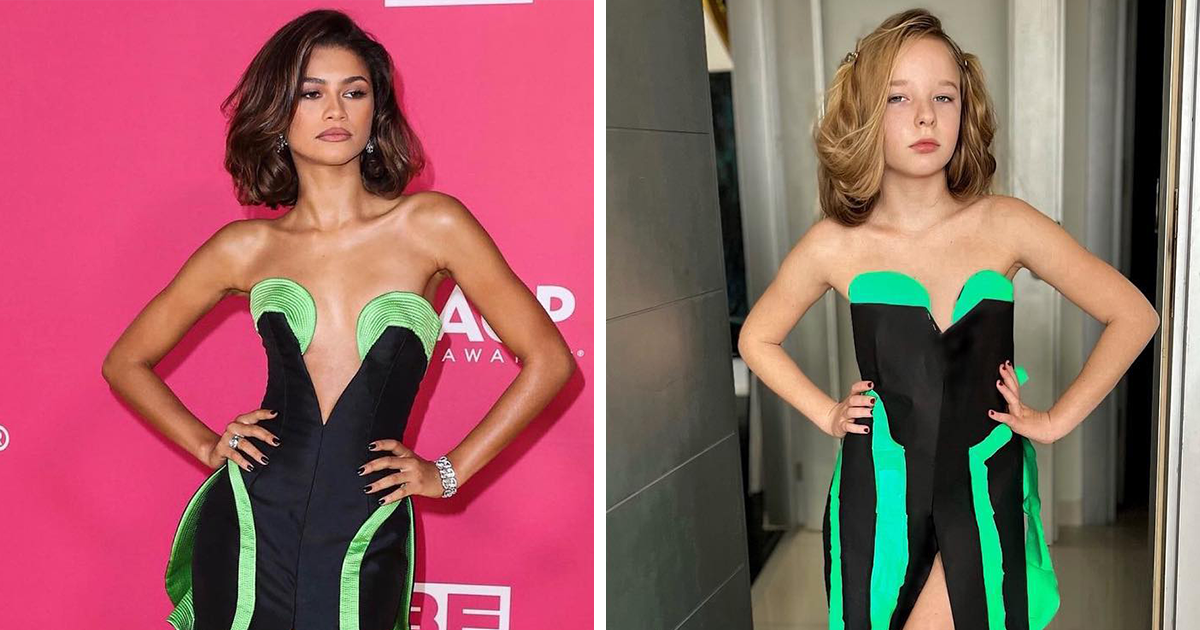
Some people see a cardboard box and think, “recycling.” Alya Chaglar and her daughter Stefani see a couture train, a dramatic shoulder piece, or a celebrity gown waiting for its close-up. Their viral mother-daughter red-carpet recreations prove that high fashion does not always need silk, diamonds, or a backstage team whispering into walkie-talkies. Sometimes, it only needs paper, foil, plastic, tape, a stapler, a little patience, and a child who knows how to pose like she owns the carpet.
The creative duo from Turkey has become known online for recreating extravagant celebrity outfits with simple household items. What began when Stefani was very young, posing in playful perspective “dresses” made from fruit, flowers, and everyday objects, has grown into a delightful DIY fashion series featuring looks inspired by stars such as Rihanna, Zendaya, Adele, Cate Blanchett, Beyoncé, Lady Gaga, Jennifer Lopez, Taylor Swift, and more. The magic is not only in the costumes; it is in the wink. These recreations are glamorous, funny, clever, and deeply charming all at once.
In a digital world crowded with filters, luxury hauls, and perfectly polished influencer content, Alya and Stefani’s homemade red-carpet looks feel refreshingly human. They remind us that creativity does not ask for a black card. It asks, “Do you have aluminum foil and ten minutes?”
Why These Mother-Daughter Red-Carpet Recreations Keep Winning the Internet
The appeal of this project is easy to understand. Red-carpet fashion is already theatrical. The Met Gala, Cannes Film Festival, the Grammys, Oscars, and other high-profile events turn clothing into performance art. A celebrity does not simply wear a dress; they arrive in a story. There may be feathers, sculptural sleeves, crystals, sheer panels, opera gloves, or a train long enough to require its own security detail.
Alya and Stefani take that drama and shrink it into a living-room-sized comedy masterpiece. A massive couture skirt becomes layered paper. Metallic armor becomes kitchen foil. A structured bodice becomes folded cardboard. A cloud-like gown becomes tissue or plastic arranged with surprising precision. The result is not a cheap imitation. It is a joyful translation.
That is the secret sauce. These looks are not trying to fool anyone into thinking they are designer originals. They are playful tributes. The humor comes from recognizing the famous silhouette and then realizing it was built from things you might find next to the snack drawer. It is fashion cosplay with a family-friendly twist.
From Household Items to High-Fashion Illusion
The project’s most impressive feature is its use of ordinary materials. Alya has described using items such as paper, plastic, tin foil, cardboard, and a stapler to build the looks. Many outfits reportedly take only about 10 to 30 minutes to create, which is wildly unfair to anyone who has ever spent 30 minutes looking for matching socks.
But speed does not mean sloppiness. The designs work because Alya understands the core elements of a red-carpet outfit: silhouette, color, proportion, texture, and attitude. A celebrity gown might be remembered for its dramatic shoulder line, huge skirt, shiny surface, or unusual cutout. The recreation captures that one unforgettable detail and exaggerates it just enough to make the joke land.
The Power of Silhouette
In fashion, silhouette is everything. A dress can be made from the finest fabric in Paris, but if the shape is forgettable, the camera moves on. Alya’s recreations often focus on outline first: the balloon skirt, the sharp sleeve, the sweeping cape, the column dress, the sculptural ruffle. By nailing the silhouette, the homemade materials suddenly feel intentional.
The Beauty of Imperfect Materials
Paper crinkles. Foil wrinkles. Plastic reflects light in strange ways. Instead of hiding these qualities, the project uses them. A shiny foil fold can echo metallic couture. A paper fan can mimic pleats. A trash bag can become a dramatic black gown. The imperfections are part of the charm, like a tiny rebellion against fashion’s obsession with flawless surfaces.
The Pose Finishes the Outfit
Stefani’s confidence is half the show. She does not just stand there wearing a paper dress. She serves the look. Chin up, shoulders angled, tiny celebrity energy activated. The pose turns craft supplies into a red-carpet moment. Without that performance, the costume would be cute. With it, the whole thing becomes iconic.
Why Parents Love This Kind of DIY Creativity
Beyond the laughs, these mother-daughter fashion recreations touch something deeper: creative play. Child-development experts often emphasize that play helps children build imagination, communication, problem-solving skills, and parent-child connection. A project like this checks all those boxes while also leaving glitter, paper scraps, and possibly one missing stapler in its wake.
When a parent and child make something together, the activity becomes more than a craft. It becomes a conversation. Which dress should we recreate? What can we use for the sleeves? How do we make this stand up? Should we try foil, or will that make us look like a fashionable baked potato? These silly questions invite planning, experimentation, and laughter.
Process-based art is especially valuable because the child gets to explore materials, make choices, and see mistakes as part of the adventure. Not every fold will work. Not every paper skirt will stay in place. But that is exactly where creative thinking grows. The problem is not “failure.” The problem is simply the next design challenge.
Red-Carpet Fashion Is Already a Kind of Storytelling
Part of the reason these recreations are so satisfying is that celebrity fashion has become a cultural language. A red-carpet look can signal elegance, rebellion, nostalgia, humor, power, romance, or pure chaos. The Met Gala, for example, is famous for turning fashion into an interpretation of a theme. The Costume Institute at the Metropolitan Museum of Art treats fashion as a serious art form with historical and cultural value, which helps explain why the world keeps paying attention to what celebrities wear on museum steps.
Alya and Stefani’s recreations enter that same conversation from a totally different door. Instead of asking, “Who designed it?” they ask, “How can we understand it?” Recreating a look forces you to notice its structure. Suddenly, a celebrity gown is not just “pretty.” It has architecture. It has rhythm. It has balance. It has a ridiculous sleeve that somehow works because fashion is brave like that.
This is why the project feels educational without becoming boring. It teaches visual literacy. It trains the eye to spot shapes, textures, and styling choices. And it does all of that while making people smile.
The Upcycling Angle: Glamour Without Waste
There is also a sustainability lesson tucked inside the fun. Fashion waste is a serious issue, and textile recycling rates remain low in the United States. That does not mean every child with a roll of foil is solving the global waste crisis. But projects like this can encourage a healthier relationship with materials. They show that objects can have a second life before they are thrown away.
Upcycling has become increasingly visible in fashion, from student collections to professional designers experimenting with recycled or discarded materials. The idea is simple: instead of treating waste as the end of a story, treat it as raw material for a new one. Alya and Stefani’s red-carpet recreations make that idea approachable. You do not need a studio. You need imagination, a safe workspace, and permission to look a little silly.
What Makes the New 30 Pics So Fun?
The new batch of 30 pictures continues the formula fans love: big celebrity inspiration, tiny DIY budget, maximum personality. The recreated looks often highlight bold gowns and dramatic red-carpet moments rather than simple outfits. That is important. A plain black dress would be too easy. The best targets are the ones with volume, texture, sparkle, strange proportions, or a design detail so bold it practically waves from across the internet.
Think of the kinds of looks that dominate award-season slideshows: a silver sculptural gown, a feathered cape, a massive pink skirt, a sleek black dress with architectural shoulders, or a romantic train spilling behind the wearer. These outfits are memorable because they take risks. Alya and Stefani’s versions take a different kind of risk: “Can we make this with what is already in the house?”
That question is what keeps the project fresh. It is part fashion review, part craft challenge, part family comedy. Every image invites viewers to compare the original with the homemade version and then admire how much personality can be squeezed out of humble materials.
Why the Internet Responds to Wholesome Creativity
Online audiences can be brutally hard to impress. We scroll past luxury, drama, celebrity gossip, and professionally produced content all day. Yet a mother and daughter with cardboard couture can stop people mid-scroll. Why? Because the content feels warm.
It is not mean-spirited. It does not mock the celebrities. It celebrates the looks while also making fashion feel less intimidating. The series says, “Yes, couture is grand and expensive, but style is also play.” That message is easy to love.
There is also something universally relatable about children dressing up. Many people remember turning bedsheets into capes, towels into princess trains, or cardboard boxes into spaceships. Alya and Stefani simply upgraded that childhood instinct into a mini editorial shoot. The result feels nostalgic and new at the same time.
How to Try a Red-Carpet Recreation at Home
You do not need to recreate a full gown to enjoy this idea. Start small. Pick one celebrity look with a clear shape or color story. Then gather safe household materials: wrapping paper, tissue paper, cardboard, ribbon, aluminum foil, old fabric, paper bags, or clean packaging. Avoid sharp objects, choking hazards, and anything that could irritate skin. Adult supervision is not optional; the stapler is not a toy, even if it is currently helping build a faux couture sleeve.
Step 1: Choose a Look With One Strong Feature
A huge skirt, dramatic cape, bright color, metallic shine, or unusual headpiece will be easier to recreate than a subtle designer dress. Big details read well on camera.
Step 2: Build the Shape First
Before decorating, figure out the outline. Does the dress flare out? Does it hang straight? Does it need shoulder volume? Shape matters more than perfect materials.
Step 3: Keep It Comfortable
The child should be able to move, breathe, laugh, and take the costume off easily. This is a photo project, not a medieval armor fitting.
Step 4: Take the Photo Like a Fashion Shoot
Good lighting, a clean background, and a confident pose can transform a homemade outfit. The attitude sells the look. Bonus points for dramatic eye contact with the camera.
What This Mother-Daughter Project Teaches Us About Style
The biggest lesson from Alya and Stefani’s work is that style is not the same as money. Money can buy fabric, tailoring, and access. It cannot automatically buy wit, timing, imagination, or joy. These recreations are memorable because they understand fashion as a form of play.
They also challenge the idea that creativity must be polished before it is shared. Sometimes the best creative projects are the ones that let the tape show a little. The visible construction reminds us that someone made this. Someone had an idea, tried it, adjusted it, laughed at it, and posed proudly anyway.
That is an important message for adults, too. Many grown-ups avoid creative hobbies because they think they need to be “good” first. Alya and Stefani’s project says the opposite: begin with delight. Skill can follow. Confidence can follow. But delight should lead.
Extra Experiences: What Families Can Learn From Recreating Extravagant Red-Carpet Looks
Trying a project like “Mother And Daughter Continue To Recreate Extravagant Red-Carpet Looks With Simple Household Items, And They Totally Nail It” can become one of those family experiences that starts as a joke and turns into a favorite memory. Imagine a Saturday afternoon when the house is quiet, everyone is bored, and someone says, “What if we made that celebrity dress out of paper bags?” Suddenly, the living room becomes a studio, the dining table becomes a design department, and the hallway becomes a runway.
The first experience families often notice is teamwork. A child may have a wild idea, while the parent figures out how to make it safe and wearable. One person folds paper. Another cuts ribbon. Someone holds the original photo and says, “No, the sleeve is bigger. Much bigger. Like it has its own weather system.” That kind of collaboration teaches compromise in a natural way. The final result belongs to everyone.
The second experience is confidence-building. Children love seeing their ideas become real. When they step into a homemade gown and pose for a picture, they are not just copying a celebrity. They are practicing self-expression. They learn that they can transform ordinary things into something surprising. That feeling can stay with them long after the costume is recycled.
The third experience is problem-solving. Household materials rarely behave like fabric. Paper tears. Foil collapses. Cardboard refuses to curve. Tape sticks to the wrong thing. These little disasters are not interruptions; they are the project. Each problem asks the child and parent to think differently. Can we layer it? Fold it? Support it from behind? Use a belt? Switch materials? The answer is almost always somewhere between engineering and comedy.
The fourth experience is learning to appreciate design. After recreating even one red-carpet look, you start noticing details you once ignored. Why does a train flow that way? Why does a shoulder line change the mood of a dress? Why do metallic materials photograph so dramatically? Children begin to see clothing as design, not just decoration. Adults may also gain new respect for costume makers, stylists, photographers, and designers who create these moments professionally.
The fifth experience is laughter. Not polite laughter. Real, snorting, “the cardboard crown fell over again” laughter. That matters. Families do not only bond through serious conversations and perfect vacations. They bond through ridiculous shared experiments. A red-carpet recreation made from snack boxes and wrapping paper may not last forever, but the photo and the story will.
Finally, this kind of project encourages families to spend less and imagine more. Instead of buying another costume, they can build one. Instead of scrolling through celebrity photos passively, they can respond creatively. Instead of treating household items as disposable, they can ask what else those materials might become. That shift is small, but powerful. It turns consumption into creation.
That is why Alya and Stefani’s project continues to resonate. It is not only about 30 new pictures. It is about the feeling those pictures create: the belief that glamour can be funny, parenting can be creative, and a roll of foil can have a better career than expected.
Conclusion
Alya Chaglar and Stefani’s red-carpet recreations are more than adorable internet content. They are a reminder that creativity is often hiding in plain sight, somewhere between the recycling bin and the kitchen drawer. By recreating extravagant celebrity looks with simple household items, this mother-daughter duo turns fashion into play, parenting into collaboration, and everyday materials into tiny couture moments.
Their work succeeds because it has heart. It honors the drama of red-carpet fashion while making it accessible, funny, and wonderfully human. Whether the inspiration comes from Rihanna, Zendaya, Adele, Cate Blanchett, or another style icon, the result is always the same: a homemade look that totally nails the spirit of the original without losing its own personality.
In a culture that often treats glamour as something distant and expensive, Alya and Stefani prove that imagination is still the best accessory. And thankfully, it pairs beautifully with tin foil.