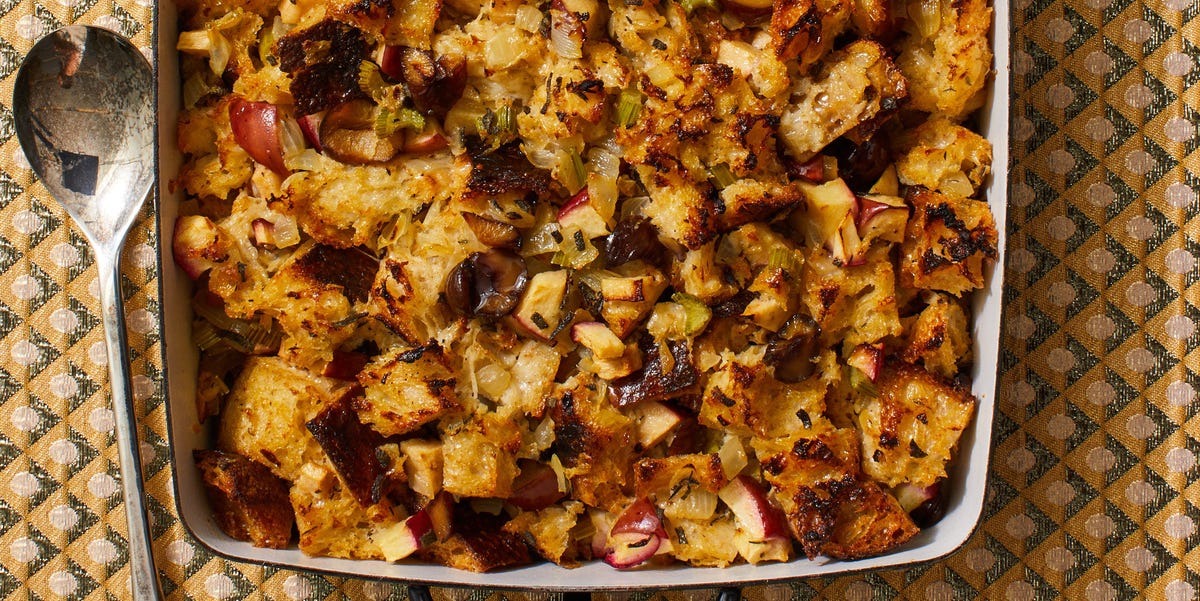
There are side dishes, and then there are holiday side dishes that quietly steal the whole show while the turkey pretends not to notice. Apple-chestnut stuffing belongs in the second category. It is buttery, savory, a little sweet, deeply aromatic, and blessed with the kind of texture that makes everyone hover near the baking dish with a “just one more spoonful” attitude. In other words, it is not here to play backup. It is here to become a tradition.
The best apple-chestnut stuffing recipe balances contrasts beautifully. Tender bread cubes soak up flavorful broth while still keeping their shape. Sweet-tart apples brighten the richness. Chestnuts bring a mellow, nutty flavor that feels elegant without being fussy. Onion, celery, sage, thyme, parsley, and butter do what they have always done for great stuffing: make the kitchen smell like the holidays have officially clocked in for work.
This version keeps things classic, but not boring. It is sturdy enough for a Thanksgiving table, cozy enough for Christmas dinner, and tasty enough to justify making in November and then thinking about in February. Let’s be honest: that is the true test of a great stuffing.
Why This Apple-Chestnut Stuffing Works
A truly great stuffing is not just a pile of seasoned bread. It is a game of balance. Too dry, and it eats like seasoned croutons with a bad attitude. Too wet, and you have savory bread pudding that lost confidence. This recipe lands in the sweet spot.
The flavor balance is spot-on
Apples add brightness and gentle sweetness, which keeps the stuffing from tasting heavy. Chestnuts add a subtle earthy richness that feels festive and a little luxurious. Fresh herbs keep everything lively, while butter ties the whole thing together like the world’s most delicious peace treaty.
The texture has contrast
The best stuffing should be moist in the center and lightly crisp on top. Drying the bread before mixing helps the cubes absorb broth and butter without collapsing into mush. That means every bite gets a mix of tender, golden, and just slightly crisp edges.
It feels special without being difficult
Apple-chestnut stuffing sounds like something you would order at a charming inn with linen napkins and suspiciously perfect candles. But the method is simple: dry the bread, cook the vegetables, add the apples and chestnuts, pour in broth, toss, bake, and accept compliments with grace.
Ingredients for the Best Apple-Chestnut Stuffing
Here is what you need for a classic, deeply flavorful homemade apple-chestnut stuffing recipe.
- 1 loaf sturdy country bread or sourdough, cut into 3/4-inch cubes
- 8 tablespoons unsalted butter
- 1 large yellow onion, finely chopped
- 4 celery stalks, finely chopped
- 2 medium apples, peeled or unpeeled, cored, and diced
- 1 1/2 cups cooked chestnuts, roughly chopped
- 2 teaspoons chopped fresh sage
- 1 1/2 teaspoons chopped fresh thyme
- 1/4 cup chopped fresh parsley
- 2 1/2 to 3 cups low-sodium chicken broth or vegetable broth
- 2 large eggs, lightly beaten
- 1 1/2 teaspoons kosher salt, or to taste
- 1/2 teaspoon black pepper
You can also add a small splash of apple cider for extra fall flavor, or a handful of dried cranberries if you want a sweeter finish. But the core recipe does not need much embellishment. It already knows it looks good.
Choosing the Best Ingredients
Best bread for stuffing
Use a bread with enough structure to hold up once moistened. Country bread, sourdough, French bread, or a good bakery loaf all work well. Very soft sandwich bread can work in a pinch, but a sturdier loaf gives a more satisfying texture. Day-old bread is ideal, though fresh bread can be dried in the oven.
Best apples for stuffing
Choose apples that hold their shape and bring a sweet-tart flavor. Honeycrisp, Braeburn, Pink Lady, Gala, and Jonagold are all strong choices. You want apples that soften but do not disappear into the stuffing like they are trying to avoid responsibility.
Best chestnuts for stuffing
Jarred or vacuum-packed cooked chestnuts are convenient and excellent here. Fresh chestnuts can be roasted and peeled if you are feeling ambitious and festive. Chestnuts have a softer, starchier texture than other nuts, so they blend into stuffing beautifully instead of fighting for attention.
How To Make Apple-Chestnut Stuffing
Step 1: Dry the bread
Preheat the oven to 300°F. Spread the bread cubes on two baking sheets and bake for 25 to 35 minutes, stirring once or twice, until the bread is dry but not deeply browned. Let it cool slightly. This step matters more than people think. Dry bread is the difference between “holiday masterpiece” and “why is this spoonable sponge?”
Step 2: Cook the aromatics
Melt the butter in a large skillet or Dutch oven over medium heat. Add the onion and celery and cook for 8 to 10 minutes, until softened and fragrant. Season with salt and pepper.
Step 3: Add apples, chestnuts, and herbs
Stir in the diced apples, chestnuts, sage, thyme, and parsley. Cook for another 3 to 5 minutes, just until the apples start to soften slightly. The goal is not applesauce. The goal is tender fruit that still knows it is an apple.
Step 4: Combine everything
Place the dried bread cubes in a large bowl. Add the warm vegetable mixture and toss gently. Pour in 2 1/2 cups broth and the beaten eggs, then mix until the bread is evenly moistened. If it still seems dry, add more broth a little at a time. The mixture should feel moist throughout but never soupy.
Step 5: Bake until golden
Butter a 9-by-13-inch baking dish or similar casserole. Spread the stuffing evenly in the dish. Cover with foil and bake at 375°F for 30 minutes. Remove the foil and bake for another 15 to 20 minutes, until the top is golden and lightly crisp.
Step 6: Serve warm
Let the stuffing rest for 5 to 10 minutes before serving. This gives the interior a chance to settle and makes scooping easier. It also gives the family time to circle it like sharks in tasteful sweaters.
Tips for the Best Apple-Chestnut Stuffing Recipe
Do not skip drying the bread
One of the biggest stuffing mistakes is starting with bread that is too fresh and soft. Dried bread absorbs broth more evenly and gives you a better texture after baking.
Use broth carefully
The exact amount depends on your bread. Start with less, then add more if needed. You are looking for moist, not drenched. If the mixture pools liquid at the bottom of the bowl, you have gone too far.
Season in layers
Season the vegetables while they cook, then taste the combined mixture before baking if you are comfortable doing so. Bread has a funny way of swallowing flavor if you are timid with seasoning.
Make it ahead
This stuffing is wonderfully make-ahead friendly. Assemble it the day before, cover, refrigerate, and bake when needed. You may need a few extra minutes in the oven if it goes in cold.
Apple-Chestnut Stuffing Variations
Sausage apple-chestnut stuffing
Brown 8 to 12 ounces of sausage before cooking the onions and celery. This adds richness and makes the stuffing even heartier. Italian sausage or mild breakfast sausage both work nicely.
Vegetarian apple-chestnut stuffing
Use vegetable broth and make sure your bread is vegetarian-friendly. Add sautéed mushrooms for extra savory depth. Mushrooms and chestnuts get along like old friends at a reunion.
Cornbread apple-chestnut stuffing
Swap part of the bread for cubed cornbread. The result is a little sweeter, softer, and especially nice if you like Southern-style holiday sides.
Extra-fruity holiday stuffing
Add dried cranberries, chopped dried apricots, or even a small splash of cider. This version pairs especially well with roast turkey and pork.
What To Serve With Apple-Chestnut Stuffing
This stuffing recipe is incredibly versatile. It belongs next to roast turkey, herb-roasted chicken, pork loin, or even a holiday vegetarian centerpiece. It also works beautifully with classic sides like green beans, roasted carrots, Brussels sprouts, cranberry sauce, mashed potatoes, and gravy. In fact, gravy is highly encouraged. Nobody is handing out awards for restraint at the holiday table.
Storage and Reheating
How to store leftovers
Let the stuffing cool, then refrigerate it in an airtight container for up to 4 days.
How to reheat stuffing
Reheat in a covered baking dish at 350°F until warmed through. Add a splash of broth before reheating if it seems dry. Individual portions can be microwaved, but the oven keeps the top from giving up entirely.
Can you freeze it?
Yes. Bake it first, cool completely, wrap well, and freeze for up to 1 month for best quality. Thaw overnight in the refrigerator before reheating.
Food Safety Note
If you bake the stuffing separately, life is generally simpler and the texture is easier to control. If you choose to stuff a turkey, make sure the center of the stuffing reaches 165°F. That is the number that matters. Holiday confidence is lovely, but a thermometer is lovelier.
Final Thoughts
The best apple-chestnut stuffing recipe feels like everything people love about the holidays packed into one casserole dish. It is savory, buttery, herbaceous, gently sweet, and textured in all the right ways. It tastes nostalgic and a little refined at the same time, which is a rare trick for anything made primarily of bread.
What makes this recipe special is not just the ingredient list. It is the way the flavors support each other. Apples keep things bright. Chestnuts add depth. Herbs make everything smell irresistible. And the bread, when properly dried and carefully moistened, becomes the kind of tender, golden base that makes the whole dish unforgettable.
So whether you are planning a Thanksgiving feast, a Christmas dinner, or just a cold-weather meal that deserves something a bit more exciting than ordinary sides, this homemade apple-chestnut stuffing is a strong choice. Make it once, and there is a decent chance someone will request it every year after that. Congratulations in advance on your new seasonal obligation.
Experience: Why Apple-Chestnut Stuffing Becomes the Dish Everyone Talks About
There is something almost theatrical about bringing a pan of apple-chestnut stuffing to the table. The top is browned and a little crisp, the center stays soft and fragrant, and the aroma of butter, sage, onion, and apples tends to arrive before the dish itself. People who claim they are “just having a little” somehow return with a larger spoon the second time. That is not a coincidence. That is stuffing math.
One of the most interesting things about this recipe is how it changes the mood of a meal. Standard stuffing is comforting, yes, but apple-chestnut stuffing feels a little more memorable. It tastes familiar enough to please traditionalists, yet distinctive enough to make someone pause mid-bite and ask, “Wait, what’s in this?” That is usually your cue to say “chestnuts” in a calm, modest tone, even though internally you are accepting an imaginary culinary award.
From a cook’s perspective, this recipe also creates a better kitchen experience than many overly complicated holiday sides. The prep is straightforward, the ingredients are easy to understand, and the payoff feels bigger than the effort. Drying the bread makes the house smell warm and bakery-like. Cooking the onion and celery in butter creates the official opening ceremony of the holiday season. Adding the apples and chestnuts is where the whole thing starts to feel special. Suddenly, it is not just stuffing. It is the stuffing.
Another reason people love this dish is its flexibility. Families often adapt it over time. Some add sausage for a richer, heartier version. Some use sourdough for extra character. Some lean sweeter with dried cranberries, while others keep it deeply savory with extra herbs and black pepper. Yet even with those changes, the core experience stays the same: a pan of stuffing that tastes cozy, festive, and deeply homemade.
It is also one of those rare holiday dishes that can create food memories across generations. Kids may come for the buttery bread and mild sweetness from the apples. Adults appreciate the more subtle chestnut flavor and herb-forward depth. Grandparents often approve because it still feels rooted in tradition. That broad appeal is not easy to pull off. Plenty of holiday dishes divide the room. Apple-chestnut stuffing tends to unite it.
The leftovers deserve their own paragraph of respect. The next day, warmed in the oven with a spoonful of broth, it becomes rich and comforting all over again. Some people tuck it into turkey sandwiches. Others top it with a fried egg and call it brunch, which is a smart and noble use of resources. Cold-weather food rarely gets more satisfying than that.
In the end, the experience of making and serving the best apple-chestnut stuffing recipe is about more than flavor. It is about ritual, aroma, texture, and the tiny thrill of watching a humble side dish become one of the stars of the meal. It is the kind of recipe that feels generous. It fills the kitchen with warmth, fills the table with expectation, and fills everyone’s plate whether they planned for that or not. And honestly, that is exactly what great holiday cooking is supposed to do.