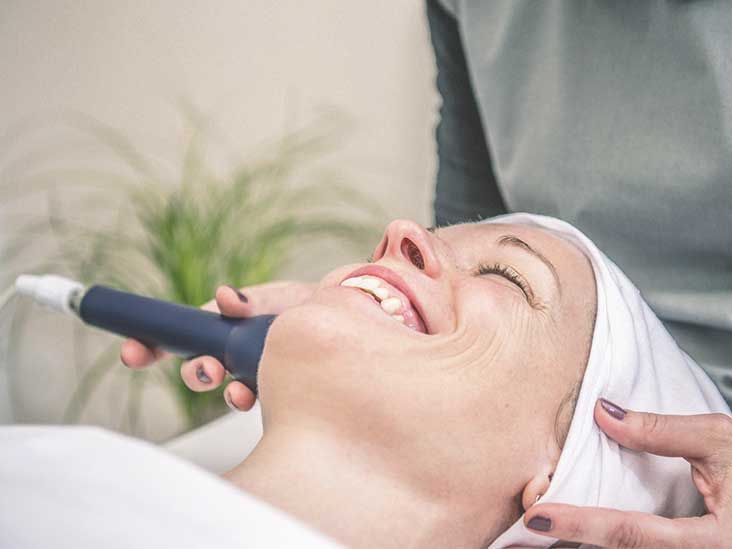
Ultherapy has one of those beauty-treatment names that sounds either futuristic or slightly made up, like something a sci-fi spa would offer between cryo facials and moon dust scrubs. But unlike a lot of trendy treatments that show up, go viral, and quietly disappear into the internet’s “remember this?” pile, Ultherapy has stayed relevant for a reason: it targets skin laxity with focused ultrasound energy and promises a lift without surgery, stitches, or a dramatic “I have taken two weeks off and I am definitely not talking about it” recovery period.
So, does Ultherapy work? The honest answer is yes, but with a giant asterisk made of collagen fibers. It can work well for the right person, on the right areas, with the right expectations. It is not a surgical facelift in disguise. It is not a magic wand for severe sagging. And it is definitely not one of those treatments where you walk in looking tired and float out looking 22 with cheekbones sharp enough to open packages.
What Ultherapy can do is create a modest, gradual lift in people with mild to moderate skin laxity, especially around the brow, jawline, under-chin area, neck, and upper chest. It is best understood as a collagen-stimulation treatment, not a shortcut to surgery-level results. Once you view it that way, the treatment starts to make a lot more sense.
What Is Ultherapy?
Ultherapy is a noninvasive cosmetic treatment that uses microfocused ultrasound energy to heat targeted tissue below the surface of the skin. The goal is to stimulate the body’s natural wound-healing response so it builds new collagen over time. That new collagen is what helps the skin look firmer, tighter, and a little more lifted.
The treatment is FDA-cleared for lifting the eyebrow, the skin on the neck, and skin under the chin, and for improving lines and wrinkles on the upper chest, also called the décolletage. That clearance matters because it tells you this is not random spa folklore wrapped in fancy branding. It is a device-based treatment with specific cleared uses.
One of Ultherapy’s biggest selling points is that it uses real-time ultrasound visualization. In simple terms, that means a trained provider can see the tissue layers during treatment and place energy where it is intended to go. That does not make the procedure foolproof, but it does make it more precise than treatments that rely only on surface landmarks.
How Does Ultherapy Work?
Think of your skin as a mattress that has lost some of its bounce over time. Creams can smooth the sheets. Makeup can improve the lighting. Good skin care can absolutely help. But if the internal structure has loosened, you need something that works deeper than the surface. Ultherapy tries to do that by delivering focused ultrasound energy into the foundational layers where collagen remodeling happens.
Those tiny points of thermal injury are deliberate. They trigger a repair response, and your body answers by producing fresh collagen and, over time, improving firmness. This is why Ultherapy is not really an instant-gratification treatment. Some people notice a slight immediate tightening, but the real change usually shows up gradually over two to three months, with improvement that can continue for several months after that.
This also explains why the treatment feels so different from a facial. A facial says, “Relax, I brought cucumber slices.” Ultherapy says, “We’re doing construction under the skin now.”
So, Does Ultherapy Actually Work?
Yes, Ultherapy does work for many patients, especially those with mild to moderate facial or neck laxity. Clinical reviews and dermatologist guidance consistently support the same basic conclusion: ultrasound-based skin tightening can produce a visible but typically modest lift, and the best candidates tend to be people with early to moderate sagging rather than advanced loose skin.
That distinction is everything. If your goal is a subtle improvement in brow position, better definition under the chin, a firmer-looking neck, or smoother chest lines, Ultherapy may be a very reasonable option. If your goal is dramatic tightening, major jowl correction, or a full lower-face reset, surgery is still the more effective tool.
In other words, Ultherapy works best when the skin still has something to work with. If the tissue is only beginning to droop, collagen stimulation can make a noticeable difference. If there is significant excess skin, heavy laxity, or volume loss, the treatment may help a little, but it is unlikely to deliver the “before and after” transformation many people secretly hope for.
What Kind of Results Can You Expect?
Most people should expect a natural-looking improvement rather than a dramatic overhaul. The change is often described as looking more rested, slightly firmer, or a little more lifted. Friends may not immediately say, “Aha, ultrasound!” They are more likely to say, “You look good lately,” which, to be fair, is the entire point of most cosmetic treatments.
Areas that often respond well include:
- The brow, for a subtle lifted look.
- The area under the chin, where mild laxity can soften jawline definition.
- The neck, especially early “crepey” or loose-looking skin.
- The upper chest, where lines and wrinkles may improve over time.
Results are usually not immediate. Many patients start noticing meaningful changes somewhere around the two- to three-month mark, with some continued improvement up to six months. That delayed effect is both a strength and a weakness. It feels natural, but it also requires patience, which is not always the internet’s favorite personality trait.
Who Is a Good Candidate for Ultherapy?
The best candidate for Ultherapy is usually someone in their 30s or older with mild to moderate skin laxity who wants a non-surgical lift and understands that subtle improvement is still improvement. Some younger patients also use it as a preventive or maintenance treatment, especially when they are starting to notice looseness around the jawline or under the chin.
You may be a strong candidate if you:
- Have mild to moderate loose skin on the face or neck.
- Want a nonsurgical treatment with little to no downtime.
- Prefer gradual, natural-looking results over sudden dramatic change.
- Are realistic about what one treatment can and cannot do.
You may be a weaker candidate if you:
- Have severe skin laxity or a lot of excess skin.
- Want facelift-level lifting.
- Need volume restoration more than tightening.
- Expect one session to solve every sign of aging from forehead to collarbone.
Some reviews also suggest that outcomes may be less impressive in patients with excessive laxity and certain body-composition factors. That is why a skilled consultation matters. A good provider should tell you when Ultherapy is appropriate and when another treatment would make more sense.
What Happens During the Procedure?
A provider cleanses the skin, applies ultrasound gel, maps the treatment area, and uses a handheld device to deliver ultrasound energy at planned depths. Depending on the areas treated, the session may take about 30 to 90 minutes, though some practices quote longer visits when multiple areas are treated or when numbing and prep time are included.
Most people describe the sensation as heat, tingling, zapping, or brief pulses of discomfort while the energy is being delivered. Translation: it is tolerable for many patients, but it is not exactly a nap-friendly experience. Bony areas like the jawline and brow can feel more intense. Some providers recommend oral pain medication before the session; others may use topical numbing depending on the treatment plan and the patient’s pain tolerance.
The good news is that the discomfort usually happens only during the actual energy delivery. Once the treatment is done, most people go right back to normal activities.
Ultherapy Downtime, Recovery, and Side Effects
One reason Ultherapy remains popular is the lack of real downtime. Most patients can return to work, wear makeup, and resume regular skin care shortly after treatment. That makes it appealing for people who want to do something noticeable without disappearing from public life for a week.
Common short-term side effects can include:
- Redness.
- Swelling.
- Tenderness.
- Tingling.
- Bruising.
- Temporary numbness in small areas.
These reactions are generally mild and temporary. Some people feel sore or tender for days to weeks, especially around the jaw or neck. Serious complications are not common, but no energy-based device is risk-free. That is another reason provider experience matters. The treatment may be noninvasive, but “noninvasive” should never be confused with “casual.”
How Long Do Ultherapy Results Last?
Ultherapy results can last up to a year or more for many patients, but the exact timeline varies. Your skin continues to age, gravity remains emotionally committed to its job, and collagen does not suddenly become immortal because you booked a treatment. Maintenance sessions may help preserve the result, particularly if you like what you see and want to keep pace with ongoing aging.
A realistic timeline looks like this:
- A little immediate tightening for some people.
- More visible improvement at around two to three months.
- Possible continued improvement up to six months.
- Gradual softening of results over time as natural aging continues.
Skin care, sun protection, smoking status, age, and baseline skin quality all influence how long results seem to last. So yes, sunscreen is still invited to the party.
Ultherapy vs. a Facelift
This is the comparison most people care about, so let’s be blunt: Ultherapy is not a replacement for a surgical facelift.
A facelift repositions and tightens deeper tissues and removes excess skin. It creates a more dramatic and predictable improvement in sagging, jowls, and neck laxity. Ultherapy does not remove skin. It does not reposition tissue the way surgery can. It stimulates collagen and creates a subtler lift.
That does not make Ultherapy bad. It just means it belongs in a different category. A better comparison would be this: if a facelift is renovation, Ultherapy is strategic repair. Both can be useful, but they solve different levels of the problem.
For someone not ready for surgery, not interested in surgery, or simply needing a smaller correction, Ultherapy may be a smart middle ground. For someone with advanced laxity who wants a clearly visible transformation, surgery remains the stronger option.
Ultherapy vs. Other Nonsurgical Treatments
Ultherapy is often compared with radiofrequency microneedling, lasers, fillers, and thread lifts. Each treatment addresses aging differently.
Ultherapy vs. Radiofrequency Microneedling
Ultherapy is more about lifting and deeper structural tightening. RF microneedling often shines when texture, pores, acne scarring, and fine lines are bigger concerns. Some patients benefit from both, but they are not interchangeable.
Ultherapy vs. Fillers
Fillers replace volume. Ultherapy tightens. If your face looks older mainly because of volume loss in the cheeks or temples, filler may do more for you than ultrasound. If your issue is mild laxity under the chin or at the brow, Ultherapy may be more relevant.
Ultherapy vs. Lasers
Lasers are often stronger for surface concerns like pigmentation, texture, and fine lines. Ultherapy works deeper and is usually not the first choice if your biggest issue is sun damage or uneven tone.
How Much Does Ultherapy Cost?
Cost varies widely by city, provider, and treatment area. Because it is cosmetic, it is generally not covered by insurance. In broader U.S. plastic surgery statistics, the category of noninvasive skin tightening has average physician-fee figures in roughly the high hundreds to low thousands, and Ultherapy often lands somewhere in that general premium range depending on whether you are treating the brow, lower face, neck, or multiple areas at once.
That means price shopping matters, but bargain hunting should not be your only strategy. This is not the time to treat your face like a clearance rack. Credentials, device authenticity, and provider skill are worth paying attention to.
Pros and Cons of Ultherapy
Pros
- Noninvasive treatment with little to no downtime.
- FDA-cleared for specific lifting and wrinkle-related uses.
- Works for all skin tones.
- Gradual, natural-looking improvement.
- Can be a useful option for early signs of aging.
Cons
- Results are usually modest, not dramatic.
- It can be uncomfortable during treatment.
- It may not work well for severe sagging.
- Results take time, so patience is required.
- It is expensive for a treatment that may need maintenance.
Common Myths About Ultherapy
Myth 1: Ultherapy gives the same result as a facelift.
No. It can create visible improvement, but it does not match the lifting power of surgery.
Myth 2: The results are instant.
Not usually. The main payoff comes as collagen rebuilds over weeks and months.
Myth 3: It is painless.
Also no. Many patients tolerate it well, but “painless” would be an ambitious marketing choice.
Myth 4: One treatment fixes everything.
Ultherapy can help, but many people age in multiple ways at once: laxity, volume loss, texture changes, pigmentation, and wrinkles. One treatment rarely addresses all of those equally well.
Final Verdict: Is Ultherapy Worth It?
Ultherapy is worth considering if you want a nonsurgical skin-tightening treatment, have mild to moderate laxity, and understand that the result is usually subtle to moderate rather than dramatic. In that setting, yes, it can absolutely work. It can lift a brow a bit, sharpen the under-chin area, improve neck firmness, and soften chest wrinkles over time.
But if you are hoping for a major lift, a dramatic jawline reset, or surgery-level results without surgery-level commitment, Ultherapy may leave you underwhelmed. The treatment’s biggest strength is also its biggest limitation: it improves gradually and naturally. That is fantastic for the right patient and disappointing for the wrong one.
The smartest way to approach Ultherapy is not to ask, “Does it work for everyone?” It does not. Ask instead, “Does it work for my kind of aging, my goals, and my tolerance for subtle change?” That is the question that actually gets you a useful answer.
Experiences With Ultherapy: What People Commonly Notice Before, During, and After Treatment
Real-world Ultherapy experiences tend to follow a pattern. Before treatment, many people feel excited but also slightly suspicious, because “non-surgical lift” sounds almost too convenient. During the consultation, the best experiences usually happen when the provider is honest. Patients who hear, “This will give you a subtle improvement, not a facelift,” tend to be happier later than patients who are accidentally sold a fantasy with a side of ultrasound gel.
During the procedure itself, people often report that the sensation is manageable but not exactly fun. The most common descriptions are quick bursts of heat, tingling, or little electric pinches deep under the skin. Some say the jawline and brow area feel the strongest. Others say the neck is more annoying than painful. A lot depends on personal pain tolerance, the treatment settings, and the skill of the provider. The usual theme is that discomfort happens while the energy is being delivered, then fades once that part is over.
Immediately after treatment, many people do not see a dramatic change. That part surprises first-timers. Some notice mild redness, puffiness, or tenderness, while others look almost completely normal and go straight back to work, errands, or dinner plans. This “Wait, that was it?” stage can be emotionally confusing because the treatment feels important, but the mirror may not yet be giving Oscar-worthy feedback.
Over the next few weeks, experiences vary. Some patients say their skin feels a little firmer early on. Others feel nothing much at all and start to wonder whether they paid premium prices for an expensive science project. Then, somewhere around the two- to three-month window, people who respond well often begin noticing that their jawline looks cleaner in photos, their neck seems less crepey, or their brows look slightly more open. The results are often more obvious in pictures than in daily mirror checks, mostly because seeing yourself every day makes subtle change harder to spot.
Another common experience is that the improvement reads as “well-rested” rather than “obviously treated.” That can be a huge advantage for patients who want privacy and natural-looking results. People who love Ultherapy often say they appreciate that they still look like themselves, just fresher. People who dislike it usually fall into one of two groups: those who expected stronger lifting, and those whose skin laxity was too advanced for a noninvasive treatment to make a satisfying difference.
Long term, satisfied patients often describe Ultherapy as a maintenance treatment rather than a one-time miracle. They may repeat it after a year or combine it with good skin care, neuromodulators, laser treatments, or fillers depending on what else is bothering them. In other words, the best real-life Ultherapy experience usually happens when someone uses it as one smart tool in a larger strategy, not as a magical substitute for every other option in aesthetic medicine.