There are two kinds of TV pain: the kind where a show ends and you feel satisfied… and the kind where a network
(or streamer) hits “delete” like it’s clearing browser history. This list is for the second kind.
We’re talking TV shows cancelled too soonthe cult favorites, the critical darlings, the “wait,
THAT was the finale?!” heartbreakers. (Also yes, I know: in American English it’s usually spelled
canceled. But the emotional damage comes with double L’s.)
1) Firefly (Fox)
Why fans still won’t “move on already”
Firefly is the patron saint of “gone too soon” series: a space western with a lovable crew, sharp
banter, and a universe that felt bigger than the screen. And thenpoofFox yanked it before it could fully
stretch out. Only 11 episodes aired during its original run, and they were shown
out of order, which is a fun way to sabotage a serialized story without technically saying,
“We are sabotaging this.” Later, the fandom was loud enough to help fuel the follow-up film
Serenity, but one movie can’t replace multiple seasons of character payoffs.
What made Firefly special wasn’t just the premiseit was the chemistry. The show felt like a
long-running favorite from episode one, like you’d walked into a bar where everyone already knew your name
and your tragic backstory.
2) Freaks and Geeks (NBC)
The teen show that became cooler by getting canceled
Freaks and Geeks is the rare cancellation that somehow increased a show’s aura. It captured high
school with painful accuracyawkward silence, tiny humiliations, and the feeling that one bad outfit choice
could ruin your entire social life. After it ended, its legacy only grew, partly because it launched (or
supercharged) a ridiculous amount of talent. It’s also gained “mythic” status precisely because it didn’t
stick around long enough to get weird in later seasons. As one take put it: there’s nothing cooler than being
“cut down in your prime.”
The tragedy is that it wasn’t out of ideasit was barely getting started. The characters had room to evolve
beyond labels like “burnout” or “brain.” Instead, the show became a time capsule… and a recurring reminder
that quality doesn’t always win the ratings battle.
3) Pushing Daisies (ABC)
Bright colors, dark jokes, and a heartbreakingly short life
If whimsical had a heartbeat, it would sound like Pushing Daisies. It’s a romance, a murder-mystery,
and a fairy tale with rules: Ned can bring the dead back with a touchbut a second touch makes it permanent.
That concept alone had enough story fuel for years, and the show used it to create equal parts sweetness and
existential dread (the best combo).
When it was canceled, fans didn’t just grumble onlinethey mourned. Cast and supporters gathered to watch
unaired episodes at PaleyFest, because that’s what we do now: we hold funerals for shows with pie imagery.
The heartbreak is how much more runway it deserved: more cases, deeper mythology, and a less-rushed goodbye.
4) My So-Called Life (ABC)
One season, infinite feelings
Before prestige teen drama became the norm, My So-Called Life treated adolescence like the emotional
event that it is. It tackled identity, intimacy, and the confusing daily reality of growing up with a
honesty that still feels modern. It only ran for one season (19 episodes), yet it shaped how
TV could portray teenage life without turning it into either a sitcom joke or a moral panic.
The cancellation sting is simple: it ended right when the characters were opening up into bigger lives.
Viewers were left with that classic “Brian or Jordan?!” debate and no official answersjust vibes, journal
voiceovers, and the knowledge that network TV once had the guts to be this sincere.
5) Happy Endings (ABC)
The funniest friend group you weren’t watching… until it was too late
Happy Endings ran for three seasons, but it still belongs in the “canceled too soon”
conversation because it never got the cultural oxygen it deserved while it was airing. It’s fast, weird,
and relentlessly joke-denseone of those comedies where you miss punchlines because you’re laughing at the
previous punchline. The cast chemistry is the kind you can’t manufacture; it’s either there or it’s not, and
this show had it in bulk.
The frustrating part is how clearly it could have grown into a true long-running staple. Instead, it became a
“discovered later” darlinganother example of TV’s cruel rule: if you don’t show up on premiere night, you
might not get another chance.
6) Better Off Ted (ABC)
Workplace comedy, corporate dystopia, and a very loyal cult
Better Off Ted was a workplace sitcom where the workplace was basically a supervillain. It skewered
corporate logic with a smile, delivering satire that feels even more accurate now than it did then. Critics
loved it. Fans loved it. Ratings… did not love it back.
The show’s creator pointed to the classic problem: not enough people knew about it, and network schedules
rarely give quirky comedies time to build momentum. Even the coverage at the time read like a eulogy in
progressbecause sometimes you can feel a cancellation coming like thunder. The result: a sharp, clever series
that ended before it could become the era-defining satire it was clearly auditioning to be.
7) GLOW (Netflix)
Renewed, then reversedbecause 2020 wasn’t done hurting us
GLOW is proof that even a renewal doesn’t mean safety. Netflix had announced a
fourth and final season, but COVID-era production realities body-slammed those plans. Reports
indicated the team had completed one episode and begun another before shutdowns and safety
constraints made filming a physically intimate, ensemble-heavy wrestling show brutally complicated. The
cancellation meant no planned endingjust a cliffhanger and collective fan screaming into the void.
What we lost wasn’t only plot resolution; we lost the show’s ongoing argument that messy, ambitious, funny
women get to be the main event. GLOW blended comedy and character work with surprising tenderness,
and it felt like it had more to say about friendship, performance, and power. It deserved to go out on its own
termspreferably with glitter, pyrotechnics, and a satisfying final bell.
8) Santa Clarita Diet (Netflix)
A “zom-com” that ended with fans begging for closure
Santa Clarita Diet took suburban normalcy, added Drew Barrymore as a newly undead real-estate agent,
and somehow made the whole thing charming, gross, and weirdly wholesome. Netflix canceled it after
three seasons, and part of why the cancellation still stings is the business logic baked into
it: streaming shows can become more expensive as seasons go on, and if the audience doesn’t grow at the same
rate, the math gets ugly fast.
The creator has said he’d love to continue and even had ideas for what a next season could look like, which is
the TV equivalent of hearing, “We could have been happy.” Instead, viewers were left with the kind of ending
that makes you double-check your remote like, “Is my app broken, or did they really just stop here?”
9) Deadwood (HBO)
Prestige TV… with a premature exit wound
Deadwood is regularly invoked in “best shows canceled too soon” conversations for one simple reason:
it didn’t get to finish. The series ran for three seasons (2004–2006), then ended abruptly,
leaving its intricate power struggles and character arcs hanging in the dusty air. Years later, fans finally
got some closure with Deadwood: The Movie, but even that feels like a belated apology letter written
in beautiful profanity.
The show was expensive, complicated to produce, and built like a novelslow-burning, layered, and meant to
unfold over time. That’s why the cancellation hurt: it wasn’t a story that could be neatly folded in half.
It needed room. It needed dirt under its nails. It needed one more season to make the final reckoning feel
earned instead of interrupted.
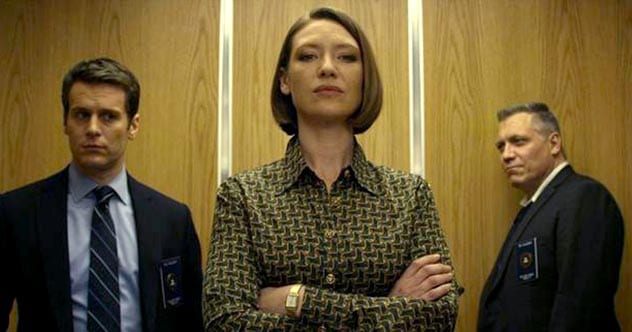
10) Hannibal (NBC)
Too bold for broadcast… and that was the point
Hannibal was an art film disguised as a network thriller: gorgeous visuals, operatic emotion, and
a level of stylized intensity that made you feel like you should be watching while wearing a velvet cape.
NBC canceled it after three seasons, and while ratings were part of the story, the bigger
tragedy is that this show was doing something genuinely distinct in a medium that often rewards sameness.
Fans rallied (petitions included), critics praised it, and the creative team talked openly about potential
future optionsbecause the appetite was there. What Hannibal proves is that “canceled too soon” isn’t
always about being unfinished; sometimes it’s about being irreplaceable.
Why Great Shows Get Canceled Too Soon
If you’ve ever wondered why smart, beloved series get axed while something called
Neighborhood Jury: Miami Nights survives until Season 11, welcome to television economics.
“Premature cancellation” usually comes down to some mix of:
- Scheduling sabotage: burying a show in a bad time slot, moving it constantly, or marketing it like a different genre.
- Slow-burn audiences: comedies and serialized dramas often need time to growtime they don’t get.
- Streaming math: if costs rise faster than viewership, shows get judged by spreadsheets, not love letters.
- Production realities: sometimes the world changes (hello, COVID), and a show becomes uniquely difficult to make safely.
The common thread: the audience often arrives right after the network leaves. Which is why “canceled TV shows”
lists keep getting longer, and group chats keep getting sadder.
Viewer Experiences: Living Through TV Shows Cancelled Too Soon (Extra )
Watching a show that gets canceled too soon is a strangely specific modern experiencelike getting dumped by
someone who still has your hoodie and refuses to return it. At first, you don’t even believe it. You see the
headline, you reread it, you check a second site, then a third, then you open your group chat and type the
digital equivalent of a primal scream: “NOOOOOOO.”
Then comes the grief ritual. Step one: denial. “Maybe it’s just rumors.” Step two: bargaining. “If we trend
on social media, they’ll reverse it.” Step three: hyper-productivity. You sign a petition. You tag executives.
You create a thread explaining why the show matters culturally, emotionally, spiritually, and medically.
(Somehow every thread includes the phrase “strong female characters,” and it’s always correct.)
After that, you start doing math you never asked for. “Okay, but how many viewers do they need?”
“What’s the completion rate?” “How expensive could a dragon possibly be?” You become a part-time streaming
analyst with zero pay and infinite rage. You learn terms like “cost-per-viewer” and “contract escalators,”
which sound like something you’d hear in a hostage negotiation. And in a way, you are negotiating. You’re
trying to convince a corporation to let your fictional friends keep existing.
The weirdest part is how cancellations change the way you watch TV afterward. You get cautious. You hover over
the Play button like it’s a suspicious link in an email: “Are we sure this is safe?” You start researching a
show’s renewal odds the way people research a restaurant’s health score. You gravitate toward limited series
because they can’t hurt you the same waythough, to be fair, they can still emotionally destroy you, just with
better planning.
And yet, somehow, you keep doing it. You keep falling for new stories. Because when a show is greateven if it
ends too earlyit still gives you something: a character you recognize yourself in, a joke you’ll quote for a
decade, a friendship dynamic you wish you had, a world you want to revisit when real life is exhausting.
That’s why canceled-too-soon shows become cult favorites. They don’t fade out; they concentrate.
Over time, you develop coping strategies. You rewatch. You buy the DVDs “just in case” (as if physical media is
a security blanket, whichhonestlyit is). You read interviews where the creator says, “We had plans,” and you
nod like a veteran who’s heard that line before. And occasionally, you get a miracle: a movie, a revival, a
final special. Not always perfect, but enough to let you exhale.
Ultimately, the experience teaches one main lesson: TV isn’t just content. It’s commitment. And if a network
wants our loyalty, maybejust maybeit should stop ending our favorite shows mid-sentence.