Brain myths are everywhere. They live in motivational speeches, classroom posters, self-help books, productivity apps, and that one uncle who says he is “totally right-brained” because he owns a guitar and refuses to read instructions. The problem is not that people are curious about the brain. Curiosity is great. The problem is that some brain “facts” are so catchy they keep spreading long after science has politely asked them to leave the building.
The human brain is complicated, powerful, weird, and occasionally dramatic. It can store the smell of your grandmother’s kitchen for decades, panic over an email with no punctuation, and convince you that you walked into the kitchen for a reason when, frankly, the reason has already packed a suitcase and moved to another continent. Because the brain is mysterious, myths about it feel believable. They sound simple. They sound empowering. They sound like something a person wearing a headset microphone at a corporate seminar would say while pointing at a stock photo of lightning.
But simple does not always mean true. In this article, we will debunk five popular brain myths that millions of people still believe. Some are harmless party trivia. Others can affect how people study, work, age, remember, and judge their own intelligence. So let’s put on our skeptical lab goggles and clear out the mental junk drawer.
Why Brain Myths Spread So Easily
Brain myths spread because they usually contain a tiny crumb of truth wrapped in a giant burrito of nonsense. For example, it is true that different brain regions specialize in different tasks. That does not mean you are a “left-brained person” who should avoid painting forever. It is true that people have learning preferences. That does not mean matching every lesson to a personal learning style magically improves memory. It is true that the brain can change. That does not mean you can unlock telekinesis by watching a ten-minute video called “Neuroscience Secrets They Don’t Want You to Know.”
Another reason these myths survive is that they are flattering. The “10 percent of the brain” myth suggests you have a hidden genius trapped inside, just waiting for the correct smoothie, app, or guru. The multitasking myth makes us feel productive when we are actually just switching tabs like caffeinated squirrels. The memory-as-video myth makes our personal stories feel perfectly reliable, even when memory is more like a group project where half the team did not show up.
Understanding the truth is not less exciting. In fact, real neuroscience is more interesting than the myths. The truth is that your brain is always active, deeply interconnected, highly adaptable, and imperfect in ways that make you human rather than broken.
1. Myth: We Only Use 10 Percent of Our Brain
The bullshit version
You have probably heard this one: humans use only 10 percent of the brain, and if we could unlock the remaining 90 percent, we would become super-geniuses, remember every phone number since 1998, learn Mandarin by lunchtime, and possibly move spoons with our minds. Hollywood loves this myth because it turns neuroscience into a superhero origin story. Unfortunately, your brain did not come with a secret “premium mode.”
The reality
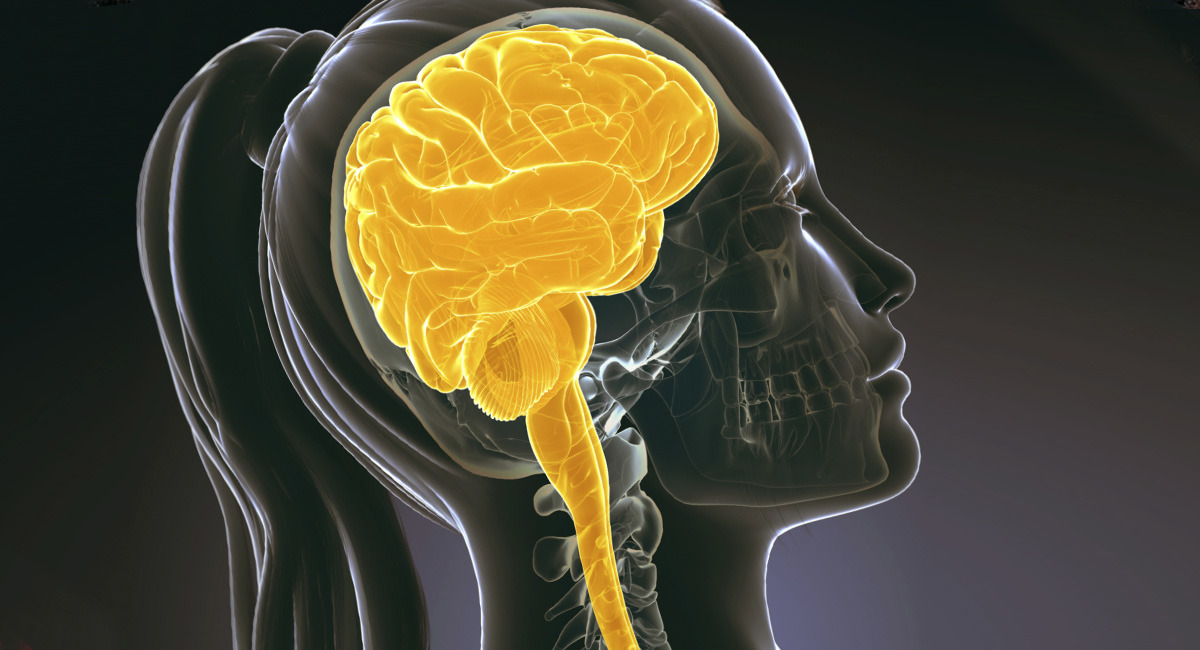
We use the whole brain, though not every region fires at maximum intensity all the time. Different areas become more active depending on what you are doing: reading, walking, smelling coffee, solving a math problem, or pretending you did not see a text. Even during sleep, the brain remains highly active. It regulates breathing, processes memories, manages body functions, and runs maintenance work that would make a night-shift engineer jealous.
The 10 percent myth likely survived because it sounds inspiring. It also confuses “unused potential” with “unused tissue.” Humans absolutely can improve skills, attention, memory strategies, emotional regulation, and creativity. But improvement does not come from activating dead zones in the brain. It comes from practice, sleep, exercise, learning, feedback, healthy habits, and sometimes admitting that scrolling social media at 2:00 a.m. is not a cognitive enhancement plan.
Why it matters
Believing the 10 percent myth can make people vulnerable to expensive nonsense: brain-boosting programs, miracle supplements, and “unlock your hidden mind power” courses that promise shortcuts but deliver mostly invoices. The truth is more practical. Your brain is already working hard. The goal is not to awaken unused brain real estate. The goal is to support the brain you actually have.
2. Myth: You Are Either Left-Brained or Right-Brained
The bullshit version
The myth says left-brained people are logical, analytical, mathematical, organized, and probably own labeled storage bins. Right-brained people are creative, emotional, artistic, intuitive, and may describe the moon as “emotionally beige.” It is a neat personality shortcut. It is also wildly oversimplified.
The reality
The brain does have hemispheric specialization. For many people, language processing is strongly associated with the left hemisphere. Spatial attention and some visual processing tasks may involve right-hemisphere strengths. But the popular personality split is not supported by the way the brain actually works. Most real-life tasks require both hemispheres communicating through networks. Writing a poem requires language, rhythm, memory, emotion, motor planning, visual imagery, and judgment. Doing algebra requires symbols, working memory, spatial reasoning, attention, and sometimes emotional resilience when the answer is not 42.
Calling yourself “left-brained” or “right-brained” can feel harmless, but it can quietly shrink your identity. A student who believes they are “not creative” may avoid art, design, music, storytelling, or flexible problem-solving. A creative person who believes they are “bad at logic” may avoid math, finance, coding, or strategy. Congratulations, myth: you just turned the brain into a horoscope with neurons.
Better way to think about it
Instead of asking whether you are left-brained or right-brained, ask what skills you have practiced and what skills you have avoided. Creativity and analysis are not enemies. Great scientists need imagination. Great artists make technical decisions. Great writers organize ideas. Great engineers visualize possibilities. Your brain is not a two-party political system. It is a busy, messy, cooperative network.
3. Myth: Everyone Has One Best Learning Style
The bullshit version
“I’m a visual learner.” “He’s an auditory learner.” “She’s kinesthetic, so she needs to learn everything by moving.” This myth has been repeated so often that it feels like common sense. It appears in classrooms, training sessions, parenting advice, and online quizzes that somehow know your educational destiny after six questions and a stock image of a pencil.
The reality
People do have preferences. Some enjoy diagrams. Some like listening. Some prefer hands-on practice. Preferences are real. The myth is the claim that people learn best when instruction is matched to a fixed learning style. Research has repeatedly failed to show strong evidence that matching lessons to a student’s declared style improves learning outcomes.
In many cases, the best learning method depends less on the person and more on the material. If you are learning geography, maps help. If you are learning pronunciation, listening helps. If you are learning surgery, hands-on practice is not optional unless your future patients are extremely forgiving. Good teaching often uses multiple methods because complex learning benefits from seeing, hearing, practicing, explaining, testing, and applying information.
What actually helps learning
Evidence-based learning strategies are less glamorous than a personal learning-style label, but they work better. Retrieval practice helps you remember by forcing the brain to pull information out instead of merely rereading it. Spaced repetition beats cramming because memory strengthens through repeated exposure over time. Interleaving helps when you mix related problem types instead of drilling one pattern until your brain falls asleep. Explaining ideas in your own words reveals what you understand and what you are only pretending to understand with a confident face.
The danger of the learning styles myth is that it can become a cage. A student who says, “I can’t learn from reading because I’m visual” may avoid useful strategies. A worker who says, “I only learn by doing” may skip background knowledge that would prevent expensive mistakes. The better message is: use many tools, choose the tool that fits the task, and do not let a quiz define your brain.
4. Myth: Multitasking Makes You More Productive
The bullshit version
Modern life treats multitasking like a badge of honor. People brag about answering emails during meetings, checking messages while studying, listening to a podcast while writing a report, and cooking dinner while mentally arguing with a stranger from the internet. The myth says doing more things at once means you are efficient. The brain says, “Absolutely not, please stop throwing flaming tennis balls at me.”
The reality
For simple automatic tasks, humans can combine activities. You can walk and talk. You can fold laundry while listening to music. But when two tasks require attention, decision-making, memory, or language, the brain usually does not perform them simultaneously. It switches between them. That switching creates costs: slower performance, more mistakes, shallower thinking, and extra mental fatigue.
When you check a notification while writing, your brain must leave the writing task, process the message, decide whether to respond, return to the document, remember what sentence you were building, and rebuild context. That interruption may feel tiny, but repeated hundreds of times a day, it turns your attention into confetti.
Specific example
Imagine studying biology while watching short videos. You read one paragraph about mitochondria, then watch a clip of a raccoon stealing cat food, then return to the paragraph and wonder why cells need ATP. The problem is not that you are lazy. The problem is that attention is a limited resource. Your brain keeps paying a switching tax. Eventually, you have spent an hour “studying” and mostly learned that raccoons have confidence.
What to do instead
Single-tasking is not old-fashioned. It is brain-friendly. Work in focused blocks. Put the phone away when doing deep work. Close extra tabs. Use a written capture list for random thoughts so your brain does not keep juggling them. Build breaks into your schedule so focus does not feel like punishment. The goal is not to become a productivity robot. The goal is to stop confusing mental chaos with achievement.
5. Myth: Memory Works Like a Video Camera
The bullshit version
Many people believe memory records events like a video file: press play, relive the moment, case closed. This belief makes personal memories feel perfectly reliable. It also explains why arguments often sound like courtroom dramas: “I remember exactly what you said on Tuesday in 2017 near the refrigerator.” Impressive? Yes. Guaranteed accurate? Not necessarily.
The reality
Memory is reconstructive. That means the brain rebuilds memories using stored fragments, current emotions, later knowledge, assumptions, context, and sometimes pure mental duct tape. Memories can be vivid and still wrong. Confidence does not always equal accuracy. Details can shift over time. Suggestions, repeated retellings, stress, expectations, and new information can change what people remember.
This does not mean memory is useless. Far from it. Memory helps us learn, plan, bond, avoid danger, and maintain identity. But it is not a perfect recording device. It is more like an editor trying to create a useful story from available footage. Usually, that editor does a decent job. Occasionally, the editor adds a scene that was never filmed.
Why this myth matters
The video-camera myth has serious consequences. In relationships, it can make people stubborn because they assume their version of events is flawless. In education, students may think recognition equals mastery: “This looks familiar, so I know it.” In legal settings, eyewitness confidence can seem persuasive even when memory is vulnerable to error. In everyday life, it can make us less humble about our own minds.
A healthier approach is to treat memory with respect and caution. Write important things down. Use calendars. Confirm details. Be careful when questioning someone about an event because leading questions can shape recall. And when you are absolutely certain about something trivial from five years ago, leave room for the possibility that your brain has been doing a little creative writing.
Bonus Myth: Your Brain Stops Changing After Childhood
This one deserves a quick honorable mention because it is both depressing and false. Childhood is a powerful period for brain development, but the adult brain does not become a concrete statue at age 25, 30, or 60. Neuroplasticity means the nervous system can adapt by changing connections, strengthening pathways, reorganizing functions, and responding to learning and experience.
Does that mean adults learn exactly like children? No. Adults may need more deliberate practice, better recovery, more patience, and fewer fantasies about becoming fluent in Italian by next Thursday. But adults can learn languages, instruments, technologies, sports, emotional skills, and new habits. The brain remains dynamic throughout life.
This matters because the “fixed brain” myth makes people give up too early. Someone may say, “I’m too old to learn coding,” “I can’t improve my memory,” or “I’ve always been bad at public speaking.” The more accurate statement is: learning may be slower, harder, or different than it was before, but change is still possible with practice, repetition, feedback, sleep, and motivation.
How to Spot a Brain Myth Before It Steals Your Wallet
Brain myths usually have warning signs. First, they offer a dramatic shortcut. If someone claims you can unlock genius instantly, be suspicious. Real cognitive improvement usually takes practice and time. Second, they use scientific language without scientific evidence. Words like “neural,” “quantum,” “dopamine,” and “rewire” can sound impressive while doing the intellectual work of glitter. Third, they divide people into rigid categories: left-brained, visual learner, born multitasker, bad memory person. The brain is more flexible than those labels.
Another clue is the promise of universality. A claim that works for everyone, instantly, with no tradeoffs, should trigger your mental smoke alarm. Real neuroscience is full of nuance. Sleep helps memory, but sleep is not magic. Exercise supports brain health, but it does not turn anyone into Einstein with sneakers. Meditation can improve attention for many people, but it is not a replacement for medical care. Brain training apps may improve performance on trained tasks, but broad real-world benefits vary.
The best brain advice tends to be boring in the way brushing your teeth is boring: sleep enough, move your body, learn challenging things, manage stress, stay socially connected, eat reasonably, protect your hearing, treat health conditions, and stop asking your phone to be both your entertainment system and your attention coach.
Real-Life Experiences: What These Brain Myths Look Like in Everyday Life
One of the easiest places to see brain myths in action is school. A student may walk into class already convinced they are “not a math person” because they believe their brain is wired for creativity instead of logic. Then every difficult problem becomes evidence. They struggle with fractions and think, “See? My brain just does not work that way.” But the problem is often not brain destiny. It may be weak foundations, anxiety, poor instruction, lack of practice, or the completely normal discomfort of learning something hard. Once the student practices step by step, gets feedback, and realizes confusion is not failure, the identity starts to loosen. The brain did not switch hemispheres. The student simply stopped treating a myth like a life sentence.
In workplaces, the multitasking myth is practically an office decoration. Someone attends a video meeting while answering messages, checking analytics, and editing a presentation. At the end of the meeting, they feel busy enough to deserve a parade. Then they realize they missed the key decision, sent a typo to a client, and forgot why slide seven contains a photo of a sandwich. This is not a moral failure. It is task switching. Many people discover that when they block thirty focused minutes for one job, they finish faster and produce better work than they do in two hours of scattered attention. The experience can be annoying because it proves the brain was right and the calendar was lying.
The memory myth appears in relationships all the time. Two people can honestly remember the same conversation differently. One remembers a joke as harmless. The other remembers it as sharp. One remembers saying, “Maybe we should leave soon.” The other remembers, “You promised we would leave at nine.” Because memory feels vivid, disagreement can feel like dishonesty. But memory is not a courtroom recording. It is shaped by attention, emotion, expectation, and later interpretation. A practical lesson is to write down important agreements and approach conflicts with curiosity: “Here is how I remember it. How did it land for you?” That sentence can save more relationships than winning a debate over whose hippocampus has better customer service.
The 10 percent myth shows up whenever people chase magical self-improvement. Someone buys a course promising “hidden brain power” but ignores sleep, exercise, and consistent practice. They want a secret door when the actual door is labeled “daily habits,” which is admittedly less sexy. Yet the real experience of improvement is powerful. People who practice an instrument for months, learn a new language slowly, or train attention through focused reading often feel their minds changing. Not because unused brain tissue woke up like a dragon, but because repeated effort strengthened skills.
The fixed-brain myth may be the saddest because it makes people quit before they begin. Adults often say, “I’m too old to learn this.” But many discover that learning later in life can be deeply satisfying. It may require humility, repetition, and laughing at mistakes. A 50-year-old beginner guitarist may not become a stadium rock star, but they can still build coordination, memory, rhythm, and joy. A retiree learning digital tools may move slowly at first, then suddenly realize they can video call family, manage photos, or take online classes. These experiences prove an important point: the brain is not a sealed museum exhibit. It is more like a living workshop. Sometimes messy, sometimes noisy, but still open for renovation.
Conclusion: The Brain Is Better Than the Myths
The biggest problem with brain myths is not simply that they are wrong. It is that they make the real brain seem less impressive. You do not need to believe you use only 10 percent of your brain to recognize your potential. You do not need to call yourself left-brained or right-brained to understand your strengths. You do not need a learning-style label to study effectively. You do not need to multitask to be productive. You do not need perfect memory to be intelligent, honest, or capable.
The truth is better: your brain is active, connected, adaptable, limited, creative, biased, and trainable. It can improve with practice, but it also needs rest. It can remember the past, but it edits. It can solve difficult problems, but not while being attacked by notifications every twelve seconds. It can change over time, but not through magic. That is not disappointing. That is empowering.
So the next time someone says they are only using 10 percent of their brain, tell them the good news: they are using much more than that. The bad news is they are also using it to repeat a myth. Luckily, brains can learn.