If you live in the United States, you probably think of body weight in pounds. If you use most medical charts, gym equipment, or nutrition calculators, kilograms may also show up like an uninvited guest at a very organized dinner party. But stones? That unit can feel like something from a castle inventory: two swords, one horse, and twelve stone of mysterious body weight.
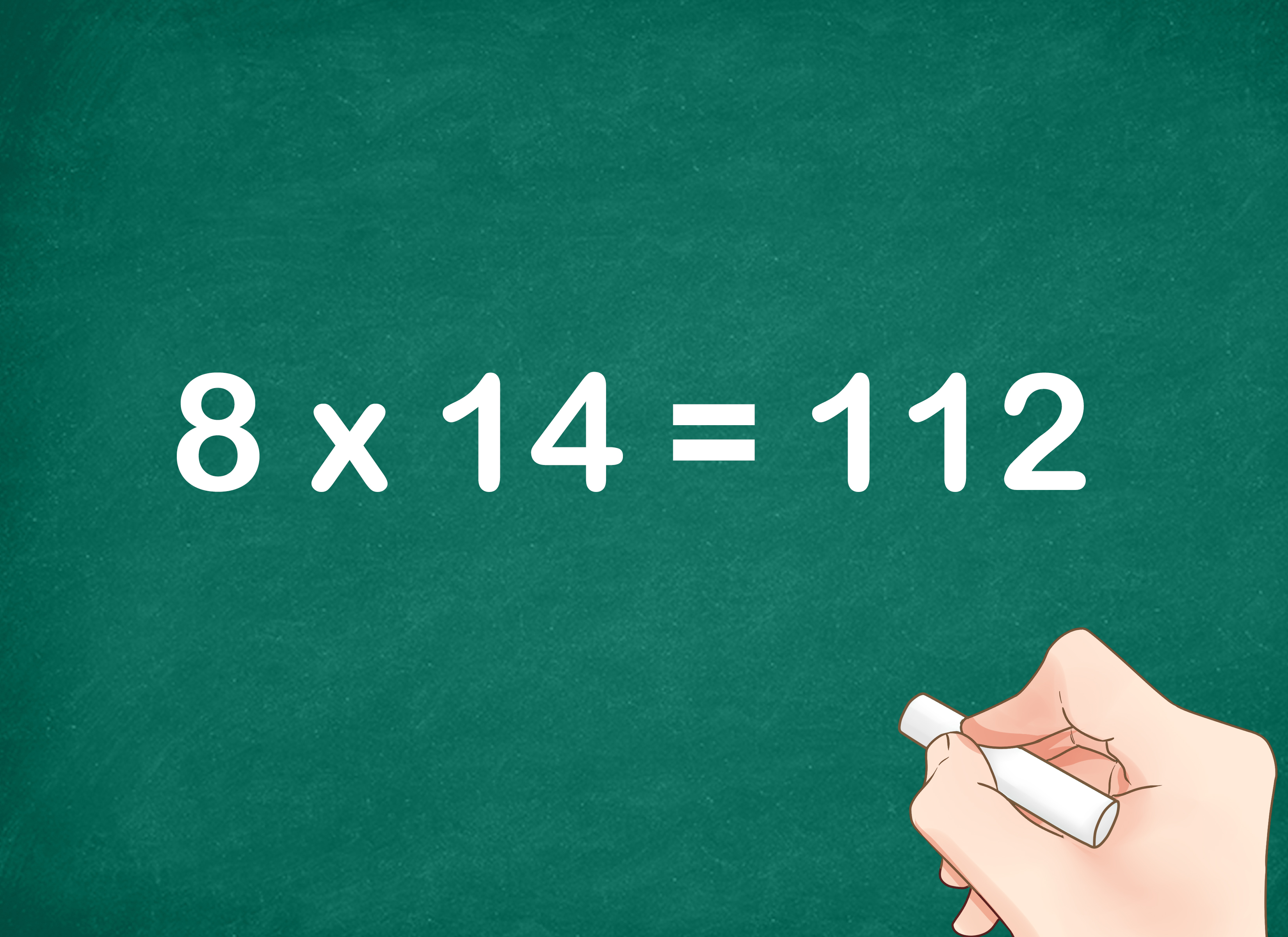
Yet the stone is still commonly used for personal body weight in the United Kingdom and Ireland, and it is surprisingly easy to calculate once you know the one rule that matters: 1 stone equals 14 pounds. That is the whole magic trick. No secret British math club required.
This guide explains 4 ways to calculate your weight in stones, whether you are starting with pounds, kilograms, a digital scale reading, or a quick mental estimate. You will also learn how to write stone-and-pound results correctly, avoid common conversion mistakes, and use real examples that make the numbers stick.
What Is a Stone in Body Weight?
A stone, often abbreviated as st, is a British unit of weight equal to 14 pounds. In modern personal weight measurement, it is usually written as stones plus leftover pounds. For example, someone who weighs 154 pounds weighs 11 stone, because 154 divided by 14 equals 11 exactly.
When the number does not divide evenly, the remainder becomes pounds. For example, 160 pounds is 11 stone 6 pounds, because 14 goes into 160 eleven times, and 6 pounds are left over. In everyday writing, that may appear as 11 st 6 lb.
The basic formula
To convert pounds to stones, use this formula:
Weight in stones = weight in pounds ÷ 14
To convert stones back to pounds, use the reverse formula:
Weight in pounds = stones × 14
Once you remember that one stone is 14 pounds, most calculations become simple. The only slightly tricky part is deciding whether you want the answer as a decimal, such as 11.43 stone, or as stones and pounds, such as 11 st 6 lb.
Method 1: Calculate Your Weight in Stones from Pounds
This is the easiest method for most American readers because bathroom scales in the U.S. usually display weight in pounds. To calculate your weight in stones from pounds, divide your pound weight by 14.
Example: 168 pounds to stones
Let’s say your scale shows 168 lb.
168 ÷ 14 = 12
That means 168 pounds equals 12 stone. Nice and clean. The math behaved itself for once.
Example: 175 pounds to stones
Now let’s try a number that does not divide perfectly.
175 ÷ 14 = 12.5
As a decimal, your weight is 12.5 stone. But in everyday stone notation, people usually write this as 12 stone 7 pounds, because half a stone equals 7 pounds.
Here is the step-by-step version:
- 14 × 12 = 168
- 175 – 168 = 7
- 175 lb = 12 st 7 lb
This method is accurate, fast, and perfect when you already know your weight in pounds.
Method 2: Convert Pounds into Stones and Remaining Pounds
Decimal stones are useful for calculators, but stones-and-pounds format is more natural in daily conversation. If someone says they weigh 10 stone 9, they mean 10 stone and 9 pounds, not 10.9 stone. This is a common source of confusion, especially for anyone used to decimal measurements.
How to do it
First, divide your total pounds by 14. The whole number is your stones. Then multiply that whole number by 14 and subtract the result from your original weight. The leftover number is pounds.
Formula:
Total pounds ÷ 14 = stones plus remainder
Example: 142 pounds
Suppose you weigh 142 lb.
- 142 ÷ 14 = 10 remainder 2
- 10 stones = 140 pounds
- 142 – 140 = 2 pounds
So, 142 pounds equals 10 st 2 lb.
Example: 199 pounds
- 199 ÷ 14 = 14 remainder 3
- 14 stones = 196 pounds
- 199 – 196 = 3 pounds
So, 199 pounds equals 14 st 3 lb.
This is the best method when you want your result to look natural for audiences in the U.K. or Ireland. It also avoids awkward decimal answers like 14.2142857 stone, which looks less like body weight and more like a Wi-Fi password.
Method 3: Calculate Your Weight in Stones from Kilograms
If your scale shows kilograms, you can still calculate your weight in stones. You just need one extra conversion step. Since 1 kilogram is approximately 2.20462 pounds, you can convert kilograms to pounds first, then divide by 14.
The kilogram-to-stone formula
Weight in stones = kilograms × 2.20462 ÷ 14
You can simplify that into:
Weight in stones = kilograms × 0.15747
Example: 70 kilograms to stones
Let’s convert 70 kg.
- 70 × 2.20462 = 154.3234 pounds
- 154.3234 ÷ 14 = 11.0231 stone
So, 70 kg is about 11.02 stone. In stones-and-pounds format, it is about 11 st 0 lb, because the remaining decimal is very close to zero pounds.
Example: 82 kilograms to stones
- 82 × 2.20462 = 180.77884 pounds
- 180.77884 ÷ 14 = 12.91277 stone
As a decimal, 82 kg is about 12.91 stone. To write it as stones and pounds, take the whole number, 12, then calculate the leftover pounds:
- 12 stone = 168 pounds
- 180.78 – 168 = 12.78 pounds
Rounded to the nearest pound, 82 kg is about 12 st 13 lb.
This method is ideal for international travel, fitness apps, medical forms, or any situation where kilograms and stones are both floating around like competing measurement dialects.
Method 4: Use a Calculator, App, or Smart Scale
The fastest way to calculate your weight in stones is to use a calculator, conversion app, spreadsheet, or smart scale that supports multiple units. This is not cheating. This is civilization working as intended.
Using a standard calculator
If you know your weight in pounds, type:
Your weight ÷ 14
For example:
186 ÷ 14 = 13.2857
That means 186 lb is about 13.29 stone. To convert that decimal into stones and pounds, keep the 13 stones and multiply the decimal part by 14:
- 0.2857 × 14 = 4
- 186 lb = 13 st 4 lb
Using a spreadsheet
If you use Google Sheets or Microsoft Excel, place your weight in pounds in cell A1. Then use:
=A1/14
For a stones-and-pounds layout, you can use one cell for stones and another for remaining pounds. For example:
- Stones: =INT(A1/14)
- Pounds: =MOD(A1,14)
This is especially helpful if you track weight over time and want consistent conversions without doing math every week.
Using a smart scale
Many digital scales let you switch units between pounds, kilograms, and sometimes stones. Look for a unit button on the back or underside of the scale. If your scale supports stones, it may display your weight directly in st or st:lb format.
For the most consistent reading, place the scale on a hard, level floor, weigh yourself at the same time of day, and use similar clothing conditions each time. Weight naturally changes during the day due to meals, hydration, sodium intake, exercise, and bathroom timing, so consistency matters more than chasing one “perfect” number.
Quick Weight Conversion Chart: Pounds to Stones
Use this quick chart for common body weights. Values are rounded to the nearest stone-and-pound format.
| Pounds | Stones | Stones and Pounds |
|---|---|---|
| 112 lb | 8.00 st | 8 st 0 lb |
| 126 lb | 9.00 st | 9 st 0 lb |
| 140 lb | 10.00 st | 10 st 0 lb |
| 154 lb | 11.00 st | 11 st 0 lb |
| 168 lb | 12.00 st | 12 st 0 lb |
| 182 lb | 13.00 st | 13 st 0 lb |
| 196 lb | 14.00 st | 14 st 0 lb |
| 210 lb | 15.00 st | 15 st 0 lb |
Common Mistakes When Calculating Weight in Stones
Mistake 1: Treating stone-and-pound format like a decimal
This is the big one. 10 st 7 lb is not the same as 10.7 stone. Seven pounds is half a stone, so 10 st 7 lb equals 10.5 stone. If you treat 10 st 7 lb as 10.7 stone, your calculation will be off.
Mistake 2: Forgetting that one stone equals 14 pounds
Some people assume a stone equals 10 pounds because decimals feel friendly and 10 is easy. Sadly, the stone did not attend that meeting. A stone equals 14 pounds, always in modern personal body weight usage.
Mistake 3: Rounding too early
If you are converting from kilograms, avoid rounding after the first step unless you only need a rough estimate. For the best result, convert kilograms to pounds, keep a few decimal places, then convert to stones.
Mistake 4: Comparing weights from different times of day
Your body weight can shift throughout the day. A morning measurement and an evening measurement may differ because of food, water, clothing, exercise, and digestion. When tracking your weight in stones, use the same scale, similar clothing, and a consistent time of day.
Why Do People Still Use Stones?
Stones remain familiar in parts of the world where personal body weight has long been discussed in that format. While the United States uses pounds and many countries use kilograms, stones offer a middle-sized unit that can make body weight sound less granular. Saying 12 stone may feel simpler than saying 168 pounds, especially in places where the unit is part of everyday speech.
For American readers, learning stones is useful when reading U.K. health articles, watching British fitness content, filling out international forms, or chatting with someone who says, “I’m 11 stone,” and you do not want to stare politely while your brain opens seventeen calculator tabs.
Real-Life Examples of Calculating Weight in Stones
Example 1: You weigh 150 pounds
150 ÷ 14 = 10.714
That is about 10.71 stone. In stones and pounds:
- 10 stone = 140 pounds
- 150 – 140 = 10 pounds
- 150 lb = 10 st 10 lb
Example 2: You weigh 185 pounds
185 ÷ 14 = 13.214
That is about 13.21 stone. In stones and pounds:
- 13 stone = 182 pounds
- 185 – 182 = 3 pounds
- 185 lb = 13 st 3 lb
Example 3: You weigh 95 kilograms
First convert kilograms to pounds:
95 × 2.20462 = 209.44 pounds
Then convert pounds to stones:
209.44 ÷ 14 = 14.96 stone
In stones and pounds, 95 kg is about 14 st 13 lb.
Helpful Experience-Based Tips for Calculating Your Weight in Stones
The first time you calculate your weight in stones, it may feel less like math and more like translating from American bathroom-scale language into British pub conversation. The good news is that the process becomes easy once you stop thinking of stones as a mysterious foreign unit and start thinking of them as “groups of 14 pounds.” That mental shift makes everything faster.
One practical experience is to memorize a few anchor points. For example, 10 stone is 140 pounds, 11 stone is 154 pounds, 12 stone is 168 pounds, and 13 stone is 182 pounds. Once you know those, you can estimate quickly. If your weight is 176 pounds, you know it is slightly above 12 stone because 12 stone is 168 pounds. The difference is 8 pounds, so your weight is 12 st 8 lb. No calculator needed, no dramatic staring into the distance.
Another useful habit is to keep decimal stones and stone-plus-pound notation separate. Decimal stones are excellent for spreadsheets and calculators. Stone-plus-pound notation is better for real-world communication. For example, 12.5 stone and 12 st 7 lb mean the same thing. But 12 st 5 lb does not mean 12.5 stone; it means 12 stones plus 5 pounds, or about 12.36 stone. This small distinction prevents a surprising number of mistakes.
If you are tracking weight over several weeks, choose one format and stick with it. Switching between pounds, kilograms, decimal stones, and stones-and-pounds can make your progress chart look like it was designed by a committee of confused calculators. A simple method is to record your original scale reading in pounds or kilograms, then add a converted stone value in a separate column. That way, your source number remains unchanged, and your converted number is easy to compare.
For people using stones because they are moving, traveling, or following U.K.-based health content, the best experience is to learn the common ranges rather than convert every number from scratch. After a while, 9 stone starts to feel like 126 pounds, 10 stone like 140 pounds, and 15 stone like 210 pounds. The numbers become familiar, the same way Fahrenheit or miles can become familiar through repeated use.
Finally, remember that body weight is only one measurement. Stones can help you understand a number in another unit system, but they do not define health by themselves. Hydration, muscle mass, sleep, nutrition, medical history, and activity level all matter. So use stone calculations as a helpful conversion tool, not as a tiny judge wearing a powdered wig.
Conclusion
Calculating your weight in stones is simple once you remember the key conversion: 1 stone equals 14 pounds. If you know your weight in pounds, divide by 14. If you want the traditional format, use the whole number as stones and the remainder as pounds. If you start with kilograms, multiply by 2.20462 first, then divide by 14. And if math is not your favorite cardio, a calculator, spreadsheet, or smart scale can do the work instantly.
Whether you are reading a British fitness article, comparing international weight measurements, or just satisfying curiosity, knowing how to calculate stones gives you a useful conversion skill. It is practical, quick, and far less intimidating than it looks at first glance.