Every generation believes it invented the future. Then history walks in wearing dusty shoes and says, “Cute. We did that in 1895.” Many so-called modern trendsselfies, brunch, influencer marketing, minimalism, true crime obsession, and even emojishave ancestors old enough to qualify for a senior discount, a museum label, or both.
The funny thing is not that people repeat trends. The funny thing is that we repeat them with better lighting, worse posture, and a monthly subscription. Today’s “new lifestyle movement” often turns out to be yesterday’s social habit with Wi-Fi, branding, and a person on TikTok explaining it with hand gestures.
This article looks at 20 annoying modern trends that are older than you think, not to ruin anyone’s fun, but to remind us that human behavior has always been dramatic, fashionable, hungry, self-promoting, and mildly ridiculous. Technology changes. The urge to show off breakfast does not.
Why Old Trends Keep Coming Back
Trends return because human needs stay stubbornly familiar: attention, belonging, convenience, comfort, status, entertainment, identity, and snacks. A modern trend becomes annoying when it pretends to be revolutionary while quietly borrowing from the past. That does not make it fake. It makes it human.
So before blaming “kids today,” remember: people in earlier centuries also chased status, collected fads, gossiped about scandals, bought things by mail, posed dramatically, and argued in public. They just had fewer ring lights.
20 Annoying “Modern” Trends That Are Older Than You Think
1. Selfies
Selfies feel like the official portrait style of the smartphone age: arm extended, chin negotiated, background carefully pretending to be accidental. But photographic self-portraits go back to the earliest days of photography. Robert Cornelius, a Philadelphia photographer, is often credited with taking a self-portrait in 1839. Long before front-facing cameras, people were already figuring out how to say, “Here I am, looking important.” The modern selfie is faster, filtered, and more numerous, but the impulse is ancient: proof of existence, with flattering angles if possible.
2. Influencer Marketing
Modern influencer marketing may look like discount codes, sponsored posts, and someone holding skin cream next to a houseplant. But celebrity endorsement is centuries old. Royals, actors, athletes, and public figures have long helped sell products by lending them prestige. In the 18th century, Josiah Wedgwood famously used royal approval to elevate his pottery brand. The platform has changed from court society and newspapers to Instagram and video apps, but the message is familiar: “A famous person touched this, so please want it.”
3. Cancel Culture
Public shaming did not begin with hashtags. Ancient Athens had ostracism, a political process that could exile a citizen considered dangerous to the city. Medieval towns used stocks, gossip, sermons, and public reputation as social discipline. Modern cancel culture is faster and more searchable, which is what makes it feel so intense. But the core behaviorgroups punishing people through public rejectionhas a very long history. The internet did not invent social consequences. It just gave them push notifications.
4. True Crime Obsession
True crime podcasts may seem like a modern habit for people who want to relax by hearing about absolutely not relaxing events. Yet true crime has been popular for centuries. Murder pamphlets, sensational newspapers, trial reports, and crime broadsides drew audiences long before earbuds existed. People have always been fascinated by danger from a safe distance. The annoying modern twist is that someone may now say, “This is my comfort podcast,” which is a sentence that would confuse a Victorian pamphlet seller and possibly delight him.
5. Food Trucks
Gourmet food trucks may feel like a 21st-century urban trend: tacos, fusion bowls, artisan grilled cheese, and a line of people pretending they are not checking the menu online. But mobile food service has deep roots. Chuck wagons fed workers and cowboys on the American frontier, while lunch carts and street vendors served city dwellers for generations. Today’s food truck may have a logo, QR code, and clever pun, but the basic promise is old: hot food, close by, no dining room required.
6. Fast Food
Drive-thrus and burger chains did not invent quick meals. Ancient cities had street vendors and ready-to-eat food stalls. In ancient Rome, thermopolia served prepared food to people who did not have full kitchens at home or needed a convenient meal. The modern fast-food system added cars, branding, standardization, and enough packaging to make a recycling bin nervous. But the conceptbusy people buying quick food outside the homeis as old as urban life itself.
7. Avocado Toast
Few foods have been blamed for more economic anxiety than avocado toast. It became a symbol of millennial spending, brunch culture, and café menus written in fonts that look expensive. But avocado on toast is not new. Recipes combining mashed avocado and toast appeared in early 20th-century newspaper archives. The modern version may include chili flakes, microgreens, and a price tag that causes spiritual distress, but the basic idea is beautifully simple: bread plus avocado. History’s verdict: tasty, not revolutionary.
8. Brunch
Brunch feels modern because it arrives with iced coffee, crowded patios, and someone saying, “Let’s just share everything,” which never ends well. But the word “brunch” was popularized in the 1890s by Guy Beringer, who proposed a late, social Sunday meal as a gentler alternative to heavy traditional dining. The concept survived because it solved a timeless problem: people want breakfast foods after breakfast and lunch foods before lunch. Annoying? Sometimes. Historically legitimate? Absolutely.
9. Minimalism
Minimalism is often sold as a modern cure for clutter: empty counters, beige furniture, and one lonely ceramic bowl that costs more than a microwave. But simplicity as an ideal is far older than social media. Religious traditions, Japanese aesthetics, Scandinavian design, modernist architecture, and 20th-century art all shaped minimalist thinking. The annoying part is when “own less” becomes “buy a whole new set of expensive things that look like you own less.” Still, the desire for calm, order, and function is not new.
10. Tiny Homes
Tiny homes became trendy as a response to high housing costs, environmental concerns, and the fantasy of owning fewer things than would fit in one closet. But small-space living is ancient. Cabins, cottages, monastic cells, frontier homes, and one-room dwellings came long before glossy tiny-house tours. Henry David Thoreau’s cabin at Walden Pond is often treated as a spiritual ancestor of the movement. The modern tiny home adds solar panels and clever storage, but the question is old: how much space does a person really need?
11. Houseplant Mania
Calling yourself a “plant parent” may sound like a modern indoor-jungle identity, but houseplant obsession has deep roots. The Victorian era had fern fever, also known as pteridomania, when ferns became wildly fashionable in homes, gardens, art, and decorative objects. Today’s version features monstera leaves, care videos, and emotional conversations with pothos plants. The older version had glass cases, botanical collecting, and plenty of social status. Different century, same drama: “I can save this plant,” said every overconfident human ever.
12. Athleisure
Athleisure is the fashion trend that lets people dress as if they might exercise later, even when the most athletic event on the schedule is opening a delivery app. But sportswear has influenced everyday clothing for more than a century. Tennis shoes, sweatshirts, polo shirts, shorts, and practical women’s activewear all moved from sports settings into daily fashion. The bicycle craze of the 1890s helped push clothing toward mobility and comfort. Yoga pants did not start the revolution; they simply stretched it.
13. Sneaker Culture
Sneakers as status symbols can feel very modern, especially when limited releases create lines, resale markets, and adults discussing shoe boxes like investment portfolios. Yet rubber-soled athletic shoes began developing in the 19th century, helped by advances in rubber manufacturing and rising interest in sports and physical culture. Over time, sneakers moved from gyms and courts into schools, streets, music, fashion, and luxury branding. The annoying part is not loving shoes. The annoying part is explaining why shoes nobody should step in cost more than rent.
14. Subscription Boxes
Subscription boxes promise surprise, convenience, and the thrill of receiving items you may not need but will definitely photograph. However, buying from home through recurring catalogs and mail-order systems is much older than the modern subscription economy. American mail-order catalogs let people browse products from home over a century ago, complete with detailed descriptions and persuasive selling. Today’s boxes add personalization, branding, and monthly billing. The old catalog said, “Order this.” The modern box says, “We curated this for your lifestyle,” which sounds fancier and empties the wallet just as effectively.
15. Emojis
Emojis seem like a language invented by phones, teenagers, and people who respond to serious messages with a thumbs-up. But typographic emotion is much older. Printed emoticon-like faces appeared in the 19th century, and punctuation-based expressions existed long before modern emoji keyboards. Humans have always wanted text to carry tone because plain words can feel cold, confusing, or accidentally rude. The smiley face, heart, and crying-laughing symbol are modern tools for an old problem: “Please understand my mood without making me write a whole paragraph.”
16. Memes
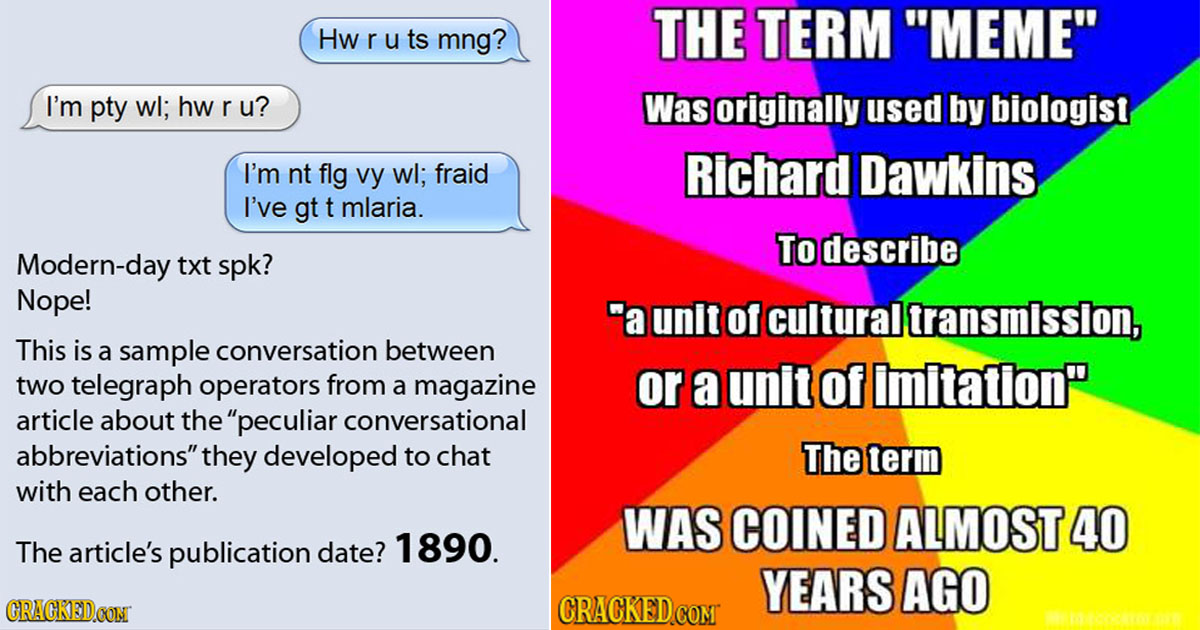
Internet memes are everywhere: jokes, reaction images, viral formats, and screenshots that somehow explain politics better than official statements. But the word “meme” was introduced by Richard Dawkins in 1976 to describe cultural information spread by imitation. Even before the term existed, people copied jokes, slogans, songs, fashions, rumors, and catchphrases. The internet accelerated the process and added cats. Memes are not new; they are old cultural copying behavior wearing modern pajamas and moving at broadband speed.
17. Ghosting
Ghosting feels like a uniquely modern dating horror: one minute there are messages, the next minute the person vanishes like a magician with poor manners. Dating apps made ghosting more visible, but disappearance as a social exit is not new. People have ignored letters, avoided callers, moved away, changed circles, and ended relationships without clear explanations for generations. The modern difference is evidence. Read receipts, online status, and social media make silence louder. Ghosting is old avoidance behavior with a digital timestamp.
18. Nostalgia Reboots
Modern entertainment sometimes looks like a recycling center with better lighting: reboots, sequels, remakes, prequels, and “legacy” versions of stories people already know. But retelling old stories is one of humanity’s oldest creative habits. Myths were retold. Plays borrowed plots. Early Hollywood remade films from earlier silent or stage versions. The annoying part is not nostalgia itself; nostalgia can be comforting. The problem begins when familiarity replaces imagination and every beloved childhood character gets dragged back for one more brand extension.
19. Wellness Fasting
Intermittent fasting and wellness fasting are often packaged as modern biohacking, complete with apps, timers, and confident charts. But fasting has existed for centuries in religious, cultural, and medical contexts. The modern wellness industry did not invent the idea of structured eating windows; it rebranded a very old practice with new language. Because food restriction can be risky, especially for teens and people with health concerns, it should not be treated as a casual trend. History may be old, but your body is not a marketing experiment.
20. Mocktails and Sober-Curious Culture
Mocktails and sober-curious menus feel very current, especially at stylish restaurants where a nonalcoholic drink may arrive with smoke, herbs, and the confidence of a Broadway entrance. Yet alcohol-free social drinks have a long history. Temperance movements in the 19th and early 20th centuries encouraged alternatives to alcoholic beverages, while soda fountains and fruit-based drinks became popular social options. Today’s mocktail culture updates that history with better glassware and more complicated names. The trend is modern in branding, old in purpose: people want festive drinks without alcohol.
What These Trends Reveal About Us
The real lesson is not that people lack originality. It is that originality often means rearranging old desires in new packaging. We want to be seen, fed, admired, entertained, comfortable, healthier, stylish, and included. Those desires repeat across centuries because they are built into social life.
Technology does not create human behavior from nothing. It magnifies what is already there. The camera made self-portraits easier. The smartphone made them constant. Newspapers spread crime stories. Podcasts made them portable. Catalogs sold from a distance. Subscription boxes made the distance feel personalized. Public shaming existed before the internet; social media made the crowd bigger and the memory longer.
That is why modern trends become annoying so quickly. The behavior is familiar, but the speed and scale are new. One person showing off breakfast is charming. Ten million people showing off breakfast can feel like civilization has been defeated by toast.
Personal Experiences and Everyday Observations
One of the funniest experiences related to these “modern” trends is realizing how often people defend them as if they discovered civilization yesterday. I have heard people talk about minimalism like no human had ever cleaned a room before 2015. Someone will point to an empty desk and say, “This is my new intentional living era,” while history whispers, “Monks did this with fewer affiliate links.” The idea is not bad. In fact, many minimalist habits are useful. But the performance around them can become more exhausting than the clutter they are supposed to replace.
Brunch is another perfect example. Everyone knows brunch can be delightful. It gives people permission to eat eggs at noon and call a stack of pancakes a social plan. But it also has a theatrical side. There is usually a wait, a menu with at least one item described as “elevated,” and a table where someone insists the group order one sweet dish “for the table.” This is how friendships are tested. The old brunch idea was sociable and relaxed. The modern version sometimes feels like a competitive sport with syrup.
Houseplant culture also has a charming but slightly chaotic personality. A person buys one plant to brighten a room. Three months later, the windowsill has become a botanical hospital. There is a moisture meter, a misting bottle, a support pole, and a half-serious belief that the fern has emotional needs. The Victorian fern collectors would understand completely. They may not have said “plant parent,” but they absolutely knew the thrill of turning greenery into identity.
Then there are selfies. People complain that selfies are vain, but self-documentation is not automatically shallow. A selfie can mark confidence, travel, friendship, recovery, celebration, or simply a good hair day. The annoying part begins when every moment becomes content before it becomes memory. There is a difference between taking a photo at dinner and making the pasta wait through a full lighting consultation. Still, the urge to preserve an image of ourselves is deeply human. The phone just made it dangerously convenient.
The same pattern appears in sneaker culture, subscription boxes, and influencer marketing. None of these trends are inherently silly. Shoes can be artful. Curated products can be useful. Trusted recommendations can help buyers make decisions. But once status and scarcity enter the room, common sense sometimes exits through a side door. A sneaker becomes too precious to wear. A subscription box becomes a monthly pile of “maybe someday.” An influencer recommendation becomes less about trust and more about lighting, commission, and whether the countertop marble is real.
What these experiences show is that trends are rarely annoying because they exist. They become annoying when they become identity shortcuts. “I eat this, therefore I am refined.” “I own this, therefore I am interesting.” “I reject this person publicly, therefore I am virtuous.” “I drink this complicated nonalcoholic beverage, therefore I am wellness with ice.” History gives us a useful reality check. People have always chased meaning through habits, objects, food, fashion, and social rituals. The healthiest response is not to sneer at every trend, but to ask: does this actually improve life, or is it just old human insecurity in a new outfit?
Conclusion
The next time someone announces a “totally modern” trend, pause before rolling your eyes too hard. There is a good chance the idea has ancestors in ancient cities, Victorian parlors, early photography studios, mail-order catalogs, or Sunday dining essays from the 1890s. Modern culture is less like a straight road into the future and more like a thrift store: everything comes back, usually with a new label.
These 20 annoying modern trends that are older than you think prove that humans are consistent creatures. We want convenience, comfort, attention, beauty, belonging, and stories. We also want to believe our version is brand-new. History, with a raised eyebrow, disagrees.
Note: This article is written as original, publication-ready content based on synthesized historical information from reputable cultural, historical, academic, and media sources. It is intended for general-interest reading and SEO publishing, not as medical, legal, or professional advice.