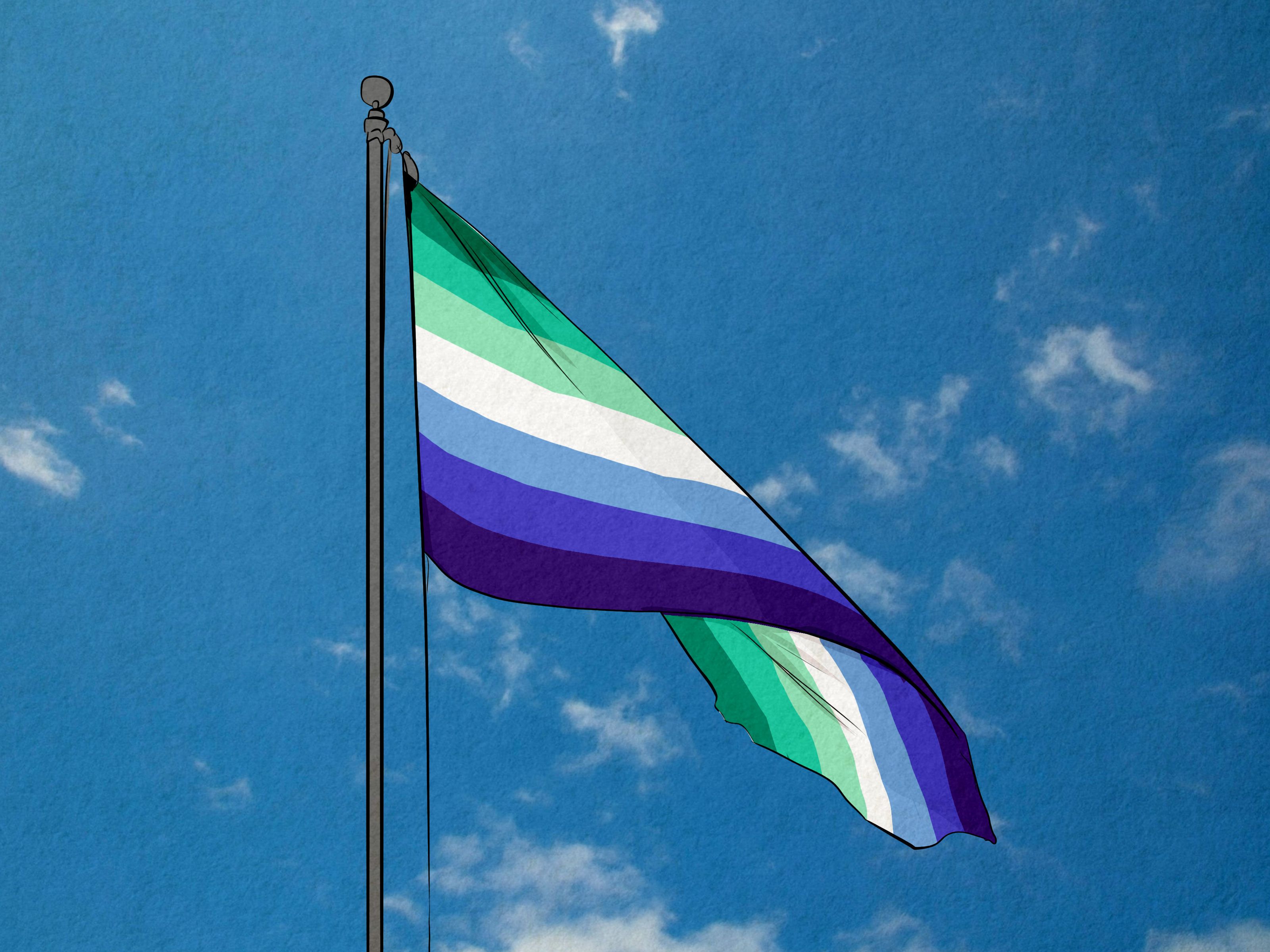
Green, blue, and white flags have a way of looking peaceful before you even know what they mean. They feel like a postcard: green for land, blue for water or sky, and white for peace, purity, unity, or the blank space where a country politely says, “Let’s not fight today.” Of course, flags are rarely that simple. A stripe can carry a revolution. A star can represent islands. A bird can stand for liberty. A triangle can point toward independence like a very serious geometric arrow.
This guide explores 15 national flags that feature green, blue, and white in meaningful ways. Some use all three colors boldly, such as Sierra Leone and Lesotho. Others include additional colors, symbols, stars, crescents, or coats of arms, but green, blue, and white still play important roles in the design. The result is a small world tour through geography, identity, religion, independence, agriculture, oceans, peace, and national pride.
Before we begin, here is a helpful rule of thumb: flag colors are not universal. Blue does not always mean the sky. Green does not always mean nature. White does not always mean peace, though it often does because apparently flags, unlike group chats, are trying their best. The meaning depends on each country’s history, culture, laws, and official interpretation.
Why Green, Blue, and White Appear So Often on Flags
The combination of green, blue, and white is popular because it can tell a complete national story in three visual notes. Green often represents land, farms, forests, mountains, fertility, prosperity, Islam, or renewal. Blue commonly points to rivers, oceans, rain, sky, freedom, or ethnic heritage. White frequently suggests peace, unity, justice, purity, harmony, or hope.
Together, these colors are especially common in countries with strong relationships to water and land. Island nations use blue for surrounding seas. Agricultural countries use green for fields and natural resources. Nations shaped by independence struggles often use white to express unity after conflict. In other words, this palette is not just pretty; it is doing a lot of symbolic heavy lifting.
15 Green, Blue & White Flags and Their Meanings
1. Sierra Leone
The flag of Sierra Leone is one of the cleanest examples of a green, white, and blue flag. It has three horizontal stripes: green on top, white in the middle, and blue at the bottom. No complicated emblem. No tiny symbol that requires a magnifying glass and three cups of coffee. Just three colors, clearly arranged.
The green represents the country’s agriculture, mountains, and natural resources. White stands for unity and justice. Blue refers to the sea and especially the natural harbor at Freetown, one of the country’s important geographical features. The flag was adopted at independence in 1961, making it a strong symbol of national identity, optimism, and self-rule.
2. Lesotho
Lesotho’s flag uses blue, white, and green in horizontal bands, with a black mokorotlo, a traditional Basotho hat, centered in the white stripe. If flags had personality, Lesotho’s would be calm, dignified, and very well accessorized.
The blue represents rain, a precious resource in the mountainous kingdom. White symbolizes peace. Green stands for prosperity. The black Basotho hat represents the country’s people and cultural heritage. The current version of the flag was introduced in 2006 to mark 40 years of independence, replacing earlier designs with a more peaceful and nationally inclusive image.
3. Uzbekistan
Uzbekistan’s flag features horizontal bands of blue, white, and green, separated by thin red lines. A white crescent and twelve white stars appear in the upper blue band. It is a flag with layers: color symbolism, historical identity, religious reference, and a little celestial sparkle for good measure.
The blue is associated with the sky, water, and Turkic heritage. White represents peace and purity. Green is commonly linked with nature, new life, fertility, and, in some interpretations, Islam. The red lines symbolize the life force. The crescent suggests a new nation and Islamic cultural heritage, while the twelve stars are often connected to the months of the year, traditional calendars, or perfection.
4. Djibouti
The flag of Djibouti is divided into two horizontal bands: light blue on top and light green below. A white triangle extends from the hoist side, holding a red five-pointed star. The design is simple, but the meaning is deeply tied to the country’s people and independence.
Blue stands for the sea, sky, and the Issa Somali people. Green represents the earth and the Afar people. White symbolizes peace. The red star recalls the struggle for independence and the unity of the nation. Djibouti’s flag shows how a design can balance geography, ethnic identity, and political history without looking visually crowded.
5. Solomon Islands
The Solomon Islands flag has a blue upper triangle, a green lower triangle, and a thin yellow diagonal stripe between them. Five white stars sit in the blue section. This flag looks like an island nation in graphic form: ocean above, land below, sunshine in between.
The blue represents the surrounding ocean, rivers, and rain. Green stands for the land, trees, and crops. The yellow diagonal stripe symbolizes sunshine. The five white stars originally represented the main island groups or provinces. Even as administrative divisions changed, the stars remained a recognizable symbol of the country’s island identity.
6. Seychelles
Seychelles has one of the most visually energetic flags in the world. Five oblique bands radiate upward from the lower hoist side: blue, yellow, red, white, and green. It looks less like a static flag and more like the country is making an entrance.
The blue represents the sky and sea surrounding the islands. White stands for social justice and harmony. Green symbolizes the land and natural environment. The other colors add meaning too: yellow represents the sun, while red symbolizes the people and their determination to work for the future in unity and love. The whole design suggests movement, optimism, and a young nation moving forward.
7. Tanzania
Tanzania’s flag uses a diagonal design with a green upper triangle, a blue lower triangle, and a black diagonal band edged in yellow. White is not a major field color in the current national flag, but white has appeared in related historical symbolism, and the blue-green pairing is central to the design.
Green represents the country’s vegetation and agricultural wealth. Blue symbolizes lakes, rivers, and the Indian Ocean. Black represents the people, while yellow or gold stands for mineral wealth. The diagonal layout reflects a union of Tanganyika and Zanzibar, making the flag not just a color statement but a political and historical bridge.
8. Namibia
Namibia’s flag features a blue upper triangle, a green lower triangle, a red diagonal band, thin white borders, and a golden sun. It is bright, balanced, and unmistakably tied to landscape.
Blue represents the sky, the Atlantic Ocean, rain, and water resources. Green symbolizes vegetation and agricultural resources. White stands for peace, unity, tranquility, and harmony. Red represents the people and their determination to build a future of equal opportunity, while the golden sun symbolizes life and energy. In one design, Namibia manages to include land, water, people, peace, and sunshine without needing a footnote the size of a cookbook.
9. Equatorial Guinea
Equatorial Guinea’s flag has horizontal green, white, and red bands with a blue triangle at the hoist and the national coat of arms centered in the white band. The coat of arms includes a silk-cotton tree, six stars, and a motto meaning “Unity, Peace, Justice.”
Green stands for the jungle and natural resources. Blue represents the sea connecting the mainland and islands. White symbolizes peace. Red recalls the struggle for independence. The six stars represent the mainland and five offshore islands. This is a flag that tells a geographic story, not just a political one.
10. The Gambia
The flag of The Gambia has horizontal red, blue, and green bands separated by narrow white stripes. Its design is unusually elegant because the white lines are not decorative afterthoughts; they help carry the meaning.
The blue stripe represents the Gambia River, which runs through the country and shapes its geography, economy, and culture. Green symbolizes forests and agriculture. White stands for peace and unity. Red represents the sun and the savannah. The flag is almost like a landscape diagram: river in the center, green land below, sun above, and peace holding the whole thing together.
11. Brazil
Brazil’s flag is famous for its green field, yellow diamond, blue globe, white stars, and white band carrying the motto “Ordem e Progresso,” meaning “Order and Progress.” It is one of the world’s most recognizable flags and, yes, one of the few that looks like it came with its own astronomy department.
The modern interpretation often links green with Brazil’s forests and natural wealth. The blue globe represents the sky over Rio de Janeiro at the time the republic was proclaimed in 1889. The white stars represent the states and the Federal District. The white band carries the national motto. Although yellow is also essential to the design, green, blue, and white are central to the flag’s identity.
12. South Africa
South Africa’s flag is a bold six-color design featuring green, blue, white, red, black, and yellow. A green Y-shape runs through the center, bordered by white, with blue and red fields on the fly side and a black triangle at the hoist.
Officially, the individual colors do not have fixed symbolic meanings. However, the Y-shape is widely understood as a symbol of convergence: diverse elements of South African society moving forward together in unity. The flag was adopted in 1994, during the country’s transition to democracy. Green, blue, and white are part of a design that represents reconciliation, movement, and a shared road ahead.
13. Azerbaijan
Azerbaijan’s flag is a horizontal tricolor of blue, red, and green, with a white crescent and eight-pointed star in the center. It is often called the Tricolor and is closely connected to national identity.
Blue represents Azerbaijan’s Turkic heritage. Red stands for modernization and progress. Green symbolizes Islam. The white crescent and star are Turkic and Islamic symbols, while the eight points of the star are often associated with Turkic peoples or interpretations of the country’s name in historical scripts. While white is not a stripe, it is visually and symbolically important in the central emblem.
14. Comoros
The flag of Comoros contains four horizontal stripes: yellow, white, red, and blue. A green triangle at the hoist contains a white crescent and four white stars. It is a compact geography lesson, religious symbol, and national claim in one design.
The four stripes represent the main islands associated with the Comorian archipelago: yellow for Mohéli, white for Mayotte, red for Anjouan, and blue for Grande Comore. The green triangle, crescent, and stars are traditional symbols of Islam. The four white stars also represent the islands. The result is a flag that uses green, blue, and white to express religion, island identity, and unity.
15. Guatemala
Guatemala’s flag is primarily blue and white: two vertical light-blue bands with a white band in the middle. The national coat of arms appears at the center and includes a green-and-red quetzal, the national bird. So yes, Guatemala sneaks green into the club by way of one very important bird.
The blue bands represent the Pacific Ocean and the Caribbean Sea, as well as ideals such as justice, loyalty, and strength in common interpretations. White stands for peace and purity. The quetzal symbolizes liberty. The emblem also includes crossed rifles, crossed swords, a scroll marking independence from Spain, and a laurel wreath for victory. Guatemala’s flag shows how a mostly blue-and-white design can gain extra depth through a meaningful green national symbol.
Quick Comparison of Green, Blue, and White Flag Meanings
| Country | Green Often Represents | Blue Often Represents | White Often Represents |
|---|---|---|---|
| Sierra Leone | Agriculture, mountains, resources | Sea and Freetown harbor | Unity and justice |
| Lesotho | Prosperity | Rain | Peace |
| Uzbekistan | Nature, new life, fertility | Sky, water, Turkic heritage | Peace and purity |
| Djibouti | Earth and Afar people | Sea, sky, Issa Somali people | Peace |
| Seychelles | Land and environment | Sky and sea | Social justice and harmony |
Common Themes Behind Green, Blue, and White Flags
Nature and Geography
Many green, blue, and white flags are built around landscape. Green often marks forests, farms, crops, mountains, or fertile land. Blue frequently points to oceans, rivers, lakes, rain, or sky. This is especially clear in island and coastal nations such as Seychelles, Solomon Islands, Comoros, Djibouti, and Equatorial Guinea.
Peace and Unity
White is one of the most common symbols of peace on national flags. In Lesotho, Djibouti, The Gambia, Namibia, Seychelles, and Sierra Leone, white is strongly tied to peace, justice, unity, purity, or harmony. In countries with complex histories of colonization, independence, or internal division, white often works like a visual promise: the future should be calmer than the past.
Identity and Heritage
Flags also preserve identity. Azerbaijan uses blue for Turkic heritage and green for Islam. Lesotho places the Basotho hat at the center of its flag. Guatemala includes the quetzal, a bird associated with liberty. Comoros uses the crescent and stars to reflect Islamic culture and island identity. These designs remind us that a flag is not just a color chart. It is a national autobiography with very strict page dimensions.
Personal Experience: What Green, Blue, and White Flags Teach Us
One of the most interesting experiences when studying green, blue, and white flags is realizing how quickly a simple design becomes memorable once you understand the meaning. At first glance, Sierra Leone’s flag might look like three calm stripes. But once you know that green points to agriculture and mountains, white to unity and justice, and blue to Freetown’s harbor and hope for world peace, the flag becomes much richer. It is like reading the caption under a painting and suddenly noticing details you missed.
The same thing happens with Lesotho. Many people first notice the black shape in the middle and wonder, “Is that a shield? A basket? A mysterious national mushroom?” Learning that it is a mokorotlo, a traditional Basotho hat, changes the whole design. The flag becomes personal. It is not only about rain, peace, and prosperity; it is about people, culture, and a national symbol that belongs specifically to Lesotho.
Travelers, students, teachers, and trivia lovers can use flags as tiny doors into bigger stories. A flag can lead to geography: Why does Djibouti use blue for sea and sky? Why does The Gambia place blue at the center? Why do island nations like Seychelles and Comoros use designs that feel so connected to the ocean? A flag can lead to history: Why does South Africa’s Y-shape matter so much? Why does Brazil’s blue globe show a specific sky? Suddenly a rectangle of color becomes a shortcut to politics, culture, religion, and place.
Green, blue, and white flags are especially good for visual learners because the colors feel intuitive. Green suggests land. Blue suggests water or sky. White suggests peace. But the fun begins when a country bends those expectations. Azerbaijan’s blue is not just sky; it is Turkic identity. Uzbekistan’s green is not only nature; it also carries cultural and religious associations. Guatemala’s green is not a stripe at all, but a quetzal, a national bird symbolizing liberty. Flags are excellent reminders that symbols are powerful because people agree to give them meaning.
Another practical experience: once you learn a few flag meanings, you start noticing patterns everywhere. You see blue-and-white flags in Central America and remember the old Federal Republic of Central America. You see green, white, and red combinations and think about independence movements, religion, or land. You see stars and ask whether they represent states, islands, provinces, unity, or something astronomical. Congratulations, you have become the person who pauses a movie to identify the flag in the background. There are worse hobbies. At least this one comes with geography.
For writers, educators, and web publishers, this topic is also a great reminder that “meaning” content works best when it goes beyond a list. Readers do not just want to know that blue means water. They want to know which water, why it matters, and how it connects to the country’s story. A strong flag article should explain the symbolism, but also add context: independence dates, national emblems, geography, and cultural references. That is what turns a basic fact into a useful, memorable explanation.
In the end, green, blue, and white flags show how nations use simple visual tools to express complicated ideas. Land, water, peace, unity, liberty, faith, and future hopes can all fit inside a few stripes, triangles, stars, or symbols. That is the quiet magic of vexillology, the study of flags. It proves that even a small piece of cloth can carry a country’s landscape, history, and dreamswhile still looking good on a flagpole.
Conclusion
Green, blue, and white flags are more than attractive color combinations. They often represent the things nations value most: land, water, peace, unity, identity, nature, and freedom. Sierra Leone’s clean tricolor celebrates resources, justice, and the sea. Lesotho’s flag blends rain, peace, prosperity, and cultural identity. Seychelles turns its colors into a rising burst of national energy. South Africa uses green, blue, and white inside a larger design about convergence and unity. Comoros, Djibouti, Azerbaijan, Guatemala, and others show how symbols like crescents, stars, birds, and coats of arms can deepen the story.
The next time you see a green, blue, and white flag, do not just think, “Nice colors.” Ask what landscape it remembers, what history it carries, and what future it hopes for. Flags may be small, but they are rarely shy.
Note: This article summarizes real flag descriptions and widely recognized symbolism from authoritative country, encyclopedia, and flag-reference sources, rewritten in original American English for web publication.