The Rocky Horror Picture Show is not just a movie. It is a glitter-covered cultural lightning strike wearing fishnets, singing rock songs, and somehow still showing up at midnight screenings decades after most films have quietly retired to streaming menus. Released in 1975, this musical comedy horror oddity began as a box-office disappointment and then performed one of cinema’s strangest magic tricks: it refused to leave.
Today, The Rocky Horror Picture Show is famous for its outrageous characters, unforgettable songs, interactive screenings, and loyal fans who know that watching the movie silently is almost missing the point. The film turned audience participation into an art form, helped define the midnight movie experience, and became one of the most recognizable cult classics in film history.
Whether you are a long-time fan, a curious first-timer, or someone who has heard people shouting callbacks in a theater and wondered if the popcorn was haunted, these fascinating facts about The Rocky Horror Picture Show explain why the movie still matters. Let’s step into the castle, but maybe keep an umbrella handy.
1. It Started as a Tiny Stage Musical in London
Before it became a legendary cult film, The Rocky Horror Picture Show was born as The Rocky Horror Show, a stage musical written by Richard O’Brien. The original production opened in 1973 at the Royal Court Theatre Upstairs in London, a small space that held just a modest audience. That intimate beginning is part of what makes the film’s later global fame so deliciously strange.
O’Brien created a playful mash-up of science fiction, horror, glam rock, and old B-movie energy. Instead of treating classic monster movies with stiff respect, he threw them into a blender with rock music, camp humor, and bold theatrical style. The result was messy in the best possible way: strange, catchy, and impossible to ignore.
2. Richard O’Brien Did Much More Than Act
Many viewers know Richard O’Brien as Riff Raff, the pale, hunched servant with unforgettable timing and a face that looks like it was designed during a thunderstorm. But O’Brien was also the creative engine behind the original musical. He wrote the book, music, and lyrics for the stage show and co-wrote the film adaptation with director Jim Sharman.
That means The Rocky Horror Picture Show carries O’Brien’s fingerprints everywhere: the songs, the oddball humor, the affectionate references to vintage genre films, and the gleeful refusal to behave like a normal musical. Riff Raff may seem like a supporting character, but behind the scenes, O’Brien was basically the castle’s architect.
3. The Film Was Directed by Jim Sharman
Jim Sharman, who had directed the stage version, also directed the movie. His background in theater helped shape the film’s bold, stage-like energy. The Rocky Horror Picture Show does not feel like a conventional movie musical with polished edges and predictable emotional beats. It feels like a live event that happened to be captured by a camera.
That theatrical DNA is essential to its charm. The framing, performances, costumes, and musical numbers all lean into exaggeration. Characters do not merely walk into rooms; they arrive. They pose, sing, stare, sneer, and make entrances like the rent is due and drama is the only accepted currency.
4. The Movie Was a Flop Before It Became a Phenomenon
One of the most fascinating facts about The Rocky Horror Picture Show is that it did not begin as an instant hit. When the film first opened in 1975, it struggled with critics and mainstream audiences. For a normal movie, that might have been the end of the story. The studio would move on, the posters would come down, and Dr. Frank-N-Furter would become a trivia answer.
Instead, the film found a second life through late-night screenings. Once it moved into midnight movie slots, the audience changed the rules. People came back again and again, brought friends, dressed as characters, shouted lines, and transformed the screening into a shared performance. The movie did not simply recover; it evolved.
5. Midnight Screenings Made It Immortal
The midnight movie tradition gave The Rocky Horror Picture Show the perfect home. In the 1970s, late-night showings often attracted adventurous audiences looking for films outside the mainstream. Rocky Horror fit that world like a sequined glove.
At New York City’s Waverly Theater, fans helped build the interactive style that would define the movie’s reputation. People talked back to the screen, sang along, danced in the aisles, and created rituals that spread from city to city. The film became less like a movie ticket and more like a membership card to a gloriously weird club.
6. Audience Participation Became Part of the Movie’s Identity
Most movies ask audiences to sit quietly. The Rocky Horror Picture Show politely declined that social contract, then danced on top of it. Audience participation became one of the film’s defining features. Fans developed callbacks, props, costumes, and shadow casts who perform in front of the screen while the movie plays behind them.
This is one reason the movie has lasted so long. Every screening can feel different because the audience helps create the experience. A first-time viewer might arrive expecting a film and instead discover a room full of people who seem to have rehearsed chaos. In a way, they have.
7. The Famous Lips Belong to Patricia Quinn
The opening image of giant red lips is one of the most iconic visuals in cult cinema. Those lips belong to Patricia Quinn, who plays Magenta in the film. However, the voice singing the opening number is Richard O’Brien’s. That combination immediately tells the audience what kind of movie this is: playful, theatrical, and very comfortable blurring expectations.
The lips also act like a welcome sign to the film’s universe. Before we meet Brad, Janet, Frank-N-Furter, or anyone else, the movie gives us a surreal image floating in darkness. It is both simple and unforgettable. Not bad for a pair of lips that have probably done more for midnight cinema than most full-length marketing campaigns.
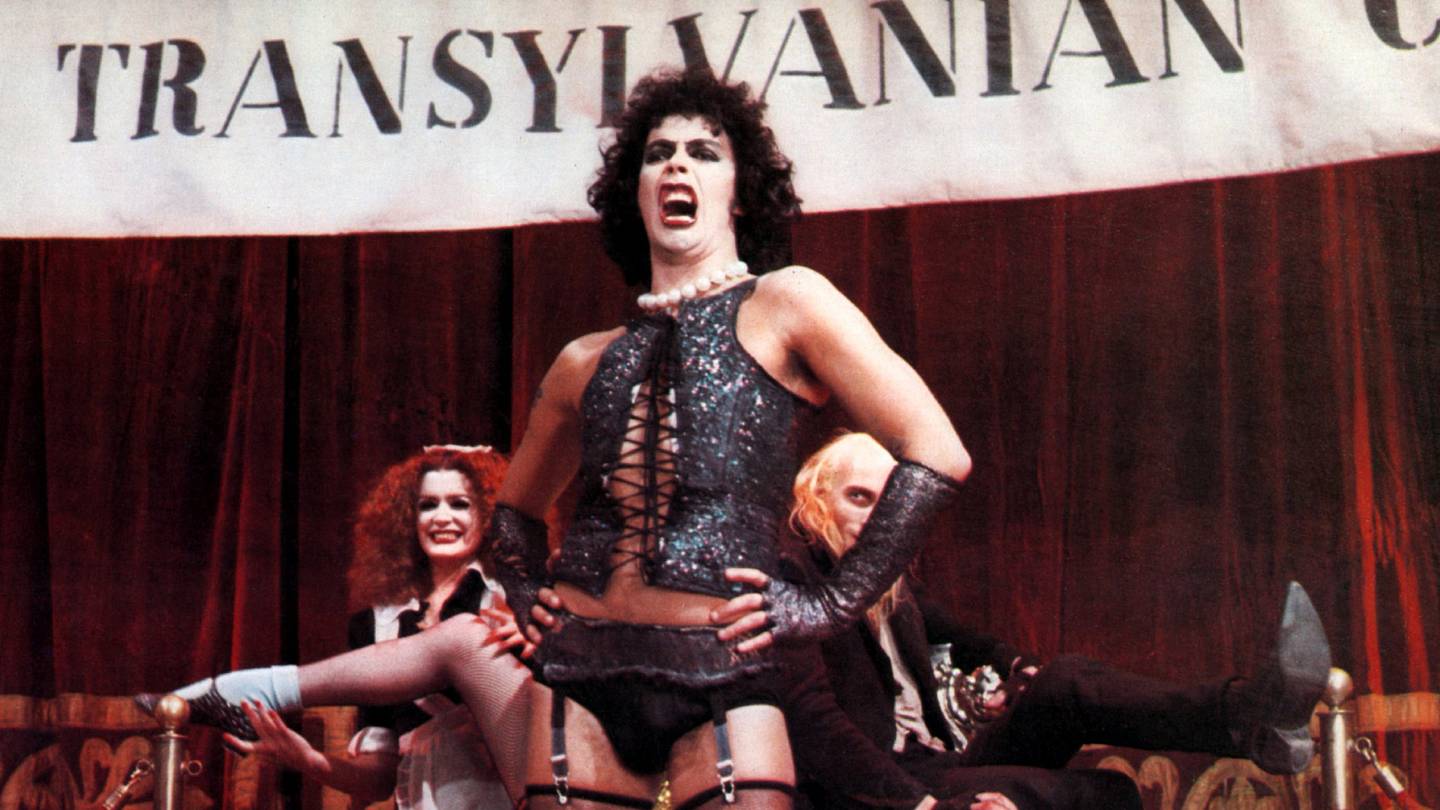
8. Tim Curry’s Frank-N-Furter Became a Career-Defining Performance
Tim Curry’s performance as Dr. Frank-N-Furter is the sparkling engine of The Rocky Horror Picture Show. He is funny, theatrical, commanding, and impossible to look away from. Curry had originated the role on stage, and the film preserved the performance that would make him a cult icon.
What makes Curry’s work so memorable is not just the costume or the makeup. It is the confidence. Frank-N-Furter enters the film as if the entire castle, soundtrack, and camera crew have been waiting for him to arrive. In many ways, they have. His performance turns the film from strange into legendary.
9. Susan Sarandon Was Early in Her Career
Susan Sarandon, who plays Janet Weiss, was still early in her screen career when she appeared in The Rocky Horror Picture Show. Janet begins the story as an innocent, proper character and gradually gets pulled into the castle’s wild world. Sarandon gives the role a mix of sincerity, comedy, and curiosity that helps ground the movie’s madness.
That balance matters. Brad and Janet are the audience’s entry point. They are confused, overwhelmed, and often hilariously out of place. Without characters like them, the film might simply be a carnival of eccentricity. With them, viewers get to experience the castle as outsiders first, then slowly understand why people keep returning.
10. Barry Bostwick’s Brad Is Supposed to Be Ridiculously Square
Barry Bostwick’s Brad Majors is a masterpiece of wholesome awkwardness. Brad is polite, stiff, well-meaning, and almost aggressively conventional. That makes him the perfect comic target once he enters a world where everyone else seems to have read a completely different rulebook.
Brad’s character works because Bostwick does not wink too hard at the audience. He plays Brad’s confusion sincerely, which makes the absurdity even funnier. In a movie filled with huge personalities, Brad’s nervous normality becomes its own kind of costume.
11. The Film Is a Loving Tribute to Old Sci-Fi and Horror Movies
The Rocky Horror Picture Show is packed with references to classic science fiction and horror. It borrows the atmosphere of old haunted-house films, the mad-scientist setup of vintage monster movies, and the dramatic lightning-and-laboratory energy that made early genre cinema so much fun.
But the movie is not simply mocking those films. It clearly loves them. Its humor comes from affection as much as parody. The film understands the pleasure of creaky castles, strange experiments, dramatic narration, and characters who react to danger with the emotional volume turned all the way up.
12. Oakley Court Gave the Castle Real Gothic Flavor
The movie’s gothic mansion exterior was filmed at Oakley Court in England, a location with its own history in horror cinema. The building’s looming presence gives the movie instant atmosphere. It looks like exactly the kind of place where your car would break down during a storm, because apparently horror-movie geography has a sense of humor.
That setting helps the film connect to earlier British horror traditions, especially the kind of stylish, eerie movies that made castles, laboratories, and shadowy corridors feel essential. Rocky Horror then takes that familiar mood and fills it with rock music, camp, and outrageous theatricality.
13. The Costumes Helped Shape the Film’s Legacy
Sue Blane’s costume designs are central to the look and influence of The Rocky Horror Picture Show. The outfits are bold, theatrical, and instantly recognizable. They also helped fans participate. Unlike many movie costumes that stay trapped on screen, these designs practically invited audiences to recreate them.
That is a major reason shadow casts and fan costumes became so important. The film’s visual language is easy to identify and fun to imitate. A little sparkle, a little attitude, and suddenly the audience is not just watching the movie; they are joining the world of the movie.
14. It Is One of the Longest-Running Theatrical Releases in Film History
Few movies can claim the kind of theatrical life that The Rocky Horror Picture Show has enjoyed. Thanks to midnight screenings, anniversary events, Halloween showings, and fan-driven performances, the film has remained in circulation for decades. That kind of longevity is almost unheard of in modern cinema.
Most films have a release window, a marketing push, and then a quieter afterlife. Rocky Horror took another path. It became a ritual. The movie’s continued theatrical presence proves that a film does not need to be perfect to be beloved. Sometimes it needs to be strange, quotable, musical, and brave enough to let the audience climb into the driver’s seat.
Why ‘The Rocky Horror Picture Show’ Still Matters
The lasting power of The Rocky Horror Picture Show comes from more than nostalgia. Yes, the songs are catchy. Yes, the costumes are unforgettable. Yes, Tim Curry’s entrance could wake a sleeping statue. But the deeper reason the film endures is that it creates space for people who enjoy being outside the ordinary.
The movie celebrates exaggeration, identity, transformation, and theatrical self-expression. It became especially meaningful to audiences who felt like outsiders, including many LGBTQ+ viewers and fans drawn to alternative culture. While the film is very much a product of its time and is often discussed through a modern lens, its importance as a gathering point for self-expression remains powerful.
It also changed how people think about moviegoing. A theater screening is usually passive: you buy a ticket, sit down, watch, and leave. Rocky Horror turned that model upside down. Fans made the theater into a stage, the movie into a script, and the audience into a temporary community. That is not just film history. That is social history in eyeliner.
Experience Section: What It Feels Like to Watch ‘The Rocky Horror Picture Show’ With a Crowd
Watching The Rocky Horror Picture Show alone at home can be entertaining, but seeing it with an audience is a completely different creature. At home, you notice the plot, the songs, the costumes, and the strange turns in the story. In a theater, you notice the energy. The room seems to buzz before the movie even begins, especially if people arrive in costume or a shadow cast is warming up near the screen.
For first-time viewers, the experience can be surprising. You may expect a standard movie night and instead find yourself surrounded by people who know every beat, every entrance, and every moment when the crowd is supposed to respond. Some fans call first-timers “virgins,” meaning newcomers to the Rocky Horror screening tradition. The word is part of the fan culture, though many modern events handle it more gently depending on the audience and venue.
The best way to enjoy your first screening is to relax and treat it like a party where the movie is the guest of honor. You do not have to understand every callback. You do not have to dress up. You do not have to know when to clap, shout, dance, or laugh. The fun comes from letting the atmosphere carry you. By the end, you may still be confused, but you will probably understand why people come back.
Shadow casts are one of the most memorable parts of the experience. These performers act out the movie in front of the screen, matching the characters’ movements and adding their own flair. It is part tribute, part parody, and part athletic event. Anyone who thinks standing in heels under stage lights while matching a cult musical is easy has clearly never tried to hit a cue while someone in the crowd is yelling a joke about Brad’s sweater.
Props can also be part of the tradition, although rules vary by theater. Some venues allow approved prop bags; others restrict certain items to protect the space and keep cleanup from becoming a horror sequel. A good rule for newcomers is simple: check the theater’s guidelines before bringing anything. The goal is fun, not making the staff regret every life choice that led them to that broom.
What makes a Rocky Horror screening special is the feeling that everyone is temporarily in on the same weird joke. The movie becomes a shared language. People who have never met can laugh at the same callbacks, admire costumes, and cheer for favorite moments. It is chaotic, but not random. It is a tradition built over decades by fans who turned a once-overlooked film into a living event.
For many viewers, the experience is also surprisingly welcoming. Beneath the glitter and noise is a sense of permission: permission to be dramatic, to be silly, to dress up, to sing badly, to laugh loudly, and to enjoy a film that was never interested in being normal. That is why The Rocky Horror Picture Show remains more than a cult classic. It is a reminder that sometimes the best movie nights are the ones where the audience refuses to sit still.
Conclusion
The Rocky Horror Picture Show has survived because it is not merely watched; it is performed, quoted, dressed up as, debated, rediscovered, and passed from one generation of fans to the next. Its journey from small stage musical to box-office misfit to midnight movie royalty is one of the strangest success stories in entertainment history.
The film’s 14 fascinating facts reveal a bigger truth: culture does not always follow a neat plan. Sometimes a movie flops, finds the right audience at the wrong hour, and becomes immortal. Sometimes a pair of red lips, a castle in the rain, and a room full of enthusiastic fans are enough to rewrite film history. And sometimes, the best advice is still simple: don’t dream it, experience it.