Dark tourism is not about chasing misery like a gloomy tourist with a passport and dramatic scarf. At its best, it is travel with memory attached: visiting places shaped by tragedy, conflict, disaster, injustice, or loss so we can understand history beyond textbook paragraphs. These destinations can be haunting, yes, but they are also deeply human. They ask visitors to slow down, read the signs, listen carefully, and maybe stop taking cheerful selfies next to solemn memorials. A good rule of thumb: if the place makes you whisper, it probably deserves respect.
From preserved prison islands to cities frozen by volcanic ash, the world’s most powerful dark tourism destinations reveal how fragile life, power, culture, and civilization can be. Some sites are museums. Some are ruins. Some are battlefields. Others are quiet spaces where silence says more than any tour guide could. Below are 10 haunting dark tourism destinations from around the world that are historically significant, emotionally intense, and unforgettable for travelers who want more than pretty postcards.
What Is Dark Tourism?
Dark tourism refers to travel connected with places of death, disaster, suffering, or difficult history. That definition sounds as cheerful as a rainy Monday, but the purpose can be meaningful. Many travelers visit these sites to learn, reflect, honor victims, or better understand the causes and consequences of historical events. The best dark tourism experiences are not thrill rides. They are reminders that history was lived by real people, not just printed in bold dates.
Responsible dark tourism means arriving with curiosity and leaving with humility. It means supporting preservation, following local rules, avoiding sensationalism, and remembering that many of these places are not “spooky attractions” but cultural memory sites. In other words, save the haunted-house energy for Halloween; bring empathy here.
1. Auschwitz-Birkenau Memorial and Museum, Poland
Auschwitz-Birkenau is one of the most sobering Holocaust memorial sites in the world. Located near Oświęcim, Poland, it preserves parts of the former Nazi German concentration and extermination camp complex. Visitors walk through barracks, gates, watchtowers, and exhibitions that document persecution, forced labor, and mass murder during World War II.
What makes Auschwitz-Birkenau so haunting is not only its scale, but the contrast between ordinary objects and unimaginable history. Shoes, suitcases, photographs, and written records remind visitors that victims were individuals with families, hopes, habits, and names. A guided visit helps provide historical context and prevents the site from becoming only a visual experience. This is not a place to rush through. It is a place to absorb slowly, respectfully, and quietly.
Why visit responsibly?
Auschwitz-Birkenau is essential for understanding the Holocaust, antisemitism, propaganda, and the dangers of dehumanization. Visitors should avoid loud behavior, staged photos, or anything that turns remembrance into performance.
2. Chernobyl Exclusion Zone, Ukraine
The Chernobyl nuclear disaster of 1986 turned the area around Reactor No. 4 into one of the most famous disaster landscapes on Earth. The nearby city of Pripyat, once built for workers and families connected to the nuclear plant, became a ghost city almost overnight. Abandoned apartment blocks, schools, cultural spaces, and the well-known amusement park create an eerie picture of interrupted daily life.
Chernobyl is haunting because it is not ancient history. Its story involves modern technology, political secrecy, emergency response, environmental impact, and long-term public health questions. Before Russia’s full-scale invasion of Ukraine, carefully controlled tours helped visitors understand radiation safety, Soviet urban planning, and the disaster’s legacy. Travel access has been affected by war and security conditions, so anyone considering a future visit should check official advisories and current restrictions.
Why it matters
Chernobyl is a powerful lesson in engineering responsibility, government transparency, and the relationship between humans and the environment. It is not a playground for “danger tourism”; it is a reminder that mistakes in high-risk systems can echo for generations.
3. Hiroshima Peace Memorial Park, Japan
Hiroshima Peace Memorial Park stands near the hypocenter of the atomic bombing of August 6, 1945. The Genbaku Dome, also known as the Atomic Bomb Dome, remains one of the city’s most recognizable symbols. Preserved as a ruin, it communicates both destruction and a continuing call for peace.
The Peace Memorial Museum presents survivor testimonies, artifacts, historical background, and educational exhibits. The tone is not designed to shock for shock’s sake; it is designed to make visitors understand the human cost of nuclear war. Around the park, memorials, trees, water features, and open space create an atmosphere that is calm but emotionally heavy.
What visitors take away
Hiroshima is not only a dark tourism destination. It is also a city of resilience. Visitors leave with a clearer understanding of wartime history, nuclear weapons, civilian suffering, and the global importance of peace education.
4. National September 11 Memorial & Museum, New York City, USA
At the World Trade Center site in Lower Manhattan, the National September 11 Memorial & Museum tells the story of the 2001 terrorist attacks through artifacts, personal narratives, architecture, and reflective space. The twin memorial pools mark the footprints of the original Twin Towers, while the museum below ground preserves objects and stories connected to victims, survivors, rescue workers, and the city’s response.
This site is especially powerful because many visitors remember where they were that day, while younger visitors may know it mostly through history lessons. The museum bridges that gap by focusing on both public history and private grief. It is emotional without being theatrical, and that restraint is part of its strength.
How to approach the visit
Give yourself time. Read the personal stories. Notice the architecture. The experience is less about seeing “a famous place” and more about understanding how a single morning changed thousands of lives and reshaped global politics.
5. Alcatraz Island, San Francisco, USA
Alcatraz Island sits in San Francisco Bay with a view so beautiful it almost feels unfair. Then you step inside the former federal prison, and the mood shifts faster than fog rolling under the Golden Gate Bridge. Operated as a federal penitentiary from 1934 to 1963, Alcatraz held some of America’s most well-known inmates and became famous for its isolation, strict routines, and escape stories.
But Alcatraz is more than a prison tale. The island also has military history, lighthouse history, and major significance in Native American activism, especially the occupation that began in 1969. This layered past makes Alcatraz a richer dark tourism destination than the usual “creepy cellblock” stereotype.
Best experience
The audio tour, featuring voices connected to the prison’s history, adds atmosphere and context. It helps visitors imagine daily life on the island without turning incarceration into entertainment.
6. Pompeii Archaeological Park, Italy
Pompeii is a haunting destination because it preserves ordinary life at the moment disaster interrupted it. In AD 79, Mount Vesuvius erupted and buried the Roman city under volcanic material. The result, discovered and excavated over centuries, is one of the world’s most extraordinary archaeological sites.
Walking through Pompeii feels strangely familiar. There are streets, homes, bakeries, public baths, wall paintings, shops, and courtyards. That familiarity is what makes the site so moving. Pompeii is not only about catastrophe; it is about daily routines frozen in time. The past does not feel distant there. It feels like the residents just stepped out, though history tells us otherwise.
Why it belongs on this list
Pompeii combines archaeology, disaster history, urban life, and human vulnerability. It teaches visitors that civilization can be sophisticated, busy, and confidentand still be changed in a single day.
7. Paris Catacombs, France
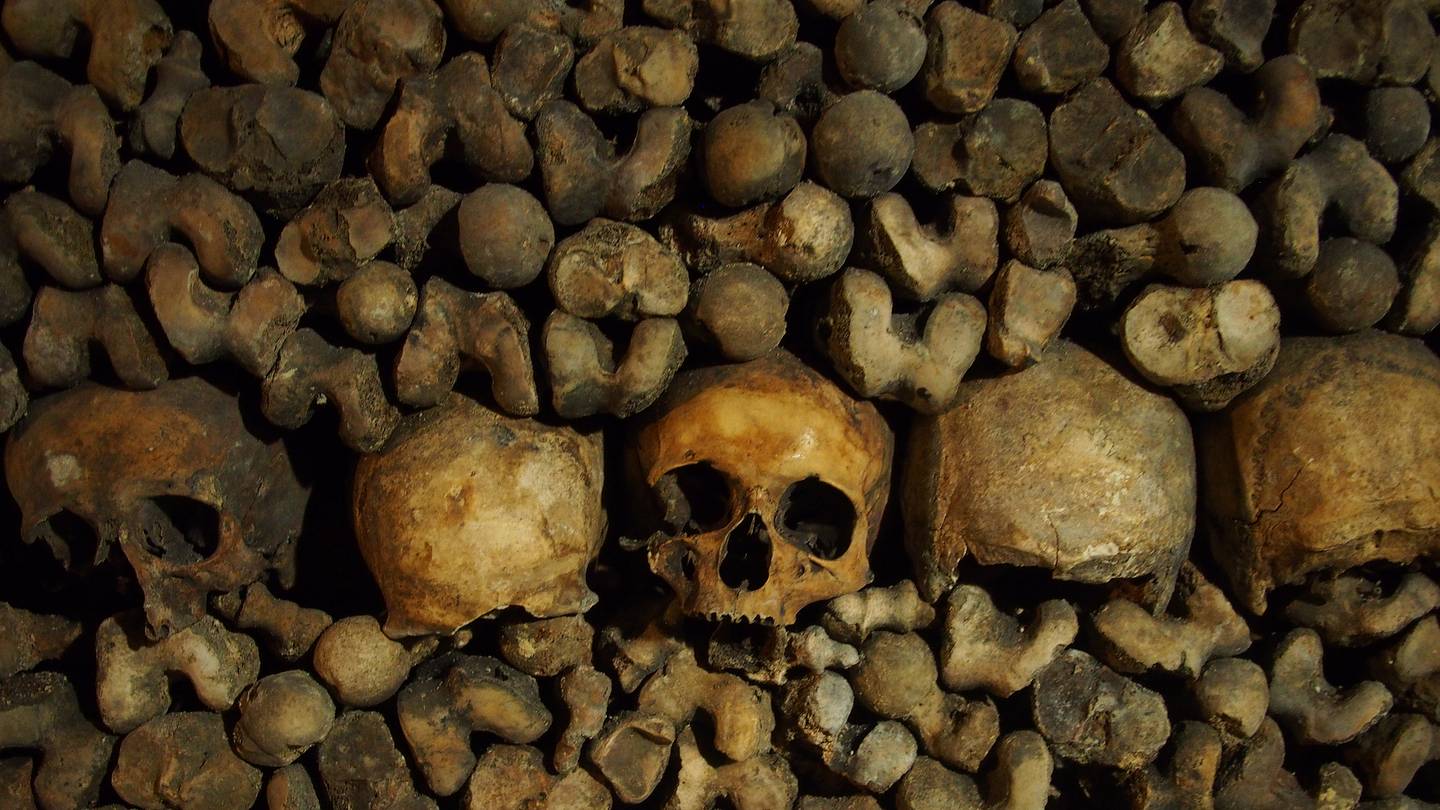
Beneath the polished cafés and elegant boulevards of Paris lies a different city: the Catacombs. This underground ossuary contains the arranged remains of millions of Parisians, moved there beginning in the late 18th century after overcrowded cemeteries created public health concerns. It is one of the most visually striking dark tourism destinations in Europe.
The Catacombs are haunting because they turn the abstract idea of mortality into architecture. Long tunnels, dim lighting, stone walls, and carefully arranged bones create an atmosphere that is both historical and philosophical. Paris above ground says, “Have another pastry.” Paris below ground says, “Remember you are temporary.” Both are persuasive, frankly.
Visitor tip
Book ahead when possible and follow the official route. The Catacombs are not just a moody backdrop; they are a protected heritage site and a resting place.
8. Robben Island, South Africa
Robben Island, off the coast of Cape Town, is best known as the prison where Nelson Mandela and other political prisoners were held during apartheid. The island’s history stretches across centuries, including uses as a place of banishment, isolation, imprisonment, and military activity. Today, it is a museum and UNESCO World Heritage Site.
What makes Robben Island unforgettable is the presence of living memory. Tours are often led or informed by people with direct connections to the prison’s past, giving visitors insight into political resistance, injustice, endurance, and democracy. The ferry ride from Cape Town also adds emotional distance: the island is visible from the city, yet for prisoners it represented separation from freedom, family, and political life.
Why it is powerful
Robben Island is not only a story of oppression. It is also a story of resilience. Visitors leave with a deeper understanding of apartheid and the long struggle for human rights in South Africa.
9. Tuol Sleng Genocide Museum and Choeung Ek, Cambodia
In Phnom Penh, Tuol Sleng Genocide Museum and Choeung Ek Genocidal Center preserve the memory of Cambodia’s Khmer Rouge period. Tuol Sleng, once known as S-21, was used as a detention and interrogation center. Choeung Ek, located outside the city, is a memorial site connected to victims of the regime. Together, they form one of Southeast Asia’s most important remembrance landscapes.
These places are difficult to visit, and they should be. Exhibitions, photographs, preserved rooms, and memorial spaces explain how ideology, fear, and state violence affected ordinary people. The experience is not comfortable, but comfort is not the point. The point is remembrance, education, and respect.
Responsible travel note
Visitors should move slowly, dress respectfully, and avoid casual joking or photo behavior that would feel inappropriate in a memorial setting. This is a place for learning, not content hunting.
10. Tower of London, England
The Tower of London is almost 1,000 years old, which means it has had plenty of time to collect stories, legends, prisoners, politics, and the occasional deeply awkward royal family moment. Built as a fortress and royal residence, it later became famous as a prison and execution site for high-status prisoners, including figures from England’s turbulent political and religious history.
Unlike some dark tourism destinations, the Tower blends grim history with pageantry. The Crown Jewels are there. So are ravens, Yeoman Warders, thick stone walls, and stories of imprisonment, power, betrayal, and survival. The result is a destination that feels both theatrical and historically serious.
Why it fascinates visitors
The Tower reminds us that power has always had a shadow. Behind royal ceremonies and polished symbols were real struggles over loyalty, belief, inheritance, and control.
How to Visit Dark Tourism Destinations Respectfully
Dark tourism requires a different mindset from beach vacations or theme parks. You do not need to be gloomy all day, but you do need awareness. Before visiting, learn the basic history so you are not wandering through tragedy like a confused raccoon in a museum. Read official guidance, understand photography rules, and remember that many sites are connected to living communities and descendants.
Support local guides and museums when possible. Good interpretation makes a major difference, especially at complex sites such as Robben Island, Auschwitz-Birkenau, and Tuol Sleng. A guide can explain context, correct myths, and help visitors understand why a place matters beyond its visual impact.
Be careful with photos. A respectful photo of a memorial or historic structure may be acceptable, but posing dramatically, smiling beside solemn displays, or treating the site as a social media prop is not. The internet already has enough bad decisions wearing sunglasses.
Experiences Related to Dark Tourism Around the World
The most memorable dark tourism experiences are rarely the loudest ones. They often arrive quietly: a hallway that suddenly feels too still, a guide who pauses before speaking, a preserved room where ordinary objects carry extraordinary weight. These moments stay with travelers because they connect history to emotion. You may forget the exact opening hours of a museum, but you will remember the silence.
One common experience across dark tourism sites is the feeling of scale becoming personal. At first, visitors may understand tragedy through numbers: thousands, millions, years, battles, dates. But then a single name, photograph, letter, or object changes the experience. A suitcase at Auschwitz-Birkenau, a child’s school setting in Pripyat, a family story at the 9/11 Museum, or a former prisoner’s account on Robben Island can make history feel immediate. That shift is one reason these destinations matter.
Another important experience is discomfort. Dark tourism should not always feel easy. A visitor may feel sadness, anger, confusion, guilt, or even emotional fatigue. That is normal. These places often challenge comfortable assumptions about progress, safety, leadership, prejudice, and human behavior. They show how quickly institutions can fail and how deeply societies can harm people when fear or ideology takes over. The emotional weight is not a flaw in the visit; it is part of the lesson.
There is also a strange sense of contrast. In Hiroshima, a peaceful park sits in a city full of modern life. In Paris, the Catacombs exist beneath streets crowded with restaurants and fashion boutiques. At Pompeii, blue sky and ancient streets can feel beautiful until the story behind them returns to mind. At Alcatraz, tourists look across sparkling water toward San Francisco while standing in a place designed for isolation. These contrasts make dark tourism powerful because they show that tragedy and ordinary life often occupy the same map.
For many travelers, dark tourism also changes how they travel afterward. They become more careful readers of monuments, more patient in museums, and more aware of whose stories are missing from official narratives. They may notice that history is not only about famous leaders and dramatic events, but also about workers, prisoners, families, children, responders, survivors, and communities that rebuilt after loss.
The best experience to seek is not fear, shock, or bragging rights. It is understanding. A meaningful dark tourism visit should leave you more informed and more thoughtful. You do not have to leave with all the answers. In fact, you probably will not. But you may leave with better questions, and that is a very good souvenirmuch better than a fridge magnet that says “I survived history,” which, please, do not buy if it exists.
Conclusion: Why Dark Tourism Still Matters
Dark tourism destinations are haunting because they refuse to let the past become tidy. They remind us that history contains grief, courage, failure, resilience, cruelty, recovery, and lessons we ignore at our own risk. Whether you are walking through Pompeii’s ancient streets, standing beneath the trees at Hiroshima Peace Memorial Park, listening to stories on Robben Island, or reflecting at the 9/11 Memorial, the purpose is not to consume tragedy. The purpose is to remember, learn, and travel with a little more humility.
The world is full of beautiful places, but not every meaningful journey is beautiful in the usual way. Some destinations are important because they are uncomfortable. Some are unforgettable because they ask us to pay attention. And sometimes, the most responsible traveler is not the one with the biggest itinerary, but the one who knows when to stand still.