Street photography is the art of noticing what everyone else walks past. A glance reflected in glass, a dog waiting beside a stalled car, or a train compartment temporarily transformed into a bedroomordinary life keeps producing tiny plays, and the best photographers arrive before the curtain drops.
The Independent Photographer’s February 2021 Street Photography Award celebrated that unscripted theater. British documentary photographer Martin Parr, a longtime Magnum member and former president of the agency, judged the competition. The official results named three prize recipients and seven finalists. A widely shared roundup later grouped all ten images under the convenient label of “winning photos,” so one useful clarification is in order: Florian E. J. Lang, Joseph-Philippe Bevillard, and Monia Marchionni took first, second, and third prize, while the other seven photographers were finalists.
That technical distinction does not make the finalists less memorable. Together, the ten candid street photos show why the genre remains so addictive: it can be funny, tender, uncomfortable, mysterious, and beautifully chaoticsometimes before breakfast.
Why These Award-Winning Street Photographs Stand Out
Street photography is nearly as old as photography itself, and its territory extends beyond literal sidewalks. Public transportation, beaches, ceremonies, markets, workplaces, parks, and roadside spaces can all become stages for visual storytelling. What matters is not the postal address but the photographer’s alertness to real life as it unfolds.
The strongest images rarely depend on expensive equipment or exotic locations alone. They depend on timing, composition, emotional intelligence, and the ability to organize a crowded scene without physically organizing the people in it. In other words, the photographer must turn confusion into clarity without yelling, “Everybody move three inches to the left.”
The 2021 contest selection repeatedly demonstrates four qualities: layered composition, meaningful gestures, visual relationships between people and their surroundings, and a sense that the scene would never happen in exactly the same way again.
10 Candid Photos From The Independent Photographer’s Street Photography Contest
1. “Buddhist Roadside Shrine” by Florian E. J. Lang First Prize
Photographed in Siem Reap, Cambodia, in 2020, “Buddhist Roadside Shrine” shows visitors gathered at a shrine in the center of the city. The frame succeeds because the scene is busy without becoming visually noisy. People, architecture, color, and background details occupy distinct spaces, giving the image the controlled rhythm of a carefully arranged group portraiteven though the moment was candid.
Lang’s photograph demonstrates a central street-photography skill: waiting until separate moving elements briefly become one coherent design. A fraction of a second earlier, someone might have blocked a face. A fraction later, the balance could have dissolved. The winning moment lives in that narrow gap.
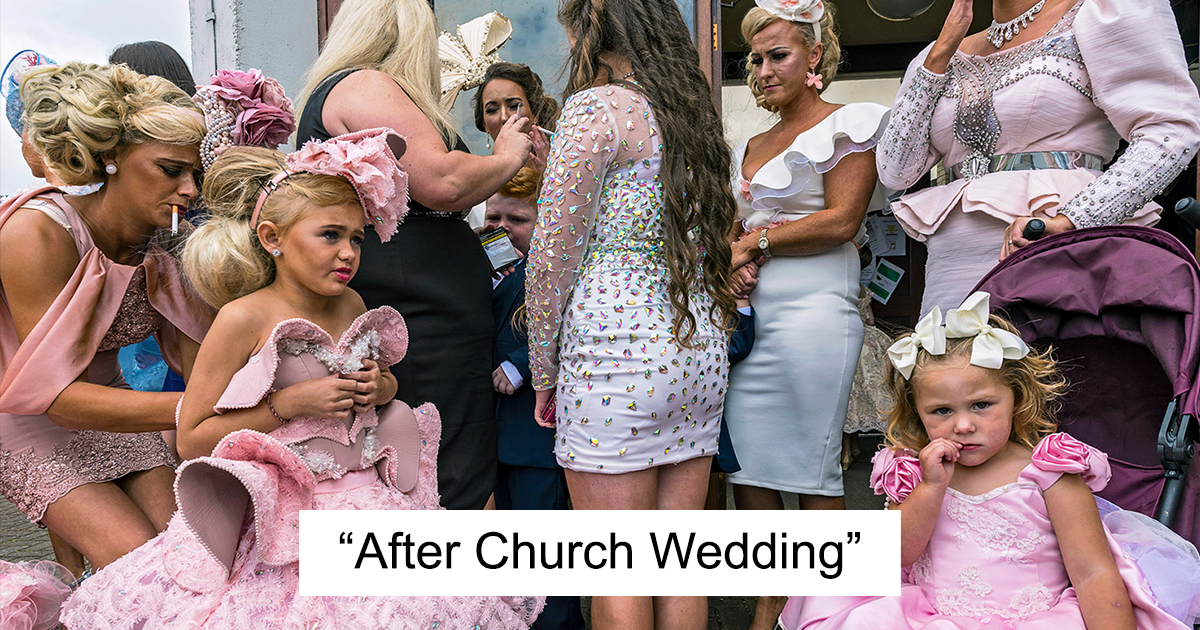
2. “After Church Wedding” by Joseph-Philippe Bevillard Second Prize
Created in Wexford, Ireland, in 2019, Bevillard’s image records women and girls from the Irish Traveller community gathered after a church wedding. Layers of pink dresses, grooming rituals, gestures, and expressions create a scene that feels both celebratory and socially revealing.
The photograph’s power comes from density. There is plenty happening, yet no detail feels accidental. The eye moves from person to person, reading relationships and small actions. It is a reminder that complicated candid photography is not simply about squeezing many people into a frame; it is about preserving enough separation and structure for each person to contribute to the story.
3. “The Gardens From the Sky” by Monia Marchionni Third Prize
Marchionni photographed three generations of an Italo-Cuban family spending a summer day in a period home overlooking the sea. The resulting image feels theatrical, but not staged. Each family member appears to inhabit a separate emotional zone, while the architecture holds the personalities together like compartments in a dollhouse.
This is candid family photography with unusual visual wit. The frame suggests affection, independence, boredom, routine, and eccentricity all at once. Anyone who has attended a multigenerational family gathering may recognize the mood: everybody is together, and everybody is also starring in a completely different movie.
4. “Repair” by Marcel van Balken Finalist
In Dordogne, France, van Balken encountered a car, a person apparently working beneath it, and a dog waiting nearby. The setup is simple, but the uncertainty makes it funny. Is the repair under control? Does the dog know something the mechanic does not? Has the dog already called roadside assistance?
The image works because it leaves space for interpretation. Street photography often becomes more engaging when it does not explain everything. A strong frame can operate like the opening sentence of a short story, giving viewers enough information to become curious but not enough to close the case.
5. “The Train for Jaipur” by Giuliano Lo Re Finalist
Lo Re’s photograph observes passengers traveling from New Delhi to Jaipur. During the journey, the railcar becomes a temporary home: people rest, think, groom themselves, prepare food, and settle into private routines within a public space.
The picture expands the meaning of street photography. Urban life does not stop when people board a train; it becomes compressed. The carriage contains overlapping stories, body language, textures, and improvised domestic behavior. By photographing the in-between time of travel, Lo Re captures a social world that most passengers experience but rarely study.
6. “Children Looking Through the Glass” by Orna Naor Finalist
Made in Bnei Brak, Israel, in 2000, Naor’s photograph catches children pressing their attention toward or through a pane of glass. Their expressions carry the image. The glass acts as both a physical barrier and a compositional tool, turning spontaneous curiosity into a layered portrait.
Children are naturally unpredictable subjects, which is precisely why candid images of them can feel so alive. Their reactions are often immediate and unpolished. Here, the photographer does not need an elaborate event; the emotional charge comes from faces, proximity, and the universal experience of wanting to see what is happening on the other side.
7. “Fantasy Alley” by Carlos Antonorsi Finalist
Photographed at Hollywood Beach, Florida, in 2020, “Fantasy Alley” finds visual play in an everyday public setting. Its strength lies in juxtapositionthe street’s signs, bodies, colors, and background references combine to make reality feel slightly fictional.
Good street photographers frequently notice accidental jokes built by the environment. A sign can comment on a passerby. A mural can appear to interact with a stranger. An ordinary alley can briefly look like a movie set that forgot to hire actors. Antonorsi’s image shows how context can transform a person from a subject into part of a larger visual punchline.
8. “La Comitiva” by Lorenzo Catena Finalist
Catena met a close group of young friends along the seaside in Paola, Calabria, and spent several evenings photographing their routines on the rocky beaches of southern Italy. The title refers to a tightly bonded circle of friends, and that familiarity is visible in the relaxed physical language of the group.
Although street photography is often associated with quick encounters, this image points to another approach: return, observe, and gradually understand. Spending time near a community can produce more nuanced photographs than collecting isolated surprises. The photographer remains responsive to candid moments while building enough familiarity to recognize which gestures matter.
9. “Workers in a Shipyard” by Andrew Biraj Finalist
Biraj photographed laborers in a shipyard near the Buriganga River outside Dhaka, Bangladesh. Unlike the lighter scenes in the selection, this image draws attention to physical work and the demanding environment in which it occurs.
Street photography can entertain, but it can also document labor, inequality, risk, and systems that remain invisible to many viewers. Composition still matters; strong social content does not excuse a weak picture. Biraj’s frame uses the workers’ bodies, industrial forms, and surrounding space to communicate scale and strain without turning the subjects into scenery.
10. “Workout Session” by Susanne Grether Finalist
Captured in Varanasi, India, in 2020, Grether’s photograph finds a group engaged in physical exercise. The scene’s appeal comes from the arrangement of bodies and the lively contrast between concentrated effort and the activity surrounding it.
Exercise is repetitive, but candid photography can isolate the one repetition that looks extraordinary. A raised arm, tilted torso, distant observer, or unexpected background figure may create a visual connection lasting less than a second. Grether’s image reminds photographers that patience is not passive. It is active attention with comfortable shoes.
What the Contest Reveals About Great Candid Photography
Composition Creates Order Without Killing Spontaneity
Several images in the contest are packed with people and details, yet they remain readable. That is difficult. Busy scenes demand control over edges, spacing, foreground, background, and overlapping forms. The photographer cannot rearrange reality, so the practical solution is movement: take a step, lower the camera, wait for separation, or anticipate where people are going.
Gesture Often Matters More Than Facial Expression
A cigarette held while adjusting a dress, a child leaning toward glass, a worker’s posture, or a dog’s patient stance can carry as much meaning as a face. Gesture tells viewers what is happening between people and how they feel within a space. It also makes candid street photos legible across languages.
Humor Works Best When It Is Observed, Not Forced
The funniest photographs in the group do not rely on staged comedy. Their humor grows from ambiguity, coincidence, and visual timing. The joke is already present in the world; the photographer simply notices it before everyone else checks a notification.
Ethics Remain Part of the Frame
In the United States, photographing plainly visible activity in public spaces is broadly protected, but legality is only one part of responsible practice. Respect, context, vulnerability, cultural understanding, and the likely impact of publication also matter. Ethical street photographers ask not only, “May I make this picture?” but also, “What story am I telling about this person, and am I telling it fairly?”
Visual-journalism standards similarly emphasize accuracy, dignity, and avoiding manipulations that mislead viewers. For candid photographers, this means resisting the temptation to manufacture a “real” moment after missing it. Reality does not offer a replay button, which is inconvenient but rather central to the genre.
A Practical Street Photography Experience: Learning to See Before Shooting
A useful way to understand these ten photographs is to imagine a typical day of practicing street photography. You leave home with a camera and the optimistic belief that the city has scheduled several masterpieces for your convenience. It has not. For the first half hour, you see delivery trucks, people looking at phones, and one pigeon with excellent confidence but poor direction.
Then the experience begins to change. Instead of hunting for “interesting people,” you start watching relationships. A patch of sunlight falls across a dark wall. Commuters pass through it one by one. A red umbrella echoes a red advertisement behind it. Two strangers approach from opposite sides of the frame. Nothing has happened yet, but the ingredients are gathering.
This is where anticipation becomes more valuable than rapid-fire shooting. You choose a position, check the edges of the composition, and wait. Perhaps the strangers overlap awkwardly and the picture fails. Perhaps a cyclist enters at the wrong moment and blocks everything. Street photography contains many near-misses, and learning not to mourn each one is part of the experience. The city owes you nothing, including good layering.
As confidence grows, you also become more aware of your behavior. Photographing people candidly requires calm body language and honest intentions. You avoid cornering anyone, exploiting distress, or behaving as though possession of a camera has granted you diplomatic immunity. When someone notices and objects, a respectful explanationor simply lowering the cameraoften matters more than winning an argument.
The best experience is not necessarily returning home with hundreds of files. It is returning with a sharper sense of attention. During editing, one frame may reveal a gesture you barely noticed: a hand mirroring a sign, a child watching an adult, or a worker pausing while everyone else moves. That small relationship becomes the photograph.
Reviewing the contest images reinforces another lesson: memorable candid photos are rarely about technical perfection alone. Slight blur can communicate motion. Deep shadow can create mystery. An unusual crop can increase tension. What cannot be repaired so easily is an empty idea. Sharpness is useful, but a perfectly sharp photograph of nothing remains, with admirable clarity, nothing.
With practice, photographers learn to build simple habits. They revisit the same neighborhood because familiarity makes change visible. They study light before raising the camera. They look beyond the central subject to check what the background is doing. They take fewer steps backward into traffic. Progress comes from repetition, curiosity, and a growing ability to recognize when unrelated elements are about to connect.
That is the deepest experience these award-winning street photographs share. Their creators were presentnot merely standing in a location, but mentally available to the scene. They recognized that a shrine, wedding, train, beach, workshop, car repair, or exercise session could briefly become more than an event. It could become a complete visual story contained inside four edges.
Why These 10 Candid Street Photos Still Matter
The Independent Photographer’s 2021 selection remains compelling because it does not offer one narrow definition of street photography. It moves from ceremony to labor, from family life to friendship, and from humor to social observation. Some frames are densely layered; others depend on one clear visual idea. All reward attention.
More importantly, the photographs preserve ordinary human behavior before it disappears. Clothing changes, cities transform, vehicles are replaced, and daily rituals evolve. A candid image can therefore become both art and evidence: a record of how people occupied a particular place at a particular time.
The lesson for photographers is refreshingly low-tech. Be curious. Be patient. Respect the people in front of the lens. Watch the background. Notice gestures. And remember that the decisive moment is unlikely to send a calendar invitation.