Friendship can survive bad coffee, delayed flights, and even the person who claps when the plane lands. But can it survive one exhausting vacation, mismatched expectations, and a very loaded accusation?
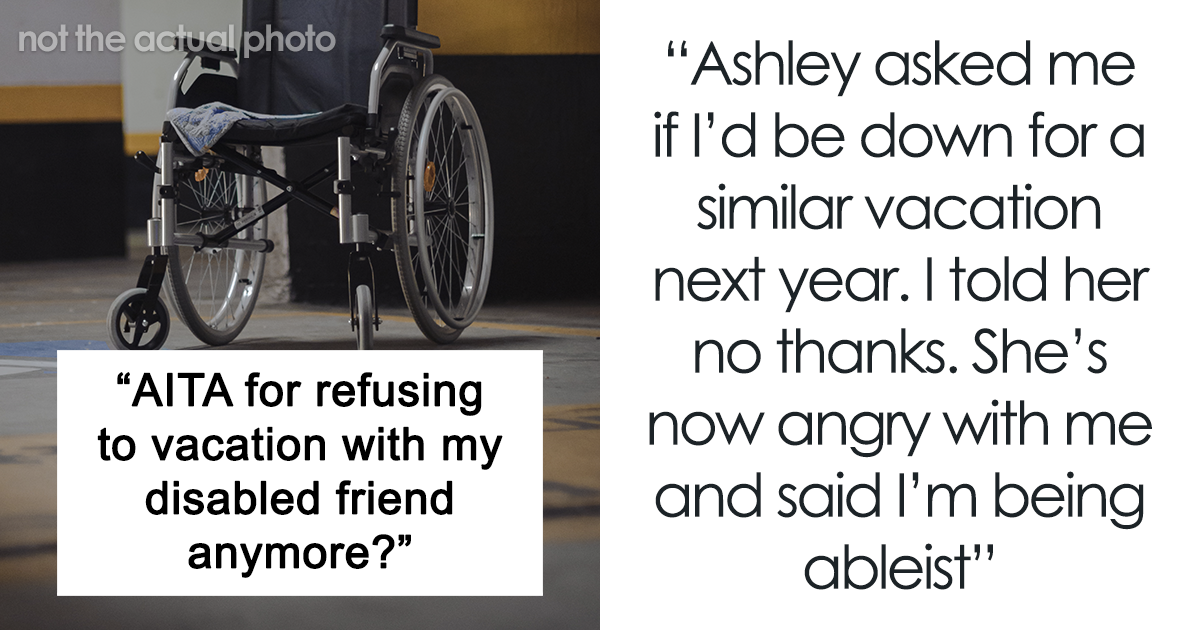
A woman recently found herself at the center of an online debate after saying she did not want to travel again with her disabled childhood friend. The decision, according to her, was not about the friend’s disability itself. It was about the way the trip unfolded: constant tension, poor planning, emotional pressure, and the feeling that every inconvenience became her responsibility. When she tried to set a boundary, her friend called her “ableist.” And just like that, a vacation disagreement turned into a full-blown internet courtroom drama, complete with opinions, judgment, and probably at least one person typing furiously from an airport lounge.
The story hits a nerve because it touches two sensitive truths at once. First, traveling with a disability can be genuinely difficult. Accessibility barriers are real, exhausting, and often unfair. Second, friendship does not automatically mean becoming someone’s unpaid travel coordinator, emotional punching bag, luggage mule, or emergency backup plan with snacks. The tricky part is telling the difference between discrimination and incompatibility.
This article breaks down the situation with nuance: what ableism actually means, why accessible travel requires planning, how friends can support each other without burning out, and why “I care about you” and “I cannot repeat that trip” can both be true at the same time.
What Happened: A Trip That Went From Fun Idea To Friendship Stress Test
According to the widely discussed story, the woman agreed to take a four-day trip with a childhood friend who lives with fibromyalgia, a chronic condition often associated with widespread pain, fatigue, sleep problems, and flare-ups. The trip involved sightseeing, transportation, walking, schedules, and all the usual travel chaos that makes even healthy people question their life choices somewhere between baggage claim and hotel check-in.
The woman said she tried to be understanding of her friend’s physical limitations. She expected slower days, rest breaks, and flexibility. That is reasonable. Accessible travel is rarely a “wing it and hope the elevator works” situation. But the frustration reportedly came from behavior she felt was unfair: last-minute demands, lack of preparation, complaints, and the expectation that she would constantly adjust while receiving little cooperation in return.
After the trip ended, the disabled friend suggested traveling together again. The woman said no. She explained that she valued the friendship but did not think they were compatible travel companions. The friend responded by accusing her of being ableist. Online commenters largely took the woman’s side, arguing that refusing another trip because of someone’s behavior is not the same as rejecting them because of their disability.
What “Ableist” Means And Why The Word Matters
Ableism is discrimination, prejudice, or social bias against disabled people. It can show up in obvious ways, such as refusing access, mocking someone’s limitations, or assuming disabled people are helpless. It can also appear in quieter ways: inaccessible buildings, inflexible policies, dismissive attitudes, or treating accommodations as annoying favors instead of basic inclusion.
That said, not every uncomfortable boundary is ableism. A person can be supportive of disability rights and still decide, “This travel arrangement does not work for me.” A friend can believe in accessibility and still not want to repeat a trip that felt chaotic, emotionally draining, or badly planned. The word “ableist” should not be used as a magic travel wand that turns every disagreement into discrimination.
The key question is motive and context. Did the woman refuse because her friend had fibromyalgia? That would be cruel and discriminatory. Or did she refuse because the trip dynamic was stressful, unbalanced, and poorly managed? That is a boundary. The internet, surprisingly, managed to locate nuance for once. Alert the historians.
Disabled Travelers Face Real Barriers, And Those Barriers Are Not Imaginary
Before judging either person, it is important to understand why travel can be much harder for disabled people. Airports can involve long distances, unpredictable waits, confusing layouts, and inconsistent assistance. Hotels may advertise “accessible rooms” while offering bathrooms that seem designed by someone who has only heard rumors about wheelchairs. Public transportation may be unreliable. Sidewalks may be uneven. Elevators may be broken. A restaurant may technically be open to everyone while physically welcoming only people who can climb stairs like a mountain goat in sandals.
For someone with fibromyalgia, the challenges can be even less visible. A person may look fine at breakfast and be in serious pain by lunch. Fatigue can arrive suddenly. Sleep problems can make an early itinerary feel like a personal attack from the universe. Pain flare-ups do not care that the museum tickets are nonrefundable.
This is why accessible travel planning matters. It is not about being dramatic or demanding. It is about reducing avoidable stress. Confirming hotel accessibility, planning transportation, building in rest periods, checking walking distances, arranging airport assistance, and discussing expectations ahead of time can prevent a trip from becoming a group project in resentment.
Support Is Kind; Assumption Is Not
A good travel companion asks useful questions: “How much walking is realistic?” “Do we need taxis built into the budget?” “Should we plan one major activity per day instead of four?” “Would a mobility aid, airport assistance, or a hotel closer to attractions help?” These questions are practical, not patronizing, when asked respectfully.
But support becomes unfair when it is assumed instead of discussed. Nobody should silently expect a friend to handle every accommodation, absorb every mood swing, or sacrifice their entire vacation without prior agreement. Friendship is not a legally binding contract to become a human Swiss Army knife.
The disabled friend also has responsibilities. That does not mean disabled people must be perfect, cheerful, or endlessly grateful. It means that adult travel requires communication. If someone knows they need frequent rest, reduced walking, specific transportation, medication timing, mobility support, or quiet evenings, those needs should be discussed before departure. A travel companion cannot read minds, even if they have mastered the sacred art of finding an outlet at the airport.
Why Travel Compatibility Matters More Than People Admit
Some friends are perfect for dinner and terrible for vacations. That does not mean the friendship is fake. It means travel exposes differences that ordinary life politely hides under decorative throw pillows.
One person wants a color-coded itinerary. Another wants to “see where the day takes us,” which usually means getting lost and calling it culture. One person wants budget meals and free walking tours. Another believes vacation calories and vacation dollars live in a separate legal jurisdiction. One person wants museums. Another wants naps. Both are valid. Together, they may become a sitcom with luggage.
Add disability needs, chronic pain, fatigue, or mobility limitations, and compatibility becomes even more important. A successful accessible trip requires everyone to be honest about pace, budget, energy, and expectations. If one person wants a high-walking city adventure and the other needs slow mornings, planned rests, and taxis, the trip can still work but only if both people agree to design it that way.
Setting A Boundary Is Not The Same As Abandoning A Friend
The woman’s boundary was not “I refuse to be friends with you because you are disabled.” It was closer to “I do not want to travel together again because the last trip hurt our friendship.” That is a very different statement.
Healthy boundaries protect relationships from turning sour. If two people discover they are incompatible as roommates, business partners, or travel companions, stepping back can be wise. Forcing another trip out of guilt might create more resentment. Then nobody gets a vacation; they get a four-day argument with hotel towels.
A compassionate version of the boundary might sound like this: “I love spending time with you, but I realized travel together is stressful for both of us. I would rather protect our friendship and do things locally, like dinner, movie nights, or short day plans that are easier to manage.” That message avoids blame while staying firm.
Where The Friend May Have Felt Hurt
Even if the woman was not being ableist, the disabled friend’s hurt may still be real. Disabled people often experience exclusion. They may be left out of trips, parties, restaurants, hikes, and spontaneous plans because others do not want to deal with accessibility. Over time, rejection can start to feel familiar, and familiar pain is quick to raise its hand.
So when her friend said no to another trip, she may have heard, “You are too difficult.” She may have felt embarrassed, rejected, or judged. That does not make the accusation fair, but it helps explain why the conversation became emotional.
This is where both sides needed gentleness. The woman needed to avoid framing the friend’s body as the problem. The friend needed to avoid turning a travel boundary into a character attack. Two things can be true: the friend deserves inclusion, and the woman is allowed to say no.
How Friends Can Plan Accessible Trips Without Ruining The Friendship
1. Talk About Needs Before Booking Anything
The planning conversation should happen before flights, hotels, and attractions are locked in. Discuss walking limits, pain triggers, sleep needs, transportation preferences, dietary needs, bathroom access, and backup plans. The goal is not to interrogate anyone. The goal is to avoid discovering at 10 p.m. that the hotel has stairs, the restaurant has no seating, and everyone is one inconvenience away from becoming a villain origin story.
2. Build Two Itineraries: Good Day And Bad Day
For chronic conditions like fibromyalgia, symptoms can fluctuate. A smart plan includes a “good energy” option and a “low energy” option. Good day: museum, lunch, short walk, scenic stop. Bad day: nearby café, rest, one accessible attraction, early night. This prevents disappointment from feeling like failure.
3. Share Responsibilities Clearly
One friend can research accessible hotels. Another can check transportation. Someone can manage reservations. Someone can track budget. Responsibilities should not quietly fall onto the most organized person simply because they made the mistake of owning a spreadsheet.
4. Budget For Accessibility
Taxis, closer hotels, airport assistance, mobility rentals, extra rest days, or flexible tickets may cost more. Pretending those costs do not exist will not make them disappear; it will only make them jump out later like a raccoon from a trash can. Budget honestly.
5. Leave Room For Separate Time
Separate activities can save a trip. One friend can rest while the other visits a landmark. One can enjoy a long dinner while the other orders room service and watches comfort TV. Independence is not betrayal. It is travel maturity wearing sensible shoes.
What This Story Teaches About Disability, Friendship, And Fairness
This situation is not a simple “disabled friend versus selfish friend” story. It is about expectations, communication, and the emotional weight of travel. Disability adds real complexity, but it does not erase personal responsibility on either side. Being disabled does not make someone automatically wrong. Being tired does not make someone automatically cruel. Being accused of ableism does not mean the accusation is always accurate, but it should still make people pause and reflect.
The best lesson is not “never travel with disabled friends.” That would be both unfair and ridiculous. The lesson is “plan honestly, communicate clearly, and do not confuse support with unlimited sacrifice.” Many disabled travelers are excellent planners because they have had to be. Many non-disabled friends are loving companions when they understand what is needed. The successful trips happen when nobody has to guess, pretend, or silently stew.
When Saying No Is The Kindest Choice
Saying no can feel harsh, especially when disability is involved. But a resentful yes is not kindness. It is a delayed argument wearing sunscreen. If the previous trip damaged the friendship, refusing another one may be the healthier option.
The woman could still show care in other ways. She could suggest shorter outings, accessible local activities, or visits that do not require overnight logistics. She could acknowledge her friend’s pain without accepting blame for every travel problem. She could say, “I want us to stay close, and I think avoiding another trip is the best way to do that.”
That kind of boundary is not glamorous. It will not fit neatly into a viral headline. But real relationships are rarely solved by dramatic labels. They are solved by honest conversations, awkward pauses, and occasionally deciding that brunch is safer than Barcelona.
Additional Experiences And Real-Life Reflections On Traveling With A Disabled Friend
Anyone who has traveled with friends knows that vacations magnify personality traits. The friend who is “a little late” at home becomes the person still looking for socks when the airport rideshare is downstairs. The friend who is “budget-conscious” becomes the person calculating the emotional depreciation of every appetizer. The friend who “likes to relax” may interpret a walking tour as a medieval punishment. When disability is part of the picture, these differences do not disappear; they need more thoughtful planning.
One common experience is the mismatch between intention and reality. A non-disabled friend may say, “Of course I am happy to help,” and genuinely mean it. But after two days of carrying bags, changing plans, finding elevators, negotiating transportation, and managing unexpected flare-ups, they may feel overwhelmed. Then guilt arrives. They think, “I should not feel frustrated.” But frustration is not automatically prejudice. It is a signal that the plan did not include enough support, boundaries, or shared responsibility.
On the other side, a disabled traveler may feel humiliated by needing help. They may already be angry at the inaccessible world before the trip even starts. A broken elevator or long walk is not just an inconvenience; it can feel like proof that the world forgot them again. If they snap at a friend, it may come from pain or exhaustion, but the impact still matters. Pain explains behavior; it does not give anyone a free pass to mistreat the person standing beside them holding both coffees.
A better approach is to treat accessibility as part of the itinerary, not as an emergency add-on. Instead of planning a packed day and hoping everyone survives, friends can plan with energy levels in mind from the beginning. For example, choose a hotel near the main attraction, reserve restaurants with seating and accessible entrances, schedule rest after travel days, and agree that splitting up is allowed. The phrase “I will rest while you explore” can be relationship-saving magic.
Another helpful practice is to discuss emotional expectations. Some people want comfort when symptoms flare. Others want privacy. Some want practical help, like finding a taxi. Others want reassurance that they are not ruining the trip. Asking, “What helps you most when you are having a bad pain day?” can prevent both friends from guessing wrong.
The story also reminds readers that friendship does not require identical vacation styles. A person may be a wonderful friend for phone calls, birthdays, game nights, and emergency pep talks, yet not be the right person for multi-day travel. That is not failure. That is information. The healthiest friendships use information instead of ignoring it until everyone is silently furious over hotel breakfast.
If there is one practical takeaway, it is this: accessible travel works best when dignity and boundaries travel together. The disabled friend deserves respect, planning, patience, and inclusion. The other friend deserves honesty, rest, and the freedom to say, “I cannot do that again.” When both sides accept those truths, the conversation becomes less about blame and more about designing relationships that can actually last.
Conclusion: Compassion Does Not Mean Ignoring Compatibility
The woman who refused to repeat the trip was not automatically ableist for saying no. Based on the details shared, her issue was not her friend’s disability but the stressful travel dynamic. Still, the story is a useful reminder that disability and friendship require care, especially when travel is involved. Accessible trips need planning, honest communication, flexibility, and respect for everyone’s limits.
Disabled people should not be excluded because the world is inconvenient. At the same time, friends should not be pressured into repeating experiences that leave them drained or resentful. The sweet spot is compassion with boundaries: caring enough to include people thoughtfully, and honest enough to admit when a specific arrangement does not work.
In the end, not every friendship needs a passport stamp. Some friendships are better with coffee, movie nights, and zero airport security lines. Honestly, that already sounds like a vacation.