Human beings have walked on the moon, mapped the genome, and invented refrigerators that send text messages. Yet many of us still knock on wood, avoid sidewalk cracks, and become suspicious when a black cat strolls across the road. Apparently, scientific progress has limitsand one of them is an upside-down horseshoe.
First, a small but important correction: the historical expression is the Ides of March, not the “Ideas of March.” The mistake is understandable because “ides” is an ancient calendar term that rarely appears outside history lessons and dramatic warnings. Today, the phrase is only one example of how ordinary dates, animals, objects, and accidents can acquire supernatural reputations.
Superstitions often survive because they help people feel more prepared when outcomes are uncertain. A lucky shirt cannot control a baseball game, and crossing your fingers cannot rewrite an employment contract. Nevertheless, rituals may reduce anxiety, increase confidence, and create a comforting sense of control. In other words, superstition sometimes works psychologically even when it does not work magically.
The Ides of March and Unlucky Dates
1. The Ides of March
In the ancient Roman calendar, the Ides marked the middle of a month. It fell on the 15th in March, May, July, and October and on the 13th in most other months. March 15 was originally an ordinary calendar marker, not a cursed date.
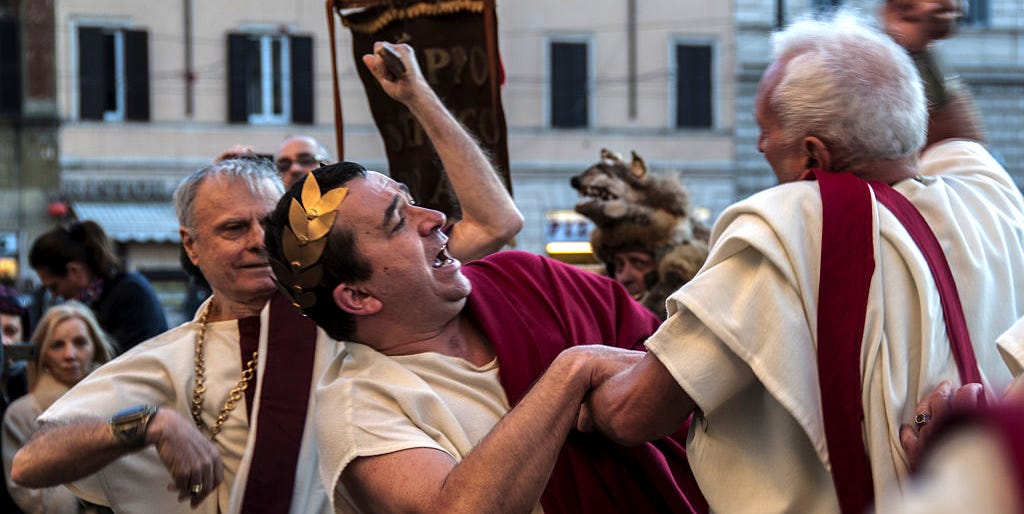
Its dark reputation developed after Julius Caesar was assassinated by Roman senators on March 15, 44 BCE. William Shakespeare later made the date immortal in Julius Caesar, where a soothsayer warns Caesar to “beware the Ides of March.” The phrase now suggests approaching betrayal or disaster, although your greatest danger on March 15 is probably forgetting that your tax paperwork is due soon.
2. Friday the 13th
Friday and the number 13 had separate reputations for misfortune before they became an unlucky power couple. Thirteen was associated with disorder because it followed the supposedly complete number 12, while Friday carried negative religious and cultural associations in parts of Europe.
The modern fear of Friday the 13th became especially visible in the late 19th and early 20th centuries. Thomas W. Lawson’s 1907 novel Friday, the Thirteenth helped popularize the combination, and later horror movies gave it a machete, a hockey mask, and excellent brand recognition.
3. The Unlucky Number 13
Fear of 13 is known as triskaidekaphobia. One common explanation points to the Last Supper, where Jesus dined with 12 apostles, creating a group of 13 before his arrest. Norse mythology contains another frequently repeated story involving an unwanted 13th guest, although the historical development of the superstition is more complicated than any single tale.
Its influence remains visible in buildings that label the floor after 12 as 14, restaurants that avoid tables for 13, and travelers who would rather sit in row 12B than row 13A.
4. The Number 666
In the Book of Revelation, 666 is identified as the “number of the beast.” Scholars have long examined the possibility that it was a coded reference to the Roman emperor Nero, whose name can produce the number through an ancient system of assigning numerical values to letters.
Whatever its original meaning, 666 became a popular symbol of evil in Western culture. Hotel rooms, phone numbers, and license plates containing it may be rejected by people who do not want Satan accidentally added to the family plan.
5. Bad Luck Comes in Threes
After two unpleasant events, people often brace themselves for a third. The belief probably persists because the human brain loves complete patterns, and three feels like a beginning, middle, and end.
Confirmation bias does the rest. Once two bad things occur, nearly any inconvenience can be promoted to “number three.” A car repair, a missed meeting, and a burned piece of toast suddenly become a trilogy of doom.
Animals, Objects, and Everyday Bad Omens
6. A Black Cat Crossing Your Path
Black cats became linked with witchcraft in medieval and early modern Europe. They were sometimes described as witches’ companions, supernatural helpers, or even transformed witches.
The belief is not universal. In some cultures, black cats represent prosperity, protection, or romantic luck. This proves that the cat is not the problem. The problem is humans giving an animal conflicting job descriptions.
7. Breaking a Mirror Brings Seven Years of Bad Luck
Mirrors were once regarded as more than household decorations. Some cultures believed a reflection contained part of a person’s soul or life force. Damaging the reflection could therefore damage the individual.
The seven-year penalty may have developed from ancient ideas that human life renewed itself in seven-year cycles. Fortunately, the superstition predates modern warranties, so breaking a bathroom mirror still brings an immediate and scientifically verifiable consequence: an expensive trip to the hardware store.
8. Walking Under a Ladder
A ladder leaning against a wall creates a triangle. Various explanations connect that shape with sacred symbolism, including the Christian Trinity and ancient Egyptian ideas about spiritual spaces. Other theories associate ladders with executions and gallows.
There is also a wonderfully boring practical explanation: walking beneath a ladder increases the chance that a tool, paint can, or startled worker will land on your head. Some superstitions may simply be safety advice wearing a dramatic cape.
9. Opening an Umbrella Indoors
The precise origin of this warning is uncertain. Popular explanations connect umbrellas with ancient sun worship, suggesting that opening one away from the sun was disrespectful. Another possibility is far more practical: early umbrellas had stiff metal mechanisms that could spring open suddenly and injure someone or demolish a vase.
Even without supernatural punishment, opening a large umbrella in a small living room remains an excellent method for becoming unpopular.
10. Spilling Salt
Salt was once costly, essential for preserving food, and associated with purification. Wasting it could therefore be viewed as financially foolish or symbolically dangerous.
Throwing a pinch over the left shoulder is supposed to blind or repel the evil presence lurking there. Why the devil spends so much time standing behind people at dinner remains unexplained. Perhaps he is waiting for someone to pass the potatoes.
11. Stepping on a Crack
The rhyme “step on a crack, break your mother’s back” is largely children’s folklore. It turns an ordinary walk into a miniature obstacle course and gives children a thrilling sense that each footstep carries cosmic consequences.
Earlier versions sometimes connected cracks with boundaries through which spirits or misfortune might enter. Today, avoiding them is more likely to test balance than protect anyone’s spine.
12. Ringing Ears Mean Someone Is Talking About You
Versions of this belief have circulated for centuries. One ear may supposedly indicate praise and the other criticism, although cultures disagree about which ear delivers which review.
In reality, temporary ringing can have ordinary physical causes, while persistent tinnitus deserves medical attention. Sadly, no physician can identify who was gossiping about you at lunch.
Rituals for Good Luck and Protection
13. Knocking on Wood
People knock on wood after mentioning something fortunate, hoping not to “jinx” it. Proposed origins include beliefs that spirits lived in trees, Christian associations with the wooden cross, and a British children’s game in which touching wood provided temporary safety.
No single explanation has been proven conclusively. That uncertainty has not stopped millions of people from tapping tables immediately after saying, “My car has never broken down.”
14. Crossing Your Fingers
Crossed fingers are used when making a wish or hoping for success. The gesture may have developed from early Christian symbolism, with the crossed fingers representing a cross. Another theory suggests that two people once crossed fingers together while making a wish.
Modern users can perform the ritual alone, which is convenient during job interviews, medical appointments, and the final seconds of an online auction.
15. Picking Up a Lucky Penny
“Find a penny, pick it up, and all day long you’ll have good luck.” Finding money naturally feels fortunate, even when inflation has reduced the reward to approximately one hundredth of a candy bar.
Older rhymes referred to finding pins rather than pennies. Metal objects were sometimes considered protective, particularly when iron was believed to repel dangerous supernatural forces.
16. Carrying a Rabbit’s Foot
Rabbit feet have been carried as protective charms in several traditions. Their history is often linked to European folk beliefs and to hoodoo, an African American spiritual tradition shaped by African, European, and Indigenous influences.
Traditional versions could include very specific rules about the rabbit, the foot, and the circumstances in which it was obtained. A generic keychain from a souvenir shop may therefore lack the full supernatural paperwork.
17. Hanging a Horseshoe
Horseshoes combine two symbols traditionally associated with protection: iron, which was believed to repel harmful spirits, and a crescent-like shape connected with good fortune.
Some people hang the ends upward to hold luck like a bowl. Others point them downward so luck pours over those who pass underneath. The disagreement means you can hang one incorrectly regardless of which direction you choose.
18. Finding a Four-Leaf Clover
Most white clovers have three leaves, making a four-leaf specimen unusual enough to feel special. Later Christian interpretations associated the four leaves with faith, hope, love, and luck or compared the shape to a cross.
The rarity of the plant strengthens its reputation: finding one already feels like winning a tiny botanical lottery.
19. Pulling a Wishbone
Two people pull opposite ends of a bird’s forked breastbone, and the person receiving the larger piece supposedly wins a wish. The practice is commonly traced through Roman and Etruscan traditions involving birds, omens, and divination.
The custom later became associated with holiday meals, allowing families to transform leftover anatomy into competitive entertainment.
20. Wearing an Evil-Eye Charm
The evil eye is the belief that an envious or hostile glance can cause injury, illness, or misfortune. Versions appear across the Mediterranean, the Middle East, South Asia, Latin America, and other regions.
Blue-and-white eye-shaped amulets are commonly worn or displayed for protection. They are not supposed to spy on your neighbors, although hanging several in a window may give that impression.
21. An Itchy Palm Predicts Money
According to popular folklore, an itchy palm means money is coming or going. Which hand receives and which hand pays varies by region, making this superstition unusually difficult to audit.
Before celebrating an incoming fortune, consider soap irritation, dry skin, or allergies. Moisturizer has ruined many imaginary inheritances.
22. Bird Droppings Bring Good Luck
In several cultures, being struck by bird droppings is considered fortunate. The belief may be a psychological reversal that transforms an unpleasant, random event into something positive.
This is emotionally useful. It is easier to think, “Money is coming,” than, “A pigeon has made a deeply personal decision.”
23. Beginner’s Luck
A newcomer who wins on the first attempt may be credited with beginner’s luck. The apparent pattern can result from chance, selective memory, or the relaxed attitude of someone who has not yet learned enough to become nervous.
Experts remember the shocking beginner victory but rarely document the thousands of beginners who lose immediately and quietly read the instructions.
24. Wearing Lucky Clothes
A shirt, pair of socks, or hat can become “lucky” when it is associated with a successful event. The wearer repeats the behavior, strengthening the perceived connection even when the item has no influence on the outcome.
A lucky garment may still have a real psychological effect by improving confidence and maintaining a familiar routine. Its magical power usually ends when another household member puts it in the washing machine.
Travel, Wishes, Weddings, and Social Customs
25. Holding Your Breath in a Tunnel
Some travelers hold their breath while passing through a tunnel to earn a wish or prevent bad luck. The origins are uncertain and may involve old beliefs about tunnel air, childhood road-trip games, or the idea of completing a difficult challenge without breathing.
The ritual should remain a harmless game, never a distraction for the person driving. The luckiest person in the vehicle is the one paying attention to traffic.
26. Wishing on a Shooting Star
Because meteors appear suddenly and vanish quickly, they have long inspired supernatural interpretations. Some traditions treated unusual events in the sky as messages or moments when communication with the divine became possible.
Today, a shooting star offers a brief opportunity to make a private wishassuming someone nearby does not spend the entire event explaining that it is technically a meteoroid entering Earth’s atmosphere.
27. Something Old, New, Borrowed, and Blue
This wedding custom comes from an English rhyme. Something old represents continuity, something new suggests optimism, something borrowed traditionally carries another person’s happiness, and something blue symbolizes loyalty or purity.
The original rhyme also mentioned a sixpence in the bride’s shoe. Modern brides often omit that portion, possibly because walking all day with currency under one’s foot is less charming than poets imagined.
28. The Couple Must Not See Each Other Before the Wedding
The belief that seeing each other before the ceremony brings bad luck is sometimes connected with arranged marriages, when families feared that one participant might cancel after seeing the other.
Today, many couples preserve the custom for suspense, while others schedule a private “first look” for photographs. Both approaches are acceptable, provided nobody interprets a delayed photographer as an omen.
29. Throwing Rice at Newlyweds
Rice and other grains have long symbolized fertility, abundance, and prosperity. Tossing them over newly married couples was therefore a symbolic wish for a productive and comfortable life.
Many venues now prefer flower petals, bubbles, or biodegradable confetti. These alternatives create attractive photographs and reduce the chance of discovering rice inside formal clothing several days later.
30. Saying “Bless You” After a Sneeze
Several stories attempt to explain this custom. Some connect sneezing with vulnerability to spirits, while another familiar theory associates the phrase with disease epidemics. The exact origin is difficult to establish because responses to sneezing developed in different cultures and periods.
Whatever its history, “bless you” is now usually an expression of politeness rather than emergency spiritual protection. It is a tiny social ritualand considerably friendlier than shouting, “Keep your germs over there.”
Why Superstitions Continue to Feel Powerful
Superstitions survive because the mind is built to identify patterns. That ability helps people learn, predict danger, and make decisions, but it also encourages us to connect unrelated events. When a team wins while we wear a particular hat, the coincidence becomes memorable. When the team loses in the same hat, the evidence may be quietly ignored.
Rituals can also relieve stress. They give people something concrete to do when the most important factors are outside their control. Athletes repeat pregame routines, students carry lucky pens, and travelers touch the airplane before boarding. The action may not alter the external world, but it can change the participant’s emotional state.
Folklore should also be understood with cultural sensitivity. Calling a practice a superstition can imply that another person’s tradition is foolish. Many beliefs carry family memories, religious meanings, regional identity, or historical experiences. A charm may be less about proving supernatural causation than maintaining a connection with previous generations.
A Superstition-Filled Day: A Composite Experience
The following experience is a realistic composite vignette created to illustrate how familiar superstitions can influence an ordinary day. It is not presented as a documented personal event.
Imagine waking on March 15 and noticing that your calendar says “Ides of March.” You know perfectly well that you are not Julius Caesar and that no Roman senators are waiting beside the coffee machine. Even so, the phrase adds a faintly theatrical mood to the morning. When your phone slips from your hand, you catch it just before it hits the floor and wonder whether the warning has already begun.
In the kitchen, you spill salt while making breakfast. Your rational mind says the only consequences are a gritty counter and a sodium-rich omelet. Your superstitious reflex says, “Left shoulder, immediately.” You toss a pinch behind you, where it lands in the dog’s water bowl. The dog looks disappointed in your decision-making but remains protected from evil spirits.
On the way outside, you notice a ladder leaning against the apartment building. Walking beneath it would save approximately four seconds. You take the longer path, partly because of superstition and partly because a maintenance worker is holding a paintbrush above your head. This is a useful reminder that folklore and basic risk management occasionally reach the same conclusion.
A black cat crosses the sidewalk near your car. You pause. The cat pauses. For one absurd second, both of you appear to be evaluating the supernatural significance of the encounter. Then the cat continues toward a sunny porch, apparently unconcerned about its centuries-old career as an omen.
At work, you have an important presentation. You wear the same jacket you wore during a successful meeting last month. You call it your lucky jacket, although its practical advantages are obvious: it fits well, looks professional, and makes you feel prepared. The confidence is real even if the luck is not.
Before entering the conference room, you say, “I think this will go well,” then knock on the wooden doorframe. A coworker sees you and laughs. Five minutes later, that same coworker crosses both fingers while the presentation software loads. Superstition is often judged harshly until someone else’s screen freezes.
The meeting goes smoothly. On the way home, you find a penny near the curb and pick it up. It is dirty, slightly bent, and financially insignificant, but it feels like a tiny reward. Later, a bird leaves an unwanted deposit on your windshield. You decide that this must also be lucky because the alternative interpretation is merely irritating.
By evening, nothing disastrous has happened. The Ides of March did not produce betrayal, the black cat did not sabotage your career, and the spilled salt did not summon chaos. Still, the rituals made the day more memorable. Each superstition turned an ordinary event into a small story involving danger, hope, humor, or control.
That may be the most important experience superstitions provide. They transform uncertainty into narrative. The world feels less random when a lucky coin, crossed finger, protective charm, or whispered phrase seems to participate in the outcome. We may not truly believe the ritual controls fate, but performing it can make us feel connected to family traditions, cultural history, and countless nervous humans who have made the same gesture before us.
Conclusion
The Ides of March began as a routine date in the Roman calendar and became ominous because of Julius Caesar’s assassination and Shakespeare’s unforgettable storytelling. The other superstitions in this list followed similar journeys. Practical warnings, religious symbols, ancient rituals, childhood games, and memorable coincidences gradually became rules for attracting luck or avoiding disaster.
There is no scientific reason to fear black cats, cracked mirrors, or the number 13. Nevertheless, these beliefs reveal something genuine about human psychology. People want patterns, explanations, and a little reassurance when the future is uncertain. So go ahead and knock on wood after making an optimistic prediction. It probably will not change fatebut it may make the universe feel slightly less unpredictable.