If you saw the headline and briefly considered moving into a bunker made of hand sanitizer, you’re not alone. “An unimaginable virus named Gorgon found buried under Massachusetts” sounds like the opening scene of a streaming-series apocalypse: dramatic music, ominous shovel, one scientist whispering, “Uh… guys?”
Here’s the twist: the real story is still wildly fascinatingjust not in the “everyone stock up on canned beans” way. What researchers actually reported was a zoo of giant virus-like particles in the soil of Harvard Forest in Massachusetts, including a bizarre shape nicknamed “Gorgon” because it’s ringed with long tube-like appendages. It’s science at its best: curious, weird, and humbling. Also, fortunately, not a horror movie.
Let’s dig into what “Gorgon” really is, why Massachusetts soil is basically a microscopic safari, what giant viruses do in ecosystems, and how to tell the difference between a thrilling discovery and a doomsday headline doing its daily cardio.
What “Gorgon” Really Means (Spoiler: It’s Not a Named Human Super-Virus)
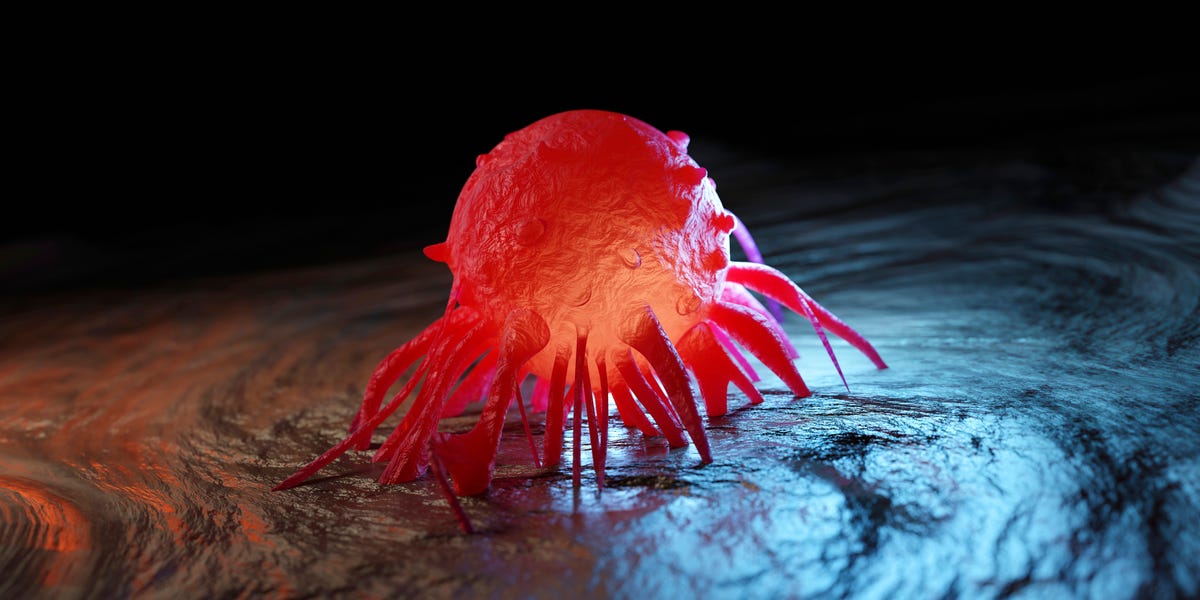
The word Gorgon in this story isn’t a formal virus species name stamped onto a villain’s passport. It’s a nickname for a morphotypea shape categoryseen under powerful microscopy. Researchers looking at forest soil found hundreds of unusually large, complex particles that look like they belong in a tiny alien art gallery. One set had a central shell surrounded by snaking tubes, which reminded everyone of mythic Gorgon hair (Medusa vibes), so “Gorgon morphology” was born.
Virus or “Virus-Like” Particle?
Here’s the careful scientist move: many of the particles have strong “this is probably a virus” vibes, but images alone don’t prove infectivity. To confirm something is a living, infectious virus, researchers typically need to show it can infect a host organism and replicate. So you’ll often see the phrase virus-like particles in early reportsscience’s way of saying, “We’re excited, but we’re not guessing in public.”
Where Was It Found? Harvard Forest, MassachusettsNot a Secret Underground Vault
The discovery comes from soil in Harvard Forest, a long-running research site in Petersham, Massachusetts. This isn’t a random patch of dirtthis is a place where ecologists and microbiologists have been studying forests, climate, and soil life for decades. Some plots there are part of long-term soil warming experiments (yes, literal heating cables in the ground), designed to mimic warmer conditions and track how microbial communities respond.
In other words, if you wanted to look for hidden microbial weirdness, this is a pretty good place to start: intensely studied soil, carefully sampled, and tied to climate-driven changes that may shift which microbes thrive.
Giant Viruses 101: The “Big Balloons” of the Microbial World
Most of us picture viruses as ultra-tiny specksso small you need serious tools to see them. Giant viruses break that mental model. Some are so large they were historically mistaken for bacteria. They often have huge genomes (for viruses), complex structures, and they tend to infect single-celled organisms like amoebas, protists, and algae.
Why do giant viruses matter?
- They shape ecosystems. By infecting microbes, they influence which microbial populations boom or crash.
- They impact nutrient cycles. When viruses kill microbes, they release nutrients back into the environment.
- They challenge definitions. Their size and gene complexity blur lines between “virus” and “cell-like” behavior.
If typical viruses are paperclips, giant viruses are multi-toolsstill small, still viruses, but packed with features that make biologists rethink what’s possible.
The Massachusetts Connection: Two Waves of Discovery
Wave #1 (2018): Genomes of giant viruses discovered in forest soil
Before “Gorgon” hit headlines, researchers had already found something remarkable in Harvard Forest soils: multiple new giant virus genomes recovered directly from environmental samples. This was a major shift because much giant virus knowledge historically came from aquatic environments or lab cultivation. In the soil study, scientists used advanced sequencing approaches to uncover giant viruses without needing to grow them first in a lab host.
The big idea: soil is complicated, microbial life is dense, and standard methods miss a ton of diversity. Newer approaches can pull genetic “signals” out of the noise and reveal whole communities you didn’t even know you weren’t seeing.
Wave #2 (2023): The “shape show” reveals Gorgon and friends
Then came the microscopy work: instead of only reading genetic clues, researchers used transmission electron microscopy to actually look at giant virus-like particles in soil. That’s where the nicknames took offbecause once you see something that looks like a spiky holiday ornament, you stop calling it “Particle #47B” and start calling it “Christmas star.”
Among the reported morphotypes: Gorgon (tube-like appendages), Haircut (bristly fibers), Turtle (flaps like limbs), plus other shapes that sound like a craft store aisle but are, in fact, microbiology.
So… Is the Gorgon Virus Dangerous to Humans?
Based on what researchers currently know about this Harvard Forest “Gorgon” morphotype and similar soil giant viruses, there’s no evidence it’s a human pathogen. Giant viruses in this category typically infect amoebas and other microbesnot people. That’s a crucial distinction the internet tends to gently ignore while it screams into the algorithm.
But aren’t there giant viruses linked to human illness?
Some giant viruses (like mimivirus) have been studied for possible associations with respiratory illness, and there are scientific discussions about whether certain exposures could matter in specific contexts. But that’s a long way from “Massachusetts soil virus is coming for your weekend plans.” For most people, ordinary soil safety habits are the right level of concern: wash hands after gardening, cover cuts, and maybe don’t eat dirtno matter what your toddler’s personal brand suggests.
Why the Discovery Is Still a Big Deal
Even if Gorgon isn’t a human threat, it’s a scientific treasure. Soil is one of the most biodiverse habitats on Earth, but it’s also one of the hardest to study. These findings suggest that forest soils may contain far more giant virus diversity than previously catalogedpossibly orders of magnitude more.
1) Soil viruses may influence carbon cycling
Soil microbes drive decomposition and carbon movement. Viruses that infect those microbes can change how fast or how differently carbon moves through soil systems. That’s not a minor footnote; it’s part of how ecosystems respond to climate change and how greenhouse gases are produced or stored.
2) Morphology hints at function
Those tube-like appendages on the Gorgon morphotype aren’t just decorative. Scientists are curious whether they help with attachment, movement through micro-spaces, interaction with hosts, or something we haven’t imagined yet. (Science translation: “We have theories, and all of them are currently wearing safety helmets.”)
3) It expands the map of life’s weirdness
Discoveries like this expand the known “design space” of viruseshow they’re built and how they might operate. That matters for evolution, ecology, and even biotechnology, where viral mechanisms sometimes inspire tools for medicine and research.
“Buried Virus” Headlines vs. Reality: Why This Story Got Spicy
The phrase “buried under Massachusetts” is technically true in the same way that your lost sock is “buried under your bed.” The particles were found in soilundergroundat a research forest in Massachusetts. But headlines often compress nuance into a punchline, because nuance doesn’t get clicked as hard as “Nice knowing everyone.”
How to read these headlines without panic-buying hazmat suits
- Check what the organism infects. Amoebas? Algae? Humans? This matters a lot.
- Look for the word “preprint.” Preprints are useful and fast, but not yet peer-reviewed.
- Notice “virus-like particles.” That’s scientific caution, not a conspiracy.
- Distinguish “found” from “released.” Sampling isn’t the same as outbreak.
What Happens Next: The Research Roadmap
The next steps are as exciting as they are painstaking:
- Identify hosts. Which amoebas or protists do these viruses infect?
- Prove infectivity. Can these particles replicate inside a host in controlled experiments?
- Sequence more genomes. Match bizarre shapes to genetic lineages and evolutionary history.
- Understand structures. What are the tubes, flaps, fibers, and layers actually doing?
If science is detective work, this is the part where investigators find a mysterious gadget at the scene, take it back to the lab, and spend the next several years figuring out whether it’s a lockpick, a can opener, or an interdimensional stapler.
Conclusion: The Gorgon “Virus” Is a Discovery, Not a Doom Clock
“Gorgon found buried under Massachusetts” is the kind of headline that makes your group chat light up. But the grounded, real version is better: researchers studying Harvard Forest soil have uncovered an astounding diversity of giant virus-like particles, including a Gorgon-shaped morphotype with tube-like appendages. It’s a reminder that the world under our feet is not dead dirtit’s a living ecosystem with mysteries still queued up.
The practical takeaway is refreshingly boring (in the best way): this isn’t a reason to fear Massachusetts. It’s a reason to respect soil ecology, support careful research, and appreciate that nature has been doing experimental design since before we invented the word “weird.”
Field & Lab Experiences: What It’s Like to Go Looking for “Buried” Viruses in Massachusetts Soil (Extra 500+ Words)
You might imagine virus hunting as something that happens in a high-security lab with glowing green vials and a scientist who says, “We were warned never to open this.” The reality is both less cinematic and, somehow, more charming. If you ever join a research crew collecting soil in a place like Harvard Forest, your first “experience” isn’t terror it’s boots. Muddy boots. Boots that acquire new ZIP codes. Boots that make you understand why field researchers develop deep emotional bonds with waterproof gear.
Soil sampling looks simplescoop dirt, label bag, repeatbut the process has an oddly ritual feel. You choose plots carefully, avoid contaminating samples, record conditions, and treat each bag of soil like a time capsule. And in a sense, it is. Soil layers carry the fingerprints of seasons, organisms, and micro-events: a wet week, a dry spell, a burst of fungal growth, the slow churn of leaves becoming something else entirely.
The truly surreal part often happens later, when “a bag of dirt” becomes an entire universe. In the lab, researchers might separate particles, concentrate material, or use sorting methods that capture things roughly cell-sizedmeaning giant viruses can get swept up in the process. That’s one of the delightful ironies here: giant viruses are so large they can behave like the microbial equivalent of a parade float that accidentally joins the bicycle lane.
Then comes microscopythe moment where your brain has to recalibrate. Under an electron microscope, you’re no longer looking at “soil.” You’re looking at architecture. Shells. Fibers. Layers. Symmetry. Shapes that feel engineered, except they weren’t engineered by a person; they were engineered by evolution doing infinite drafts. Seeing a “haircut” morphotype (with bristly fibers) is the kind of thing that makes even tired grad students sit up straighter. Seeing a star-like shell can trigger the very scientific reaction of: “No way. That can’t be real.” And then you zoom in and it’s still there, being real at you.
The “Gorgon” experience is particularly memorablenot because it’s scary, but because it’s so unexpected. Tubes around a central shell look purposeful, like tools laid out around a device. In a lab meeting, that’s where the speculation starts: are the tubes hollow? Do they help attach to hosts? Do they help the virus navigate micro-spaces in soil? Could they be structural leftovers from assembly? Nobody gets to declare victory early; science makes you earn your conclusions. So the room fills with hypotheses, caution, and excited arguingbasically the academic version of a sports debate, but with more words like “appendage” and fewer words like “trash.”
And the emotional arc is funny in its own way. You begin with a dramatic headline. You end with a more accurate realization: most of what’s “buried” under Massachusetts isn’t a threatit’s a library. A biological archive of interactions between microbes and the viruses that infect them. The experience of working around these discoveries is less “contain the outbreak” and more “catalog the wonder.” You leave the day not afraid of the forest floor, but impressed by itlike you just found out your backyard has a hidden museum, and admission is paid in patience and data.
If there’s a final, practical “experience-based” lesson, it’s this: the best science stories don’t end with panic. They end with better questions. Gorgon isn’t an endingit’s a doorway into how much we still don’t know about the ecosystems that keep the planet running quietly beneath our feet.