Backmasking is one of music’s most durable rabbit holes. It has inspired late-night listening sessions, angry parental meetings, conspiracy theories, courtroom drama, and enough “play it backward!” instructions to make a cassette deck feel like a paranormal investigation tool.
At its simplest, backmasking is an audio technique in which a sound or spoken phrase is recorded backward so that it becomes understandable only when the recording is played in reverse. Musicians have used it for atmosphere, jokes, experimentation, and occasionally as a playful wink to obsessive fans. The important catch: not every strange phrase people hear in reversed music was intentionally planted there. Human brains are extremely good at finding patterns, even when the soundtrack is mostly sonic spaghetti.
That distinction matters. Some famous backmasking cases are documented creative choices. Others are allegations that became bigger than the songs themselves. Together, they tell a wonderfully weird story about rock music, technology, fear, humor, and our undeniable urge to believe that a guitar solo may be hiding government secrets, Satanic instructions, or at minimum a message about processed cheese.
What Is Backmasking, Exactly?
Backmasking is not the same as simply finding a phrase that sounds meaningful when a song is reversed. True backmasking requires intention: an artist or producer records material backward and places it inside a normal forward-playing track. When listeners reverse the audio, the hidden phrase becomes clear.
During the analog era, musicians could create the effect by recording speech onto tape, reversing the tape, and blending the reversed audio into the final mix. Today, a digital audio workstation can do the same job in seconds. That technical simplicity has not reduced the mystery, though. If anything, modern editing tools have made it easier for artists to hide Easter eggs while making it harder for listeners to know whether an odd sound is intentional, accidental, or merely the audio equivalent of seeing a face in a potato chip.
Top 10 Famous Cases of Backmasking
1. The Beatles – “Rain”
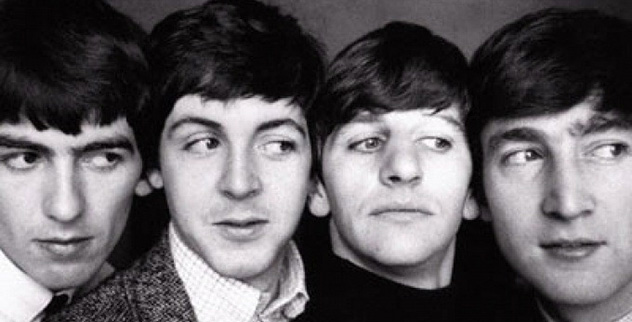
The Beatles did not invent experimental recording, but they helped turn studio trickery into mainstream pop magic. Their 1966 B-side “Rain” is widely recognized as one of the earliest famous rock songs to use reversed vocal material. The backward vocals near the end of the track were not designed to reveal a secret command; they were used because the sound itself was strange, dreamlike, and perfectly suited to the Beatles’ increasingly psychedelic imagination.
That is the key to understanding early backmasking. It was less about mind control and more about musicians discovering that tape could be bent, flipped, slowed, sped up, and generally encouraged to misbehave. “Rain” made reverse sound feel artistic rather than accidental, opening the door for a generation of producers who viewed the studio as an instrument rather than merely a room with microphones.
2. The Beatles – “Free as a Bird”
Nearly three decades after “Rain,” the Beatles returned to backmasking with a much more sentimental twist. At the end of “Free as a Bird,” the reunited surviving members included a reversed archival recording of John Lennon saying a familiar British catchphrase associated with entertainer George Formby. Played backward, it becomes audible; played normally, it resembles a phrase that sounds like a sly Lennon credit.
The effect was intentionally playful. Paul McCartney later described the backward snippet as a joke for dedicated Beatles listeners to discover. Instead of feeding a conspiracy theory, it gave fans a tiny hidden memorial: a final studio-era-style prank involving Lennon, technology, and a group that never lost its appetite for mischief.
3. Electric Light Orchestra – “Fire on High”
Electric Light Orchestra turned the backmasking controversy into a joke before the panic fully swallowed pop culture. On “Fire on High,” the opening contains a reversed spoken phrase that, when played backward, says: “The music is reversible, but time is not.”
That line was a pointed response to claims that ELO had hidden sinister messages in earlier work. Rather than panic, the band leaned into the absurdity. The result is one of the smartest uses of backmasking because it mocks the very people trying to find forbidden messages. It is the musical equivalent of a magician revealing the trapdoor, then asking whether you would also like to inspect the rabbit.
“Fire on High” proves that reverse audio can be a form of satire. Sometimes the secret message is not evil, mystical, or life-changing. Sometimes it is simply a band saying, “Yes, we know you are listening backward, and frankly, we are enjoying this.”
4. Pink Floyd – “Empty Spaces”
Pink Floyd were never likely to waste a strange sound effect on something ordinary. “Empty Spaces,” from The Wall, includes a backmasked spoken message that congratulates listeners for finding the hidden audio and directs them toward “Old Pink” at the “funny farm.”
The phrase fits the album’s world of isolation, paranoia, celebrity collapse, and psychological fragmentation. It is not merely a hidden joke; it feels like part of the record’s atmosphere. A listener who reverses the song gets rewarded with another crack in the wall, except this one speaks directly back.
Pink Floyd’s use of backmasking is memorable because it turns a technical gimmick into storytelling. The message functions like a secret hallway in a haunted house: it is optional, slightly unsettling, and very much on-brand.
5. Judas Priest – “Better by You, Better Than Me” and “Love Bites”
No discussion of famous backmasking cases is complete without Judas Priest, whose name became tied to one of the most serious controversies in rock history. In a 1990 Nevada civil trial, the band and CBS Records faced claims that the song “Better by You, Better Than Me” contained hidden commands encouraging two young men to harm themselves.
The case involved enormous personal tragedy, but the legal claim was not proven. The judge concluded that the alleged “do it” phrase was a chance combination involving breath noise and a guitar effect, and the plaintiffs did not establish that the band intentionally planted a message or that it caused the shootings.
Complicating the public conversation, Rob Halford acknowledged that Judas Priest had used a deliberate backward phrase in a different song, “Love Bites.” That message was included as a creative production idea, not as a command or hidden act of coercion. The distinction became crucial: an artist using reverse audio for texture is not the same thing as an artist secretly directing listeners toward harmful behavior.
6. Slayer – “Hell Awaits”
Slayer did not exactly build its reputation on subtle garden-party imagery. The title track from the 1985 album Hell Awaits begins with a reversed vocal passage that reveals a repeated invitation to “join us,” followed by a welcome-back greeting.
Unlike many alleged Satanic backmasking stories, this one was an intentional theatrical effect. Slayer used horror imagery, blasphemous language, and extreme themes as part of its musical identity. The reversed chant works because it sounds ominous even before listeners decode it. Once reversed, it becomes less a hidden threat than a stage prop with teeth.
The track is a useful reminder that context matters. In a horror movie, a creepy whisper signals mood. In a Slayer song, it signals that the next few minutes may involve fire, skulls, and absolutely no acoustic campfire singalong.
7. “Weird Al” Yankovic – “Nature Trail to Hell”
Where others found dread, “Weird Al” Yankovic found a cheese product. His 1984 song “Nature Trail to Hell” includes a backmasked phrase that becomes “Satan eats Cheez Whiz” when reversed.
The joke was deliberate and perfectly timed. During the 1980s, claims about Satanic messages in rock records were spreading through parts of American popular culture. Yankovic answered the panic with an intentionally ridiculous hidden line. He did not argue with the fear; he inflated it until it popped.
This is backmasking at its funniest. The supposed dark secret of popular music turns out to involve a supernatural being enjoying a fluorescent orange snack. It is difficult to remain terrified when the Devil appears to be shopping in the same aisle as nacho dip.
8. Missy Elliott – “Work It”
Missy Elliott’s “Work It” brought reverse vocal effects into hip-hop with so much confidence that listeners did not need a turntable or a conspiracy pamphlet to notice them. The song’s famous reversed line is played forward in reverse, creating an instantly recognizable vocal hook.
The story behind the effect is especially fitting for Elliott’s creative style. Accounts of the recording describe how a vocal error produced the backward sound, and instead of discarding it, Elliott and her collaborators transformed the accident into one of the track’s defining features. That choice made reverse audio feel less like a secret and more like a flex.
“Work It” shows how backmasking evolved in the digital age. The technique no longer had to hide in a murky tape loop. It could sit in the center of a chart-topping single, wearing sunglasses and daring the listener to keep up.
9. Led Zeppelin – “Stairway to Heaven”
“Stairway to Heaven” is probably the most famous alleged backmasking case in rock history. Some listeners claimed that part of the song, when played backward, contained Satanic phrases and references to the number 666. The rumor became a staple of sermons, television specials, record-burning campaigns, and spooky sleepover conversations.
Led Zeppelin denied intentionally placing such messages in the song. Robert Plant criticized the claims, and the band’s label dismissed the allegation as nonsense. The enduring lesson is not that “Stairway to Heaven” contains a coded message; it is that once people are told what they are supposed to hear, they often hear it.
The case remains culturally important because it demonstrates how suggestion can shape listening. Give ten people reversed audio and no clues, and they may hear ten different things. Give them a printed phrase beforehand, and suddenly everyone becomes an unpaid cryptographer.
10. Queen – “Another One Bites the Dust”
Queen’s 1980 hit was accused of carrying a reversed message that encouraged marijuana use. The claim became one of the most repeated examples in anti-rock backmasking discussions, despite the band’s representatives denying that any such message had been deliberately inserted.
There is a real reversed piano element in the recording, which may have helped fuel the rumor. But the alleged spoken message is not confirmed as intentional backmasking. It is better understood as a famous example of how a catchy phrase, a reversed chorus, and a little cultural anxiety can combine into an urban legend that refuses to die.
Queen’s case belongs on this list not because it proves a hidden instruction existed, but because it shows how easily musical ambiguity can become moral panic. One bass line, one backwards playback experiment, and suddenly Freddie Mercury is being treated like a very stylish public-health menace.
Why Backmasking Still Fascinates Listeners
Backmasking lasts because it combines two irresistible pleasures: music and secret knowledge. Everyone likes the idea that a familiar song may contain another song hidden underneath it. The technique gives listeners permission to become detectives, technicians, historians, and occasionally people who spend two hours reversing a seven-second guitar passage while their laundry quietly develops its own civilization.
It also thrives because sound is ambiguous. Reverse a vocal, add hiss, distortion, cymbals, and a little expectation, and the brain starts filling in blanks. This is related to auditory pareidolia: the tendency to hear recognizable words or patterns in unclear sound. That does not make listeners foolish. It makes them human.
The most interesting backmasking stories are therefore not always the scariest ones. They are the cases where artists use the technique knowingly: to create atmosphere, tease fans, parody critics, honor collaborators, or make a song sound unlike anything else on the radio.
Experiences: The Strange Fun of Hearing Music Backward
The first experience many people have with backmasking is not scholarly. It is usually messy, informal, and wonderfully dramatic. Someone says that a song has a hidden message. Another person insists that it absolutely does not. A phone appears, an audio app gets opened, and within three minutes everyone is leaning toward the speaker as if it is about to reveal the winning lottery numbers.
That moment explains much of backmasking’s appeal. Reversing a song changes the relationship between listener and music. Normally, songs move in one direction. The beat arrives, the chorus returns, the guitar solo does its heroic little victory lap, and the track ends. Backward playback disrupts all of that. Cymbals inhale. Snare drums become tiny explosions traveling in reverse. Vocals stop sounding like language and start sounding like messages from an underwater radio station.
There is also a strange social energy around it. One person hears a phrase immediately. Another hears nothing but mush. A third person hears an entirely different phrase and begins defending it with the confidence of a lawyer who has just discovered a new continent. Backmasking turns passive listening into a group puzzle, except the puzzle may not have a correct answer.
For music fans, the best experiences usually happen when the hidden effect is clearly intentional. Hearing the Beatles tuck a joke into “Free as a Bird” feels like finding a handwritten note inside an old book. Discovering Pink Floyd’s message in “Empty Spaces” feels like being rewarded for wandering deeper into an album that already behaves like a psychological maze. Hearing Missy Elliott turn a reversed vocal into a pop hook feels like watching a magician explain the trick and somehow make it cooler.
The more complicated experiences come from alleged messages. A listener may be convinced they hear something ominous in a reversed rock song, especially after reading a description first. But expectation can act like subtitles for the brain. Once you are told that a sound says a particular phrase, it becomes hard to hear anything else. Remove the suggestion, and the supposed message may dissolve into breath, guitar effects, tape noise, and the general chaos of music being forced to travel backward through time.
That does not ruin the fun. It improves it. The real experience of backmasking is not just hearing a phrase. It is noticing how much your mind contributes to what you hear. It is discovering that music can contain secrets, jokes, accidents, illusions, and technical experiments all at once. It is realizing that a strange sound may be an artistic choice, a coincidence, or a band trolling the audience with a snack-food punch line.
So the next time someone tells you that a famous song contains a hidden message, approach it with curiosity rather than panic. Listen closely. Reverse it if you want. Compare what you hear with what others claim to hear. Then remember that the most powerful mystery may not be hidden inside the record at all. It may be the human brain, enthusiastically trying to turn noise into meaning.
Conclusion
The top famous cases of backmasking reveal a history that is far more creative than sinister. From the Beatles’ studio experiments and Electric Light Orchestra’s satire to Pink Floyd’s puzzles, Slayer’s theatrical menace, “Weird Al” Yankovic’s absurd humor, and Missy Elliott’s forward-thinking production, reverse audio has been used as a tool of imagination.
The controversies surrounding Led Zeppelin, Queen, and Judas Priest also offer a useful lesson: a mysterious sound is not automatically a hidden command. Music can be powerful, emotional, and occasionally unsettling, but it is not a supernatural remote control for the human mind. Sometimes a backward message is real. Sometimes it is a joke. Sometimes it is a coincidence. And sometimes it is just a guitar effect wearing a very convincing fake mustache.
Note: This article distinguishes documented intentional backmasking from famous allegations and listener interpretations. Reversed audio can create convincing word-like patterns, so context and verified artist statements matter.