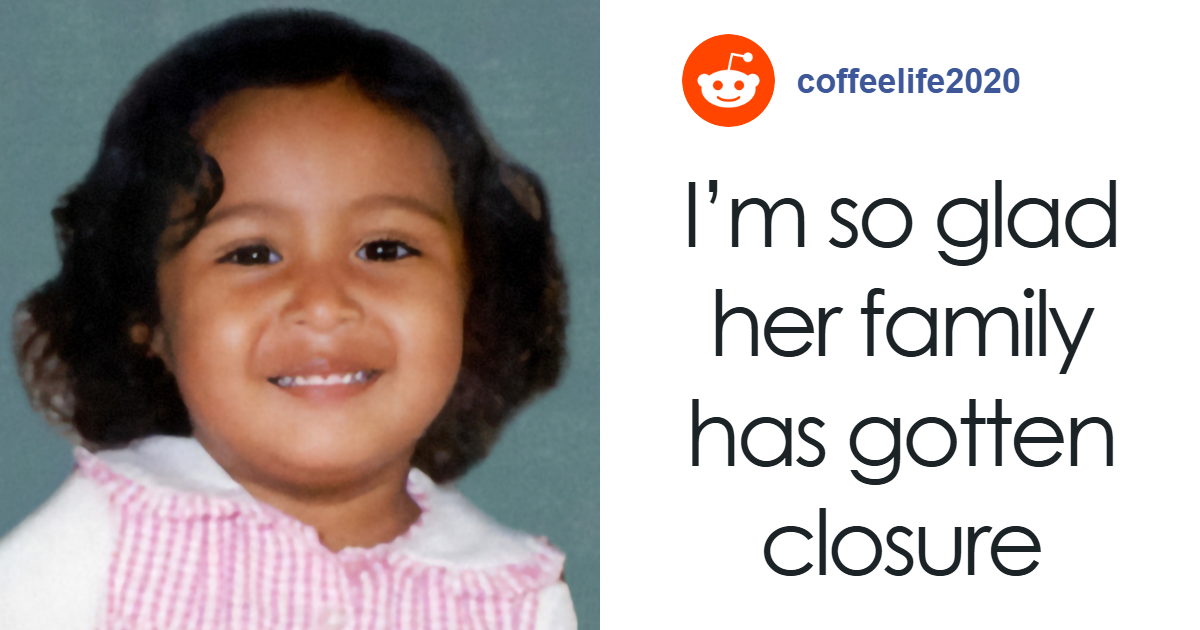
For 25 years, the disappearance of Andrea Michelle Reyes sat in the painful category every family fears most: the kind of case that seems to gather dust, questions, and heartbreak faster than answers. She was not a runaway. She was not a teenager looking for space. She was a toddler, barely old enough to say full sentences, when she disappeared from New Haven, Connecticut, in October 1999.
Then, in 2025, the story took the turn her family had prayed for but could never confidently expect. Andrea Reyes was found alive in Mexico. She was no longer the 23-month-old child pictured in missing-person posters and age-progressed images. She was a 27-year-old woman with a life, a history, and a name that DNA testing helped return to its original place.
It is the kind of missing child case that sounds almost impossible in the age of smartphones, social media, facial recognition, and digital footprints. But Andrea’s story proves that even in a connected world, a person can still be hidden by distance, time, family conflict, and borders. It also proves something more hopeful: cold cases are not always cold because nobody cares. Sometimes they are waiting for the right detective, the right technology, and one more person willing to ask, “What if we try again?”
The Disappearance of Andrea Michelle Reyes
Andrea Michelle Reyes was just 23 months old when she disappeared from New Haven in 1999. Authorities said she was in the custody of her father, Carlos Reyes-Couvertier, when she was taken by her mother, Rosa Tenorio, who did not have legal custody at the time. Police later issued a felony warrant for custodial interference.
From the beginning, investigators believed Andrea may have been taken to Mexico. That belief gave the case a direction, but not an easy solution. Mexico is not exactly a small backyard where someone can simply check behind the shed. It is a country of more than 120 million people, countless towns, busy cities, and complex legal realities. Finding one child there, especially before the modern social media era, was like trying to locate a single puzzle piece in a warehouse full of puzzles.
Andrea’s father did not stop searching. Reports described years of effort, including travel, legal expenses, private investigators, and public appeals. The National Center for Missing & Exploited Children helped keep Andrea’s face in public view through missing-person posters and age-progressed images. Those images attempted to answer the heartbreaking question that grows heavier with every passing birthday: what would she look like now?
A Cold Case That Refused to Stay Cold
Many missing child cases fade from headlines long before they fade from a family’s daily life. News cycles move on. Communities change. Detectives retire. Files get transferred, archived, and reopened only when a new lead appears. But for Andrea’s family, the case was never an old story. It was a missing chair at the table, an unfinished sentence, a question that followed them through every holiday and ordinary Tuesday.
The case gained new momentum in 2023 when New Haven Police Detective Kealyn Nivakoff, a member of the department’s Special Victims Unit, began reinvestigating Andrea’s disappearance. According to public reports, the renewed investigation used a combination of interviews, search warrants, social media research, and eventually advanced DNA testing.
That combination matters. Modern cold-case work is rarely solved by one dramatic movie moment where someone slams a folder onto a desk and yells, “We got her!” Real life is less cinematic and involves more paperwork, more patience, and probably more coffee than any detective wants to admit. In Andrea’s case, the breakthrough came from old-fashioned persistence paired with new technology.
How DNA Testing Helped Confirm the Truth
Investigators eventually located a woman in Puebla, Mexico, who was believed to be Andrea Reyes. But belief is not enough in a case involving a missing toddler, two countries, and a quarter century of separation. Authorities needed scientific confirmation.
The New Haven Police Department worked with Othram, a Texas-based forensic DNA company known for assisting law enforcement with cold cases, unidentified remains, and difficult identity questions. A DNA sample from the woman was compared with Andrea’s father’s DNA profile. The testing supported a father-daughter relationship, confirming that the woman living in Mexico was Andrea Michelle Reyes.
For families of missing children, DNA can do something both simple and profound: it can end uncertainty. It does not erase the lost years. It does not explain every emotional complication. It does not magically repair every wound. But it can answer the question that haunts a family most: is this really our child?
The Father Who Never Stopped Looking
Carlos Reyes-Couvertier’s role in this story is central. He had legal custody when Andrea disappeared, and according to reports, he spent years trying to find her. He traveled, searched, asked questions, and held onto hope long after many people might have quietly concluded that hope was too heavy to carry.
When Andrea was confirmed alive, the reunion was described as joyful but also delicate. This was not a simple return to normal, because “normal” had been interrupted for 25 years. Andrea had grown up in Mexico. Her father had grown older in Connecticut. They were connected by biology, memory, and love, but separated by time and life experience.
That is why Detective Nivakoff’s comment that the discovery was not the end of the healing process is so important. Finding Andrea alive was a miracle for the family, but reunification after decades is not a light switch. It is more like learning a language that should have been spoken every day but was stolen before the first conversation could fully begin.
Why This Missing Toddler Case Captured National Attention
The case of Andrea Michelle Reyes quickly drew widespread attention because it contains nearly every emotional element that makes a missing child story unforgettable: a toddler taken from home, a father searching for decades, a suspected international parental abduction, a cold case revived by a determined detective, and DNA technology delivering the answer.
It also challenges how people think about parental abduction. Many people hear the word “kidnapping” and imagine a stranger in a van, because television has trained us to picture crime in the most dramatic way possible. But many child abduction cases involve someone the child knows, including a parent or relative. That can make the situation legally, emotionally, and publicly complicated.
When a parent is accused of taking a child across borders without custody rights, the child may not understand what happened. The child may grow up believing a different version of the story. Years later, the truth can arrive not as a clean headline, but as an emotional earthquake. Andrea’s discovery is happy news, but it is not a fairy tale with all the hard pages removed.
The Role of Social Media in Finding Andrea Reyes
Social media is often blamed for shortening attention spans, ruining dinner conversations, and making everyone think they are a detective after watching three crime documentaries. But in cold cases, social platforms can sometimes become powerful investigative tools.
In Andrea’s case, authorities said social media was part of the renewed effort that helped locate her. That does not mean random internet sleuthing solved the case. It means trained investigators used available digital clues, public records, and modern communication tools as part of a broader law enforcement strategy.
This is one of the major changes in missing-person investigations since 1999. When Andrea vanished, there was no Facebook, no Instagram, no TikTok, and no endless stream of searchable digital breadcrumbs. Missing posters were physical, local news was more regionally limited, and international searches were much harder to coordinate. Today, a single name, image, or family connection can travel across borders in seconds.
What This Case Says About Cold Case Investigations
The discovery of Andrea Reyes is part of a broader shift in how cold cases are being approached. Forensic genetic genealogy, advanced DNA comparison, digital records, and social media research have given investigators tools that did not exist when many older cases first went cold.
In the past, a missing-person case might stall because there were no fresh witnesses, no confirmed sightings, and no reliable way to verify identity. Today, investigators can revisit evidence, compare family DNA, search digital trails, and work with specialized labs. None of these tools guarantees success, but together they can reopen doors that once seemed locked forever.
Andrea’s case also shows why families should not be dismissed when they keep pushing for answers. Persistence can be uncomfortable. It can look repetitive from the outside. But for a parent searching for a missing child, persistence is not obsession; it is love doing its job.
The Legal Questions That Remain
Although Andrea has been found alive, legal questions remain. Public reports state that the warrant for Rosa Tenorio remains active in the United States. Authorities have said Tenorio is believed to still be in Mexico, and the warrant is valid in the U.S.
That reality highlights one of the most difficult parts of international parental abduction cases. Different countries have different legal systems, custody procedures, extradition rules, and enforcement limitations. Even when investigators know where someone is, resolving the legal side may be far more complicated than the public expects.
For Andrea and her family, however, the most immediate story is not only about courts or warrants. It is about reconnection. It is about a father and daughter beginning a relationship that should have had 25 more years of birthday candles, school photos, family jokes, and ordinary memories.
Why “Found Alive” Is Only the Beginning
When a missing person is found alive, the public often wants a perfect ending. We want hugs, happy tears, and a neat closing line. But reunions after long-term disappearance are rarely simple. The missing person has their own identity, memories, loyalties, and emotional reality. Family members have grief, hope, anger, and joy tangled together like a box of holiday lights nobody had the patience to wrap properly.
Andrea is an adult now. She has lived most of her life in Mexico. The people who searched for her remember a toddler, but the person found is a grown woman. That distinction matters. Respecting her privacy and autonomy is part of respecting the seriousness of the story.
The best outcome is not a headline-friendly reunion staged for public comfort. The best outcome is a safe, respectful process in which Andrea and her family can decide what connection looks like now. Healing may happen slowly. It may include difficult conversations. It may also include joy, curiosity, and the strange beauty of discovering family after so much time apart.
Experiences and Lessons From the Andrea Reyes Case
The story of a toddler who vanished without a trace 25 years ago and was finally found alive offers several powerful lessons for families, communities, and anyone who follows missing-person cases. The first lesson is that “cold” does not mean “closed.” A case may stop making headlines, but that does not mean it has stopped mattering. Families continue to live inside the question long after the public has moved on.
One experience many families of missing children describe is the exhausting rhythm of hope and disappointment. A possible lead appears. A phone call comes in. Someone thinks they saw the missing person. For a moment, the heart runs ahead of the facts. Then the lead fails, and the family has to return to waiting. Andrea’s father lived with that cycle for decades. His persistence shows how love can become a form of endurance.
The second lesson is that accurate records matter. Missing-person posters, age-progressed images, DNA profiles, case files, and national databases may seem bureaucratic, but they can become lifelines years later. In Andrea’s case, organizations dedicated to missing children helped keep her identity from disappearing completely. Even when the search did not produce immediate results, the record remained available for the next investigator who picked up the case.
The third lesson is that technology should support human effort, not replace it. DNA testing helped confirm Andrea’s identity, but DNA did not wake up one morning, put on a detective badge, and solve the case by itself. A detective reopened the file. Investigators followed leads. Family members stayed engaged. Scientists performed the testing. The answer came from teamwork, not magic.
The fourth lesson is about public sensitivity. When a missing child is found as an adult, people naturally want details. They want to know where she lived, what she knew, how she feels, and what happens next. Curiosity is human, but privacy is necessary. Andrea’s story belongs first to Andrea and her family. The public can celebrate the good news without demanding every private chapter.
The fifth lesson is that parental abduction should be taken seriously. Because the accused person may be a biological parent, some observers mistakenly assume the child is automatically safe or that the situation is merely a family disagreement. Custody orders exist for a reason. Removing a child from a lawful custodian can cause deep emotional harm, disrupt identity, and separate children from extended family, culture, and truth.
Finally, Andrea’s case offers hope to families still waiting. Hope should never be packaged as a guarantee, because not every case ends this way. But it can be a reason to keep records updated, submit DNA when appropriate, contact missing-person organizations, and support investigators who revisit old files. Sometimes the next breakthrough is not loud. Sometimes it begins with one detective reopening one folder and deciding that 25 years is long enough to wait for an answer.
Conclusion: A Long-Lost Daughter, A Modern Breakthrough, and A Family’s New Chapter
Andrea Michelle Reyes’ discovery after 25 years is both astonishing and deeply human. It is a story about a toddler taken from Connecticut, a father who never stopped searching, a detective who reopened a cold case, and DNA technology that finally confirmed what hope had been whispering for decades.
It is tempting to call the ending “closure,” but that word may be too small. Closure sounds final, like a door clicking shut. Andrea’s case feels more like a door opening. The mystery of where she was has been answered, but the work of rebuilding connection, understanding the past, and respecting the future has only begun.
For every family still waiting for news, this case is a reminder that time can hide answers, but it does not always destroy them. Sometimes, after 25 years, the missing child is no longer a child. Sometimes she is alive, grown, and ready to be known again.
Note: This article is based on publicly reported information from law enforcement statements, forensic DNA reporting, missing-children organizations, and U.S. news coverage available as of June 2026.