Teaching kids about money is one of those ideas that sounds obvious until someone actually does it. Then suddenly the internet forms a committee, the comment section puts on a graduation gown, and everyone becomes an expert in childhood development, capitalism, trauma, desk rent, and whether fourth graders should be allowed to purchase tiny prizes with fake money.
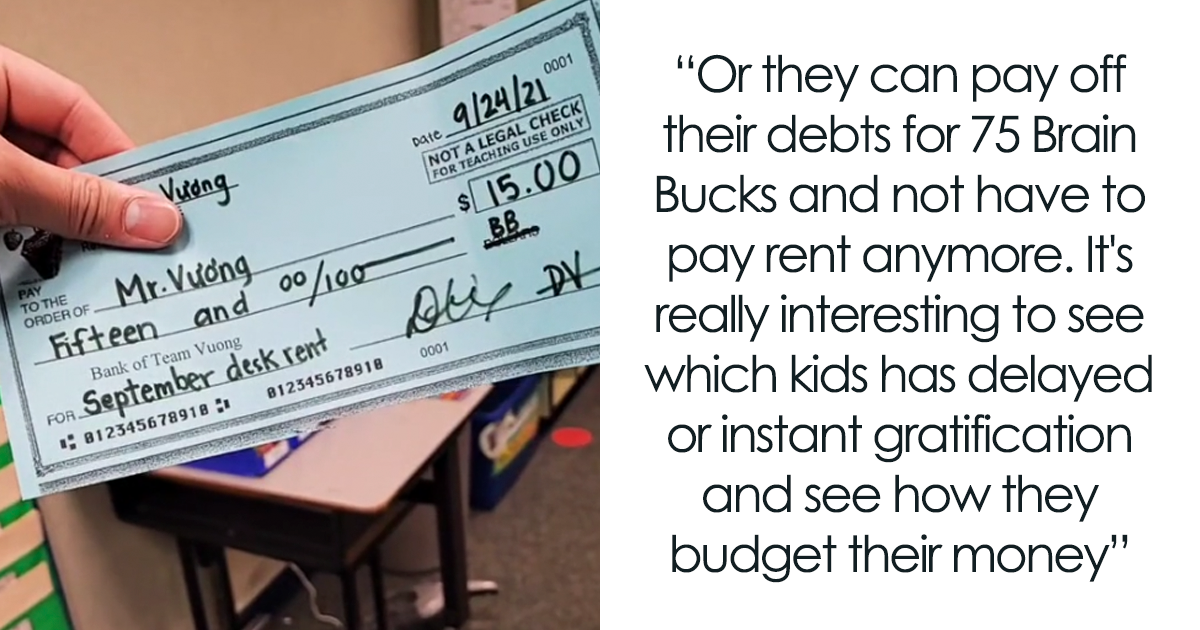
That is basically what happened when a teacher known online as Mr. Vuong shared his classroom economy system. In his class, students earn pretend currency called “Brain Bucks” for participation, responsibility, and positive classroom habits. At the end of the month, they use that classroom money to pay rent for their desks, save for bigger rewards, or buy small classroom treats. The goal is not to turn children into miniature landlords with pencil cases. The goal is to teach financial literacy, budgeting, delayed gratification, and decision-making in a way that feels real enough to matter but safe enough to learn from mistakes.
Still, not everyone loved it. Some people praised the idea as practical, creative, and far more useful than memorizing a formula nobody has met since eighth grade. Others worried that making children “pay rent” could create stress, especially for students whose families already face financial insecurity. Like many viral classroom ideas, the truth sits somewhere between “genius life-skills lesson” and “please do not make recess feel like tax season.”
What Is a Classroom Economy System?
A classroom economy system is a simulated money-management program where students earn, save, spend, and sometimes pay bills using classroom currency. It often includes jobs, paydays, rent, fines, bonuses, banking, auctions, and a store. Students may earn money for classroom responsibilities such as line leader, paper passer, classroom librarian, technology helper, or kindness ambassador. They may spend that money on rewards like a homework pass, extra reading time, classroom supplies, or small prizes.
In Mr. Vuong’s version, students earn Brain Bucks and pay monthly desk rent. If they save enough, they can eventually “buy” their desk and stop paying rent. The system also allows students to practice saving for a goal instead of spending every dollar the moment it hits their tiny wallet. In adult terms, that is budgeting. In kid terms, that is resisting the treasure chest even though the sparkly eraser is staring directly into your soul.
Why Teachers Use Classroom Economies
Many teachers like classroom economies because they combine behavior management, math practice, and real-world financial education. Instead of teaching budgeting as a worksheet with cartoon coins, students actually make choices. Should they spend now or save? Should they take a classroom job seriously? What happens if they forget a bill? How does rent affect what is left for fun?
Research on experiential financial education suggests that students can gain financial knowledge when they learn by doing. A field study of the My Classroom Economy program found that students in participating classrooms showed gains in financial knowledge, budgeting behavior, financial socialization, and economic experience after ten weeks. That matters because money skills are not built only through lectures. They grow through repeated practice, mistakes, reflection, and the occasional realization that buying five novelty pencils may not have been a retirement plan.
The Real-World Skills Kids Can Learn
Budgeting Before the Stakes Are Real
The best argument for a classroom economy is that it lets children experience budgeting without real consequences. A student who spends all their Brain Bucks is not losing housing, food, or safety. They are learning that choices have trade-offs. That lesson is easier to absorb at age ten with fake money than at age twenty-five with overdraft fees, rent due, and a refrigerator containing one heroic string cheese.
Understanding Income and Work
Classroom jobs show students that money usually comes from effort, responsibility, and contribution. When students get paid for helping the class function, they begin to see work as part of a community system. The classroom does not magically clean itself. Papers do not levitate into folders. Someone has to organize supplies, straighten books, and keep the pencil sharpener from becoming a public health mystery.
Learning to Save
A classroom store teaches spending, but the better lesson is saving. If a student wants a bigger reward, they have to wait. That is delayed gratification in action. Instead of hearing “save your money” as an adult slogan, students feel what saving means. They experience the tension between small immediate treats and larger future goals.
Practicing Math in a Meaningful Way
Classroom economies also make math feel useful. Students add income, subtract expenses, compare prices, calculate balances, and sometimes plan for future payments. Suddenly subtraction is not just numbers on a worksheet; it is the difference between affording rent and explaining to the teacher why the treasure chest looked too good to ignore.
Why Some People Criticize the System
The criticism is not silly. In fact, it raises important questions. Children are not adults, and school should not feel like a miniature version of economic pressure. Critics worry that “desk rent” could remind some students of real family struggles. They also question whether tying classroom behavior to money might overemphasize external rewards. If every helpful action earns currency, will students still help because it is kind?
There is also an equity concern. If students earn money through participation, what happens to shy students, neurodivergent students, English language learners, or children who miss school because of circumstances outside their control? A poorly designed classroom economy can accidentally reward students who already find school easier while penalizing students who need more support.
That is why the teacher’s explanation matters. Mr. Vuong clarified that students do not lose their desks if they cannot pay rent. He treats the system as an educational game, not a real punishment. If a student cannot pay because of illness, family transportation problems, or other serious reasons, the lesson changes. Real life comes first. The economy is fake. The child is real.
The Difference Between a Lesson and a Punishment
A strong classroom economy should never humiliate students. It should not turn poverty into a classroom role-play. It should not make a child feel publicly “broke.” It should not punish absences caused by illness, family responsibilities, transportation, disability, or hardship. The best versions are private, flexible, and guided by empathy.
For example, if a student spends all their classroom money on prizes and forgets rent, the teacher can turn that into a budgeting conference. “What could you do differently next time?” is a lesson. “Everyone look at who cannot pay rent” is not a lesson; it is a disaster wearing a name tag.
Teachers can also build in safety nets: sick days, personal days, scholarships, hardship waivers, bonus opportunities, savings goals, and reflection sheets. These additions make the simulation more realistic and more humane. Adults have emergencies. Kids should learn that financial planning matters, but they should also learn that communities help people through hard moments.
Why Financial Literacy Belongs in Schools
Financial literacy is increasingly becoming a national education priority. More U.S. states now require personal finance instruction for high school graduation, and organizations such as the Consumer Financial Protection Bureau, the Council for Economic Education, and the National Education Association provide resources for youth financial education. Topics like budgeting, saving, credit, banking, debt, taxes, insurance, and consumer choices are not luxury knowledge. They are survival tools for modern life.
The challenge is that students need these skills before they face adult consequences. Waiting until college or the first full-time job is often too late. By then, young adults may already be making decisions about student loans, credit cards, apartment leases, car payments, and online subscriptions that multiply like rabbits with Wi-Fi.
A classroom economy is not a complete financial education curriculum. It will not teach everything about compound interest, credit scores, taxes, investing, inflation, or economic inequality. But it can open the door. It gives students a vocabulary for talking about money. It makes abstract ideas concrete. Most importantly, it gives children permission to ask questions many adults still feel embarrassed to ask.
What a Good Classroom Economy Should Include
Clear Rules
Students should understand how money is earned, how bills work, what rewards cost, and what happens when they make a mistake. Confusing rules create anxiety. Clear rules create learning.
Private Money Management
No child should be publicly shamed for having less classroom money. Teachers can use individual ledgers, private bank accounts, envelopes, or digital systems to protect students’ dignity.
Multiple Ways to Earn
Students should not have to be loud, fast, or socially confident to succeed. A good system rewards many strengths: responsibility, organization, creativity, kindness, effort, teamwork, and reflection.
Room for Mistakes
The whole point is learning. If one bad choice ruins the month, the simulation becomes stressful. If one bad choice leads to a conversation and a plan, it becomes education.
Real Conversations About Fairness
Money lessons should not pretend the economy is perfectly fair. Students can discuss why some people have more opportunities than others, why emergencies affect budgets, and why communities create support systems. This turns a classroom economy from a cute game into a deeper lesson about responsibility and empathy.
Why the Internet Reaction Was So Divided
The debate around Mr. Vuong’s system became intense because money is emotional. Adults bring their own experiences into the conversation. Someone who grew up with financial stress may see desk rent and think, “Please let kids be kids.” Someone who struggled because school never taught money management may think, “Finally, a teacher is teaching something useful.” Both reactions make sense.
That is what makes this classroom economy story so interesting. It is not just about pretend money. It is about what we believe school should prepare children for. Should school protect childhood from adult worries? Yes. Should school also prepare children for adult realities? Also yes. The art is finding the line between preparation and pressure.
A Balanced Way to Look at It
A classroom economy can be excellent when it is playful, flexible, private, inclusive, and connected to thoughtful discussion. It can be harmful if it becomes rigid, public, punitive, or insensitive to students’ real lives. The tool is not automatically good or bad. The design matters. The teacher’s judgment matters. The emotional climate of the classroom matters most.
Mr. Vuong’s approach appears to work because he frames it as a learning game, not a survival test. He gives students opportunities to earn, save, spend, and reflect. He also listens to concerns and adjusts the system. That willingness to revise is important. Good teaching is not “I made a rule, now everyone salute the bulletin board.” Good teaching is observing, listening, improving, and remembering that children are not spreadsheets with sneakers.
Experience-Based Reflections: What This Topic Teaches Beyond Money
Anyone who has worked with children knows that the lesson you plan is rarely the only lesson they learn. A teacher might design a classroom economy to teach budgeting, but students also learn patience, fairness, communication, and self-control. They learn how it feels to want something and wait. They learn how it feels to make a mistake and recover. They learn that money is not magic; it is a tool that requires planning.
Imagine a student who earns ten classroom dollars in a week. On store day, a small toy costs eight dollars, but rent is due soon. The student pauses. That pause is the lesson. In that tiny moment, the child is practicing a decision adults make constantly: spend now or save for what matters later. The numbers are fake, but the thinking is real.
Another student may forget to do a classroom job and receive a smaller paycheck. Instead of being scolded, the student can reflect: “My role affects the group.” That is not just financial literacy. That is community literacy. Children begin to see that responsibility is connected to trust. If the classroom librarian does not return books, reading time gets messy. If the supply manager does not organize materials, everyone loses time. The “economy” becomes a map of classroom cooperation.
There is also a powerful emotional lesson in saving. Many children are used to immediate rewards because modern life is full of instant buttons: instant videos, instant games, instant snacks, instant “skip ad” energy. Saving classroom money slows things down. It teaches students that wanting something is not an emergency. That skill is bigger than finance. It supports emotional regulation, goal-setting, and resilience.
At the same time, teachers must stay alert to stress. A child who panics about fake rent is not being dramatic. That reaction may come from real conversations heard at home. A sensitive teacher can use that moment gently, perhaps by saying, “In our classroom, no one loses what they need. This is practice. We are learning together.” That sentence can turn anxiety into safety.
Parents can also be part of the experience. A teacher might send home a simple explanation: students are using classroom currency to practice budgeting, saving, and decision-making; no real money is involved; basic classroom needs will never be taken away. This transparency helps families understand the purpose and reduces misunderstandings. It also opens the door for parents to talk with children about chores, allowances, saving jars, grocery budgets, or why adults sometimes say, “Not today,” in the toy aisle with the seriousness of a Supreme Court ruling.
The most useful classroom economy experiences are not about creating perfect little consumers. They are about creating thoughtful decision-makers. A student who learns to ask, “Do I need this? Can I afford it? What happens if I wait?” is building a mental habit that can last for years. Those questions apply to toys, snacks, subscriptions, college loans, cars, apartments, and everything else with a price tag.
In the end, a classroom economy works best when it teaches both math and humanity. Yes, students should learn to budget. Yes, they should learn that bills exist. But they should also learn compassion, flexibility, and the truth that financial hardship is not a character flaw. When handled with care, a classroom economy can make money less mysterious and less scary. It can show children that mistakes are not the end of the world. They are practice. And honestly, if more adults had learned that before signing up for three streaming services and a gym membership they visit twice a year, the world might be a calmer place.
Conclusion
Mr. Vuong’s classroom economy system sparked debate because it touches a nerve: money education is necessary, but childhood should still feel safe. The strongest version of this idea does both. It gives students hands-on practice with earning, saving, spending, and budgeting while making sure no child is embarrassed, excluded, or punished for circumstances outside their control.
Financial literacy for kids should not be scary. It should be practical, age-appropriate, and human. A classroom economy can be a smart way to teach real-world skills, as long as the teacher remembers that the “money” is imaginary but the children’s feelings are not. Used thoughtfully, the system is not about turning school into a bank. It is about helping students understand the world before the world starts charging late fees.
Note: This article is for educational and editorial purposes. Classroom economy systems should always be adapted to student age, family context, school policy, and emotional well-being.