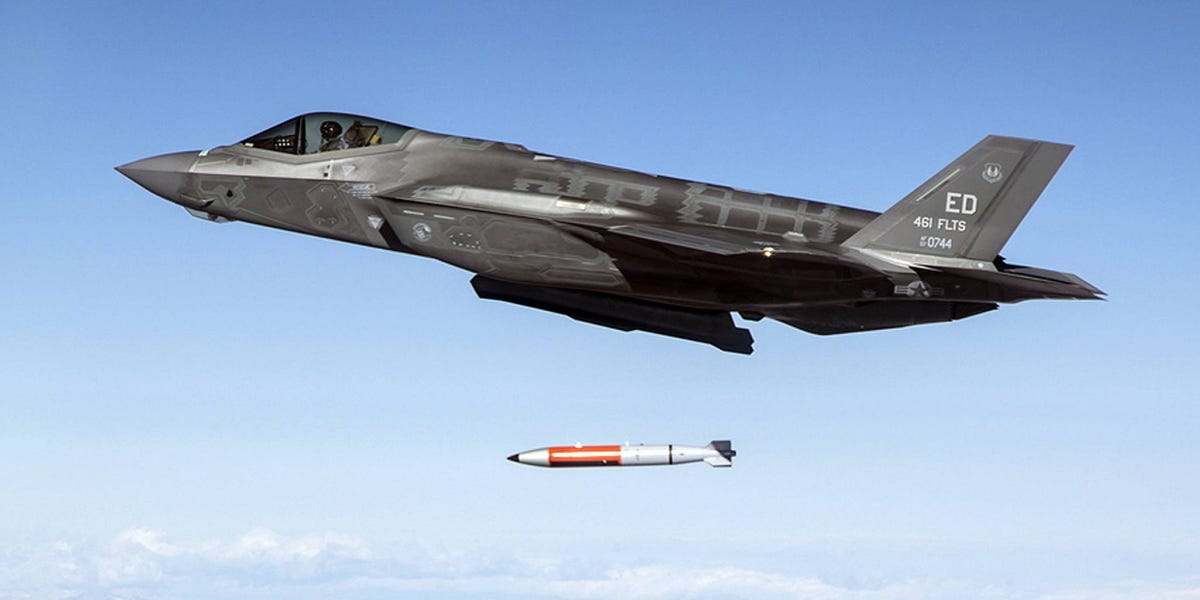
The United States is building a new nuclear weapon, and yes, that sentence still has the power to make a room go quiet. The weapon is called the B61-13 nuclear gravity bomb, a modern variant of the long-running B61 family. It is not a cartoonish “doomsday button,” nor is it a shiny new gadget from a defense contractor’s holiday catalog. It is part of a serious and expensive modernization effort meant to keep America’s nuclear deterrent credible in an era of growing tension with Russia, China, North Korea, and other nuclear risks.
The phrase “new nuke” can sound misleading if it suggests the United States is simply adding more warheads to the pile. According to U.S. officials, the B61-13 is intended to replace or modify existing weapons rather than increase the total number of nuclear bombs in the stockpile. Still, its arrival matters. It follows two other post-Cold War nuclear updates: the B61-12 gravity bomb and the W76-2 low-yield submarine-launched ballistic missile warhead. That makes the B61-13 the third notable new or heavily modernized U.S. nuclear weapon since the Cold War era.
In plain English: America is not dusting off Cold War blueprints for nostalgia. It is updating old weapons for a more complicated strategic world. Think less “retro military museum” and more “your 1960s muscle car now has modern brakes, sensors, and a terrifyingly large engine.”
What Is the B61-13 Nuclear Bomb?
The B61-13 is a nuclear gravity bomb, meaning it is designed to be dropped from aircraft rather than launched from a missile silo or submarine tube. Gravity bomb may sound charmingly simple, like something Newton would appreciate, but modern nuclear gravity bombs are anything but basic. They are designed with advanced safety, security, and accuracy features, and they fit into the air-delivered leg of the U.S. nuclear triad.
The B61 family has been around for more than 50 years, making it one of the most enduring weapons in the U.S. nuclear arsenal. The new B61-13 builds on the recently completed B61-12 program, using many of the same modern features while offering a higher-yield option for certain hard or large-area military targets. It is expected to be delivered by strategic bombers, including the future B-21 Raider and potentially the B-2 Spirit before that aircraft retires.
The Department of Defense has described the B61-13 as a response to a changing security environment, not as a reaction to one specific crisis. In other words, Washington is not saying, “We saw one bad headline and built a nuclear bomb.” The argument is broader: U.S. adversaries are expanding and modernizing their nuclear forces, and American planners believe the U.S. arsenal must remain credible enough to deter attacks and reassure allies.
Why Is It Called the Third Since the Cold War?
The B61-13 follows two major nuclear updates that arrived after the Cold War: the W76-2 and the B61-12. The W76-2 is a low-yield warhead for submarine-launched ballistic missiles. It was fielded to give the U.S. a limited nuclear response option, especially in scenarios where an adversary might believe it could use a smaller nuclear weapon without triggering a massive American reply.
The B61-12, meanwhile, was a major life-extension program for the B61 gravity bomb family. It consolidated and replaced older B61 variants, added a modern tail kit for improved accuracy, and extended the life of the air-delivered nuclear deterrent. The last B61-12 production unit was completed in late 2024, closing a long and technically complex modernization chapter.
Now comes the B61-13. Unlike the B61-12, which is often discussed for its lower-yield flexibility and compatibility with fighter aircraft, the B61-13 is associated with strategic bombers and higher-yield missions. It is meant to provide the president with more options against difficult targets without increasing the overall number of weapons in the stockpile.
How Powerful Is the B61-13?
Open-source estimates commonly compare the B61-13’s maximum yield to the older B61-7, which is often cited at roughly 360 kilotons. That is far above the yield of the B61-12, whose maximum is often described around 50 kilotons. For perspective, the bomb dropped on Hiroshima was about 15 kilotons. Nobody should read those numbers while eating lunch and expect the sandwich to taste the same.
Yield, however, is only one part of the story. Modern nuclear planning is also about delivery platform, accuracy, target type, survivability, and political signaling. A higher-yield bomb paired with modern guidance and strategic bomber delivery gives U.S. leaders a different set of options than a lower-yield tactical weapon. That does not make nuclear war “usable” in any normal moral sense. It means military planners are trying to shape deterrence by convincing adversaries that aggression would fail at every rung of escalation.
Why Build It Now?
The official answer is deterrence. U.S. defense leaders argue that the security environment has changed dramatically. Russia has repeatedly used nuclear threats during its war against Ukraine. China is rapidly expanding its nuclear forces. North Korea continues developing nuclear-capable missiles. Iran remains a long-running proliferation concern. The arms-control architecture that helped stabilize nuclear competition for decades is also weaker than it used to be.
In that context, the B61-13 is meant to send a message: America’s nuclear arsenal is old, but it is not asleep. The U.S. stockpile is much smaller than it was during the Cold War, but many of its weapons were built decades ago. Modernization aims to keep them safe, secure, reliable, and credible without returning to the huge numbers of the 1960s.
Supporters argue that the B61-13 is a practical compromise. It uses existing production lines and B61-12 technology, replaces some older capability, and does not increase total stockpile numbers. Critics respond that “new nuclear bomb” and “practical compromise” should probably not be in the same sentence without a fire extinguisher nearby. They worry it could fuel arms racing, complicate future arms-control talks, and normalize more flexible nuclear options.
The B61-13 and the B83 Question
One reason the B61-13 has attracted attention is its relationship to the aging B83-1, the most powerful nuclear bomb remaining in the U.S. arsenal. The B83 has a yield in the megaton range, making it vastly more destructive than the B61-13. The 2022 Nuclear Posture Review supported retiring the B83-1, but some lawmakers and defense voices worried that retiring it would leave a gap against certain hardened or deeply buried targets.
The B61-13 appears to be part of the answer to that debate. It offers a higher-yield bomber-delivered option while avoiding the extreme destructive power and aging design of the B83-1. In political terms, it may be the nuclear equivalent of replacing a roaring, gas-guzzling monster truck with a newer, still-alarming heavy-duty truck. Less excessive does not mean cuddly.
Will the B61-13 Increase the U.S. Nuclear Stockpile?
According to U.S. officials, no. The B61-13 is expected to be produced by reducing the number of B61-12s manufactured, keeping the total planned number of B61 bombs unchanged. That distinction is important for SEO readers, defense watchers, and anyone who prefers facts over dramatic fog machines.
The United States has already reduced its nuclear stockpile dramatically since the Cold War peak. The Department of Energy has stated that the U.S. stockpile is at its smallest level since 1960, with thousands rather than tens of thousands of warheads. The modernization debate is therefore not simply about “more nukes.” It is about whether fewer nuclear weapons can remain credible, safe, and strategically useful as old systems age and rivals modernize.
How Does This Fit Into the Nuclear Triad?
The U.S. nuclear triad consists of land-based intercontinental ballistic missiles, submarine-launched ballistic missiles, and aircraft-delivered nuclear weapons. Each leg has a different role. Missiles offer speed. Submarines offer survivability. Bombers offer visibility, flexibility, and recallability. If a missile is launched, it is not politely coming back because someone changed their mind. A bomber, at least in theory, can be recalled before weapons are released.
The B61-13 belongs to the bomber leg. It is designed for strategic aircraft, not for widespread deployment on NATO dual-capable fighter aircraft. That makes it different from the B61-12, which is tied more closely to both U.S. and NATO air-delivered deterrence arrangements.
The Cost of Modernizing America’s Nuclear Arsenal
Nuclear modernization is not cheap. The Congressional Budget Office estimated that U.S. nuclear forces could cost nearly $946 billion from 2025 through 2034. That includes operating existing systems, modernizing delivery platforms, upgrading command-and-control networks, and supporting the Department of Energy’s nuclear weapons complex.
The B61-13 itself is only one piece of a much larger modernization puzzle. The U.S. is also developing the Columbia-class ballistic missile submarine, the Sentinel intercontinental ballistic missile, the B-21 Raider bomber, the Long-Range Standoff weapon, and major nuclear command, control, and communications upgrades. If the nuclear enterprise were a home renovation, this would not be a fresh coat of paint. It would be lifting the house, replacing the foundation, rewiring the walls, and discovering the contractor needs another $100 billion.
Supporters Say It Strengthens Deterrence
Supporters of the B61-13 argue that deterrence depends on credibility. If adversaries believe the United States lacks suitable options for certain targets, they may be tempted to gamble. A modern, bomber-delivered, higher-yield gravity bomb gives the U.S. another tool to hold difficult targets at risk.
They also argue that allies need reassurance. Countries protected by the U.S. nuclear umbrella, especially in Europe and Asia, watch American modernization closely. If they believe U.S. commitments are weakening, some may consider developing their own nuclear weapons. In that sense, modernization can be framed not only as a military project but also as a nonproliferation tool.
Critics Say It Raises Risk
Critics see the matter differently. They argue that building new nuclear variants can make nuclear weapons appear more usable, even if officials insist they exist only for deterrence. The more options leaders have, critics worry, the easier it becomes to imagine controlled nuclear escalation. History suggests nuclear escalation is not a tidy chess match. It is more like playing chess during an earthquake while both players are holding gasoline.
Arms-control advocates also worry that the B61-13 could make future negotiations harder. Russia and China may point to U.S. modernization as justification for their own programs. Even if the United States says the B61-13 does not increase stockpile numbers, opponents may see it as evidence that Washington is improving nuclear warfighting capabilities rather than reducing nuclear dangers.
What the B61-13 Says About the New Nuclear Age
The B61-13 reveals a larger truth: the post-Cold War vacation from nuclear anxiety is over. For years after the Soviet Union collapsed, nuclear weapons faded from everyday political conversation. They never disappeared, but they became background machinery. Today, they are back in the foreground.
The new nuclear age is not identical to the Cold War. Instead of one main superpower rivalry, the United States faces multiple nuclear challenges at once. Russia has the largest nuclear arsenal. China is expanding quickly. North Korea is unpredictable and increasingly capable. Cyber threats add uncertainty to command-and-control systems. Space assets are more vulnerable. Artificial intelligence raises new questions about speed, warning, and decision-making.
That makes the B61-13 more than a bomb. It is a symbol of strategic adjustment. It shows that Washington believes old assumptions no longer fit neatly. Whether that adjustment improves stability or adds danger is the central debate.
Real-World Examples: Why Details Matter
Consider Russia’s nuclear signaling during the Ukraine war. Moscow’s threats were designed to deter NATO from direct intervention and remind the world that nuclear weapons remain central to Russian strategy. U.S. officials look at that behavior and ask whether America has enough credible options to deter limited nuclear use.
Now consider China. U.S. defense assessments have warned that China is expanding and diversifying its nuclear forces. A world in which the United States must deter both Russia and China at the same time is different from the old bilateral U.S.-Soviet framework. The B61-13 is one piece of a broader response to that two-peer problem.
Finally, consider allies. NATO countries and U.S. partners in Asia depend on American extended deterrence. If those allies lose confidence, the global nonproliferation system could become shakier. Modernized U.S. nuclear forces are partly intended to prevent that outcome.
Experience Section: Living With the Return of Nuclear Anxiety
For many Americans, the experience of hearing that the U.S. is building a new nuclear bomb feels strangely old and new at the same time. Older generations may remember school drills, Cold War headlines, and the uneasy feeling that geopolitics could turn catastrophic in minutes. Younger readers may have grown up thinking nuclear weapons belonged to history documentaries, grainy missile footage, and stern men in black-and-white photographs. The B61-13 reminds everyone that nuclear strategy did not retire. It merely stopped trending for a while.
The everyday experience of this topic is not technical. Most people are not asking about yield curves, aircraft certification, or stockpile stewardship. They are asking a simpler question: “Should I be worried?” The honest answer is yes, but not in a panic-buy-canned-beans-by-the-truckload way. Nuclear modernization is serious because it reflects real dangers. It is also meant to prevent nuclear use by making deterrence credible. That paradox is what makes the subject so uncomfortable. The weapons are built so they are never used. It is the world’s darkest insurance policy, and nobody enjoys reading the fine print.
There is also a civic experience here. Nuclear weapons are often discussed in classified rooms, dense budget documents, and expert panels where acronyms reproduce like rabbits. But the public still pays for the arsenal and lives with the consequences of nuclear policy. A nearly trillion-dollar modernization plan is not an abstract spreadsheet. It competes with other national priorities and shapes America’s role in the world. Citizens do not need to become nuclear physicists to ask reasonable questions: What threat is this weapon meant to deter? What older weapon does it replace? Does it reduce risk or increase it? How does it affect arms control? Who decides when enough is enough?
For journalists, students, and readers trying to understand the B61-13, the best experience is to avoid the two easiest traps. The first trap is panic: assuming every nuclear update means war is around the corner. The second trap is numbness: treating nuclear modernization like routine defense paperwork. The truth sits between those extremes. The B61-13 is not a magic shield, and it is not automatically a reckless escalation. It is a strategic choice made under pressure, with trade-offs that deserve public attention.
In that sense, the B61-13 is a test of how seriously democratic societies can discuss terrifying technologies without losing their balance. The goal should be clear thinking, not theatrical doom. A modern nuclear arsenal may deter enemies, reassure allies, and replace more dangerous aging weapons. It may also provoke rivals, strain budgets, and make arms-control diplomacy harder. Both things can be true, because nuclear policy rarely offers clean answers. It offers choices between risks.
Conclusion: A New Bomb for an Uneasy Era
The U.S. decision to build the B61-13 nuclear gravity bomb is one of the clearest signs that nuclear weapons have returned to the center of great-power strategy. It is the third major new or modernized U.S. nuclear weapon since the Cold War, following the W76-2 and B61-12. It is designed to provide a higher-yield bomber-delivered option against certain hard and large-area military targets, while officials insist it will not increase the total number of weapons in the stockpile.
Supporters call it a necessary update for deterrence in a dangerous world. Critics call it another step toward a more flexible and risky nuclear posture. Both sides agree on one thing: the nuclear age is not over. The B61-13 is not just a weapon; it is a warning label attached to the 21st century. The challenge now is ensuring that modernization does not outrun wisdom, and that deterrence remains exactly what it is supposed to be: a way to prevent the unthinkable, not prepare casually for it.