Note: This article is inspired by real publicly available information about cancer coping, family caregiving, Waldenström’s macroglobulinemia, therapeutic play, humor, emotional support, and the story of a father who found purpose through a family board game project during cancer treatment. It is informational content only and not medical advice.
Cancer has a rude habit of entering a person’s life without knocking. One day, you are making plans, complaining about email, wondering what is for dinner, and pretending you will finally organize the garage. The next day, a doctor says a word you never wanted to hear, and suddenly the entire room feels smaller. For Joseph Erskine Welsh IV, that word came with a rare blood cancer diagnosis: Waldenström’s macroglobulinemia, a slow-growing type of non-Hodgkin lymphoma that affects certain immune cells and can bring fatigue, nerve problems, treatment side effects, and a mountain of fear.
But this is not a story about cancer being defeated by positive thinking, kale smoothies, or a magical motivational quote printed over a sunset. This is a story about something much stranger and more human: monsters. Not the scary ones under the bed, but pun-filled, family-friendly monsters created around a table with children, laughter, and cardboard pieces. In the middle of pain, chemotherapy, and uncertainty, a family board game became more than entertainment. It became a ritual, a reason to gather, a project with purpose, and a reminder that joy can still sneak into the room wearing fuzzy monster slippers.
The title “The Monsters That Saved Me” sounds dramatic until you understand what the game actually did. It did not cure cancer. It did not replace treatment. It did not turn a hospital into a comedy club, though frankly, oncology waiting rooms could use better lighting and at least one decent snack machine. What it did was give a father and his family something to build together when illness tried to take everything apart.
When Cancer Shrinks Your World
Waldenström’s macroglobulinemia is rare, and like many blood cancers, it can be confusing for patients and families because it does not always look the way people expect cancer to look. It begins in B cells, part of the immune system, and is associated with abnormal cells in the bone marrow and excess IgM antibodies. Some people are monitored for years before needing treatment, while others require therapies such as chemotherapy, targeted therapy, immunotherapy, plasmapheresis, or other individualized care. The medical details are important, but for the person living through it, the emotional details are often just as loud.
A diagnosis can shrink ordinary life into appointments, lab results, side effects, insurance calls, and the suspiciously endless beeping of medical machines. The National Cancer Institute and major cancer centers emphasize that cancer affects not only the body but also mood, identity, relationships, routines, and family life. That is the part many people do not see. Cancer does not simply ask, “How are your cells?” It asks, “Who are you when you cannot do what you used to do?”
For a parent, that question can be especially brutal. Children still need breakfast, rides, jokes, help with homework, and someone to admire their extremely urgent drawings of dragons wearing sneakers. A sick parent may want desperately to be present but feel trapped by exhaustion, neuropathy, pain, or fear. Family life does not pause neatly for treatment. It wobbles, improvises, drops a few balls, and hopes nobody notices the laundry has entered its villain era.
Why A Family Board Game Can Matter During Cancer Treatment
At first glance, a board game may seem too small for something as huge as cancer. But small things often carry people through large storms. Cancer care organizations frequently recommend supportive routines, connection with loved ones, creative activities, distraction, humor, and safe ways to talk about emotions. Games can touch all of those needs at once.
A board game gives structure when life feels chaotic. It has rules, turns, cards, tokens, and a beginning and end. That matters when treatment feels like an endless hallway. Around the table, nobody has to deliver a perfect speech about fear. A child can simply say, “Dad, your monster looks like a confused potato,” and somehow that becomes a conversation. Play lowers the temperature of difficult emotions. It lets people be together without forcing every moment to become a serious family meeting with tissues and awkward eye contact.
Modern research and therapeutic practice increasingly recognize play as more than a childish distraction. Board games can encourage emotional regulation, patience, cooperation, problem-solving, social connection, and communication. In hospitals, pediatric cancer programs often use games, art, music, guided imagery, laughter, and other supportive tools to help patients cope with treatment stress. Adults need those tools too, even if we pretend we are too mature while secretly getting competitive over a plastic token shaped like a hat.
The Power Of Making Monsters Together
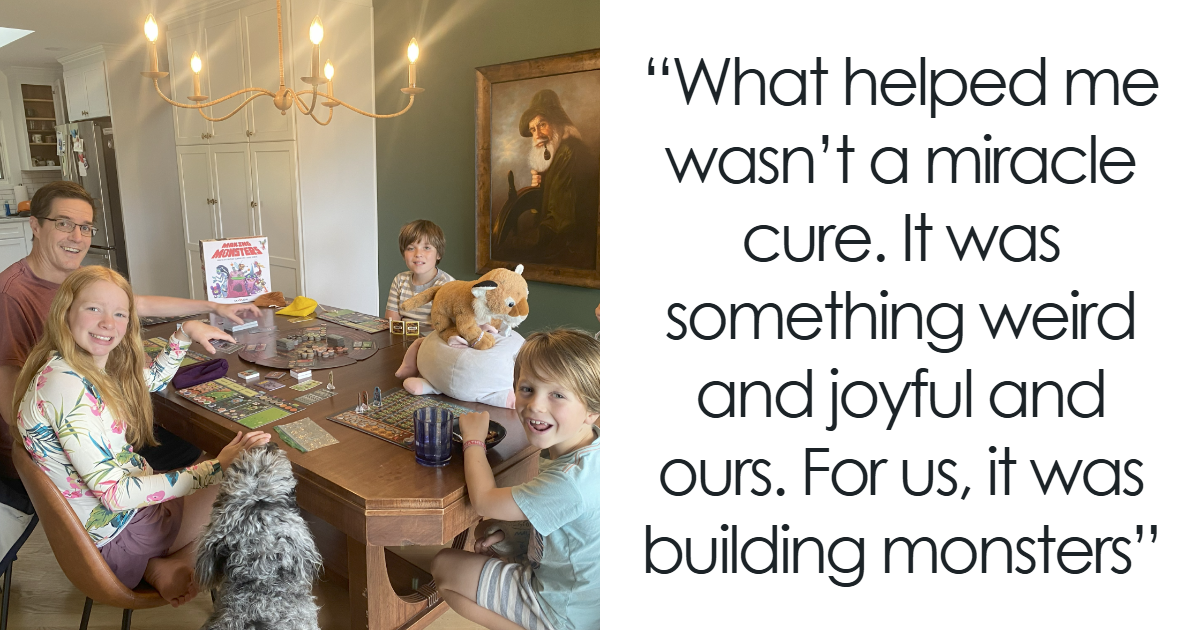
In Welsh’s story, the family board game was not just something taken off a shelf for a Saturday night. It became a creative project. During recovery, he became involved with a family-friendly game called Making Monsters. His daughters, nieces, and other family members helped test ideas, rewrite parts, invent monster names, and laugh at ridiculous puns. That detail is important. They were not only playing; they were contributing.
When someone has cancer, family members often feel helpless. Children may sense fear in the house but not know what to do with it. A shared creative project gives everyone a role. One person can name a monster. Another can test a rule. Someone else can declare that a joke is “too dad,” which is not technically a design category but probably should be. The project becomes a bridge between illness and normal life.
That bridge is powerful because cancer often steals ordinary roles. A parent becomes “the patient.” A spouse becomes “the caregiver.” Children become “the kids dealing with Dad being sick.” A game night can soften those labels. Around the table, the patient can become the storyteller, the referee, the terrible dice roller, the pun generator, the parent again. The caregiver can laugh instead of tracking medication times for a few minutes. The children can be teammates instead of quiet observers of adult fear.
Humor Is Not Denial; It Is Oxygen
There is a strange pressure around illness to behave in a way that looks appropriately brave. People expect solemn gratitude, noble suffering, and maybe a tasteful journal entry about resilience. But real coping is messier. Sometimes resilience looks like crying in a car. Sometimes it looks like forgetting a word mid-sentence because chemo brain walked in and stole your nouns. Sometimes it looks like laughing at a monster pun so bad it should come with a warning label.
Humor does not mean the situation is not serious. It means the situation is serious and humans still need air. Studies on laughter therapy and supportive cancer care suggest that humor and laughter may help reduce stress, improve mood, and support quality of life for some patients and caregivers. That does not make laughter a treatment for cancer, and nobody should replace medical care with knock-knock jokes. Still, laughter can be a pressure valve. It gives the nervous system a tiny vacation. It reminds the family that illness is present, but it is not the only guest at the table.
In this story, monsters became emotional oxygen. The silliness mattered because it was shared. A private joke is nice; a family joke becomes a tiny home inside a hard season. When a daughter laughs with her father during treatment, that moment does not erase fear, but it gives fear some competition.
Caregiving Is Also A Family Story
Cancer caregiving can be physically and emotionally demanding. The American Cancer Society, National Cancer Institute, Mayo Clinic, MD Anderson, and other cancer support organizations all stress a similar point: caregivers need care too. They often help with transportation, meals, medications, household tasks, communication with doctors, emotional support, and decision-making. That is a lot of invisible labor. It is also why shared rituals matter.
A board game night cannot mow the lawn, organize insurance paperwork, or drive anyone to an infusion appointment. Unfortunately, even the most charming cardboard monster is useless behind the wheel. But a game can create a protected pocket of time where the family is not only managing cancer. They are living together. That difference is enormous.
Friends and extended family can also learn from this. Supporting someone with cancer does not always require grand gestures. Practical help matters deeply: bring a meal, handle groceries, drive to appointments, take notes during doctor visits, walk the dog, or give the primary caregiver a break. But emotional presence matters too. You can offer a low-pressure visit, a simple activity, a puzzle, a favorite movie, a short game, or a joke that does not begin with “At least…” because that phrase should be retired immediately.
Purpose Can Be Medicine For The Spirit
One of the most moving parts of the Making Monsters story is not only that the game helped Welsh pass time. It gave him purpose. Purpose is not the same as pretending everything is fine. Purpose says, “Something still matters today.” For a person facing cancer, that can be a lifeline.
The project allowed him to use skills from his life before diagnosis: building, organizing, solving problems, encouraging creativity, and connecting people. Cancer had narrowed his physical world, but the game opened a creative one. He could still contribute. He could still make something with his children. He could still be part of a future that reached beyond the next scan.
That sense of purpose is especially meaningful for people living with chronic or rare cancers. Conditions such as Waldenström’s macroglobulinemia may require long-term monitoring, ongoing treatment decisions, and periods of uncertainty. Support foundations, patient communities, research organizations, and survivorship programs can help patients feel less isolated. But purpose also grows locally, in kitchens and living rooms, through hobbies, projects, rituals, and relationships.
What Families Can Learn From The Monsters
The lesson is not that every cancer family should immediately design a board game. Some families would rather do puzzles, bake bread, paint, garden, watch old sitcoms, build model trains, scrapbook, write stories, or become strangely serious about birdwatching. The activity is not the magic. The shared ownership is the magic.
Choose Something Small Enough To Start
During treatment, energy can be unpredictable. Pick activities that can survive cancellation. A 20-minute card game may work better than a four-hour strategy epic with seventeen rulebooks and one cousin who insists on explaining everything. Keep it flexible. The goal is connection, not performance.
Let Children Participate Honestly
Children do not need every frightening detail, but they do need truthful, age-appropriate connection. Let them help choose the game, name characters, draw cards, keep score, or make snacks. Participation gives them a way to love the sick person without feeling responsible for fixing the illness.
Make Room For Bad Days
Some nights, the game will not happen. Someone will be tired, nauseated, anxious, or simply not in the mood. That is not failure. Cancer already grades people harshly enough; family rituals should not. The ritual can wait. The love behind it remains.
Protect The Fun From Becoming A Chore
If the activity starts feeling like another medical assignment, shrink it. Play one round. Tell one joke. Invent one monster name. Fun is allowed to be tiny. Tiny fun is still fun.
The Emotional Strategy Behind Game Night
Game night works because it quietly combines several coping strategies recommended by cancer support experts: routine, social connection, distraction, emotional expression, creativity, humor, and family communication. It also gives people something to anticipate. Looking forward to a small event can help break the monotony of treatment weeks.
For patients, it can restore identity. For caregivers, it can provide relief. For children, it can create memories that are not only about sickness. That last point deserves attention. When a parent has cancer, children may remember hospital smells, whispered conversations, and adults acting “fine” in the very specific way that means absolutely nobody is fine. A family game can add a different memory: Dad laughing, Mom making popcorn, a monster with a ridiculous name winning the round.
Those memories matter. They do not delete the hard ones, but they add color to the story. They say, “Yes, that year was terrifying. But we also laughed. We also made things. We also belonged to each other.”
More Than A Game: A Model For Resilience
Resilience is often misunderstood as toughness. In reality, resilience is more like flexibility. It is the ability to bend, adapt, ask for help, and find meaning without denying pain. The Making Monsters story shows resilience in a wonderfully practical form. A father could not control everything about cancer. He could control showing up at the table when he had enough strength. He could invite his daughters into a project. He could turn fear into creativity, one silly monster at a time.
There is a beautiful humility in that. He did not claim that a game saved him medically. He recognized that joy, purpose, and connection helped save the part of him that cancer threatened to silence. That is a different kind of survival, and it deserves attention.
500 More Words Of Experience: What A Board Game Night Can Feel Like During Cancer
Imagine a Thursday evening during treatment. The day has already been too long. There was a blood draw in the morning, a call from the clinic in the afternoon, and a wave of fatigue that arrived like an uninvited raccoon in the pantry. Dinner is simple because nobody has the energy to become a Food Network finalist. The family clears half the table, leaving one stack of mail, two water bottles, and a suspicious crumb field that may be crackers or may be ancient history.
Someone opens the game box. That sound alone matters. It signals a change of scene without leaving the house. The cards come out. The pieces scatter. A child immediately grabs the funniest-looking monster and announces ownership with the confidence of a tiny real estate attorney. The sick parent smiles, even if their legs hurt, even if their hands tingle, even if their body feels like it has been assembled by a committee with poor communication skills.
The first few minutes are awkward. Everyone is tired. Nobody remembers the rules. Someone asks whether the blue card beats the green card, and someone else says, “That was last time,” which is not helpful because nobody remembers last time either. Then a monster name lands. It is absurd. Maybe it is a pun involving slime, socks, fangs, or tacos. The youngest player laughs first, because children are generous with joy when adults give them permission. Then the room loosens.
For the patient, the experience is not just entertainment. It is a return. Cancer often makes the body feel like a battleground and the calendar feel like enemy territory. A game returns the person to a role beyond diagnosis. They are not only the one being treated. They are the one teasing, choosing, losing, winning, bluffing badly, or pretending not to care while absolutely caring. That ordinary silliness is precious because it feels normal without pretending life is normal.
For children, the game becomes a safe container. They may not know how to ask, “Are you scared?” But they can ask, “Can we play again tomorrow?” Hidden inside that question is another one: “Will you still be here with me?” The answer, for that evening, is yes. Yes, I am here. Yes, we can play. Yes, this monster has a ridiculous name. Yes, cancer is in our lives, but it does not get every chair at the table.
For caregivers, the ritual can be a breath between responsibilities. Caregiving often means remembering what everyone else forgot: medication schedules, appointment times, clean masks, insurance forms, safe foods, and which friend offered help but needs a specific task. During game night, the caregiver may still be tired, but they are also allowed to laugh. They can watch the patient be a parent, not just a person in need. That can refill something invisible.
Over time, these nights collect meaning. The family may not remember every rule or every score. They may remember the monster that made everyone laugh, the night Dad stayed for one extra round, the joke that became a household phrase, or the feeling of being together when the world outside felt uncertain. That is why a board game can matter during cancer. It creates repeatable joy. It gives fear a smaller room. It turns waiting into making. It lets love become visible in cardboard, jokes, and shared time.
Conclusion: The Monsters Were Never Really Monsters
At the heart of “The Monsters That Saved Me” is a lesson that reaches far beyond one family board game. Illness can isolate people, but shared creativity can pull them back into connection. Cancer treatment can make life feel clinical, but rituals can make it feel human again. Fear can dominate a household, but laughter can interrupt it with the graceful subtlety of a monster wearing tap shoes.
The monsters in this story were never really monsters. They were invitations. They invited a father to keep creating. They invited children to participate. They invited a family to laugh while living through something frightening. They turned a table into a small island of normal life during an abnormal year.
For anyone facing cancer, the takeaway is gentle but powerful: find your version of the monsters. It might be a board game, a sketchbook, a playlist, a garden, a recipe, a shared journal, a puzzle, or a weekly movie night. It does not have to be impressive. It only has to be yours. Healing is not only what happens in hospitals. Sometimes, the spirit heals in little pieces around a table, surrounded by people who love you, laughing at something wonderfully ridiculous.