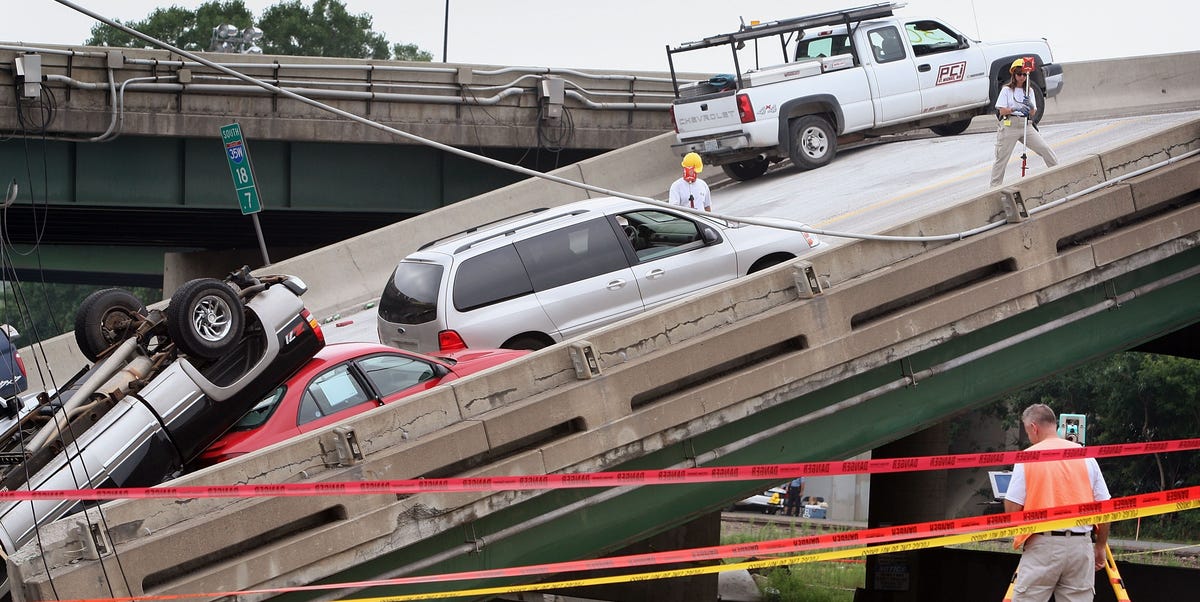
Five years after the I-35W bridge collapsed into the Mississippi River, Minneapolis had more than a new crossing. It had a new civic memory, a new engineering case study, and a daily reminder that infrastructure is not background scenery. It is the quiet machinery of ordinary lifeuntil it fails, and then everyone suddenly remembers that roads, bridges, bolts, plates, and inspection reports matter very much.
The St. Anthony Falls Bridge, officially the replacement for the collapsed I-35W Mississippi River bridge, opened in September 2008. By the fifth anniversary of the disaster, commuters were already treating it like a normal part of the city. That is what good infrastructure is supposed to do: work so reliably that people complain only about traffic, not gravity. Yet beneath the smooth concrete deck is a deeper story about loss, accountability, design, public trust, and the long road from tragedy to rebuilding.
What Happened on August 1, 2007?
On the evening of August 1, 2007, the I-35W bridge over the Mississippi River in Minneapolis was carrying rush-hour traffic through an active construction zone. At about 6:05 p.m., the steel deck truss bridge suddenly gave way. Vehicles dropped with the structure into the river and onto the banks below. The collapse killed 13 people and injured 145 others, turning a familiar commuter route into one of the most studied bridge failures in modern American history.
The old bridge, known as Bridge 9340, had opened in 1967. For four decades, it served as a major artery through the Twin Cities, carrying commuters, trucks, buses, and visitors across the Mississippi near downtown Minneapolis. To most drivers, it was just another bridge. To engineers, however, it was a complex steel truss system with critical load paths, aging components, and a maintenance history that deserved close attention.
The collapse did not happen because one unlucky truck hit the wrong spot or because the Mississippi River suddenly developed a villainous personality. The real explanation was more technicaland more unsettling. The National Transportation Safety Board determined that undersized gusset plates, the steel plates that connected key truss members, were a central cause. Additional weight from bridge modifications over time and construction materials staged on the bridge contributed to the failure.
The Engineering Lesson: Small Plates, Huge Consequences
In bridge design, gusset plates are not glamorous. They are not the soaring arches, dramatic towers, or sleek deck surfaces that make people pull out cameras. But they are essential. Gusset plates help transfer force between structural members. If they are too thin or overloaded, the bridge can lose its ability to carry stress safely.
The I-35W collapse became a painful lesson in how small design details can carry enormous consequences. The NTSB investigation found that some gusset plates were substantially underdesigned. That design weakness, combined with decades of added load and the weight of construction equipment and materials on the bridge at the time of collapse, created a catastrophic situation.
This is why the Minnesota bridge collapse remains important five years later and beyond. It showed that infrastructure safety depends on more than visible cracks, rust, or dramatic warning signs. Sometimes the most dangerous weakness is hidden in calculations made decades earlier. The public may see concrete and steel, but engineers see load ratings, redundancy, fatigue, corrosion, inspection records, and design assumptions that must be checked, questioned, and updated.
Rebuilding Fast: The Birth of the St. Anthony Falls Bridge
After the collapse, Minnesota faced an urgent problem. I-35W was not a quiet country road where a detour means waving at three cows and a mailbox. It was a major urban freeway carrying thousands of vehicles every day. The state needed a replacement bridge quickly, but speed could not come at the expense of safety.
MnDOT used an emergency design-build process to accelerate the project. Instead of separating design and construction into a slower sequence, the design-build approach allowed engineers, contractors, and transportation officials to work in a more coordinated and compressed schedule. The replacement, named the I-35W St. Anthony Falls Bridge, opened to traffic on September 18, 2008, just over a year after the collapse.
The new bridge was not simply a copy of the old one with fresher paint and better public relations. It was designed as a modern concrete segmental bridge with wider shoulders, more lanes, improved durability, and built-in technology for monitoring performance. It carries five lanes in each direction and was planned with future transportation needs in mind.
The St. Anthony Falls Bridge also became known as a “smart bridge.” During construction, it was equipped with hundreds of sensors that monitor strain, movement, temperature, vibration, corrosion potential, and other structural behaviors. In plain English, the bridge can “tell” researchers and transportation officials much more about how it is performing than a traditional bridge could. It is not exactly texting MnDOT every time a truck rolls across it, but compared with older infrastructure, it is impressively talkative.
Five Years Later: What Changed in Minnesota?
By the fifth anniversary in 2012, the most visible change was obvious: traffic was moving again across the river. But the deeper changes were found in policy, engineering culture, and public awareness. The collapse pushed Minnesota and the nation to take bridge inspection and infrastructure funding more seriously.
The disaster made phrases like “structurally deficient,” “fracture critical,” and “load rating” part of public conversation, at least for a while. Before the collapse, many people assumed that if a bridge was open, it must be safe. Afterward, that assumption became harder to maintain. Citizens wanted to know how bridges were inspected, how often ratings were updated, and whether aging structures were receiving enough investment.
Minnesota responded with renewed attention to bridge safety, including accelerated repairs and replacements for bridges with serious deficiencies. The collapse also influenced conversations far beyond the state. Across the United States, transportation departments reviewed truss bridges and looked more closely at gusset plates and other critical connections.
One of the strongest lessons was that inspection is not just about looking for visible wear. It is also about verifying original design assumptions, especially when structures have been modified over time. A bridge that was adequate for one era may face heavier traffic, thicker deck overlays, changed use patterns, and new construction loads decades later.
The Human Side: Remembering the Victims and Survivors
Any serious article about the Minnesota bridge collapse must resist the temptation to turn the story into only an engineering puzzle. Yes, gusset plates matter. Yes, design calculations matter. Yes, smart sensors are fascinating. But 13 people died. Families were changed forever. Survivors carried physical injuries, emotional trauma, and memories of a normal evening that became anything but normal.
The 35W Bridge Remembrance Garden in Minneapolis honors the victims and survivors. Its 13 illuminated columns represent the people who lost their lives, while other elements recognize those who survived. The memorial gives the city a place to pause, reflect, and remember that public works are connected to private lives.
Five years later, the bridge was no longer only a transportation story. It was part of Minneapolis identity. People crossed the new St. Anthony Falls Bridge on the way to work, school, restaurants, concerts, hospitals, and home. Some crossed without thinking about the collapse. Others remembered every time. Both reactions are human. Cities heal partly by remembering and partly by resuming ordinary life.
Why the St. Anthony Falls Bridge Matters
The St. Anthony Falls Bridge matters because it represents a promise: that rebuilding after disaster should not mean returning to the old normal without learning anything. The new bridge was built quickly, but it also carried new expectations for safety, transparency, technology, and accountability.
Its monitoring system has helped researchers understand how a major concrete bridge behaves under real-world conditions. Data from sensors can support better models, better maintenance planning, and better future designs. While technology cannot eliminate every risk, it can make infrastructure less mysterious. A bridge that produces useful performance data gives engineers a clearer picture of stress, movement, and long-term change.
The bridge also matters because it shows the balance between urgency and care. After the collapse, Minneapolis needed a replacement fast. Businesses, commuters, emergency services, and regional freight all depended on restoring the crossing. But the public also needed confidence that speed would not create a second mistake. The project became an example of how emergency infrastructure work can move quickly while still emphasizing quality.
What America Learned From the I-35W Collapse
The Minnesota bridge collapse became a national warning about aging infrastructure. It reminded Americans that bridges do not last forever simply because they look sturdy from a car window. Steel corrodes, concrete deteriorates, traffic grows heavier, design standards evolve, and old assumptions can become dangerous when nobody revisits them.
The collapse also highlighted the need for better communication between engineers, agencies, elected officials, and the public. Technical reports should not disappear into filing cabinets like shy ghosts. When a structure is critical, its condition should be understood, tracked, funded, and explained. Infrastructure safety requires money, but it also requires attention. Neglect is rarely dramatic until the bill comes due.
Five years later, the I-35W story remained a reminder that prevention is almost always cheaper than disaster. Replacing a bridge is expensive. Rebuilding public trust is harder. Healing families and communities is harder still. The strongest infrastructure policy is the one that treats maintenance not as a boring expense, but as a form of public protection.
Experiences and Reflections: What the Bridge Teaches Us
Standing near the St. Anthony Falls Bridge, it is easy to feel two different emotions at once. The first is admiration. The bridge is clean, broad, and purposeful, carrying traffic with the quiet confidence of modern engineering. The second is unease. The site asks visitors to remember that a bridge is not just a line on a map. It is a place where people place trust every day without thinking about it.
For commuters, the experience of crossing the bridge can be ordinary, even boring. That ordinariness is part of the achievement. Nobody wants every trip across the Mississippi to feel like a final exam in structural mechanics. A successful bridge lets life continue. Parents make daycare pickup. Nurses get to shifts. Students arrive late to class and blame traffic with the creativity of future lawyers. The city moves.
For survivors and families, however, the site can never be only ordinary. The fifth anniversary was not just a marker of time; it was a reminder of absence, courage, and resilience. Public memorials matter because they protect memory from being paved over by routine. The Remembrance Garden gives grief a physical address. It says that progress and remembrance can stand side by side.
For engineers, the I-35W collapse is an experience in professional humility. It teaches that calculations are not paperwork; they are promises. Inspection is not a ritual; it is a responsibility. A missing review, an outdated assumption, or an underestimated load can move from spreadsheet to tragedy. The lesson is not that engineers should be afraid of every structure. The lesson is that confidence must be earned through verification.
For public officials, the bridge offers another lesson: infrastructure is easiest to ignore when it is working. Cutting maintenance may look painless in a budget cycle, but bridges remember. Roads remember. Water systems remember. Deferred maintenance is not savings; it is a transfer of risk into the future, often with interest.
For ordinary citizens, the St. Anthony Falls Bridge invites a more practical kind of awareness. We do not need to become bridge inspectors every time we merge onto an interstate. But we can support serious infrastructure funding, pay attention to local transportation decisions, and understand that safe bridges are not accidents. They are built by design, maintained by discipline, and protected by public will.
Five years after the Minnesota bridge collapse, the new bridge stood as both a crossing and a classroom. It carried vehicles, but it also carried lessons: remember the people, respect the details, invest before failure, and never assume that ordinary things are simple just because they are familiar.
Conclusion
The Minnesota bridge collapse remains one of the most sobering infrastructure failures in recent U.S. history. Five years later, the St. Anthony Falls Bridge showed how a city can rebuild with speed, intelligence, and respect for what was lost. The new bridge cannot erase August 1, 2007, and it should not. Instead, it turns memory into motion, carrying people across the Mississippi while reminding engineers, officials, and citizens that safety is a daily commitment.
The story is not only about steel plates or concrete spans. It is about trust. Every bridge asks the public to trust unseen calculations, inspections, materials, maintenance crews, and decision-makers. The I-35W collapse broke that trust in a devastating way. The St. Anthony Falls Bridge represents an effort to rebuild itlane by lane, sensor by sensor, and crossing by crossing.