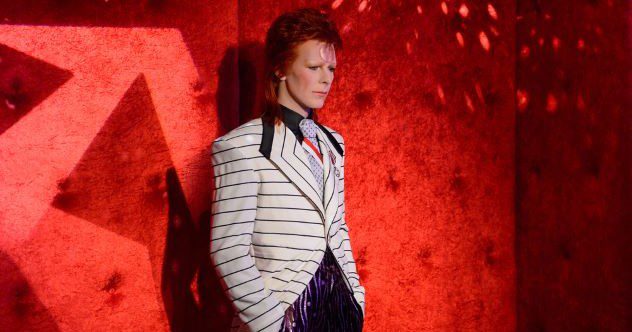
Musicians have always changed their appearance, sound, and attitude. Some, however, do not stop at buying a new jacket and declaring that their “experimental era” has begun. They invent an entirely different person.
Musical alter egos can be glamorous superstars, dangerous villains, rebellious teenagers, alien doctors, or android freedom fighters. These fictional identities give artists permission to explore ideas that may feel too exaggerated, vulnerable, controversial, or downright peculiar under their usual names.
The best stage personas are more than costumes. They have voices, histories, motivations, and sometimes entire imaginary universes. A few become so famous that the fictional character nearly overshadows the human performer. Others produce fascinating records but leave audiences wondering whether someone at the record label should have gently asked, “Are we absolutely sure about the wig?”
Here are ten famousand occasionally wonderfully strangemusical alter egos that changed how artists could use identity, storytelling, and theatrical performance.
Why Do Musicians Create Alter Egos?
An alter ego creates artistic distance. It allows a performer to say, sing, or wear something without presenting it as a literal expression of everyday personality. The character becomes a creative shield and, at the same time, a creative amplifier.
For some musicians, a fictional persona unlocks confidence. For others, it supports a concept album or separates different musical styles. Hip-hop artists often use aliases to shift vocal delivery and perspective, while pop and rock performers may build characters through fashion, stage design, interviews, videos, and elaborate mythology.
There is also a practical advantage: audiences remember characters. A mysterious masked villain or orange-haired alien is easier to recognize than “talented person wearing another tasteful black shirt.”
1. David Bowie as Ziggy Stardust
The alien rock star who made reinvention an art form
David Bowie did not invent the musical persona, but he demonstrated how completely an artist could inhabit one. Ziggy Stardust emerged during the era of The Rise and Fall of Ziggy Stardust and the Spiders from Mars, Bowie’s landmark 1972 album.
Ziggy was an androgynous, otherworldly rock star who arrived with apocalyptic warnings and became consumed by fame. Bowie supported the character with vivid costumes, dramatic makeup, flaming hair, theatrical gestures, and concerts that felt closer to science-fiction theater than an ordinary rock show.
The brilliance of Ziggy was that the character worked on several levels. He was a glamorous alien, a satire of celebrity, and a warning about the psychological dangers of becoming the image everyone expects to see. Bowie publicly retired Ziggy in 1973, shocking fans and freeing himself to transform again. That final act helped establish reinvention as one of Bowie’s defining artistic methods.
2. Beyoncé as Sasha Fierce
The fearless performer hiding inside a reserved superstar
Beyoncé introduced Sasha Fierce as the bolder, more aggressive personality who appeared when she stepped onstage. The distinction became central to her 2008 double album, I Am… Sasha Fierce.
The “I Am” half emphasized personal ballads and emotional openness, while the “Sasha Fierce” material delivered assertive pop songs such as “Single Ladies (Put a Ring on It)” and “Diva.” The alter ego gave Beyoncé a useful way to describe the psychological switch between her private self and her commanding performance identity.
Sasha was confident, sensual, and seemingly immune to stage frightthe sort of person who would not spend twenty minutes wondering whether an email sounded too enthusiastic. Beyoncé later explained that she no longer needed the character in the same way, suggesting that Sasha’s confidence had become integrated into her own identity.
3. Eminem as Slim Shady
The cartoon troublemaker with no internal censor
Marshall Mathers used Slim Shady to express his most outrageous, violent, absurd, and satirical ideas. The character developed during the late 1990s and became the center of The Slim Shady EP and the breakthrough album The Slim Shady LP.
Slim Shady was not simply Eminem with bleached hair. He had a sharper voice, exaggerated cruelty, gleeful irresponsibility, and a talent for turning bad taste into elaborate comic theater. The persona helped Eminem distinguish between different emotional perspectives: Marshall Mathers could be personal and vulnerable, Eminem could address fame, and Slim Shady could arrive with a metaphorical chainsaw.
The character also created controversy because satire does not come with an automatic instruction manual. In 2024, Eminem revisited his relationship with the persona through The Death of Slim Shady (Coup de Grâce), examining whether the character could survive in a different cultural climate.
4. Garth Brooks as Chris Gaines
The country superstar who became a gloomy Australian rocker
In 1999, country giant Garth Brooks introduced Chris Gaines, a fictional Australian pop-rock singer with dark hair, a troubled biography, and the facial expression of a man who had just learned his favorite café was permanently closed.
Gaines was created for a planned movie called The Lamb. Before the film was made, Brooks released Garth Brooks in… The Life of Chris Gaines, presented as a greatest-hits collection from the fictional musician’s career.
The music explored pop, rock, and R&B influences beyond Brooks’ normal country sound. The concept confused many listeners because they encountered Gaines before seeing the movie that was supposed to explain him. The film never materialized, leaving the album as one of popular music’s boldest unfinished experiments. Brooks has nevertheless continued to speak fondly about the project and has discussed the possibility of returning to the character.
5. Nicki Minaj as Roman Zolanski
The theatrical troublemaker in the Minaj character universe
Nicki Minaj has created numerous characters, voices, accents, and personalities, but Roman Zolanski remains among her most recognizable. Roman is typically portrayed as a reckless, confrontational male persona capable of saying what other versions of Minaj might politely reconsider.
The character gained major attention through Minaj’s appearance on Kanye West’s “Monster” and the track “Roman’s Revenge” from Pink Friday. Roman later became an important presence on Pink Friday: Roman Reloaded.
Minaj expanded the mythology by inventing relatives and related characters, including Roman’s mother, Martha Zolanski. These personalities allowed her to change vocal tone, rhythm, accent, and emotional intensity within a single performance. Listening to some Nicki Minaj songs can feel like hearing an argument involving several people, all of whom possess excellent breath control.
6. Lady Gaga as Jo Calderone
The chain-smoking male greaser who challenged expectations
Lady Gaga introduced Jo Calderone as a male alter ego in a 2010 fashion project. Jo appeared with slicked-back hair, sideburns, cigarettes, heavy boots, and the restless attitude of someone who might challenge a parking meter to a fistfight.
The character later appeared in the “Yoü and I” video and became the center of Gaga’s performance at the 2011 MTV Video Music Awards. Instead of briefly arriving as Jo and then returning to herself, Gaga remained in character through the performance and portions of the ceremony.
Jo Calderone played with gender, celebrity, authenticity, and the public’s desire to identify the “real” person behind a performance. Gaga’s commitment transformed what could have been a simple costume into a piece of performance art that deliberately made viewers uncomfortable, amused, and curious.
7. Janelle Monáe as Cindi Mayweather
The android fighting for love and freedom
Janelle Monáe created one of modern music’s most ambitious narrative alter egos: Cindi Mayweather, an android living in a futuristic society where she faces persecution after falling in love with a human.
Cindi’s story unfolds across projects including Metropolis: The Chase Suite and The ArchAndroid. Through science-fiction storytelling, Monáe explores oppression, class divisions, discrimination, sexuality, freedom, and the political power of love.
The android is not merely a decorative concept placed around unrelated songs. Cindi functions as both protagonist and symbol. Her artificial identity represents people treated as outsiders by social systems that decide which bodies and relationships are acceptable.
Monáe’s retro-futuristic music, sharply tailored clothing, cinematic visuals, and Afrofuturist ideas made the character feel like part of a much larger universeone with considerably better choreography than most dystopian futures.
8. Madlib as Quasimoto
The animated troublemaker with the helium voice
Producer and rapper Madlib created Quasimoto partly as a solution to an audio problem. He reportedly disliked the sound of his natural rapping voice, so he recorded vocals at a slower speed and accelerated them during playback. The process produced Quasimoto’s unmistakably high-pitched delivery.
Also known as Lord Quas, the animated character became the star of albums including The Unseen and The Further Adventures of Lord Quas. Quasimoto’s world is dusty, psychedelic, unpredictable, and populated by obscure samples, strange conversations, mischievous observations, and cartoonish impulses.
The vocal manipulation created enough separation for Madlib to treat Quasimoto as an independent personality. On some recordings, Madlib and his alter ego even appear to converse or argue, turning studio technology into character development. It is economical storytelling: no costume department, just tape speed and a highly active imagination.
9. MF DOOM as Viktor Vaughn
A younger villain inside an already fictional identity
Daniel Dumile’s career contained more identities than some small theater companies. Even MF DOOM was a persona: a masked supervillain inspired partly by comic-book imagery. Yet Dumile continued building characters within that identity, including Viktor Vaughn.
Vaughn was presented as a younger, hungrier, less disciplined version of the villain. He became the central figure of Vaudeville Villain in 2003 and returned for VV2: Venomous Villain.
The character allowed DOOM to adjust his perspective without abandoning his larger fictional universe. On Madvillain’s “Fancy Clown,” Viktor Vaughn complains that his girlfriend has cheated on him with another Dumile identity. In other words, the artist created a diss track aimed at himself, performed by himself, because apparently ordinary internal conflict was not complicated enough.
10. Kool Keith as Dr. Octagon
The extraterrestrial surgeon nobody should visit
Kool Keith has performed under an enormous collection of aliases, but Dr. Octagon may be his strangest and most influential. Introduced prominently on the 1996 album Dr. Octagonecologyst, the character is an alien, time-traveling surgeon with questionable medical ethics and a complete absence of normal conversational boundaries.
The album combined Keith’s surreal lyrics with Dan the Automator’s eerie production and DJ Qbert’s turntable work. Its mixture of horror, science fiction, sexual humor, medical imagery, and abstract boasts helped expand the possibilities of underground hip-hop.
Keith later created Dr. Dooom, another persona who claimed to have killed Dr. Octagon. This means Kool Keith did not merely invent alter egos; he arranged fictional workplace violence between them. Behind the absurdity, however, was a serious creative achievement: the character gave rap permission to become more cinematic, surreal, and proudly bizarre.
What Makes a Musical Alter Ego Successful?
The most memorable musical alter egos usually change more than an artist’s name. They affect the voice, lyrics, production, appearance, movement, and story surrounding the music.
Ziggy Stardust succeeded because the songs, clothes, concerts, and mythology supported one another. Slim Shady worked because listeners could immediately recognize his vocal style and moral recklessness. Cindi Mayweather carried larger social ideas, while Quasimoto and Viktor Vaughn allowed their creators to build conversations between competing identities.
A weaker alter ego may feel like a marketing costume placed over ordinary material. A stronger one gives the artist access to work that would not exist without the character. The identity becomes a creative instrument, as important as a guitar, sampler, microphone, or suspiciously large collection of platform boots.
A Listener’s Experience: Hearing the Character Before the Celebrity
Exploring these musical alter egos as a group changes the listening experience. Instead of treating every lyric as a direct confession, the listener begins asking different questions: Who is speaking? What does this character want? How much of the performance is satire? Which emotions belong to the musician, and which have been intentionally exaggerated?
Starting with Ziggy Stardust reveals how a persona can organize an entire album. The songs feel connected not because every plot detail is explained, but because they share an atmosphere of glamour, danger, loneliness, and approaching disaster. Listening while viewing Bowie’s costumes and performances makes the music feel larger. The record is no longer just a collection of tracks; it becomes a stage production occurring inside the imagination.
The experience is different with Sasha Fierce. The contrast between Beyoncé’s ballads and high-energy performance songs makes the alter ego feel psychological rather than fictional. Many listeners recognize that transformation in their own lives. A quiet person may become commanding during a presentation, competition, performance, or difficult conversation. Sasha Fierce turns that familiar shift into a named source of power.
Slim Shady produces a less comfortable reaction. His songs can be technically dazzling and deliberately funny while also containing disturbing material. The character encourages listeners to examine the difference between depiction, satire, provocation, and approval. That uncertainty is part of the experience. Slim Shady is designed to press every available button and then complain that the machine is too sensitive.
Chris Gaines demonstrates how context affects acceptance. Hearing the album without knowing about the proposed movie can make the project seem like a sudden and confusing makeover. Learning the fictional biography clarifies the ambition, but it also shows the danger of introducing an elaborate character before audiences understand the story.
The hip-hop alter egos offer another pleasure: world-building through sound. Quasimoto’s pitched-up voice instantly creates distance from Madlib. Viktor Vaughn sounds like a character inside a comic-book universe, while Dr. Octagon treats an album like a transmission from a malfunctioning intergalactic hospital. These records reward repeat listening because jokes, samples, voices, and narrative clues often hide in the background.
Cindi Mayweather may provide the richest emotional experience. The android framework initially appears fantastical, yet the themes are recognizable: exclusion, forbidden love, surveillance, inequality, and resistance. The fictional distance makes those subjects approachable without making them less serious.
After spending time with all ten personas, one conclusion becomes clear: an alter ego is not necessarily an escape from authenticity. Paradoxically, pretending to be someone else can help an artist express something more truthful. The mask removes certain expectations. Once the musician is no longer required to behave like the public version of themselves, new voices become available.
For listeners, that is the lasting appeal. We are not only hearing songs. We are watching identity become flexible, theatrical, and open to revision. The characters remind us that personality is not always one fixed thing. Sometimes creativity begins when an artist asks, “Who else could I be?” Occasionally, the answer is an android revolutionary. Occasionally, it is a murderous alien gynecologist. Art contains multitudes.
Conclusion
Famous musical alter egos show that reinvention can be much more than a promotional strategy. At their best, fictional identities help musicians change genres, confront fear, explore social issues, satirize fame, or create worlds too unusual for an ordinary album.
Some characters last for one project, while others follow their creators for decades. A few are empowering, several are unsettling, and at least one should immediately lose his medical license. Together, they demonstrate the same enduring principle: popular music becomes more interesting when artists are free to turn identity itself into part of the performance.
Editorial note: Biographical and recording-history details in this article were cross-checked using official artist materials and established American music, entertainment, and cultural publications. The interpretations and listening observations are original editorial analysis.