Nature is full of animals that look harmless until you learn where they keep their chemical backup plan. Some hide toxins in their skin. Others tuck them into feathers, elbows, ankles, eggs, neck glands, or tiny sea-slug “fingers.” If evolution had a junk drawer, it would be labeled: defensive toxins, please do not lick.
The animal kingdom has never been shy about creative problem-solving. Teeth are useful. Claws are handy. Running away is respectable. But toxins? Toxins are the biological equivalent of putting a “Do Not Eat Me” sign on your body and making sure the sign bites back.
Before we meet the weirdest toxin-storage champions, it helps to clarify one thing: poison and venom are not exactly the same. Poison usually harms when an animal is touched or eaten. Venom is actively delivered, often through a bite, sting, spur, or other specialized tool. Toxins is the broader umbrella term, and many animals either produce toxins themselves or borrow them from food and store them for later defense.
Ready for a tour of biology’s strangest safety lockers? Here are ten animals that produce, borrow, and store toxins in places that seem wildly unlikelyuntil you remember that nature is both brilliant and slightly dramatic.
1. Poison Dart Frogs Store Toxins in Their Skin
Poison dart frogs are tiny, jewel-colored amphibians with the confidence of a creature that knows predators should keep their mouths to themselves. Their bright colors are not just decorative. They are warning labels. Many species store defensive alkaloid toxins in granular glands just under the skin.
What makes this even more fascinating is that many poison frogs do not create all of these toxins from scratch. In the wild, they acquire alkaloids from small prey such as ants, mites, termites, and other leaf-litter arthropods. The frog eats the insects, processes the compounds, and stores the chemical defense in its skin. In human care, when fed a different diet, many poison frogs lose much of their toxicity. In other words, their “spice level” depends on the menu.
Why the Skin?
Skin is the first thing a predator touches, bites, or tastes. By turning the outside of the body into a chemical shield, poison dart frogs make a strong case for being admired from a distance. Their toxin storage is also a classic example of aposematism, where bright colors warn predators that lunch may come with regrets.
2. Hooded Pitohuis Keep Toxins in Their Feathers
Birds are not the first animals most people associate with toxins. A snake? Sure. A frog? Definitely. A fluffy songbird? That feels like a plot twist. Yet the hooded pitohui of New Guinea is one of the best-known toxic birds, storing batrachotoxin-like compounds in its skin and feathers.
That is right: feathers. The same structures birds use for flight, insulation, courtship, and looking fabulous can also function as a chemical defense system. Researchers have found that these toxins are especially concentrated in the bird’s skin and plumage. Local knowledge long recognized that some pitohuis were unpleasant or risky to eat, and modern science later confirmed the chemical reason.
Why Feathers?
Feathers are the bird’s outer packaging. A predator grabbing a mouthful of feathers may get a memorable lesson before it gets a meal. The toxin may also help deter parasites. For the pitohui, “ruffled feathers” are not just a mood. They are a defensive strategy.
3. Pufferfish Store Tetrodotoxin in Their Organs
Pufferfish are famous for inflating into spiky underwater balloons, but their chemical defense is even more impressive. Many species store tetrodotoxin, often shortened to TTX, in body parts such as the liver, ovaries, skin, and intestines. The exact distribution depends on the species, environment, sex, season, and diet.
In many marine pufferfish, toxin levels are especially high in the ovaries and liver. That is an unlikely place from a human perspective, but from an evolutionary perspective, it makes sense. Protecting reproductive tissues helps protect the next generation, while toxic skin can discourage predators before they get too enthusiastic.
Why Internal Organs?
Pufferfish are not trying to poison the ocean for fun. Their toxins are part of a defensive system that makes them dangerous to eat. Storing toxins in organs and skin turns the entire fish into a poor dining decision. It is the seafood version of “terms and conditions apply.”
4. Blue-Ringed Octopuses Store Toxins in Salivary Glands
The blue-ringed octopus is small, beautiful, and exactly the kind of animal that reminds us not to judge danger by size. Its famous glowing blue rings are a warning display. When threatened, the rings become more visible, as if the octopus is switching on tiny neon signs that say, “Please reconsider.”
Blue-ringed octopuses carry tetrodotoxin, and research has found TTX in places including the posterior salivary glands, skin, and eggs. The salivary glands are especially important because the animal can deliver venom through a bite. Unlike the passive defense of a poisonous animal, this is active delivery: the toxin can help subdue prey and discourage threats.
Why Salivary Glands?
Saliva is already part of feeding, so turning salivary glands into a venom delivery system is efficient. The blue-ringed octopus does not need size, claws, or roaring. It has chemistry, camouflage, and a wardrobe of warning lights.
5. Tiger Keelback Snakes Store Toad Toxins in Neck Glands
The tiger keelback snake proves that some animals do not just eat toxic prey; they recycle it. This Asian snake consumes toads that contain defensive compounds called bufadienolides. Instead of simply tolerating those toxins, tiger keelbacks can store them in specialized nuchal glands located in the skin of the neck region.
When threatened, a tiger keelback may arch its neck, exposing the gland area. That posture can present a predator with a very unpleasant surprise. Even more remarkable, studies show that toxin availability can depend on diet and may even be passed from toxin-rich mothers to offspring.
Why the Neck?
Predators often aim for the head or neck when attacking snakes. By placing defensive chemicals in that high-risk zone, tiger keelbacks turn a vulnerable target into a chemical trap. It is not just a neck. It is a security system.
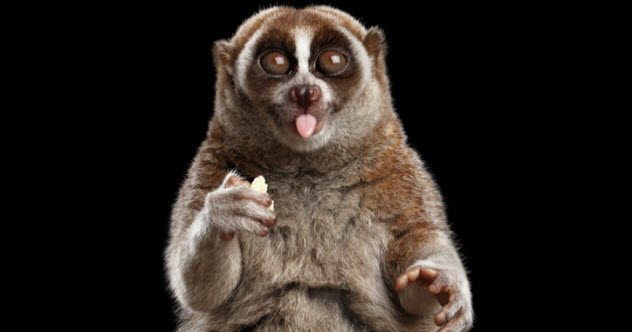
6. Slow Lorises Keep Venom Ingredients Near Their Elbows
The slow loris looks like a plush toy that stayed up too late. Its huge eyes, round face, and careful movements make it seem gentle. But slow lorises are among the only known venomous primates, and their toxin system is wonderfully strange.
Slow lorises have glands on the upper arm near the elbow. When alarmed, they can raise their arms and lick these glands. The secretion mixes with saliva and can then be delivered through a bite. Some lorises may also spread the secretion on their fur, adding another layer of protection.
Why the Elbow?
Because apparently evolution looked at the primate body and said, “Let’s put the venom starter kit right there.” The elbow location allows the loris to access the gland with its mouth and combine the secretion with saliva. It is a two-step system: lick, mix, bite. Strange? Yes. Effective? Also yes.
7. Male Platypuses Deliver Venom From Ankle Spurs
The platypus already feels like several animals were assembled during a very weird brainstorming meeting. It has a duck-like bill, webbed feet, a beaver-like tail, lays eggs, senses electric signals underwater, and somehow still had room for venom.
Adult male platypuses have venomous spurs on their hind ankles connected to venom glands. These spurs are thought to be used mainly during breeding-season competition between males. The venom is not primarily for hunting food; it appears to function more in rivalry and defense.
Why Ankles?
An ankle spur is a deeply unexpected weapon. It is not a fang, claw, or stinger in the usual sense. But for a male platypus grappling with another male, hind-leg spurs can be useful. The platypus is proof that evolution sometimes solves problems by adding features exactly where no one would check first.
8. Monarch Butterflies Store Plant Toxins in Their Bodies and Wings
Monarch butterflies are famous for their orange-and-black wings and epic migration, but they also carry a chemical story from childhood. As caterpillars, monarchs feed on milkweed plants, which contain compounds called cardenolides. Monarch larvae can sequester these chemicals and retain them into adulthood.
Adult monarchs do not eat milkweed, yet they can still contain the cardenolides they ingested as caterpillars. These toxins make them unpalatable to many predators. The butterfly’s bold wing pattern works like advertising: “Beautiful, yes. Snack, no.”
Why Wings and Body Tissues?
For a butterfly, wings are everything: movement, identity, display, and warning. Storing toxins in body tissues while wearing bright warning colors helps predators learn quickly. One bad taste can teach a bird that orange-and-black butterflies are best left alone.
9. Blue Dragon Sea Slugs Store Stinging Cells in Their Cerata
The blue dragon sea slug, Glaucus atlanticus, looks like a tiny mythical creature designed by an artist with excellent taste and mild chaos in the heart. This ocean drifter often feeds on venomous prey such as Portuguese man o’ war. Instead of being harmed by the stinging cells, the blue dragon steals them.
It stores the prey’s stinging cells, called nematocysts, in finger-like appendages known as cerata. These cerata are not just decorative sea-dragon fringe. They are storage compartments for stolen defenses. When threatened, the slug can use those borrowed stinging cells for its own protection.
Why Cerata?
Cerata are exposed and easy for predators to contact, making them perfect defensive outposts. The blue dragon does not manufacture the stinging cells itself. It commits biological piracy, then wears the stolen weaponry like designer armor.
10. Bombardier Beetles Store Reactive Chemicals in Their Abdomen
The bombardier beetle may be small, but it has one of the most theatrical defense systems on land. It stores chemical ingredients in abdominal chambers and, when threatened, ejects a hot, irritating spray from the rear of the body. This is not subtle. It is the insect version of pulling a fire alarm and aiming it backward.
The beetle’s defensive spray involves compounds such as benzoquinones, released in rapid pulses. The system depends on specialized internal structures that separate and control reactive chemicals until the beetle needs them. That separation is crucial because the beetle must avoid damaging itself while still delivering a powerful defense.
Why the Abdomen?
The abdomen gives the beetle room for storage chambers and flexible aiming. Some bombardier beetles can direct the spray with impressive precision. Many animals run from danger. The bombardier beetle backs up and says, chemically speaking, “Absolutely not.”
How Animals Get Their Toxins: Make, Borrow, or Partner With Microbes
Not all toxic animals create their toxins the same way. Some produce defensive compounds through their own metabolism. Others sequester toxins from food. Poison dart frogs borrow alkaloids from arthropods. Monarchs store chemicals from milkweed. Tiger keelbacks recycle toad toxins. Blue dragon sea slugs steal stinging cells from venomous prey.
In some marine animals, microbes may also play a role. Tetrodotoxin has been associated with bacteria in several TTX-bearing animals, and scientists continue to study how much toxin comes from diet, microbial partners, or the animal’s own biology. The answer can vary by species.
This is what makes toxin biology so fascinating. It is not one trick repeated across the animal kingdom. It is a whole toolbox of chemical strategies. Evolution keeps finding new places to hide the warning label.
Why Store Toxins in Strange Places?
At first, a toxic elbow or poisonous feather sounds absurd. But each storage location has a logic. Skin protects frogs because predators touch or bite skin first. Feathers help pitohuis discourage predators and possibly parasites. Pufferfish organs protect the animal from being eaten. Tiger keelback neck glands defend a vulnerable attack zone. Blue dragon cerata place stolen stinging cells where predators are likely to contact them.
The “unlikely place” is often only unlikely to us. To the animal, it is the perfect place. A toxin is most useful when it is near the point of danger: the mouth of a predator, the grip of a rival, the surface of the body, or the next generation’s eggs.
Poisonous vs. Venomous: The Dinner Rule
A simple way to remember the difference is this: if you bite it and you suffer, it is poisonous. If it bites or stings you and you suffer, it is venomous. That rule is not perfect for every biological detail, but it is useful.
Poison dart frogs, monarch butterflies, pufferfish, and pitohuis are mostly discussed as poisonous because the danger comes from touching or eating them. Blue-ringed octopuses, slow lorises, and platypuses are venomous because they can deliver toxins through a bite or spur. Some animals, like tiger keelbacks, blur the line because they can be both venomous and poisonous in different ways.
Nature enjoys categories. It also enjoys breaking them.
What These Toxic Animals Teach Us About Survival
The biggest lesson is that survival is not always about being bigger, faster, or stronger. Sometimes the winning strategy is being memorable. A predator only needs one bad experience with a toxic animal to rethink its dining preferences.
Bright colors, strange glands, bitter tastes, painful stings, and dramatic warning displays all help animals communicate risk. Toxic animals do not want to fight constantly. Chemical defense often works best when it prevents conflict before it starts.
That is why so many toxic animals are visually distinctive. A poison frog looks like living candy. A monarch butterfly practically waves an orange flag. A blue-ringed octopus flashes electric-blue circles. These are not fashion accidents. They are communication systems.
Experience Section: Safely Exploring the World of Toxic Animals
Experiencing the topic of toxic animals does not require touching anything, chasing anything, or making questionable decisions near tide pools. In fact, the best way to appreciate these animals is with your hands respectfully to yourself. Nature is not a petting zoo, and many of its prettiest creatures have very firm boundaries.
A good starting point is a zoo, aquarium, natural history museum, or wildlife center. Seeing poison frogs in a carefully maintained exhibit is unforgettable. They are tiny, vivid, and almost unreal, like someone spilled a box of highlighters into the rainforest and the highlighters learned to hop. The best part is that exhibits often explain the diet connection: wild frogs may be toxic because of what they eat, while captive frogs fed non-toxic insects are often much safer for keepers. That one fact can completely change how you think about food webs. A frog is not just a frog. It is a walking summary of everything it has eaten.
Aquariums offer another kind of experience. Watching octopuses move is already mesmerizing, but learning about blue-ringed octopuses adds a layer of respect. Their beauty is not an invitation; it is a warning. The same goes for blue dragon sea slugs that sometimes wash ashore. They look like fantasy creatures, but their stolen stinging cells make them a perfect example of why beach discoveries should be observed, photographed, and left alone.
Butterfly gardens can make the toxin story feel gentler but no less impressive. When monarch caterpillars chew milkweed, they are not just eating lunch. They are building a defense system for adulthood. Later, the adult butterfly’s orange-and-black pattern tells predators that this delicate creature is not worth tasting. It is a flying memory of a toxic childhood diet.
Reading about toxic birds and snakes can be just as exciting because they challenge assumptions. Most people do not expect a bird’s feathers to be chemically defended or a snake’s neck to store toad toxins. These examples show that evolution is not limited by our expectations. It uses available materials, available body parts, and available opportunities.
The best personal takeaway is respect. Toxic animals are not villains. They are not “mean,” and they are not trying to ruin anyone’s day. They are surviving in ecosystems full of hungry mouths. Their toxins are tools, warnings, shields, and sometimes borrowed armor. When we understand that, fear turns into curiosity. The world becomes less like a list of dangerous creatures and more like a giant, weird, brilliant chemistry lab where every species has a story.
So the next time you see a bright butterfly, a colorful frog in a documentary, or a tiny sea slug online that looks too magical to be real, remember: beauty in nature often has a job. Sometimes that job is flight. Sometimes it is camouflage. And sometimes it is telling predators, in the politest possible biological language, “Please choose a different snack.”
Conclusion
Animals that produce and store toxins in unlikely places reveal just how inventive evolution can be. Poison dart frogs use skin glands. Pitohuis use feathers. Pufferfish protect organs and eggs. Blue-ringed octopuses load salivary glands. Tiger keelbacks hide stolen toad toxins in their necks. Slow lorises turn elbow secretions into venom. Platypuses use ankle spurs. Monarchs carry milkweed chemicals from caterpillarhood into flight. Blue dragons steal stinging cells and store them in cerata. Bombardier beetles keep reactive chemistry in abdominal chambers.
Together, these animals prove that defense is not always about brute force. Sometimes it is about placement, timing, color, diet, and chemistry. The unlikely storage spots are not random at all. They are carefully shaped by survival. Nature may be strange, but it is rarely careless.