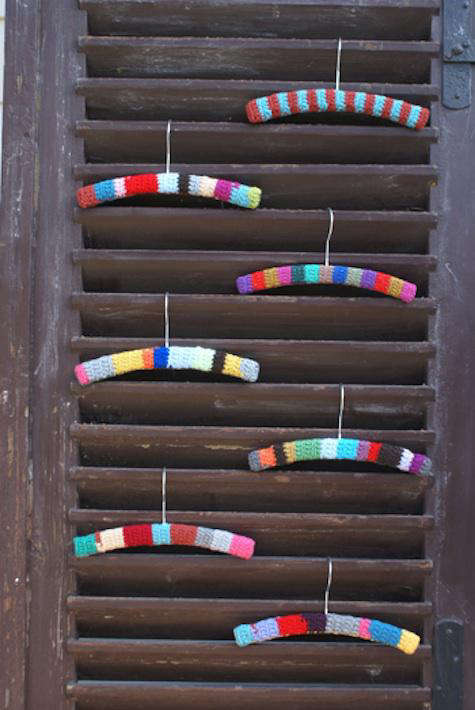
A clothes hanger may be one of the least celebrated objects in the home. It does not brew coffee, connect to Wi-Fi, or dramatically improve your posture. Most days, it simply hangs aroundwhich, to be fair,houghtfully designed hanger can change the way a closet looks, how a garment keeps its shape, and even how pleasant it feels to put away laundry. Clothes hangers made from wood and wool bring together two naturally warm materials: a sturdy wooden frame and a soft, textured covering that adds padding, grip, and personality.
The idea gained design attention through small wooden baby hangers decorated with colorful hand-crocheted wool covers. Originally featured as practical storage attractive enough to display on a wall, these hangers demonstrated that an ordinary household tool could also function as cheerful handmade décor. y, the concept remains useful far beyond a nursery. Wood-and-wool hangers can organize children’s clothing, support delicate woven garments, brighten an open wardrobe, and turn an awkward closet corner into something that looks intentional rather than mildly defeated.
What Are Wood-and-Wool Clothes Hangers?
A wood-and-wool clothes hanger generally begins with a wooden hanger that is partially or completely covered with wool yarn, felted wool, knitted fabric, or a crocheted sleeve. Some designs use bright stripes and playful color combinations, while others rely on undyed yarn in cream, oatmeal, gray, or earthy brown.
The wool layer may be decorative, functional, or both. A soft covering can create a slightly cushioned surface, reduce slipping, and prevent a hard hanger edge from pressing directly against a garment. On children’s hangers, the handmade cover also adds visual charm without requiring additional closet accessories.
These hangers are related to traditional padded hangers, although they are not identical. Museum and textile-care professionals typically use carefully shaped, well-padded supports for sturdy garments that are appropriate for hanging. Fragile, heavily decorated, stretchy, or unusually heavy pieces are often stored flat because hanging concentrates the garment’s weight around the shoulders. Wood Makes a Strong Hanger Base
It Provides Better Structural Support
Wooden clothes hangers are usually wider and more rigid than thin wire or lightweight plastic versions. That extra structure makes them useful for coats, tailored jackets, woven shirts, and garments that need a defined shoulder line.
A flimsy hanger can bend under weight, creating drooping shoulders and wrinkled fabric. A properly sized wooden hanger spreads the load across a broader area. It is not performing advanced engineering, but compared with a wire hanger shaped like a nervous triangle, it is practically an architectural masterpiece.
It Creates a Calm, Coordinated Closet
Matching wooden hangers introduce visual consistency. Even an inexpensive wardrobe can look more organized when hanger shapes, heights, and finishes are uniform. Natural wood also works well in open closets, entryways, children’s rooms, and freestanding clothing racks where the storage hardware remains visible.
Coordinated hangers do not create more square footage, but they reduce visual noise. When garments hang at similar heights and face the same direction, it becomes easier to scan the wardrobe, notice duplicate items, and return clothes to the correct place.
It Can Last for Years
A sound wooden hanger can survive repeated use with heavy garments. Its durability makes it particularly suitable for frequently worn coats, school uniforms, blazers, and special-occasion clothing. Better Homes & Gardens notes that wood is heavier and takes up more closet space than slim alternatives, but it offers strength, visual appeal, and support for substantial garments. re buying, check the finish carefully. The wood should feel smooth, especially around the shoulder tips and trouser bar. Rough grain, dried glue, exposed staples, or sharp hardware can snag fabric faster than a cat discovering a new sofa.
What Wool Adds to the Design
A Soft Surface for Delicate Clothing
A wool covering provides a gentler contact point between the hanger and the garment. This can be helpful for lightweight woven dresses, small jackets, heirloom children’s clothing, and garments with delicate linings.
Padding can also soften the outline of a narrow hanger. Professional garment-storage guidance recommends well-padded hangers when appropriate because they distribute pressure more gradually and reduce sharp creases at the shoulders. However, padding does not magically make every garment suitable for hanging. The garment’s weight, construction, condition, and fiber type still matter. ural Grip Without Aggressive Clips
Wool yarn has more surface texture than polished wood. That texture can help keep small straps, smooth collars, and lightweight garments from sliding immediately to the closet floor.
The grip is gentle rather than rigid. Unlike tight clips, it does not pinch a concentrated section of fabric. Unlike some rubberized coatings, it does not feel sticky. The exact performance depends on the yarn and stitch pattern: tightly crocheted wool generally provides more grip than a loose, silky yarn.
Color, Pattern, and Handmade Character
The strongest visual advantage is customization. Wool covers may be striped, color-blocked, embroidered, monogrammed, or coordinated with a room’s palette. In a nursery, several hangers in related colors can become part of the décor. They may hold a favorite outfit, a christening gown, a tiny coat, or nothing at all except the responsibility of looking charming.
Neutral wool creates a quieter effect. Cream yarn over pale wood fits Scandinavian-inspired rooms, while charcoal wool over walnut-colored hangers creates a more tailored appearance. Leftover yarn can also be used, making a hanger-covering project a practical way to rescue small quantities from the craft basket.
Which Clothes Belong on Wood-and-Wool Hangers?
Choosing the right hanger is less about finding one universal “best” material and more about matching the support to the garment.
Good Candidates for Hanging
- Lightweight woven dresses and blouses
- Children’s coats, shirts, and coordinated outfits
- Tailored wool jackets and woven wool trousers
- Special garments displayed temporarily in a nursery
- Delicate woven clothing that benefits from a padded shoulder
- Small accessories placed on a hanger with an appropriate bar or loops
Garments That Are Usually Better Folded
Heavy sweaters, loose knits, and stretchy wool garments should generally be folded. Hanging them for long periods may pull the fabric downward, lengthen the body, distort the neckline, and leave shoulder bumps. Woolmark’s basic rule is simple: hang woven wool garments and fold knitted ones. ed dresses, fragile vintage textiles, bias-cut garments, and clothing with weak shoulder seams may also need flat storage. Textile-conservation guidance favors flat storage for many delicate pieces because the entire object is supported instead of being suspended from two relatively small shoulder areas. to Choose the Right Hanger Size
A beautiful hanger in the wrong size can damage clothing just as efficiently as an ugly one. The ends of the hanger should sit close to the garment’s natural shoulder points without pushing into the sleeves.
If the hanger is too wide, it may create bumps below the shoulders or strain the sleeve heads. If it is too narrow, the garment may collapse inward, wrinkle, or slide off. Children’s clothing should be placed on child-size hangers rather than balanced precariously on adult versions.
Also consider thickness. Broad hangers provide valuable support for coats and tailored clothing, but they consume more rail space. In a compact closet, use wood-and-wool hangers selectively for garments that benefit from them rather than replacing every slim hanger in sight.
How to Make a Simple Wool-Covered Wooden Hanger
A basic hanger cover is an approachable craft project. Crochet and knitting skills are useful, but even beginners can create a wrapped version with yarn, fabric tape, or a hand-sewn wool sleeve.
Materials
- A smooth wooden hanger in the correct size
- Wool or wool-blend yarn
- A crochet hook or knitting needles suited to the yarn
- A yarn needle
- Thread and a sewing needle if adding a lining
- Optional thin cotton batting for extra padding
Method 1: Crochet a Removable Sleeve
- Measure each wooden shoulder from the hook to the outer tip.
- Crochet two narrow tubes or rectangular panels that match those measurements.
- Slip the tubes over the hanger arms, or wrap the panels around them.
- Join the edges with a discreet hand-sewn seam.
- Secure the material near the hook and tips without leaving knots that could catch clothing.
A removable sleeve is easier to clean, repair, or replace. Keep the stitches even and reasonably tight so buttons, straps, and loose threads cannot become trapped.
Method 2: Wrap the Hanger with Yarn
For a simpler project, tie the yarn securely near the hook and wrap it around the wooden frame with consistent tension. Push each wrap close to the previous one, changing colors where desired. Finish with a concealed knot or a small stitched join.
This method creates less cushioning than a crocheted sleeve, but it still adds texture and color. Avoid excessive glue, particularly where it could soak through the yarn, harden into a rough ridge, or contact clothing.
Method 3: Sew a Padded Wool Cover
Wrap the hanger with a thin layer of clean cotton batting, then cover it with felted wool or tightly woven wool fabric. Sew the cover closed by hand. The finished shape should be smooth, symmetrical, and free from exposed pins or sharp fasteners.
Do not overpad the hanger until it resembles a sofa cushion. The goal is to broaden and soften the support while preserving enough room for the garment’s neckline.
Cleaning and Maintaining Wool-Covered Hangers
Dust the hangers regularly with a clean, soft brush or low-suction vacuum attachment protected by a screen. Spot-clean only when the yarn and dye are known to be colorfast. Excess moisture can affect both the wool cover and the wooden base, so avoid soaking the entire hanger.
If the cover is removable, follow the yarn’s care instructions. Hand washing with cool water and a neutral wool detergent is often appropriate, but the material must be dried completely before it returns to the closet. Woolmark recommends gentle care, mild detergent, and flat drying for wool knitwear to help preserve shape. ect the wood occasionally for splinters, loose joints, rusting hardware, or a rough finish. Check the wool for pulled loops and stretched stitches. A loose loop may look harmless until a zipper catches it and the hanger begins unraveling like a sweater in a cartoon.
Protecting Wool Hangers and Clothes from Moths
Because the cover itself may contain animal fiber, a wool-covered hanger should be included in the closet’s pest-prevention routine. Clothes moth larvaenot the adult mothsdamage wool and other animal-based materials. They prefer dark, undisturbed areas and are especially attracted to fibers contaminated with perspiration, body oils, food, or other residues. n clothing before seasonal storage, vacuum closet edges and shelves, inspect hidden folds, and avoid leaving rarely used wool items untouched for years. Airtight containers can help exclude moths when storing clean, pest-free garments, although delicate textiles should not be sealed while damp.
Cedar may contribute a pleasant scent and offer some deterrent value, but it is not an invisible security guard. Extension guidance warns that cedar closets and chests have limited effectiveness when the concentration of aromatic compounds is too low. Cleanliness, inspection, and proper storage remain more dependable preventive measures. balls are pesticides, not casual closet perfume. Use only legally registered products, follow the label exactly, and keep them away from children and pets. The EPA specifically warns consumers about illegal mothball products that may lack required safety information. ng Wood-and-Wool Hangers as Décor
These hangers are particularly effective when storage is visible. Hang a small group from wooden pegs, a nursery rail, or a wall-mounted rack. Use coordinated yarn colors but vary the stitch patterns so the display feels collected rather than factory-produced.
For a child’s room, one hanger might display tomorrow’s outfit while another holds a favorite jacket. In an entryway, a larger version can support a light scarf or cardigan. In a craft room, miniature hangers can display fabric samples, ribbons, or finished handmade garments.
Resist overcrowding. Three thoughtfully spaced hangers usually look better than fifteen packed together like commuters during rush hour. Leave enough room for the wood, wool texture, and garment silhouette to be visible.
Sustainability Considerations
Natural materials do not automatically make a product sustainable. Look for durable construction, responsibly sourced wood, replaceable covers, and finishes that will not flake after a few months. A hanger used for twenty years is generally a more sensible purchase than a decorative one discarded after a season.
Repurposing existing wooden hangers can be especially practical. Sand rough areas, clean the surface, repair loose joints, and add covers made from leftover yarn. This approach extends the life of an object already in the home and avoids turning a simple craft project into an excuse to buy seventeen new supplies.
At the end of the hanger’s useful life, remove metal hooks and textile coverings before sorting components for local reuse, recycling, or disposal. Recycling rules differ by community, and mixed-material products may need to be disassembled.
Common Mistakes to Avoid
- Hanging heavy knitwear: Even a padded hanger may stretch a chunky sweater.
- Using the wrong size: Adult hangers can distort children’s garments, while undersized hangers fail to support adult jackets.
- Choosing loose stitches: Open loops may catch buttons, hooks, sequins, or zippers.
- Storing dirty garments: Residue and body oils increase the risk of stains, odors, and pest activity.
- Ignoring dampness: Never place a damp hanger or garment into a crowded, unventilated closet.
- Assuming cedar solves everything: Cedar should support, not replace, cleaning and inspection.
- Covering damaged wood: Wool will not neutralize splinters, exposed staples, or loose hardware hiding underneath.
Practical Experience: What Living with Wood-and-Wool Hangers Is Really Like
The first noticeable change after introducing wood-and-wool hangers is usually visual rather than technical. A row of natural wood and soft yarn makes a closet appear warmer and more deliberate. In an open nursery wardrobe, the effect can be especially strong because the hangers become part of the room instead of disappearing behind a door.
A realistic trial begins with only four or five hangers. Place a small woven jacket on one, a lightweight dress on another, and a special outfit on a third. Keep one empty as a decorative accent or as a place to prepare the next day’s clothing. This limited test quickly reveals whether the hanger dimensions suit the garments and whether the wool provides enough grip.
Users commonly notice that small jackets remain centered more reliably on textured covers than on highly polished wood. Wide necklines are also less likely to slide to one side. The difference is not dramatic enough to deserve its own documentary, but it reduces the minor daily irritation of finding clothes puddled on the closet floor.
The extra thickness creates a trade-off. A padded hanger feels substantial and protects selected garments, yet a full closet fitted entirely with thick wooden hangers loses capacity. In practice, the best system is usually mixed. Use wood-and-wool hangers for visible outfits, tailored pieces, keepsake clothing, and delicate woven garments. Use slimmer hangers for ordinary shirts, and fold sweaters on shelves.
Maintenance is another part of the experience. Pale yarn shows dust sooner than dark yarn, which is either an inconvenience or a helpful reminder that the closet needs cleaning. Removable covers are noticeably easier to maintain because they can be inspected and washed separately. Permanently wrapped yarn is still manageable, but cleaning requires more patience and less enthusiasm with the water faucet.
Handmade versions develop character over time. A slightly uneven stripe or visible hand-sewn join rarely looks like a flaw in a child’s room; it makes the object feel personal. The most successful color combinations usually repeat shades already present in bedding, curtains, rugs, or wall art. Too many unrelated colors can make the closet resemble a yarn store after a minor earthquake.
Another practical lesson is that decorative hangers encourage better habits. When a favorite outfit has a designated hanger, it is easier to put the garment away properly instead of draping it over a chair. Preparing school clothes or a special-event outfit the night before also becomes a simple visual routine.
Seasonal inspection matters. At the beginning and end of each season, remove garments, check the yarn for dust or pest activity, inspect the wood, and clean the closet rail. This takes only a few minutes when the collection is small. It also prevents a charming handmade object from becoming an undisturbed snack bar for clothes moth larvae.
The long-term value of wood-and-wool hangers is therefore not based solely on storage capacity. Their appeal comes from combining support, craft, decoration, and routine. They make the greatest sense when used intentionally, not universally. One carefully chosen set can highlight meaningful garments and soften a practical space without turning closet organization into an expensive competitive sport.
Conclusion
Wood-and-wool clothes hangers prove that useful storage does not have to be anonymous. A strong wooden frame supports appropriate garments, while a wool cover adds softness, grip, color, and handmade charm. The combination is particularly effective for children’s clothing, delicate woven pieces, open wardrobes, and decorative displays.
The secret is thoughtful use. Match the hanger width to the garment, fold heavy knits, clean clothing before storage, inspect wool for pests, and reserve padded hangers for pieces that genuinely benefit from them. With those habits in place, a humble hanger can protect clothing, organize a closet, and make laundry day approximately seven percent less dull.