The family car is rarely just a car. It is a breakfast table, changing station, mobile office, sports-equipment locker, snack warehouse, and mysterious habitat where unmatched socks go to begin new lives. Without a simple system, even a roomy SUV can feel crowded before everyone has buckled up.
Learning how to organize the family car is not about making the interior look like a showroom. It is about creating a safer, calmer, and more functional space for school runs, grocery trips, weekend games, and long road trips. The best system controls clutter, keeps important supplies accessible, and is easy enough for every family member to maintain.
These practical family car organization ideas will help you reclaim the seats, floor, console, and trunk without turning your vehicle into a rolling storage unit.
Start With a Complete Car Cleanout
Do not buy organizers before you know what you are organizing. Otherwise, you may end up purchasing six attractive containers whose primary purpose is to organize other empty containers.
Park the car somewhere with room to work and remove everything that is not permanently attached. Check beneath the seats, inside door pockets, behind child safety seats, in the glove compartment, and under the trunk floor. You may discover reusable bags, three umbrellas, seven crayons, and enough cracker crumbs to bread a chicken.
Sort everything into four categories
- Keep in the car: Items used regularly or needed during emergencies.
- Return to the house: Clothing, toys, books, sports gear, and shopping bags that are not currently needed.
- Trash or recycle: Receipts, wrappers, empty bottles, damaged toys, and expired coupons.
- Relocate: Items that belong in the garage, school backpack, office, or another vehicle.
Vacuum the upholstery and carpets before putting anything back. Wipe hard surfaces with an appropriate automotive interior cleaner and a soft microfiber cloth. Different dashboard, touchscreen, leather, and upholstery materials may require different products, so check the vehicle manual before experimenting with a powerful cleaner from beneath the kitchen sink.
Create Practical Zones Inside the Vehicle
A successful car organization system gives every category a home. When tissues, charging cables, toys, and emergency supplies have assigned locations, family members are less likely to drop them wherever gravity makes the final decision.
The driver zone
Keep the area around the driver simple and distraction-free. Store only frequently used essentials within reach, such as sunglasses, a charging cable, tissues, and a small pack of cleaning wipes. Coins, loose pens, toys, and other small objects should not roll around the console or floor.
Use a secure phone mount when navigation is needed, but position it where it does not block the driver’s view. Connect the phone and select the route before driving. The goal is convenience without creating a miniature command center that demands constant attention.
The front-passenger zone
The front passenger can manage a small document pouch, travel information, hand sanitizer, and a spare charging cable. Avoid piling bags on the seat or floor, especially when they could interfere with foot space or become difficult to control during sudden braking.
The back-seat zone
Seat-back organizers work well for children’s books, headphones, small toys, activity pads, and travel tissues. Assign one or two pockets to each child instead of filling every pocket with communal clutter. Limited space encourages better choices: one stuffed animal is a travel companion; twelve stuffed animals are a touring theater company.
Choose soft, lightweight items for passenger areas. Heavy tools, large reusable bottles, and bulky sports equipment belong in the cargo area, where they can be secured.
The trunk or cargo zone
Divide the trunk according to purpose. A collapsible organizer can hold reusable shopping bags, basic cleaning supplies, and daily essentials. Emergency equipment should occupy a separate, clearly labeled container. Sports equipment, work supplies, or stroller accessories can have removable bins that leave the car when the activity ends.
Clear containers make contents easy to identify, while open crates provide fast access. Whatever style you select, secure it with the vehicle’s cargo hooks, straps, or hook-and-loop material so it cannot slide across the trunk at every turn.
Choose Organizers That Solve Real Problems
An organizer earns its space only when it fixes a recurring problem. Before buying one, identify the behavior that causes the mess.
- If wrappers collect in door pockets, add a small leak-resistant trash container.
- If groceries tip over, use a collapsible trunk crate or cargo net.
- If backpacks cover the floor, install headrest hooks rated for lightweight bags.
- If small items fall between seats, use properly fitted seat-gap organizers.
- If children constantly lose activities, provide one labeled pouch per child.
Avoid oversized systems that block air vents, reduce legroom, interfere with seat belts, or press against child restraints. Measure the available space first, including the area needed to fold seats or access third-row seating.
Organizers should also be easy to remove and clean. Family life has a remarkable ability to place yogurt in locations yogurt was never designed to reach.
Make Safety the First Rule of Family Car Organization
A tidy vehicle is pleasant, but a safely organized vehicle is the real goal. Items that seem harmless can move during hard braking or a crash. Keep heavy, sharp, or rigid objects out of passenger areas and secure cargo so it cannot shift, fall, leak, or escape from the vehicle.
Protect child-restraint areas
Do not allow storage accessories, toys, blankets, or bags to interfere with a child safety seat, harness, seat belt, lower anchor, or top tether. Children should ride in an age- and size-appropriate car seat, booster seat, or seat belt on every trip. A rear-facing seat should never be placed in front of an active passenger air bag.
Follow both the car-seat instructions and the vehicle owner’s manual. When an installation is uncertain, consult a certified child passenger safety technician rather than relying on the highly confident opinion of someone who once watched half of an online video.
Preserve visibility and access
Do not stack cargo above the seatbacks if it blocks the rear window. Keep the rearview camera clean, but do not treat it as a replacement for checking mirrors and surroundings. Emergency releases, spare-tire equipment, seat-folding handles, and access to third-row exits should remain unobstructed.
Build a Dedicated Family Car Emergency Kit
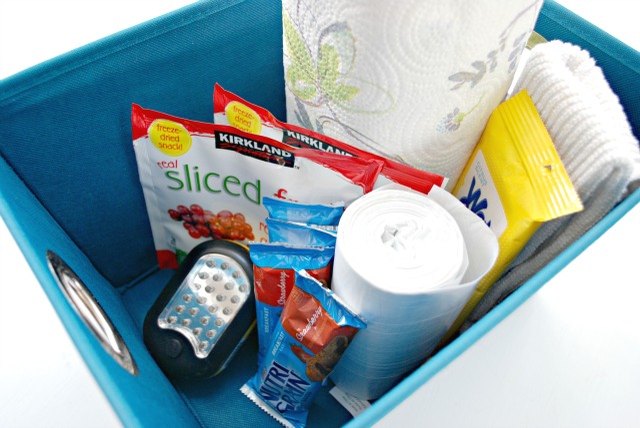
Emergency supplies should be organized separately from everyday items. Store them in a durable, labeled bag or waterproof container that family members can find quickly.
A practical roadside kit may include:
- A first-aid kit with personal medical necessities
- A flashlight with tested batteries
- Jumper cables or a charged portable jump starter
- Reflective warning triangles and a reflective vest
- A tire-pressure gauge and vehicle-compatible tire tools
- Work gloves, paper towels, and a rain poncho
- A blanket and seasonally appropriate clothing
- A phone-charging cable and charged power bank
- Drinking water and shelf-stable snacks
- Emergency contact and roadside-assistance information
Adapt the kit to the climate, route, vehicle, and passengers. Winter driving may require an ice scraper, snow brush, small shovel, and traction material. Hot-weather travel may require additional water and sun protection. Inspect supplies regularly, replace expired items, recharge batteries, and confirm that everyone knows where the kit is stored.
Control Snacks, Drinks, and Everyday Messes
Food is one of the fastest ways to turn an organized family vehicle into an archaeological site. Set clear rules about what can be eaten in the car and choose snacks that are easy to contain.
Use individual snack containers instead of passing around an open family-size package. Pack dry, low-mess options when practical, and keep drinks in cupholders that fit securely. Avoid leaving perishable food in a parked vehicle, especially during warm weather.
Create a compact cleanup station
Store a small cleanup pouch containing tissues, paper towels, disposable bags, and vehicle-safe wipes. Families with babies may also need diapers, a changing pad, and spare clothing. Keep only a reasonable supply in the vehicle and replenish it from the house.
Place a small trash container where passengers can reach it without unbuckling. Empty it at every fuel stop or whenever the family arrives home. Professional organizers often recommend clearing waste during road-trip rest stops instead of allowing it to accumulate until the final destination.
Organize Documents and Technology
The glove compartment should hold important vehicle information, not a decade-long retrospective of fast-food receipts.
Use a slim document wallet for the owner’s manual, registration, proof of insurance, roadside-assistance details, and essential emergency contacts. Review local requirements before deciding which documents or copies should remain in the vehicle. Protect personal information and never leave sensitive financial, identity, or medical records exposed.
Place charging cords in a labeled pouch or use short cable ties to prevent tangles. Remove outdated adapters and cables that no longer match the family’s devices. A multiport charger may reduce competition, although it will not resolve the deeper philosophical question of why every phone reaches 3 percent at the same time.
Rotate Seasonal and Activity-Specific Gear
The family car does not need to carry every possible item throughout the year. Review its contents when seasons, school schedules, or sports activities change.
Warm-weather supplies
Depending on family activities, summer storage may include sunscreen, hats, picnic blankets, dry towels, insect repellent, or a compact change of clothing. Avoid leaving temperature-sensitive products in extreme heat unless their labels say vehicle storage is acceptable.
Cold-weather supplies
Winter gear may include blankets, gloves, an ice scraper, a snow brush, and traction equipment appropriate for local conditions. Keep bulky coats and blankets from interfering with child safety harnesses. NHTSA advises using thin fleece layers rather than bulky puffy clothing beneath a car-seat harness.
Sports and school supplies
Create removable kits for recurring activities. A soccer bin might contain cleats, shin guards, a towel, and an empty laundry bag. A school-run basket might hold tissues, pencils, and one spare folder. Remove the entire kit when the season ends rather than allowing it to become a permanent trunk resident.
Use Simple Habits to Keep the Car Organized
No organizer can defeat a family that refuses to put anything back. Long-term success depends more on routines than products.
- Follow a carry-in, carry-out rule: Each passenger removes personal belongings after the trip.
- Reset at every stop: Throw away wrappers and return loose items to their zones.
- Empty the car after activities: Sports bags, wet towels, and school projects should leave the vehicle the same day.
- Perform a weekly five-minute reset: Empty trash, straighten bins, and restock frequently used supplies.
- Conduct a monthly safety check: Inspect emergency equipment, child-restraint areas, and cargo restraints.
- Complete a seasonal cleanout: Remove outdated gear before adding supplies for the next season.
Give children age-appropriate responsibilities. A younger child can place books in a seat-back pocket. An older child can collect trash or carry an activity pouch into the house. When everyone participates, the driver no longer serves as the unpaid curator of the Museum of Things Left in the Car.
Experiences and Lessons From Organizing a Busy Family Car
The most useful family car organization lessons become obvious during an ordinary week. Consider a household with two children, a weekday school schedule, grocery errands, and weekend sports. Before the car is organized, every trip begins with a small treasure hunt. One child cannot find a water bottle. The other is sitting on a library book. The driver discovers that the reusable shopping bags are at home, while three bags of outgrown clothing have been enjoying a month-long vacation in the trunk.
The family’s first attempt at organizing the vehicle may involve buying several storage products. For a day or two, the car looks impressive. Then the large seat-back organizer sags, the trunk bin slides around, and nobody remembers which pocket contains the tissues. The lesson is immediate: more storage does not automatically create better organization. A simple system based on actual routines works better than filling every available surface with pockets.
Lesson one: frequently used items need the easiest locations
After observing several trips, the family notices that tissues, charging cables, and a trash bag are needed almost every day. These items move to accessible but secure positions. Less frequently used supplies, including the emergency blanket and jumper cables, remain in the trunk. The cabin becomes calmer because everyday items no longer compete with equipment intended for rare situations.
Lesson two: removable kits save time
The family creates a small sports bin containing only the equipment required for practice. On practice days, the entire bin goes into the cargo area. Afterward, it returns to the garage, where damp clothing and empty bottles can be removed. This single change prevents sports gear from spreading across the car and eliminates the familiar Saturday-morning question, “Has anyone seen the other cleat?”
Lesson three: children maintain systems they understand
Instead of creating complicated categories, each child receives one zippered activity pouch and one seat-back pocket. Books and drawing supplies must fit inside those spaces. At the end of the ride, each child closes the pouch and removes anything that belongs indoors. The boundaries are visible and simple, so maintaining them requires fewer reminders.
Lesson four: a small trash container changes everything
Before the cleanup system, wrappers migrate into door compartments because no better option exists. Once the family adds a reachable, leak-resistant trash container, passengers begin using it. Emptying the container becomes part of the weekly fuel-stop routine. This does not transform the children into professional detailers, but it prevents wrappers from establishing permanent residency.
Lesson five: organization must survive real life
One rainy afternoon puts the system to the test. Muddy shoes, wet jackets, snack crumbs, and a leaking water bottle arrive at once. Because the trunk contains a washable mat, a towel, and a spare bag for wet items, the mess is contained. The car still requires cleaning, but the cleanup takes minutes rather than becoming a weekend restoration project.
After several weeks, the family discovers that the biggest improvement is not a perfectly spotless interior. It is predictability. Everyone knows where essential items belong, important equipment remains accessible, and preparing for a trip takes less time. The system works because it is small enough to maintain, flexible enough to change, and based on habits the family already has.
That is the real measure of successful family car organization. The vehicle does not need to look untouched. It needs to support daily life without adding unnecessary stress. A few bins, sensible safety rules, and a five-minute weekly reset can achieve more than an expensive collection of organizers that nobody uses.
Conclusion
Knowing how to organize the family car begins with removing what does not belong, assigning practical zones, and keeping safety ahead of convenience. Store everyday essentials where they are easy to reach, secure heavier equipment in the cargo area, and keep emergency supplies together in a clearly identified kit.
The most effective car organization system is not the one with the most pockets. It is the one your family can restore in a few minutes. Start with one cleanout, add only the organizers that solve specific problems, and establish a simple routine for removing trash and personal belongings. Your car may never remain crumb-free for eternity, but it can become safer, calmer, and much easier to use.