Note: This article is educational relationship guidance, written to help readers ask someone out with confidence, kindness, and respect. It is not a magic crystal ball, unfortunatelythose are still terrible at reading mixed signals.
So, should you ask her out? The honest answer is: maybebut “maybe” does not have to feel like trying to solve a crossword puzzle written by your own nervous system. Asking someone out is less about finding a flawless moment and more about reading the situation with respect, confidence, and emotional intelligence.
If you like her, enjoy talking to her, and feel there may be mutual interest, asking her out can be a healthy, brave step. But if she seems uncomfortable, unavailable, uninterested, or the situation involves a tricky power dynamiclike work, school leadership, or a close friend groupyou may need to slow down. Romance is exciting, but respect is the seatbelt. You still get to enjoy the ride, but everyone stays safer.
This guide offers personalized dating advice for deciding whether to ask her out, how to recognize signs of interest, what red flags to watch for, and how to ask in a way that feels natural instead of sounding like you are reading from a rejected sitcom script.
Should You Ask Her Out? Start With the Real Question
The question is not only, “Does she like me?” It is also, “Would asking her out feel respectful, appropriate, and low-pressure?” That second question matters because a good invitation should leave room for a real yes or a real no.
A healthy ask does not trap someone, pressure someone, or make them feel responsible for your feelings. It simply opens a door. If she wants to walk through it, great. If not, you thank her for being honest and keep your dignity zipped up like a responsible adult wearing a winter coat.
Ask yourself these three questions first
Before you make a move, pause and check the basics:
- Is she available? If she has clearly mentioned a partner or said she is not dating, respect that.
- Is there mutual comfort? Do your conversations feel relaxed, balanced, and welcome?
- Is the setting appropriate? Asking someone out in a private, intimidating, or high-pressure situation is not the move.
If your answers are mostly yes, you may have a reasonable green light. If your answers are mostly “uhhh,” “technically,” or “my friend said she looked at me once near the vending machine,” gather more context before jumping in.
Signs You Should Ask Her Out
There is no perfect formula for attraction. People are not Wi-Fi routers; you cannot simply check whether the “romantic interest” signal has three bars. Still, certain patterns can suggest she enjoys your company and may be open to spending more time with you.
1. She makes time to talk to you
If she often keeps the conversation going, asks follow-up questions, remembers small details, or seems happy when you show up, that is a positive sign. Mutual curiosity is one of the simplest signs of connection.
For example, if you mention you had a big presentation and she later asks how it went, she is paying attention. That does not automatically mean she wants a date, but it does suggest she values the interaction.
2. The conversation feels balanced
A good sign is not just that she respondsit is that she participates. If you are always carrying the conversation like a tired waiter balancing twelve plates, the interest may not be mutual. But if she asks about your hobbies, laughs with you, shares stories, or starts conversations herself, the vibe is healthier.
3. She seems comfortable around you
Comfort matters more than dramatic flirting. Some people are naturally shy, subtle, or slow to open up. Look for relaxed body language, warm tone, friendly teasing, shared jokes, or an easy rhythm when you talk.
However, do not overanalyze every smile. Sometimes a smile means “I like you.” Sometimes it means “I am polite.” Sometimes it means “I remembered I have fries at home.” Context is king.
4. She finds reasons to stay connected
If she sends you things related to your conversations, reacts to your messages thoughtfully, invites you into group plans, or suggests activities you both enjoy, she may be showing interest. The key is consistency. One friendly message is not a marriage proposal. A pattern of warm engagement is more meaningful.
Signs You Should Wait
Sometimes the smartest romantic move is not asking yet. Waiting does not mean you are weak. It means you are paying attention, which is attractive in a very underrated “has emotional intelligence” kind of way.
1. She gives short or closed responses
If her replies are usually one-word answers, she rarely asks questions back, or she seems distracted every time you talk, she may not be interested. Of course, people get busy. But if the pattern is consistent, take it seriously.
2. She avoids one-on-one time
If she is friendly in a group but consistently avoids being alone with you, do not force the issue. She may enjoy you as a friend, classmate, coworker, or social-circle person, but not as a romantic option.
3. She has already said no
This one deserves its own neon sign. If you asked before and she declined, do not keep asking unless she clearly reopens the topic herself. Persistence is cute in movie montages and deeply uncomfortable in real life when someone has already answered.
4. The timing is messy
Maybe she just ended a relationship. Maybe you work together and there are company rules. Maybe she is close friends with your ex. Maybe your social group is already held together with emotional duct tape. In messy situations, think beyond the date itself. Ask: “What happens if she says no? What happens if she says yes and it gets complicated?”
Personalized Advice by Situation
The best dating advice depends on context. Asking out a longtime friend is different from asking someone you matched with online. Asking a coworker is different from asking someone you met at a party. Let’s break it down.
If she is your friend
Friendship can make asking her out both easier and scarier. You already know each other, which helps. But you may also worry about changing the friendship, which is fair.
Ask yourself whether your feelings are steady or just a temporary crush because she was nice to you during a rough week. If the feelings are real and you sense mutual closeness, be honest but gentle.
You might say: “I really value our friendship, and I do not want to make things weird. But I have started to like you as more than a friend. Would you be open to going on a date sometime?”
This gives her room to answer without feeling cornered. It also shows that you care about the friendship, not just your own nerves.
If she is someone you just met
When you barely know someone, keep it light. Do not lead with a grand emotional speech. You are not proposing a shared mortgage; you are suggesting coffee.
Try something simple: “I have enjoyed talking with you. Would you like to grab coffee sometime?”
Short, clear, respectful. No fireworks required. Save the dramatic soundtrack for your headphones.
If she is a coworker
Be extra careful. Workplace dating can be complicated because people may feel pressured even when you do not intend pressure. If there is any power differencemanager, supervisor, trainer, team lead, or someone who affects her schedule, grades, opportunities, or incomedo not ask her out. That dynamic can make a yes feel less freely chosen.
If you are true peers, your company allows dating, and you have a friendly rapport, ask only once, outside of a work task, and make it easy for her to decline. If she says no or seems unsure, accept it immediately and keep work professional.
A respectful version might be: “No pressure at all, but I enjoy talking with you. Would you ever want to get coffee outside work? Totally fine if not.”
The “totally fine if not” part matters only if you actually mean it. If you say it and then act cold afterward, congratulations, you have turned one sentence into a tiny emotional trap.
If she is in your class or social group
When you share a class, club, church group, gaming group, or friend circle, think about the after-effects. A respectful ask should not make the shared space awkward or unsafe.
Keep it private but not isolated. Do not ask in front of everyone, because that can make her feel watched. Do not ask in a setting where she cannot easily leave. A casual moment after a conversation is usually better.
If you know her online
Online dating and social media require patience and common sense. If you met on a dating app, asking for a low-pressure date after some good conversation is normal. If you met through a non-dating platform, be more cautious. Not every inbox is an invitation to flirt.
Focus on shared interests, respectful conversation, and clear signals. Avoid commenting only on appearance. A better approach is: “I have liked talking about movies with you. Would you be interested in continuing the conversation over coffee?”
How to Ask Her Out Without Making It Awkward
Awkwardness is not fatal. Everyone has survived saying something weird and then pretending to check their phone like it contained urgent government secrets. The goal is not to be perfect. The goal is to be clear, kind, and calm.
Use a simple structure
A good invitation has three parts:
- A warm opener: “I enjoy talking with you.”
- A clear invitation: “Would you like to get coffee this weekend?”
- Low pressure: “No worries if not.”
That is it. No speech. No poem. No “I have watched your favorite show twice to understand your soul.” Please do not do that.
Be specific, but flexible
Instead of saying, “We should hang out sometime,” offer a simple idea: coffee, lunch, a walk in a public place, a bookstore visit, a school event, or a casual activity connected to something you both enjoy.
Specific plans feel more confident. Flexible wording feels more respectful. Try: “Would you like to grab coffee after class this week, or another time that works for you?”
Ask in a comfortable setting
Choose a moment when she is not rushing, stressed, working, studying intensely, or surrounded by people waiting for her reaction. Public enough to feel safe, private enough to avoid embarrassmentthat is the sweet spot.
What to Say: Examples You Can Actually Use
Casual and confident
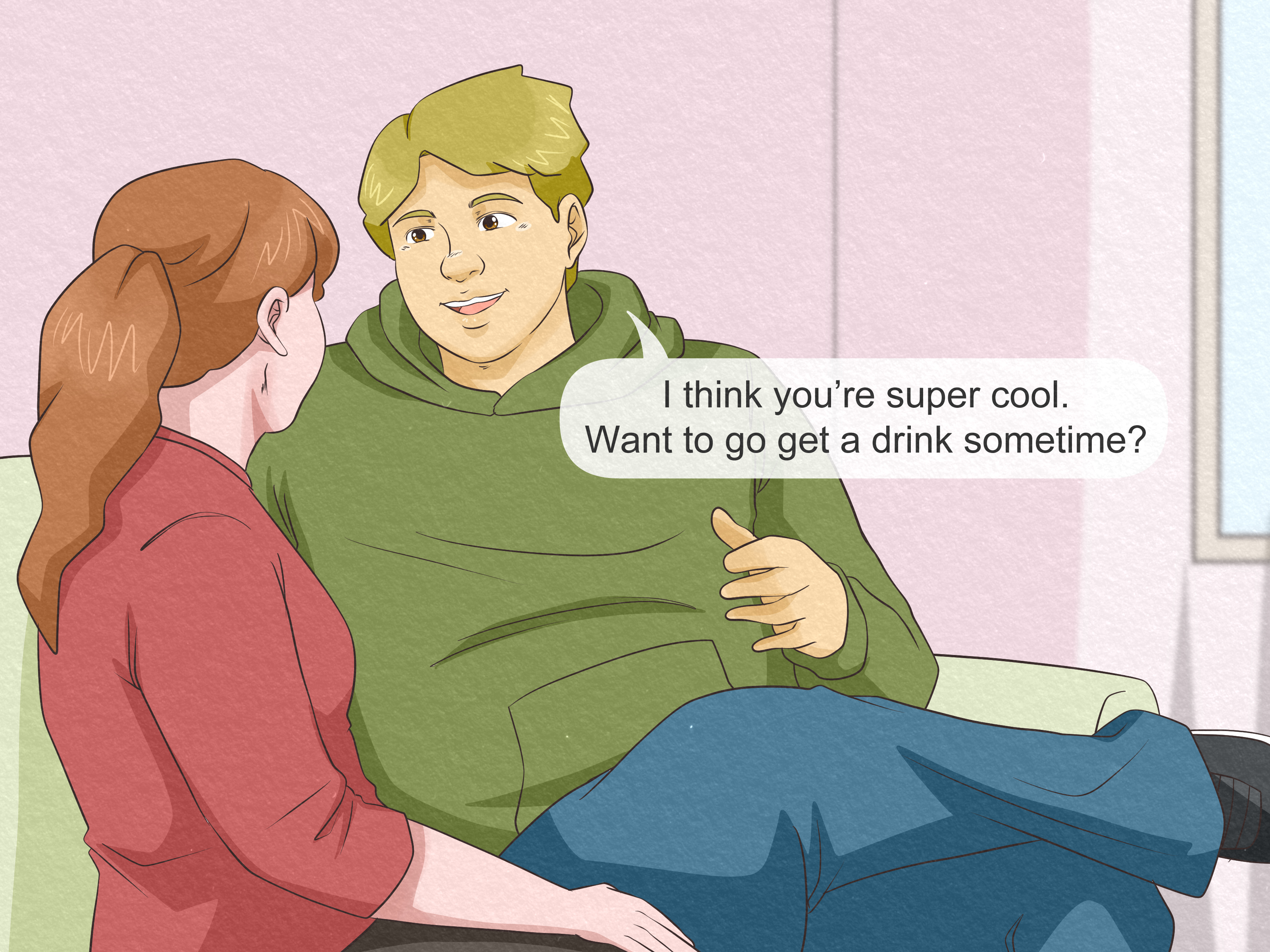
“I have really enjoyed talking with you. Would you like to grab coffee sometime this week?”
Friendly and low-pressure
“No pressure, but I think you are fun to be around. Would you want to go out sometime?”
For someone you already know well
“I value our friendship, so I want to be respectful. I have started to like you as more than a friend. Would you be open to a date?”
For texting
“I liked talking with you today. Would you want to get coffee this weekend?”
If you are unsure about her interest
“I may be reading this wrong, and that is okay, but I enjoy spending time with you. Would you be interested in going on a date?”
That last one is honest without being insecure. It shows confidence and humility, which is a surprisingly powerful combinationlike peanut butter and chocolate, but with better communication skills.
How to Handle Rejection Like a Grown-Up
Rejection hurts. Pretending it does not hurt is like pretending stepping on a LEGO is a spiritual experience. But rejection is not proof that you are unattractive, unworthy, or doomed to become a lonely houseplant whisperer.
It usually means one person did not feel the same connection, was not available, or did not want the same thing. That is disappointing, but it is also useful information.
Respond with respect
If she says no, try:
“Thanks for being honest. No worries.”
Then actually act like there are no worries. Do not demand an explanation. Do not debate her answer. Do not suddenly become icy, sarcastic, or dramatic. A respectful response protects both her comfort and your character.
Do not ask again unless something clearly changes
If she declines, take the answer as final. She does not need to convince you. She does not need to present a PowerPoint titled “Why I Said No.” Accepting rejection gracefully is one of the clearest signs of emotional maturity.
Give yourself time
You may feel embarrassed for a while. That is normal. Talk to a trusted friend, do something active, focus on your routines, and avoid replaying the moment like a detective reviewing security footage. You asked respectfully. That is something to be proud of.
Green Lights, Yellow Lights, and Red Lights
Green lights
- She starts conversations with you.
- She seems relaxed and happy around you.
- She asks personal but appropriate questions.
- She remembers details about your life.
- She suggests spending time together or responds warmly when you do.
Yellow lights
- She is friendly but not especially engaged.
- She replies slowly without much detail.
- You mostly talk in group settings.
- You are unsure whether she is available.
- The situation could affect school, work, or a friend group.
Red lights
- She has already said no.
- She avoids you or seems uncomfortable.
- She is in a relationship.
- There is a power imbalance.
- You want to ask because you feel jealous, pressured, or desperate.
If you see green lights, consider asking. If you see yellow lights, slow down and build more natural conversation. If you see red lights, do not ask. Respect is not optional; it is the whole foundation.
Common Mistakes to Avoid
Turning the ask into a confession
“I have loved you from afar for nine months” may be honest, but it can feel overwhelming. A first date invitation should be light. You are asking for time, not handing her the emotional deed to your future beach house.
Making it too vague
“We should hang out sometime” is technically an invitation, but it can sound like fog wearing sneakers. Be clear enough that she knows you mean a date.
Asking through a friend
Unless you are in middle school and the note says “check yes or no,” ask directly. It shows confidence and reduces confusion.
Ignoring discomfort
If she looks uneasy, gives short answers, changes the subject, or creates distance, pay attention. Emotional intelligence means noticing not only what you want, but also how the other person is responding.
Personalized Decision Guide: Should You Ask Her Out?
Use this quick guide to choose your next step.
Ask her out if:
- You have had several comfortable conversations.
- She seems engaged and interested.
- She is available.
- The setting is appropriate.
- You can handle either answer respectfully.
Wait and build rapport if:
- You barely know her.
- You are relying mostly on guesses.
- She is friendly but not clearly engaged.
- You feel too anxious to ask calmly.
- The timing feels rushed.
Do not ask if:
- She has said no before.
- She seems uncomfortable around you.
- She is not available.
- You have authority over her.
- You would be angry or resentful if rejected.
The best mindset is simple: invite, do not pressure. Offer, do not demand. Be brave, but not careless. Confidence without respect is just noise in a leather jacket.
of Real-Life Experience: What Asking Her Out Actually Feels Like
Most people imagine asking someone out as a movie moment. The lighting is perfect, the words arrive in the right order, and nobody accidentally says “You too” after being told “Have a nice day.” Real life is messier, funnier, and honestly more human.
The first experience many people have is the “I waited too long” situation. You like someone, you keep looking for signs, you ask three friends for opinions, you analyze every text, and suddenly she is dating someone else. That does not mean you failed. It means timing matters. Sometimes the lesson is not “be more aggressive.” The lesson is “be clear sooner when the connection feels mutual.” A respectful invitation is often better than months of silent overthinking.
Another common experience is asking when the signs are friendly but unclear. Maybe she laughs at your jokes, but she laughs at everyone’s jokes because she is a cheerful person and not because your pun about tacos changed her destiny. In this situation, the best move is a low-pressure ask. Something like, “I enjoy talking with youwould you want to get coffee sometime?” gives her room to respond honestly. If she says yes, great. If she says no, you have not built a giant emotional monument that now has to be awkwardly removed with a crane.
There is also the friendship scenario. This one feels delicate because the friendship matters. People who handle it well usually do two things: they speak honestly and they protect the other person’s comfort. They do not say, “I cannot be your friend unless you date me.” That is not romance; that is an emotional subscription fee. Instead, they say something respectful, accept the answer, and allow the friendship to breathe afterward.
Then there is rejection. Almost everyone who dates experiences it. The people who grow from it are not the ones who never feel embarrassed. They are the ones who do not let embarrassment make them unkind. They do not insult the person. They do not send five follow-up messages. They do not create a detective board with red string labeled “mixed signals.” They feel disappointed, take space if needed, and move forward.
A surprisingly useful experience is realizing that asking someone out can improve your confidence even when the answer is no. Why? Because you learn that honesty does not destroy you. You learn that a respectful no is survivable. You learn that your worth is not decided by one person’s romantic interest. That is powerful.
The best dating experiences usually begin with mutual ease. Two people talk. They enjoy the rhythm. One person makes a clear invitation. The other person feels free to say yes or no. Nobody is trapped. Nobody is pressured. Nobody has to decode a mysterious message that says, “So, like, hypothetically, if someone were to maybe do something sometime…”
So if you are wondering whether you should ask her out, remember this: the goal is not to eliminate risk. The goal is to act with courage and respect. If the connection feels warm, the timing is appropriate, and you can handle the answer with maturity, ask. Keep it simple. Keep it kind. Keep it human.
Conclusion: So, Should You Ask Her Out?
Yes, you should ask her out if there are signs of mutual comfort, the situation is appropriate, and you are ready to respect her answer either way. No, you should not ask if she seems uncomfortable, unavailable, pressured, or if the setting creates an unfair dynamic.
The best personalized dating advice is not about memorizing pickup lines. It is about reading context, honoring boundaries, and being clear without being intense. A good invitation is simple: “I enjoy spending time with you. Would you like to go out sometime?” That one sentence can save you months of guessingand it does not require a dramatic balcony scene, which is convenient because most people do not own balconies.
Ask with confidence. Listen with respect. Accept the answer with grace. That is how you protect your dignity, her comfort, and the possibility of a real connection.