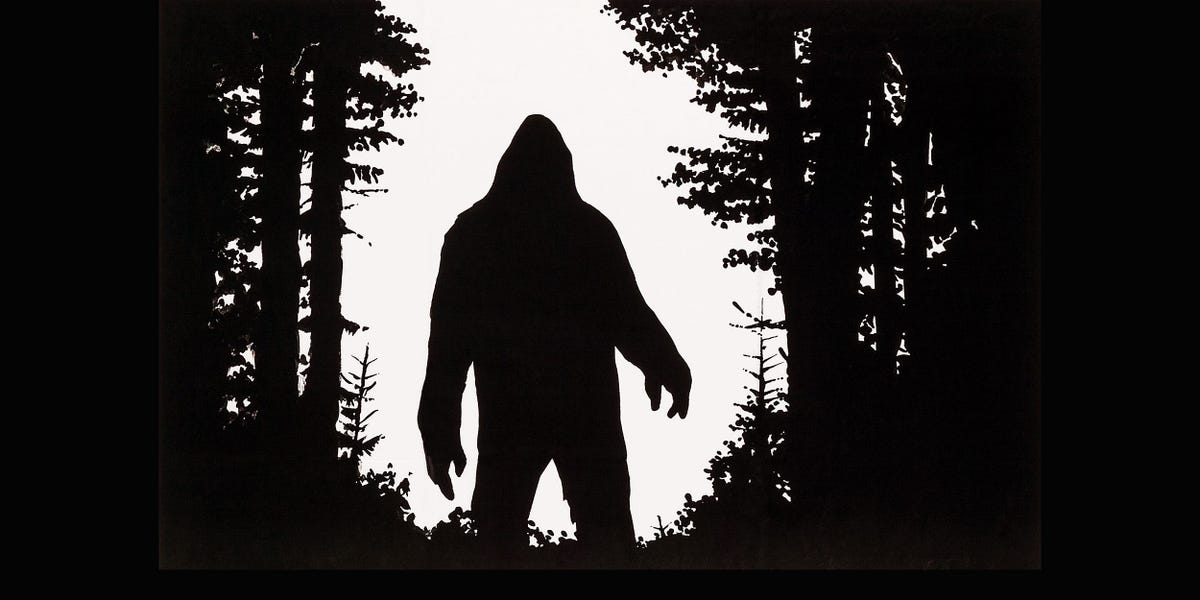
Bigfoot has excellent branding: a dramatic name, a wilderness backdrop, and just enough blurry footage to keep debates alive longer than a campfire marshmallow. But beneath the fuzzy photos and giant-footprint souvenirs sits a serious question: is Bigfoot real, or is Sasquatch one of America’s most durable legends?
For more than a century, people have reported seeing a tall, hairy, humanlike figure in remote woods, especially in the Pacific Northwest. Witnesses describe heavy footsteps, strange calls, oversized tracks, and the unnerving feeling that something large is watching from behind a fir tree. Those stories deserve to be heard respectfully. Still, extraordinary biological claims require physical evidence that can be independently tested. That is where the Bigfoot case becomes much less hairy.
Note: This article explores Bigfoot as folklore, culture, and an evidence-based question. It does not claim that Bigfoot has been scientifically proven to exist.
What Is Bigfoot, Exactly?
Bigfoot, often called Sasquatch, is usually described as a large, bipedal, ape-like creature said to live in North American forests. Reports commonly place it between seven and nine feet tall, covered in dark hair, broad-shouldered, and unexpectedly skilled at disappearing the moment someone reaches for a camera.
The creature belongs to the world of cryptids: animals or beings reported by witnesses but not accepted as known species by mainstream science. Other famous cryptids include the Loch Ness Monster and the Yeti. The difference is that Bigfoot feels distinctly local. It lives in rainy forests, near logging roads, behind souvenir shops, and in the part of the hiking trail where your phone suddenly decides it has no signal.
It is important not to flatten every Indigenous tradition into one modern monster story. Many Indigenous communities have their own distinct teachings, names, and relationships to forest beings. Those traditions carry cultural and spiritual meaning that cannot be reduced to a creature-feature checklist. The popular American Bigfoot image is a newer cultural blend of regional folklore, newspaper stories, wilderness mythology, entertainment, and personal testimony.
How Bigfoot Became an American Icon
From Forest Lore to Newspaper Headlines
Stories of wild, humanlike beings in the woods existed long before Bigfoot became a bumper-sticker celebrity. In the Pacific Northwest, settlers, miners, and loggers passed along accounts of mysterious figures and strange tracks. The modern word “Bigfoot” exploded in 1958 after reports of huge footprints appeared near a northern California logging site.
That episode helped create the familiar image of a giant forest resident, but it also delivered an early lesson in skepticism. After the death of road contractor Ray Wallace, family members revealed carved wooden feet that had been used to make some of the famous oversized tracks. The revelation did not automatically disprove every Bigfoot report ever made. It did prove something equally useful: impressive footprints are not automatically evidence of an unknown animal.
The Patterson-Gimlin Film and the Mystery of “Patty”
No piece of Bigfoot evidence is more famous than the short 1967 Patterson-Gimlin film. Shot near Bluff Creek in northern California, it appears to show a large, hairy figure walking across a creek bed before turning briefly toward the camera. Fans of the footage point to the subject’s gait, proportions, and apparent musculature. Critics point to the film’s low resolution, the history of hoaxes around the area, and the possibility of a person wearing a costume.
The film remains culturally important, but cultural importance is not the same as scientific confirmation. A short, disputed clip can launch decades of discussion; it cannot, by itself, establish a new species. Science needs evidence that does not depend on one camera angle, one interpretation, or one very convenient moment in the woods.
What Counts as Bigfoot Evidence?
Eyewitness Sightings: Powerful, but Not Proof
Thousands of people say they have seen Bigfoot or experienced something they could not explain. Their accounts can be vivid, sincere, and emotionally unforgettable. A person may remember a smell, a sound, a silhouette, or a feeling of dread for decades. That does not mean the person is lying. It means human perception is complicated, especially in poor light, dense vegetation, bad weather, and the exact moment a bear stands upright for two seconds and ruins everyone’s weekend.
Memory is not a video recording. Distance, fear, expectation, darkness, and later conversations can all affect how an event is remembered. Wildlife biologists and investigators therefore look for details that can be checked: precise location, weather, distance, duration, photographs, physical traces, and whether a more ordinary explanation fits the scene.
Footprints: A Clue That Needs a Chain of Custody
Large tracks are among the most common Bigfoot claims. Some casts appear striking, particularly when they show toe shapes or skin-like ridges. Yet mud is an unreliable sculptor. Rain softens edges, thawing enlarges impressions, and overlapping animal tracks can create bizarre shapes. A bear’s hind print placed over a front print can look surprisingly humanoid, especially when imagination has had a strong cup of coffee.
A useful track investigation records scale, depth, soil conditions, photographs from multiple angles, nearby animal activity, and an unbroken record of who handled the cast. Investigators should also compare the print with known tracks, boots, prank devices, and natural distortions. Without that context, a footprint is interestingbut not conclusive.
Photos, Videos, Sounds, and Thermal Images
Modern technology has produced more Bigfoot material, not less: phone videos, trail-camera images, audio recordings, drones, and thermal clips. Yet most evidence remains too unclear to identify. A dark shape on a ridge may be a person, bear, stump, shadow, or an extremely committed laundry pile. Audio can be distorted by terrain, wind, echo, and unfamiliar animal calls.
The key issue is not whether a recording looks strange. It is whether independent experts can determine what it is and rule out normal explanations. Good evidence must be repeatable, documented, and available for examination. A clip that only becomes convincing after twenty minutes of zooming, circling, and whispering “Look right there!” is usually not carrying enough scientific weight.
Hair, Scat, and DNA: The Test That Matters Most
If a large, undiscovered primate lived across North America, it should leave biological evidence. Hair, saliva, scat, tissue, bones, parasites, feeding traces, and environmental DNA would offer opportunities for independent testing. Researchers have examined samples attributed to Bigfoot-like creatures, but published analyses have repeatedly identified known animals or humans rather than an unknown primate.
That is a major problem for the Bigfoot hypothesis. DNA is not perfect, and contamination can complicate any sample. But a real population of large mammals would be expected to leave repeated, verifiable genetic traces. So far, no authenticated Bigfoot specimen or DNA sequence has met that standard.
Why Scientists Remain Unconvinced
Science does not reject Bigfoot merely because the idea sounds unusual. New species are discovered all the time. The question is whether the evidence matches the claim. A breeding population of giant, land-dwelling primates would need food, habitat, mates, offspring, and enough individuals to avoid disappearing immediately into the evolutionary recycling bin.
Such a population should leave a broad physical record. Wildlife researchers find evidence of elusive animalsincluding bears, mountain lions, wolves, wolverines, and rare amphibiansthrough cameras, scat, tracks, DNA, carcasses, and repeated observations. Bigfoot reports have not produced comparable evidence that outside researchers can verify.
There is also a practical ecological issue. An animal that large would require substantial calories and a viable population spread across suitable habitat. It would be difficult, though not logically impossible, for such animals to remain completely undocumented by hunters, hikers, biologists, road crews, camera traps, and genetic surveys. “Difficult” is not the same as “impossible,” but it raises the evidence bar very high.
So, is Bigfoot real? Based on the evidence available today, there is no scientifically confirmed proof that Bigfoot is a living species. The more accurate answer is not “science has proved Bigfoot cannot exist.” It is “science has not found reliable evidence that Bigfoot does exist.” That distinction leaves room for curiosity while keeping the compass pointed toward reality.
Why the Bigfoot Legend Refuses to Leave the Woods
Bigfoot survives because it does more than frighten campers. It represents wilderness, mystery, independence, and the idea that a modern map may still contain an unsolved corner. In a world where satellites photograph parking lots with unnerving confidence, Bigfoot offers the comforting possibility that nature still has a few secrets.
The legend also creates community. Festivals, museums, podcasts, local businesses, documentaries, and online forums let people share stories without needing to agree on every detail. For some, Bigfoot is a literal animal. For others, it is regional folklore, a symbol of wild landscapes, or simply an excuse to wear a furry costume without waiting for Halloween.
That cultural value is real even when the biological claim remains unproven. A legend does not need to be a zoological fact to tell us something true about people, place, and the stories we choose to carry into the dark.
How to Search for Bigfoot Without Losing Your Headlamp
A responsible Bigfoot search should look more like a careful nature walk than a monster hunt. Stay on permitted trails, follow park rules, respect private property, and avoid disturbing wildlife. Go in daylight or with experienced adults, tell someone where you are going, carry navigation tools, and never chase an animal or wander off-trail because a branch snapped.
Bring curiosity, but also a notebook. Record ordinary details first: time, weather, terrain, nearby animals, distance, and possible explanations. Photograph tracks beside a scale object, leave samples untouched when possible, and do not turn every rustle into a cryptid press conference. The goal is not to “prove” a belief. The goal is to observe carefully enough that the truthhowever ordinary or extraordinaryhas a chance to show up.
What Searching for Bigfoot Feels Like: A Composite Field Experience
The following is a composite, experience-based scene drawn from common themes in Bigfoot outings and wilderness observation. It is not presented as a personal claim of seeing Bigfoot.
It Starts With a Trail, Not a Monster
The first surprise of a Bigfoot search is how little it resembles a movie. There is no dramatic helicopter drop, no orchestra playing ominous violins, and no creature politely waiting beside the trail marker. There is mostly walking. Boots crunch gravel. A creek keeps up a conversation somewhere below the trees. Someone in the group checks the map for the fourth time, because apparently maps become less trustworthy when the word “Sasquatch” is involved.
The forest has its own scale. Douglas firs stand tall enough to make even confident adults lower their voices. Ferns hide the ground. A distant woodpecker creates a rhythm that could sound mysterious if you arrived expecting mystery. That expectation matters. Once people begin looking for Bigfoot, every dark stump seems unusually tall and every branch break begins auditioning for a documentary.
The Moment Everything Sounds Important
Near dusk, normal sounds become fascinating. A squirrel drops something from a tree, and the group pauses. Wind moves through the canopy, and someone says it sounds like footsteps. A low call carries across a valley, and phones appear faster than snacks at a school field trip. The sensible response is not to laugh at the reaction. It is to slow down and investigate the environment.
Could the sound be a bird? A coyote? A vehicle echoing through a drainage? Could two unrelated sounds have overlapped? The search becomes more interesting when those questions are asked honestly. A good outing teaches that nature is already strange enough. Owls make noises that sound like movie props. Deer can stomp, snort, and crash through brush with impressive theatrical timing. Even silence can feel loud when a forest seems to be listening back.
Finding a Track Is ExcitingThen the Real Work Begins
The most memorable moment may be finding an odd impression in soft soil. It looks broad. It has a heel-like shape. For a few seconds, everyone leans in as though the ground has just delivered a handwritten message. Then the responsible part begins: photograph it from above and from the side, place a ruler or other scale beside it, note the soil, look for nearby shoe prints, and scan for animal tracks.
Sometimes the mystery fades quickly. The “giant footprint” becomes a boot print softened by rain, a partial bear track, or a patch of mud altered by hoof marks. That is not a disappointment; it is the point. Identifying a natural explanation is a successful investigation. Occasionally, the print may remain uncertain. “Uncertain” is still not the same as “Bigfoot.” It simply means the evidence is incomplete, which is a much less glamorous conclusion but a much more honest one.
The Best Discovery Is Usually the Forest Itself
By the end of a careful search, the group may not find Bigfoot. It may, however, notice things that would otherwise pass by: fresh elk sign, mushrooms pushing through leaf litter, a barred owl calling from a hidden perch, tiny amphibian tracks near a stream, or the way a hillside changes color when the sun drops low. Searching for Bigfoot can sharpen attention when it is done respectfully.
That may be the legend’s quiet gift. It sends people outside, asks them to notice evidence, and reminds them that wild places are not empty backdrops. Whether Bigfoot is a real animal, a powerful symbol, or a little of both in the human imagination, the search works best when it leads to wonder without asking us to abandon reason.
Final Verdict: Is Bigfoot Real?
Bigfoot is real as a legend, a cultural icon, a regional tradition, and a reason people still look twice at a shadow near the tree line. But as a biological species, Bigfoot remains unconfirmed. No verified body, bone, DNA sample, or repeatable field evidence has demonstrated that a giant unknown primate lives in North America.
That does not make the subject boring. Quite the opposite. Bigfoot is a master class in eyewitness testimony, memory, folklore, ecology, hoaxes, media, and the difference between a compelling story and a confirmed fact. Keep the curiosity. Bring the skepticism. And when the woods make a strange noise, check for a squirrel before calling a film crew.