A spine is not supposed to be a ruler-straight stack of bones when viewed from the side. Natural curves help the body balance, move, and absorb everyday jolts, from running for the bus to dramatically collapsing ontoeating a C- or S-shaped pattern when viewed from behind, that condition is called scoliosis.
Scoliosis is often discovered in children and teenagers during growth spurts, although it can also affect adults. Many cases are mild and do not cause major health problems. Still, some curves progress over time and may affect posture, comfort, mobility, confidence, and, in severe cases, breathing. The good news is that scoliosis treatment is not one-size-fits-all. Depending on the cause, curve pattern, age, growth stage, symptoms, and degree of progression, care may range from simple monitoring to bracing, physical therapy, pain management, or surgery.
This guide explains scoliosis symptoms, causes, diagnosis, treatment options, and what living with a curved spine can realistically look like.
What Is Scoliosis?
Scoliosis is an abnormal sideways curve of the spine that usually includes some rotation of the vertebrae. That rotation matters because it can make one shoulder blade, rib area, hip, or side of the waist appear more prominent than the other. In other words, scoliosis is more than “bad posture.” It is a structural spinal condition, not a failure to sit up straight during math class.
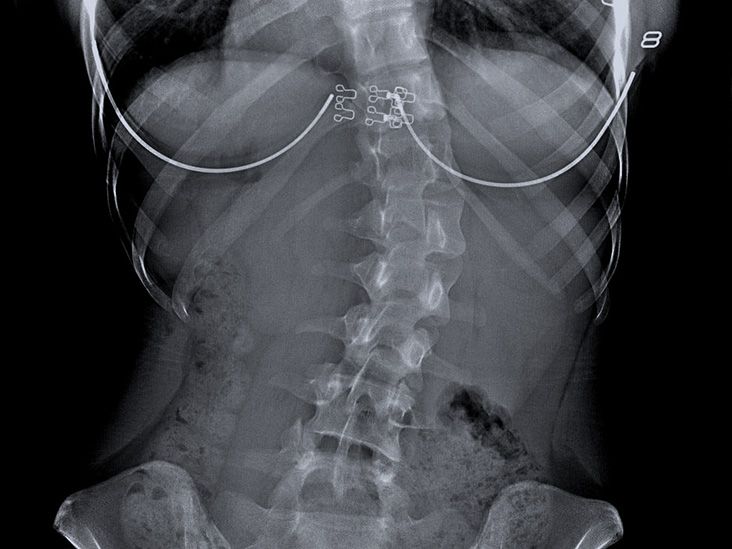
The curve may appear in the upper back, lower back, or both. Some people have a single C-shaped curve, while others have two curves that form an S shape. Doctors generally evaluate scoliosis using a physical examination and spinal X-rays, which allow them to measure the curve and monitor whether it changes over time.
Most scoliosis cases are diagnosed during late childhood or adolescence, particularly around puberty, when growth can speed up like a teenager suddenly needing new shoes every other month. Adults may also develop scoliosis or notice symptoms from a childhood curve that becomes more noticeable later in life.
Common Scoliosis Symptoms
Mild scoliosis often causes no pain and may be found during a routine checkup, school screening, sports physical, or a casual family photo where someone notices that one shoulder is doing its own thing. Visible body asymmetry is frequently the first clue.
Physical Signs of Scoliosis
- One shoulder sitting higher than the other
- One shoulder blade appearing more prominent
- Uneven hips or a tilted pelvis
- An uneven waistline
- One arm hanging lower than the other
- Clothes hanging unevenly on the body
- A rib hump or one side of the back appearing higher when bending forward
- The head not appearing centered over the pelvis
- Leaning slightly to one side while standing
Can Scoliosis Cause Pain?
In children and teens, idiopathic scoliosis is often painless. That is one reason it can go unnoticed. A child may feel perfectly fine while a spinal curve quietly develops during a growth spurt.
Adults with scoliosis are more likely to experience back pain, stiffness, fatigue, muscle imbalance, or discomfort after standing or walking for long periods. Adult scoliosis may be related to age-related changes in the spine, such as disc degeneration, arthritis, or narrowing around spinal nerves. When nerves become irritated or compressed, symptoms can include pain, numbness, tingling, weakness, or shooting pain into the legs.
When Symptoms Need Prompt Medical Attention
Contact a healthcare professional promptly if scoliosis or back pain comes with weakness, numbness, difficulty walking, loss of bladder or bowel control, fever, unexplained weight loss, severe night pain, or rapidly worsening symptoms. These signs do not automatically mean something serious is happening, but they deserve timely evaluation rather than a heroic amount of internet searching at 2 a.m.
What Causes Scoliosis?
Scoliosis has several possible causes. In many children and teenagers, however, doctors cannot identify one single cause. This is known as idiopathic scoliosis, and it is the most common type.
Idiopathic Scoliosis
“Idiopathic” is medical language for “we do not know the exact cause.” It does not mean the condition is imaginary, mysterious in a spooky-movie way, or caused by a child carrying a backpack that looks like it contains a small refrigerator.
Idiopathic scoliosis appears to involve genetic factors, and it can run in families. It is most commonly identified during adolescence. While scoliosis can affect all genders, girls are more likely to experience progression of certain adolescent curves that require treatment.
Importantly, idiopathic scoliosis is not caused by poor posture, slouching, sports participation, sleeping in a strange position, or carrying a heavy backpack. Those things may cause temporary soreness, but they do not create the structural spinal rotation seen in scoliosis.
Congenital Scoliosis
Congenital scoliosis is present at birth and results from vertebrae that did not form normally during fetal development. Because the curve may worsen as a child grows, careful monitoring is important. Some children with congenital scoliosis need imaging or evaluation for other associated health concerns.
Neuromuscular and Syndromic Scoliosis
Neuromuscular scoliosis can occur when conditions affecting the brain, spinal cord, nerves, or muscles interfere with the body’s ability to support spinal alignment. Examples include cerebral palsy, muscular dystrophy, spina bifida, and spinal muscular atrophy.
Syndromic scoliosis occurs alongside certain genetic or connective tissue disorders. Management may involve a team of specialists because the underlying condition can affect mobility, bone development, breathing, heart health, or other body systems.
Adult Degenerative Scoliosis
Adults may develop scoliosis because the discs and joints of the spine gradually wear down over time. This is often called degenerative scoliosis or adult-onset scoliosis. The curve may be accompanied by back pain, imbalance, leg symptoms, or reduced walking tolerance. In adults, treatment often focuses as much on pain relief and function as on the curve itself.
How Doctors Diagnose Scoliosis
Diagnosis typically begins with a medical history and physical exam. A clinician may look at the shoulders, hips, waistline, posture, gait, and spinal alignment. One common screening tool is the forward-bend test, in which the person bends forward at the waist while the clinician looks for unevenness in the rib cage or lower back.
X-rays are usually the main imaging test used to confirm scoliosis and measure the curve. The angle of the curve is commonly described using the Cobb angle. Repeat imaging may be used over time to see whether the curve is stable, improving, or progressing.
MRI or CT imaging is not necessary for every person with scoliosis. A specialist may recommend additional testing when the curve has an unusual pattern, symptoms suggest nerve involvement, pain is atypical, scoliosis develops very early, or there are signs of another underlying condition.
Scoliosis Treatment Options
Scoliosis treatment depends on the individual. The key questions are not simply, “How curved is the spine?” Doctors also consider age, remaining growth, curve location, symptoms, the likelihood of progression, overall health, and how the condition affects daily life.
Observation and Regular Monitoring
Many people with mild scoliosis do not need active treatment. Instead, they have periodic checkups and imaging to make sure the curve is not increasing. This approach is especially common for small curves in children who are still growing and for adults whose scoliosis is stable and not causing significant symptoms.
Observation is not doing nothing. It is a structured plan to watch carefully, avoid unnecessary treatment, and act when the curve or symptoms change.
Bracing for Growing Children and Teens
A scoliosis brace may be recommended for a child or teenager who is still growing and has a curve that has a meaningful risk of worsening. The goal of bracing is usually to slow or stop progression while the spine is growing. A brace does not “erase” scoliosis, and it is not a punishment disguised as medical equipment.
Modern braces are often designed to fit under clothing and are tailored to the person’s curve pattern. How many hours a brace should be worn varies by treatment plan. Consistent wear matters, which can be emotionally difficult for adolescents who are already navigating school, sports, social life, and the deeply important question of whether their outfit looks normal in the cafeteria.
Physical Therapy and Scoliosis-Specific Exercises
Physical therapy can help improve strength, flexibility, posture awareness, balance, movement confidence, and pain management. Scoliosis-specific exercise approaches, including programs based on the Schroth method, are designed around the individual’s curve pattern and breathing mechanics.
Exercise is valuable, but it is important to have realistic expectations. General exercise, stretching, yoga, Pilates, swimming, or core work may support overall health and comfort, but they are not guaranteed to stop a progressing curve. For a growing child with moderate scoliosis, exercise should not replace medical follow-up or prescribed bracing.
Pain Management for Adult Scoliosis
Adults with painful scoliosis may benefit from a combination of physical therapy, activity modification, strengthening, anti-inflammatory medication when appropriate, heat or cold therapy, and treatment for related conditions such as arthritis or spinal stenosis. Some people may receive injections to address pain from irritated joints or nerves.
The goal is often to improve function: walking farther, standing more comfortably, sleeping better, returning to work, and spending less time negotiating with the stairs like they are a difficult landlord.
Scoliosis Surgery
Surgery may be considered when a curve is severe, continues to progress despite other treatment, causes major pain or imbalance, affects breathing, or creates significant neurological symptoms. In adolescents, surgery is often discussed for larger progressive curves, frequently in the range where future progression is considered likely. Exact recommendations vary by person and should come from an experienced spine specialist.
The most common scoliosis surgery is spinal fusion. During fusion, surgeons use rods, screws, hooks, bone graft, or other instrumentation to realign and stabilize the spine while the selected vertebrae heal together. Some younger children with early-onset scoliosis may need growth-friendly techniques that control the curve while allowing continued spinal growth.
Surgery can improve spinal alignment and may reduce pain or prevent future worsening, but it is a major decision. Recovery takes time, and no procedure is risk-free. A careful discussion with a pediatric orthopedic surgeon, orthopedic spine surgeon, or neurosurgeon should cover expected benefits, limitations, activity restrictions, recovery, and alternatives.
Living Well With Scoliosis
Most people with scoliosis can remain active. Walking, cycling, swimming, strength training, dancing, and many sports are often possible, although individual restrictions may apply after surgery or with certain complex medical conditions. The best activity is usually one that feels safe, sustainable, and enjoyable enough to continue.
Good habits include staying physically active, following brace instructions, attending follow-up appointments, reporting new symptoms, protecting sleep, and working with a qualified clinician before starting a dramatic “spinal realignment” program advertised by someone wearing a lab coat in a social media video.
Emotional health also matters. Body-image worries, brace fatigue, pain frustration, and anxiety about surgery are real parts of the scoliosis experience. Support from family, friends, school staff, therapists, and scoliosis communities can make the medical process feel much less isolating.
Experiences With Scoliosis: What the Journey Can Feel Like
The experiences below are composite examples based on common scoliosis care pathways. They are not personal medical advice, and every diagnosis and treatment plan should be individualized.
For many families, scoliosis begins with something small: a parent notices one shoulder looks higher in a photo, a coach sees uneven posture during practice, or a child’s shirt seems to twist slightly to one side. At first, it may not seem urgent because the child usually has no pain and feels completely normal. That can make the diagnosis surprising. Parents may wonder how something involving the spine could develop without obvious symptoms, while teenagers may be more focused on whether they can still play soccer, wear fitted clothes, or go swimming with friends.
A mild diagnosis often leads to a period of observation. This can feel reassuring and stressful at the same time. Reassuring, because no brace or surgery is needed immediately. Stressful, because every follow-up X-ray can feel like a report card for a body that is still growing. Families often learn that monitoring is an active form of care. It gives specialists a chance to spot meaningful progression early, while avoiding treatments that may not be necessary.
Bracing can create a different kind of adjustment. Some teens describe the first weeks in a brace as awkward, hot, itchy, or emotionally exhausting. It may take time to learn how to sit comfortably in class, sleep in a new position, manage skin irritation, or explain the brace to friends without feeling like they are making a public announcement. Others find that friends are kinder and less curious than expected. A simple explanation such as, “It helps keep my back from curving more while I grow,” is often enough.
Families who make bracing part of a routine may find it becomes less overwhelming. Packing soft undershirts, scheduling brace breaks around sports or showers when medically appropriate, tracking wear time, and working with the orthotist to adjust uncomfortable areas can make a major difference. The brace may never become anyone’s favorite accessory, but it can become manageable.
Adults with scoliosis often tell a different story. Their biggest concern may be pain, stiffness, fatigue, or feeling uneven while standing and walking. Some describe a gradual shift: activities that once felt effortless begin to require more planning, whether that means taking more breaks while shopping, avoiding long car rides, or choosing a chair with better support. Physical therapy can feel empowering because it focuses on practical gains, such as improving core strength, hip mobility, balance, and confidence with movement.
For people considering surgery, the emotional experience can be especially complicated. There may be relief that a treatment exists, fear about a major operation, frustration that conservative care was not enough, and concern about recovery. Helpful questions often include: What problem is surgery meant to solve? What improvement is realistic? What are the risks? How long is recovery? What support will be needed at home? A second opinion can also be valuable when the decision is complex.
Across all ages, one of the most useful experiences is finding a care team that listens. Scoliosis involves measurements and X-rays, but it also involves school, work, sports, appearance, pain, sleep, family routines, and confidence. The best treatment plan is not merely the one that looks tidy on a chart. It is the one that helps a person protect their health while continuing to live a full, active, very human life.
Conclusion
Scoliosis is a sideways spinal curve that can range from mild and barely noticeable to more complex and progressive. The most common form in children and teens is idiopathic scoliosis, meaning no single cause is known. Symptoms may include uneven shoulders, hips, or waistline, but many young people have little or no pain.
Early evaluation matters because treatment is most effective when it matches the person’s growth stage, curve pattern, symptoms, and risk of progression. Observation, bracing, physical therapy, pain management, and surgery all have a role in the right circumstances. With individualized care and consistent follow-up, most people with scoliosis can stay active, manage symptoms, and keep doing the things that make life feel like their own.