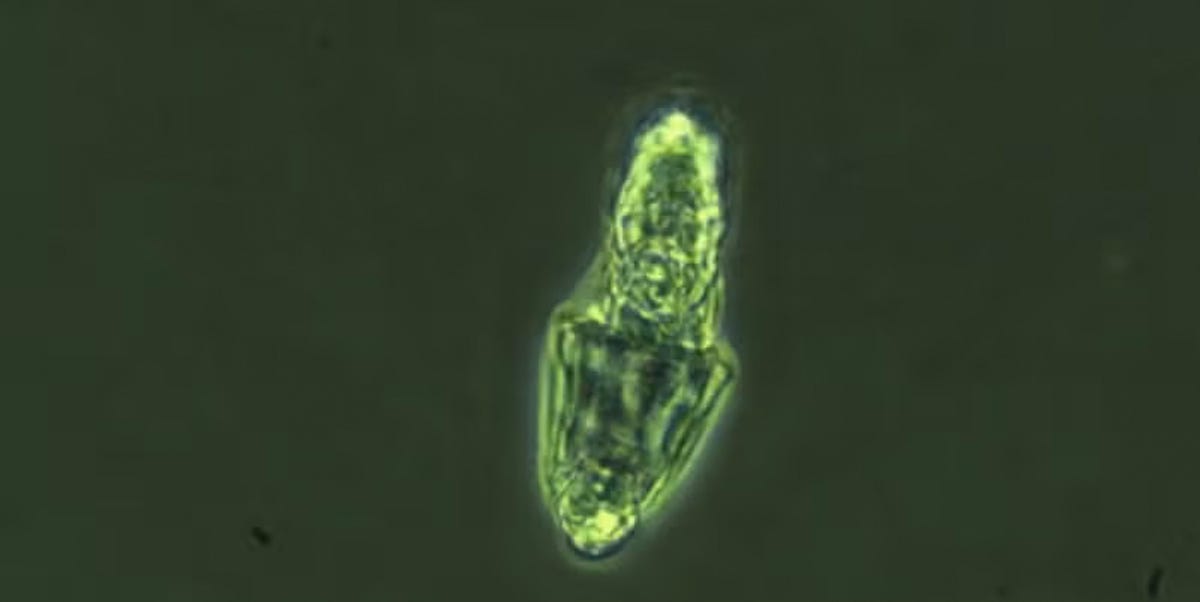
Some science stories sound as if they escaped from a late-night monster movie, put on a lab coat, and quietly asked for a microscope. “Russian scientists bring 24,000-year-old zombie worms back to life” is one of those stories. It has everything: Siberian ice, ancient life, a dramatic comeback, and tiny creatures that woke up after the kind of nap that makes your weekend sleep-in look embarrassingly amateur.
But before we imagine armies of frozen worms marching out of the Arctic with tiny snow shovels, let’s clear up the science. These so-called “zombie worms” were not zombies, and they were not exactly worms in the usual garden-after-rain sense. They were bdelloid rotifers, microscopic multicellular animals sometimes called “wheel animals” because of the rotating-looking ring of cilia near their mouths. They live in watery environments, moist soil, moss, and other damp places where being small, tough, and weird is apparently a great career plan.
The discovery, reported in the journal Current Biology, showed that bdelloid rotifers recovered from Siberian permafrost could survive roughly 24,000 years in a frozen state and then resume normal activity after thawing. Even more astonishing, the revived rotifers reproduced asexually, creating genetic copies of themselves. In other words, after spending millennia on pause, they woke up and got straight back to business. No coffee. No stretching. No complaining about Monday.
What Exactly Did the Scientists Revive?
The organism at the center of the story is a bdelloid rotifer, a tiny freshwater animal that is usually less than a millimeter long. Under a microscope, it may look like a transparent alien tadpole with a built-in vacuum cleaner for a face. Rotifers use cilia to sweep food particles toward their mouths, and many bdelloid rotifers are famous for surviving extreme conditions that would turn most living things into biological confetti.
The ancient rotifers were recovered from permanently frozen soil in northeastern Siberia. The permafrost sample was radiocarbon-dated to about 24,000 years old, placing the organism’s frozen dormancy during the Late Pleistocene, a period when mammoths still roamed and humans were very much not arguing on social media. Researchers carefully thawed the sample under laboratory conditions and observed living rotifers emerging from the deep freeze.
Why People Call Them “Zombie Worms”
The nickname “zombie worm” is catchy, clickable, and scientifically a little messy. “Zombie” suggests something dead came back in a spooky undead state. That is not what happened. The rotifers were not dead in the ordinary biological sense; they were in a state of suspended animation known as cryptobiosis. Their metabolism had slowed so dramatically that life functions were nearly undetectable.
Calling them “worms” is also an oversimplification. Rotifers are worm-like in appearance, but they belong to their own group of microscopic animals. Still, “24,000-year-old bdelloid rotifers resume activity after long-term cryptobiosis” is not exactly the kind of headline that makes your aunt forward the article to the family group chat. So “zombie worms” it isfun, dramatic, and slightly unfair to the rotifers, who never asked to be typecast in a horror franchise.
The Science Behind the Big Sleep: Cryptobiosis
The secret to this Ice Age survival story is cryptobiosis, a biological state in which an organism drastically reduces its metabolic activity in response to extreme stress. Some creatures enter cryptobiosis during dehydration, freezing, lack of oxygen, or intense environmental pressure. In this state, the organism is not actively eating, growing, or reproducing. It is more like a living file saved in cold storage.
Bdelloid rotifers are masters of this survival trick. They can tolerate drying out, freezing, starvation, and low-oxygen conditions. When the environment improves, they rehydrate or thaw and resume activity. Tardigrades, often nicknamed “water bears,” are more famous for similar toughness, but rotifers deserve their own tiny trophy cabinet.
In the Siberian case, the rotifer’s body somehow avoided fatal damage from ice crystals, cellular dehydration, and long-term molecular wear. Freezing is usually brutal for cells. Ice can puncture membranes, disrupt proteins, and damage DNA. Yet the revived rotifers were able to move, feed, and reproduce. That suggests their protective mechanisms are not just impressive; they are a biological masterclass in damage control.
How Did Scientists Know the Rotifers Were Ancient?
Whenever researchers announce that something ancient has come back to life, a fair question immediately appears: “Are we sure it wasn’t just modern contamination?” Scientists took that concern seriously. The Siberian permafrost samples were collected from deep frozen layers, and the surrounding material was radiocarbon-dated. The age estimate of around 24,000 years came from the organic matter in the same frozen context.
Permafrost works like nature’s freezer, though without the labeled containers of mystery leftovers. Ground that stays frozen for at least two consecutive years can preserve biological material for extraordinary lengths of time. In Arctic regions, some permafrost has remained frozen for thousands to hundreds of thousands of years. The Siberian sample came from an environment where long-term freezing could keep tiny organisms locked away from the modern surface world.
The team also used molecular and morphological analysis to identify the organism. The ancient rotifer belonged to the genus Adineta, a group of bdelloid rotifers known for resilience. Genetic comparisons showed similarities to modern relatives, but the recovered animal represented an extraordinary example of long-term survival in natural permafrost.
Why This Discovery Matters
The revival of a 24,000-year-old rotifer is not just a cute “science is weird” story, although it is absolutely that too. It matters because it expands what scientists understand about the limits of life. Before this discovery, rotifers were known to survive freezing for years, even up to a decade in some studies. Surviving tens of thousands of years raises much bigger questions.
How do cells protect themselves over that kind of timescale? What happens to DNA during long-term freezing? Can the same principles help improve cryopreservation for medicine, agriculture, or research? Could similar survival strategies inform future space travel, where organisms may face extreme cold, radiation, and long periods of inactivity?
To be clear, this does not mean humans are about to freeze themselves, wake up in the year 26000, and ask whether flying cars finally became affordable. Humans are far more complex than rotifers. Our organs, tissues, blood vessels, nervous systems, and immune responses make long-term whole-body freezing a problem of entirely different scale. A rotifer can pull off biological stunts that a human body simply cannot.
Still, scientists can learn from small organisms. Cryobiology, the study of life at very low temperatures, already plays an important role in preserving cells, embryos, sperm, eggs, seeds, and some tissues. Understanding how rotifers avoid freeze damage may inspire better preservation techniques in the future. Nature has had millions of years to test survival strategies. Scientists are smart to peek at the answer key.
What Happened After the Rotifers Woke Up?
After thawing, the ancient rotifers did not just twitch dramatically for the camera and retire. They became active and reproduced. Bdelloid rotifers reproduce through parthenogenesis, a form of asexual reproduction in which females produce offspring without fertilization. That means one revived rotifer could generate a clonal population in the lab.
This detail is important because it showed the organism was not merely alive in a minimal sense. It retained enough cellular function to complete one of biology’s core missions: making more life. After 24,000 years in the freezer, that is a strong performance review.
Researchers also tested how the ancient rotifer’s descendants handled freezing compared with modern rotifers. The findings suggested that the ancient lineage could withstand slow freezing and thawing, supporting the idea that these animals have robust mechanisms for surviving cold stress. Scientists still need more work to understand exactly which genes, proteins, and cellular structures are most responsible.
The Bigger Permafrost Picture
Permafrost is more than frozen dirt. It is a vast frozen archive of Earth’s past, holding plant remains, animal remains, microorganisms, trapped gases, and organic carbon. In places like Siberia, Alaska, and Canada, permafrost can preserve material from ancient ecosystems in remarkable condition. Scientists have found frozen mammoth remains, ancient plants, microbes, and other biological surprises.
But permafrost is also a climate concern. As Arctic regions warm, frozen ground can thaw, releasing carbon dioxide and methane as microbes break down long-preserved organic matter. Methane is especially powerful as a greenhouse gas over shorter timescales. This creates a feedback loop: warming thaws permafrost, thawing releases greenhouse gases, and those gases contribute to more warming.
The zombie worm story therefore has two personalities. On one side, it is a thrilling discovery about life’s resilience. On the other, it is a reminder that the Arctic is changing quickly, and the frozen world beneath our feet is not as permanently locked away as it once seemed.
Should We Be Worried About Ancient Organisms Coming Back?
The revived rotifers themselves are not a threat. They are microscopic animals, not villains in tiny capes. They are not going to crawl into cities, demand tribute, or challenge modern earthworms to a turf war. However, the broader idea of ancient organisms emerging from thawing permafrost deserves careful attention.
Most ancient microbes released from permafrost would likely be harmless to humans. Many may not survive in modern environments. Some may simply become food for other microbes. But scientists study these possibilities because permafrost can preserve bacteria, viruses, and other microorganisms for long periods. The question is not whether every ancient microbe is dangerous. The question is how thawing landscapes may alter ecosystems, carbon cycles, and disease risks in ways we do not fully understand.
There have already been real-world concerns about pathogens linked to thawing Arctic environments. For example, outbreaks involving old animal burial grounds have raised questions about how warming may expose previously frozen biological material. The lesson is not panic. The lesson is monitoring, research, and respect for frozen ecosystems that are changing faster than many communities can adapt.
Why Rotifers Are Evolutionary Overachievers
Bdelloid rotifers are strange even before you freeze them for 24,000 years. They are famous for surviving without males, reproducing asexually over long evolutionary timescales, and enduring environmental punishment that would ruin most organisms’ day. Their genomes also show evidence of unusual genetic history, including DNA acquired from bacteria, fungi, and plants over evolutionary time.
That does not mean rotifers are magical. It means they are highly adapted to unstable habitats. A rotifer living in a temporary puddle, damp moss, or moist soil may face drying, freezing, and sudden changes in food availability. Over millions of years, natural selection has favored individuals that can shut down, wait, repair damage, and restart.
Think of them as biological minimalists. When life gets rough, they do not panic-buy scented candles or announce a digital detox. They shrink, suspend, endure, and return when conditions improve. It is not glamorous, but it works.
What This Means for Astrobiology
The discovery also interests astrobiologists, who study the possibility of life beyond Earth. If multicellular organisms can survive long periods frozen in Earth’s permafrost, scientists naturally wonder what kinds of life might survive in icy environments elsewhere. Mars has subsurface ice. Icy moons such as Europa and Enceladus are major targets in the search for habitable environments.
No one is saying that rotifers are hiding on Mars, wearing little helmets and waiting for NASA. But the principle matters: life can be more durable than expected. Extreme cold, low metabolism, and long dormancy are not necessarily the end of the biological story. Studying Earth’s extremophiles helps researchers design better missions, better contamination controls, and better questions about where life might persist.
What the “Zombie Worm” Story Does Not Mean
Because the headline is so dramatic, it is worth stating what this discovery does not prove. It does not prove that large animals can be revived after thousands of years in ice. It does not make human cryonic preservation realistic. It does not mean extinct species can casually be brought back like files from an old hard drive. And it definitely does not mean scientists are one thaw cycle away from Jurassic Park: Arctic Edition.
Small organisms have advantages that large organisms do not. A rotifer has a tiny body, fewer structural demands, and a survival strategy built around dormancy. A mammal has large organs, complex tissues, and a brain that does not appreciate being turned into a popsicle. The biological gap between a rotifer and a human is not a crack in the sidewalk; it is the Grand Canyon with lab equipment.
The real miracle is not that science has conquered death. The real miracle is that life has evolved so many ways to avoid giving up.
Lessons From a 24,000-Year Nap
There is something deeply humbling about a creature so small that most people would never notice it, yet so resilient that it outlasted civilizations, languages, empires, and every smartphone model ever invented. The rotifer did not dominate the planet. It did not roar. It did not build monuments. It simply endured.
That endurance is the heart of the story. Life is not always dramatic in the way we expect. Sometimes survival looks like pausing. Sometimes the strongest strategy is not constant motion, but knowing when to shut down and wait. The bdelloid rotifer turns “sleep on it” into a 24,000-year lifestyle philosophy.
For science, this discovery opens new doors in cryobiology, evolutionary biology, climate research, and astrobiology. For the rest of us, it offers a memorable reminder: the natural world is stranger, tougher, and more inventive than our best headlines can capture.
Experience-Based Reflections: What the Zombie Worm Story Feels Like in Real Life
Stories like this hit differently because they connect cutting-edge science with ordinary human experience. Most of us have opened a freezer and found something ancient in the backperhaps a mystery container from three apartments ago, or a bag of peas that has seen things. But the Siberian rotifer takes freezer archaeology to a heroic level. It was not merely preserved; it survived. That difference changes the whole mood from “please throw that out” to “call the journal editors.”
One useful way to experience this story is to imagine looking through a microscope at a creature that has not moved since the Ice Age. The world it last “knew” was colder, wilder, and filled with animals now gone. Then, after careful thawing, it begins to move. That tiny motion carries emotional weight. It is not sentimental in the human sense, but it is powerful. Movement means metabolism. Movement means repair. Movement means the biological lights are back on.
For teachers, writers, parents, and science communicators, this topic is gold. It gives readers a doorway into serious ideaspermafrost, climate change, cryptobiosis, cell damage, DNA repairwithout starting with a textbook definition that makes everyone suddenly remember they need to check the laundry. You can begin with the phrase “zombie worm,” earn the reader’s curiosity, and then gently reveal the real science underneath. That is good storytelling and good science education.
For anyone interested in climate change, the story also creates a more personal connection to permafrost. Frozen ground can sound distant and abstract, especially to people living far from the Arctic. But when you learn that ancient organisms can still be viable inside it, permafrost stops feeling like empty frozen dirt. It becomes a living archive. It holds carbon, microbes, animal remains, and clues about ecosystems that existed long before modern cities, highways, and coffee chains.
There is also a practical lesson in patience. Humans often treat delay as failure. We want instant progress, instant answers, instant delivery, and instant Wi-Fi strong enough to reach the garage. The rotifer offers a very different model: survival through strategic stillness. In nature, pausing can be active in its own way. Seeds wait. Spores wait. Animals hibernate. Rotifers enter cryptobiosis. The pause is not the end of the story; it is the bridge to the next chapter.
Of course, people are not rotifers. We cannot solve burnout, stress, or life’s complications by drying into a microscopic curl and waiting for better humidity. That would be convenient, but awkward at staff meetings. Still, the metaphor holds. Rest, recovery, and preservation matter. Systems that run nonstop eventually break. The rotifer’s survival is a biological reminder that resilience is not always about pushing harder. Sometimes it is about protecting what matters until conditions improve.
In the end, the “24,000-year-old zombie worm” story is memorable because it is both funny and profound. It gives us a tiny creature with a ridiculous nickname, then asks us to think about the limits of life, the fragility of climate systems, and the hidden complexity of frozen worlds. That is the best kind of science story: strange enough to make us click, solid enough to make us learn, and surprising enough to stay in the mind long after the headline melts away.
Conclusion
The revival of 24,000-year-old bdelloid rotifers from Siberian permafrost is one of those discoveries that sounds impossible until the biology catches up and says, “Actually, let me explain.” These tiny animals survived through cryptobiosis, a near-total shutdown that allowed them to withstand freezing for a timespan longer than recorded human history. Once thawed, they resumed activity and reproduced, proving that some multicellular life can endure far longer in frozen conditions than scientists once expected.
The story is not about zombies, monsters, or instant immortality. It is about resilience, preservation, and the astonishing adaptability of life. It also points to bigger questions about thawing permafrost, ancient microbes, climate feedbacks, cryobiology, and the possibility of life in extreme environments beyond Earth. The rotifer may be tiny, but the scientific implications are enormous. Not bad for a creature that looks like a speck and sleeps like a legend.
Note: This article is based on real scientific findings and reputable science reporting about bdelloid rotifers, Siberian permafrost, cryptobiosis, cryobiology, and Arctic climate research. Source links have been omitted for clean web publication as requested.