Your camera roll probably contains three kinds of images: important documents, accidental screenshots, and approximately 4,782 pictures of your dog sleeping in positions that appear medically impossible. Somewhere in that collection is the onethe photograph that captures your dog’s personality so perfectly that strangers can practically hear the tail thumping.
Posting the best picture of your dog is not simply a matter of choosing the sharpest image. A technically perfect photograph can feel lifeless, while a slightly imperfect snapshot may capture the exact expression your dog makes when someone whispers “walk.” The strongest dog pictures combine personality, comfortable posing, flattering light, thoughtful composition, and a caption that gives viewers a reason to stop scrolling.
Whether you are joining a community photo challenge, updating your dog’s social media profile, entering a pet photography contest, or simply celebrating your four-legged roommate, this guide will help you choose, create, edit, and post a dog photo worth sharing.
What Makes a Dog Picture the “Best” Picture?
The best picture of your dog should communicate something true about them. Maybe your Labrador proudly carries a stick longer than a canoe. Perhaps your Chihuahua sits on the couch like a tiny landlord evaluating your rent payment. Maybe your senior dog’s cloudy eyes and sugar-dusted muzzle tell a quieter, more meaningful story.
Before judging a picture by sharpness alone, ask three questions:
- Does this look like my dog? The expression, activity, or setting should feel authentic.
- Is the dog clearly the subject? Viewers should not have to search behind laundry baskets, lawn chairs, or Uncle Gary’s elbow.
- Does the picture create an emotion? Humor, tenderness, surprise, pride, and pure joy are all excellent reasons to post.
A memorable image often shows personality through familiar toys, favorite games, natural expressions, or comfortable surroundings. Professional equipment can help, but patience and familiarity with your dog matter much more.
Start With Your Dog’s Personality
Photograph What Your Dog Naturally Loves
Instead of forcing your dog into a generic pose, build the picture around an activity they already enjoy. Photograph a retriever waiting for a ball, a terrier investigating the garden, or a lap dog wrapped in their favorite blanket. Familiar activities produce relaxed body language and genuine expressions.
Think of the photograph as a very short biography. A portrait beside a spotless white wall may be attractive, but an image of your dog sitting beside the mysteriously emptied treat jar tells a story.
Use Familiar Props
A favorite toy, bandana, blanket, or bed can add color and context without making the photograph feel staged. Keep the setup simple. Your dog should remain the star, not an unpaid supporting actor in a production involving twelve balloons and a miniature top hat.
Never use a prop that restricts movement, blocks breathing, causes fear, or encourages unsafe behavior. If your dog dislikes clothing or accessories, skip them. A happy naked dog is better than a miserable dog wearing a bow tie.
Make Comfort More Important Than the Photo
Your dog cannot verbally approve a photo session, but their body language provides useful feedback. Relaxed eyes, loose muscles, natural ears, and easy movement generally suggest comfort. Turning away, freezing, repeated lip licking, excessive panting, yawning, showing the whites of the eyes, or trying to leave may indicate stress.
When your dog asks for space, stop. Give them a break, change the environment, or continue another day. Do not corner, restrain, scold, or repeatedly reposition a dog for the sake of a photograph. The goal is to capture your companion, not negotiate a celebrity endorsement contract.
Keep sessions brief and positive. Use praise, play, and small dog-safe rewards if your dog enjoys them. End while everyone is still having fun. Guidance from animal-welfare and veterinary organizations consistently emphasizes recognizing individual body language and responding to signs of discomfort.
Find Light That Flatters Your Dog
Use Soft Natural Light
Good lighting can transform an ordinary dog picture. Indoors, position your dog near a bright window or glass door. Soft daylight reveals fur texture, eye color, and facial details without producing the harsh shadows associated with direct flash.
Outside, photograph your dog in open shade, beneath light cloud cover, or during the gentler light of early morning and late afternoon. Midday sunlight can create dark eye sockets, blown highlights, and a squint that makes your cheerful dog look suspicious of the entire legal system.
Be Careful With Flash
Direct flash can produce flat light, distracting reflections, and unnatural-looking eyes. It may also startle a sensitive dog. Increase the room lighting, move closer to a window, or use your phone’s low-light features before resorting to a bright flash.
Photography resources from AKC, Adobe, Nikon, Canon, and Rover commonly recommend comfortable settings, natural light, attention to the eyes, and techniques suited to moving animals.
Get Down to Your Dog’s Eye Level
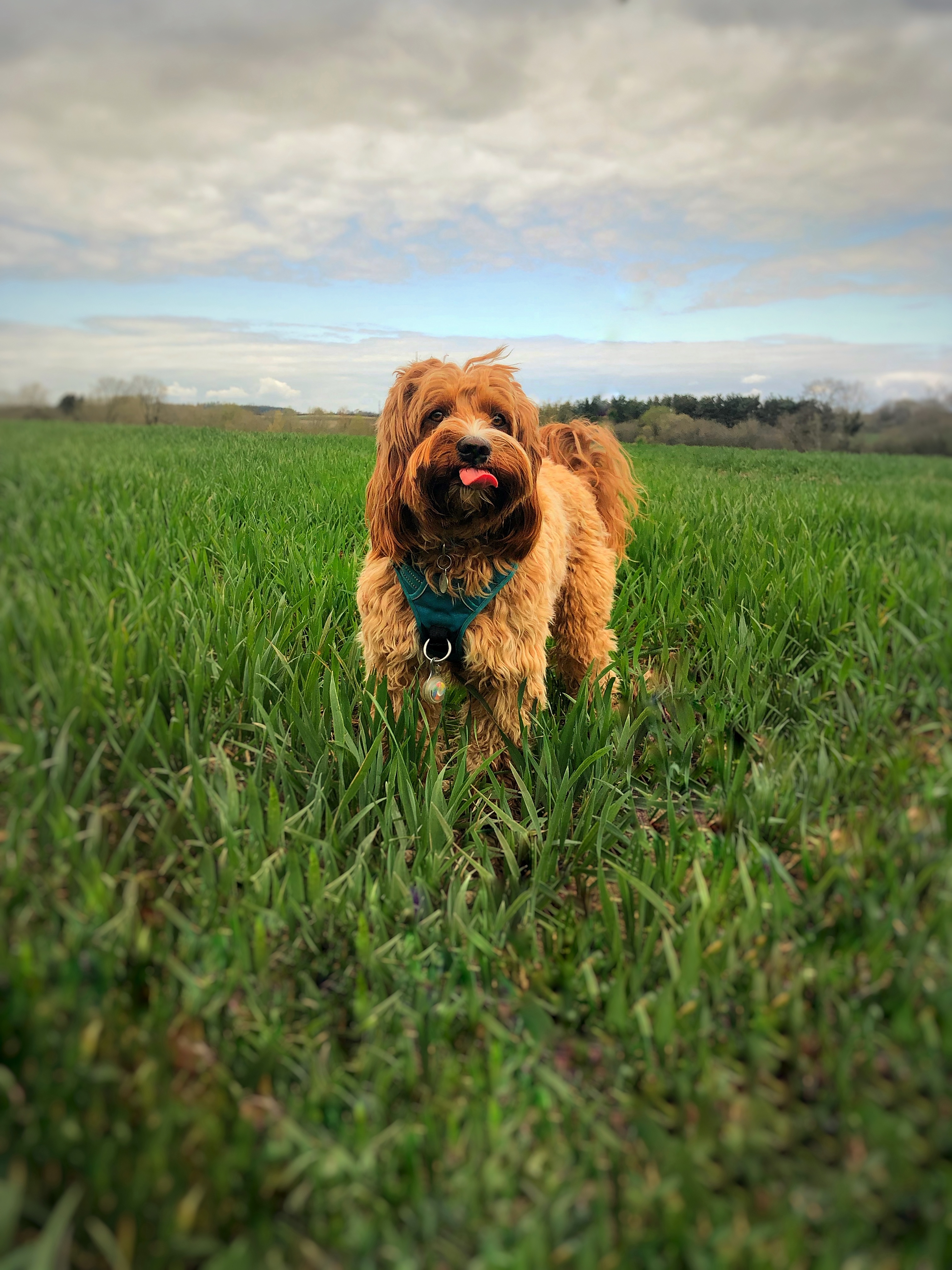
Many ordinary pet pictures are taken from a standing human’s perspective. This angle may make the dog appear small while allowing the floor to dominate the frame. Kneeling, sitting, or lying down brings the viewer into the dog’s world and makes the portrait more intimate.
Focus on the nearest eye whenever possible. Sharp eyes create a sense of connection even when the nose, ears, or background are slightly softer. For dogs with long noses, take several shots and check that the eyesnot only the magnificent snoutare in focus.
Try several perspectives:
- A close-up centered on the eyes and expression
- A full-body portrait that shows posture and surroundings
- A side profile with clean background separation
- A wide environmental image showing your dog on a trail, beach, or favorite couch
- A playful low-angle photograph during a game
Changing your position often improves the picture more than purchasing new equipment.
Control the Background Before You Press the Button
A strong dog photograph can be defeated by a cluttered background. Look behind your dog before shooting. Move trash cans, tangled leashes, bright packaging, dirty dishes, and anything that appears to grow directly from the dog’s head.
Simple backgrounds work especially well: an uncluttered wall, open grass, a shaded porch, neutral bedding, or distant trees. Increase the distance between your dog and the background when possible. This helps separate the subject visually and can create a softer, less distracting backdrop.
Do not remove every sign of real life. A muddy paw print, chewed tennis ball, or blanket fort may contribute to the story. The goal is not sterile perfection; it is intentional mess rather than accidental chaos.
Use Your Phone Like a Dog Photography Tool
Clean the Lens
Before changing settings, wipe the camera lens with a clean microfiber cloth. Phone lenses collect fingerprints, dust, and pocket debris. A ten-second cleaning can improve clarity more than ten minutes of editing.
Tap the Eyes to Focus
On most smartphones, tapping your dog’s face or eye tells the camera where to focus and measure exposure. If the fur appears too bright or dark, adjust the exposure control before taking the picture.
Use Burst Mode for Action
Dogs blink, shake, leap, sniff, and suddenly investigate invisible messages in the grass. Burst mode or continuous shooting records multiple frames, increasing your chance of catching the perfect expression or midair moment.
Avoid Excessive Digital Zoom
Digital zoom can reduce image quality. When it is safe and your dog remains comfortable, move physically closer or crop the image later. Leave enough room around paws, ears, and tails so the final composition does not feel cramped.
How to Photograph a Dog in Motion
For running, jumping, swimming, or fetching photographs, choose a bright location so the camera can use a faster shutter speed. Many modern phones and cameras include action, sports, subject-tracking, or animal-eye autofocus modes. Activate them before the game begins rather than attempting to explore menus while your dog disappears toward the horizon.
Follow the dog smoothly with the camera and begin shooting before the anticipated action. Photograph movement traveling across the frame when possible; it is often easier to track than a dog charging directly toward the lens like a furry freight train.
Leave visual space in front of the moving dog. This gives the subject somewhere to “go” within the composition. Always choose a secure location away from traffic, unstable surfaces, dangerous water, extreme heat, and other hazards.
Choose the Winning Image From Your Camera Roll
Once the session ends, resist posting the first acceptable frame. Review the entire sequence and remove obvious misses: closed eyes, severe blur, awkward crops, blocked faces, and expressions that do not represent the moment.
Next, compare the strongest candidates at full size. Look closely at:
- Eye focus and facial expression
- Body language and comfort
- Background distractions
- Lighting on dark or light fur
- Whether the pose feels natural
- The emotional or humorous story
Ask someone who knows your dog to choose a favorite without explaining your own preference. A fresh viewer may immediately notice that one picture feels more alive. When two images are technically similar, choose the one that makes you smile first.
Edit the Picture Without Editing Away Your Dog
Thoughtful editing helps viewers see what attracted you to the photograph. Start by straightening the horizon and cropping distracting edges. Then make modest adjustments to exposure, shadows, highlights, contrast, and color temperature.
Dark-coated dogs may benefit from lifted shadows, while white-coated dogs may need reduced highlights to preserve fur detail. Increase sharpness carefully around the eyes, but avoid turning every strand of fur into a tiny wire.
Filters should support the mood rather than replace reality. Heavy saturation can make grass radioactive, and extreme smoothing can make your dog resemble a computer-generated sofa cushion. Preserve natural coat color, recognizable markings, and the expression that made the image special.
Write a Caption People Will Remember
A good dog photo earns attention; a good caption gives that attention somewhere to go. The caption can reveal the dog’s name, age, personality, favorite activity, rescue story, or the ridiculous event happening outside the frame.
Simple Caption Formulas
- Name plus personality: “This is Maple, chief snack inspector and part-time squirrel analyst.”
- Mini story: “He carried this leaf for three blocks and refused all trade offers.”
- Dog’s point of view: “I was told the beach contained unlimited digging. The advertisement was accurate.”
- Question: “What do you think she heard behind the treat cabinet?”
- Heartfelt detail: “Twelve years old, still first at the door whenever the leash moves.”
Keep the tone consistent with the picture. A goofy action shot welcomes a joke, while a senior portrait or adoption anniversary may deserve a more sincere caption.
Post Your Dog Picture Safely and Responsibly
Before sharing, inspect the entire image for information you did not intend to publish. House numbers, license plates, identification tags, school logos, mail, computer screens, and recognizable documents can reveal more than expected. Consider blurring or cropping sensitive details.
Review the post’s audience settings, especially when sharing from home or a frequently visited location. Camera and app settings may attach location information to photos. Disable unnecessary location access or remove location data when privacy matters. Federal consumer guidance recommends reviewing app permissions, privacy controls, and location-sharing settings, while major social platforms provide audience and accessibility controls for posts.
When other people or their pets appear in the picture, ask permission before posting. Avoid publicly sharing information that could make pet theft easier, such as an exact daily routine, unattended location, or home address.
Make the Post More Accessible
Alt text helps people who use screen readers understand an image. Some platforms create automatic descriptions, but a short custom description is usually more accurate and expressive.
Useful alt text describes the essential visual information without copying the caption word for word. For example:
“A black Labrador sits in shallow lake water holding an oversized branch, with droplets flying from his tail.”
Mention meaningful actions, expressions, surroundings, and visible text. Avoid stuffing alt text with keywords. Its purpose is accessibility, not an invisible search-engine talent show.
A Quick Checklist Before You Post
- My dog appears comfortable and safe.
- The eyes or main action are in focus.
- The lighting shows useful fur and facial detail.
- The background does not contain major distractions.
- The edit looks natural.
- The crop does not awkwardly remove paws, ears, or tail.
- The image does not reveal private information.
- I have permission from any recognizable people.
- The caption adds humor, emotion, or context.
- Alt text describes the photograph clearly.
If the picture passes most of these checks and still makes you laugh, grin, or say “That is absolutely my dog,” post it proudly.
Experiences From Trying to Post the Best Picture of a Dog
Anyone who has seriously attempted dog photography eventually discovers that the dog has not read the creative brief. You may begin with a vision of a dignified portrait beneath golden evening light. Your dog may begin by eating grass, turning backward, and presenting the camera with a composition that cannot be used in polite society.
One of the most useful lessons is that preparation matters, but control is largely imaginary. A successful session often begins with a walk or a few minutes of play. A dog who has released some excitement may settle more naturally. The location should already be chosen, the background checked, and the camera ready before the dog enters the scene. Otherwise, the perfect expression will occur while you are still deleting old screenshots to create storage space.
During an outdoor session with an energetic retriever, the planned sitting portrait may produce nothing but blurred ears and impatient glances. The breakthrough often comes when the formal pose is abandoned. Throwing a familiar ball, allowing the dog to run, and photographing the activity can reveal the open mouth, bright eyes, and powerful movement that actually define that dog. The “failed” portrait session becomes a successful action session because the photographer adapts to the subject.
Photographing a shy dog teaches a different lesson. The best approach may be to sit nearby without calling, reaching, or repeatedly pointing the camera at their face. A longer lens or modest phone zoom can preserve personal space. After several quiet minutes, the dog may look toward the photographer with soft eyes. That single relaxed frame can be more meaningful than fifty forced poses.
Senior dogs also change the definition of a great photograph. Speed and perfect posture matter less. Their best picture may show a familiar nap in afternoon light, a slow walk beside a favorite person, or a close-up of a gray muzzle resting on a beloved blanket. Small details become part of the history: worn collar tags, cloudy eyes, a crooked ear, or the paw that always reaches out during belly rubs.
Another common experience is discovering that the photographer’s favorite image is not the audience favorite. You may admire a beautifully balanced portrait, while everyone else loves the frame taken one second later when the dog sneezed and both ears flew sideways. That does not mean viewers have poor taste. It means personality often defeats perfection.
The selection process becomes easier when pictures are judged by story rather than technical score. A slightly soft image of a puppy meeting snow for the first time may carry more emotional power than a flawless studio portrait. A rescue dog asleep with one paw touching their adopter may say more about trust than any carefully arranged pose.
The final lesson is to keep photographing ordinary days. Birthdays, hikes, and holidays deserve pictures, but so do quiet mornings, muddy walks, upside-down naps, and hopeful appearances beside the refrigerator. Dogs grow, coats change, toys disappear, and routines that feel permanent become memories surprisingly quickly.
Post the polished portrait when you capture it. Post the hilarious outtake too. The best picture of your dog is often the one that preserves not only what they looked like, but what living with them felt like.
Conclusion
To post the best picture of your dog, begin with the dog rather than the camera. Choose a moment that reflects their real personality, use soft light, photograph from eye level, simplify the background, and take enough frames to catch the expression between the poses. Edit gently, protect private information, add useful alt text, and write a caption that completes the story.
Most importantly, let your dog remain comfortable. No photograph is worth fear, restraint, or frustration. The ideal image is created when good technique meets trustand when your dog receives fair compensation in praise, play, or an appropriately sized snack.
Now review that crowded camera roll. Somewhere between the blurry tail, the accidental floor photo, and the close-up of one nostril is a picture that deserves its moment.