Porcelain bottles are the quiet overachievers of the decorative and functional world. They can sit on a vanity like tiny sculptures, hold fragrance with elegance, store tea or oil with old-world charm, or stand on a shelf and make a room look as if someone there has excellent taste and possibly reads art books on weekends. Unlike ordinary containers, porcelain bottles bring together utility, history, craftsmanship, and design in one beautifully fired package.
At their simplest, porcelain bottles are containers made from porcelain, a refined ceramic material known for its smooth surface, strength, low porosity, and often luminous white body. At their best, they are miniature works of art. From antique Chinese snuff bottles to modern refillable perfume vessels and minimalist bathroom dispensers, porcelain bottles prove that packaging does not have to be boring. A bottle can hold liquid, yesbut it can also hold culture, memory, and a surprising amount of personality.
What Are Porcelain Bottles?
Porcelain bottles are ceramic vessels made from a porcelain body, typically shaped, fired, glazed, and decorated for practical or decorative use. Porcelain itself is a type of vitrified ceramic, meaning it becomes dense and glasslike during high-temperature firing. This gives porcelain its hard, fine-grained, nonporous character. Compared with earthenware, porcelain is generally stronger, smoother, and less absorbent. Compared with many stonewares, it often has a more delicate appearance and, in thin areas, may show a soft translucency when held to light.
The word “bottle” can mean many things in this context. Some porcelain bottles are narrow-necked vessels for perfume, essential oils, liquor, sauces, or ceremonial liquids. Others are decorative bottle vases, collectible snuff bottles, apothecary-style containers, lotion dispensers, or sculptural pieces that only pretend to be useful. In other words, porcelain bottles have range. They are the actors who can play both “museum treasure” and “bathroom soap dispenser” without breaking character.
A Brief History of Porcelain Bottles
Porcelain has deep roots in China, where refined ceramic technology developed over many centuries. Chinese potters mastered high-temperature firing, white clay bodies, and sophisticated glazing techniques long before European makers could reproduce true hard-paste porcelain. Porcelain bottles and bottle-shaped vessels became part of this long tradition, appearing in forms used for medicine, wine, fragrance, scholarly display, and later, export markets.
One of the most famous centers of porcelain production is Jingdezhen, often called the “Porcelain Capital.” Its reputation grew because of access to excellent raw materials, skilled artisans, kiln technology, and trade routes. Blue-and-white porcelain, especially pieces painted with cobalt under clear glaze, became highly prized across Asia, the Middle East, Europe, and eventually America. The bottle formslender neck, rounded shoulder, balanced bodytraveled beautifully across cultures because it was both practical and graceful.
Chinese Snuff Bottles and Collectible Miniatures
Among the most admired porcelain bottle traditions are Chinese snuff bottles. These small containers were designed to hold powdered tobacco, but their cultural importance went far beyond their original use. Porcelain snuff bottles could be painted, molded, enameled, carved, or shaped into playful forms. They were often carried, gifted, collected, and admired as signs of taste. Their small size made them perfect canvases for highly detailed decoration: landscapes, flowers, animals, figures, calligraphy, and symbolic motifs.
Today, porcelain snuff bottles remain popular among collectors because they combine history, artistry, and portability. A cabinet full of antique furniture requires a large room. A serious snuff bottle collection can fit in a draweralthough collectors will still somehow run out of space. That is one of the basic laws of collecting.
Europe’s Porcelain Obsession
For centuries, European elites adored Chinese porcelain but could not easily produce it themselves. Imported porcelain was expensive, fashionable, and mysterious. It became known as “white gold,” not because anyone should try to pay rent with a vase, but because porcelain carried enormous prestige. In the early 1700s, the Meissen manufactory in Saxony became one of the first successful European producers of hard-paste porcelain, helping transform porcelain from rare import into a major decorative arts industry.
European porcelain bottles soon appeared in perfume sets, pharmacy containers, tableware services, and ornamental collections. Many were shaped with Rococo curves, painted with flowers, gilded details, or scenes inspired by East Asian art. Some were charming. Some were wildly theatrical. A few looked as if an aristocrat had asked, “Can this bottle have more gold, more flowers, and perhaps a tiny mythological scene?” and the artist said, “Absolutely.”
How Porcelain Bottles Are Made
Porcelain bottle production begins with raw materials. Traditional porcelain usually includes kaolin, feldspathic material, and silica or quartz. Kaolin gives porcelain its white-burning quality and heat resistance. Feldspar helps the body vitrify during firing, while silica contributes structure and hardness. The exact recipe can vary depending on whether the maker is producing hard-paste porcelain, soft-paste porcelain, bone china, or a modern ceramic body designed for industrial use.
Forming the Bottle Shape
Porcelain bottles may be wheel-thrown, slip-cast, press-molded, hand-built, or produced through a combination of methods. For symmetrical bottles, slip casting is common. In this process, liquid clay slip is poured into a plaster mold. The plaster absorbs water from the slip, forming a clay layer against the mold wall. Once the layer reaches the desired thickness, excess slip is poured out. After drying slightly, the bottle is removed, cleaned, refined, and prepared for firing.
Handmade porcelain bottles require patience because porcelain can be less forgiving than ordinary clay. It remembers every careless touch. It can warp, crack, slump, or shrink dramatically during drying and firing. Working with porcelain is a bit like baking a soufflé while negotiating with a cat: beautiful results are possible, but confidence alone will not save you.
Firing, Glazing, and Decoration
Most porcelain bottles are fired at high temperatures to create a dense, durable body. Many pieces go through a first firing, often called bisque firing, before glaze is applied. After glazing, the bottle is fired again at a higher temperature so the glaze melts and bonds to the surface. Decorative techniques may include underglaze painting, overglaze enamels, transfer printing, gilding, decals, carving, relief molding, or contemporary digital ceramic printing.
Blue-and-white porcelain is one of the most recognizable styles. In this technique, cobalt decoration is painted under a clear glaze, then fired so the design becomes sealed beneath the surface. Other porcelain bottles may feature celadon glazes, crackle glazes, monochrome white surfaces, matte finishes, metallic accents, or bright enamel colors. The range is enormous, which is why porcelain bottles fit so many aesthetics, from antique maximalism to modern spa minimalism.
Common Types of Porcelain Bottles
Porcelain Perfume Bottles
Porcelain perfume bottles are prized because they feel luxurious and protect fragrance from light better than clear glass. Many vintage examples feature stoppers, atomizers, painted floral designs, or gold trim. Modern versions may use porcelain sleeves, refillable cartridges, or sculptural forms that turn a fragrance bottle into a collectible object. In luxury packaging, porcelain communicates permanence. It says, “This scent is special,” not “I was grabbed from a drugstore shelf during a lunch break.”
Porcelain Apothecary Bottles
Apothecary-style porcelain bottles draw inspiration from old pharmacies and medical storage jars. Historically, ceramic and glass containers were used to store medicines, powders, oils, and tinctures. Today, porcelain apothecary bottles are often decorative, used in bathrooms, kitchens, spas, boutiques, and interior design. Labels may be printed, hand-painted, or embossed for an old-world look.
Porcelain Liquor and Beverage Bottles
Porcelain and ceramic bottles have long been used for spirits, sake, specialty liqueurs, and commemorative beverages. Their opacity helps shield contents from light, and their weight gives a premium feel. However, bottles used for drink storage must be made with food-safe materials and tested glazes. Decorative does not automatically mean safe for storing whiskey, vinegar, or grandma’s secret chili oil.
Porcelain Oil, Sauce, and Kitchen Bottles
Porcelain bottles can be excellent for olive oil, soy sauce, vinegar, and specialty condiments when properly glazed and fitted with suitable closures. A white porcelain oil bottle on a kitchen counter looks clean and elegant, especially compared with a plastic squeeze bottle that seems to have survived three restaurant shifts and a minor storm.
Porcelain Decorative Bottle Vases
Some porcelain bottles are not meant to store anything. They are bottle-shaped vases or decorative vessels designed for display. These can include Chinese bottle vases, Japanese-inspired forms, European mantel pieces, modern studio pottery, and minimalist sculptural objects. A single porcelain bottle vase with a narrow neck can hold one branch, one flower, or nothing at all. Sometimes emptiness is the design. Very Zen. Very convenient if you forgot to buy flowers.
Benefits of Porcelain Bottles
Porcelain bottles are popular for several reasons. First, they are visually refined. Porcelain has a smooth, bright, clean surface that pairs well with both classic and contemporary interiors. Second, porcelain is durable when properly made. It resists staining, does not easily absorb odors, and can be cleaned more thoroughly than porous ceramics. Third, porcelain can protect light-sensitive contents because it is opaque unless made extremely thin.
Another benefit is reusability. In a market increasingly interested in sustainable packaging, porcelain bottles can support refill systems. A well-designed porcelain dispenser for lotion, soap, fragrance, or home products can be refilled many times, reducing dependence on single-use plastic. Of course, sustainability depends on the full product life cycle, including manufacturing energy, shipping weight, refill behavior, and whether people actually reuse the bottle instead of letting it become a fancy dust collector.
Porcelain Bottles vs. Glass Bottles
Glass bottles are transparent, widely recyclable, and ideal when consumers need to see the contents. Porcelain bottles are opaque, more tactile, and often more decorative. Glass feels clean and scientific; porcelain feels crafted and intimate. Glass says “laboratory.” Porcelain says “artisan apothecary with excellent lighting.”
For perfume, cosmetics, and premium home goods, porcelain can add a sense of exclusivity. For food and beverage packaging, glass may be more practical because it is easier to inspect, lighter in some cases, and widely accepted in recycling streams. For decorative use, porcelain wins when the goal is texture, color depth, hand-painted detail, or ceramic warmth.
Porcelain Bottles vs. Ceramic Bottles
All porcelain is ceramic, but not all ceramic is porcelain. Ceramic is a broad category that includes earthenware, stoneware, porcelain, and other fired clay materials. Porcelain is usually finer, denser, harder, and less porous than earthenware. Stoneware can also be durable and nonporous when fired properly, but porcelain tends to have a more refined surface and a whiter body.
When buying a porcelain bottle, check whether the product is truly porcelain or simply “ceramic.” The distinction matters for quality, appearance, price, and performance. A rustic stoneware bottle may be perfect for farmhouse decor. A thin white porcelain bottle may be better for a luxury perfume line or an elegant tea room. Neither is automatically superior; they simply speak different design languages.
Safety Tips for Using Porcelain Bottles
If a porcelain bottle will hold food, drink, cosmetics, or anything that touches skin, safety matters. Look for labels such as food-safe, lead-safe, or tested for the intended use. In the United States, ceramic foodware is regulated for leachable lead and cadmium. Antique, handmade, imported, or purely decorative porcelain bottles may not meet modern safety standards, especially if they have old glazes, metallic decoration, repairs, or unknown origins.
Do not assume a beautiful antique porcelain bottle is safe for storing beverages or oils. Use antique pieces for display unless you have reliable testing or documentation. Also be cautious with cracked, crazed, or chipped interiors. Tiny cracks can harbor residue and bacteria, and damaged glaze can make cleaning difficult. A bottle can be gorgeous and still be a terrible candidate for salad dressing. Beauty is powerful, but it does not sanitize itself.
How to Choose a Porcelain Bottle
Consider the Purpose
Start with function. Will the bottle hold liquid, fragrance, soap, oil, or nothing at all? A decorative vase does not need the same closure quality as a refillable shampoo bottle. A perfume bottle needs compatibility with fragrance ingredients. A kitchen bottle needs a food-safe glaze and easy cleaning. A collectible bottle needs authenticity, condition, and provenance.
Check the Finish
Look at the glaze. It should be smooth, even, and free from major defects unless the imperfections are intentional artistic choices. Crazing can be attractive on decorative pieces, but it is not ideal for food storage. Matte porcelain can look beautiful but may stain more easily than glossy glaze. Metallic accents may not be dishwasher-safe or microwave-safe.
Inspect the Closure
A bottle is only as useful as its closure. Stoppers, corks, screw caps, pumps, atomizers, and pour spouts should fit securely. For liquids, check whether the closure is leak-resistant. For fragrance, make sure the stopper or spray mechanism seals well enough to reduce evaporation. For decorative bottles, the stopper should still match the design and not wobble like it has had a long day.
Think About Size and Weight
Porcelain bottles can be heavier than plastic or thin glass. That weight feels premium, but it can be inconvenient for travel or shipping. For everyday bathroom use, choose a stable base that will not tip easily. For shelves, mantels, and display cabinets, consider height, silhouette, and how the bottle relates to surrounding objects.
How to Clean and Care for Porcelain Bottles
For most modern glazed porcelain bottles, gentle handwashing with warm water and mild soap is best. Use a soft bottle brush for interiors when needed. Avoid harsh abrasives, especially on painted, gilded, or matte surfaces. Do not soak antique bottles for long periods, because old repairs, labels, corks, or overglaze decoration may be fragile.
For perfume bottles, rinse only if the material and decoration can handle it. Some collectors prefer not to clean antique perfume bottles aggressively because residue, labels, and original stoppers can affect value. For kitchen bottles, clean regularly and let the interior dry completely before refilling. Moisture trapped in a narrow-neck bottle is basically an invitation for unpleasant smells to move in and start paying no rent.
Collecting Porcelain Bottles
Collectors look for age, maker, condition, decoration, rarity, and provenance. A small porcelain bottle with a known maker’s mark, original stopper, strong enamel work, or documented history may be more valuable than a larger but ordinary piece. Condition is crucial. Chips, cracks, repairs, missing lids, and worn gilding can reduce value, although rare pieces may still be desirable even with damage.
Popular collectible categories include Chinese snuff bottles, Meissen scent bottles, Japanese porcelain sake bottles, French perfume bottles, antique apothecary containers, and studio porcelain bottles by contemporary ceramic artists. New collectors should study reputable museum collections, auction catalogs, antiques guides, and specialist dealers before buying expensive pieces. The porcelain world is beautiful, but it also has fakes, reproductions, and optimistic sellers who believe “old-looking” is a scientific dating method.
Porcelain Bottles in Modern Interior Design
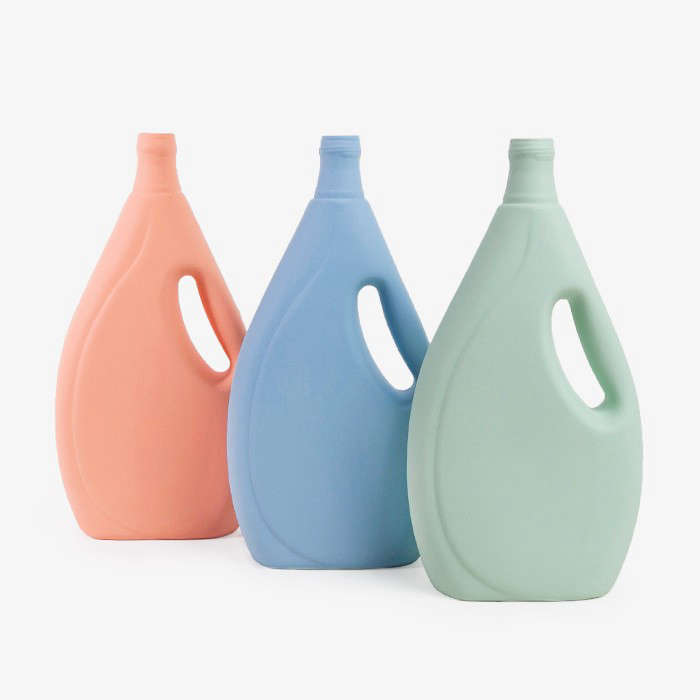
Porcelain bottles work beautifully in interior design because they add shape, shine, and texture without overwhelming a room. A pair of blue-and-white porcelain bottle vases can bring classic charm to a console table. A matte white porcelain soap bottle can make a bathroom feel calmer. A hand-painted floral bottle can soften a bedroom vanity. A black porcelain bottle with a minimalist silhouette can look striking in a modern kitchen.
Designers often use porcelain bottles in groups of varying heights. Three bottles on a shelf can create rhythm: tall, medium, small. The trick is to avoid making the display look like a bottle convention. Mix porcelain with books, trays, greenery, framed art, or natural materials such as wood and linen. Let the bottle be part of a story, not a lonely object auditioning for attention.
Modern Uses for Porcelain Bottles
Today, porcelain bottles appear in luxury fragrance, boutique skincare, refillable home products, restaurant tableware, hotel amenities, wedding decor, handmade gifts, and collector displays. Small businesses may use porcelain bottles to communicate craftsmanship and premium quality. A handmade ceramic bottle filled with room spray, olive oil, or bath salts can feel more personal than mass-market packaging.
For brands, porcelain packaging can support storytelling. A porcelain bottle can suggest heritage, purity, calm, sustainability, or luxury depending on its design. For homeowners, porcelain bottles offer a way to replace visual clutter with objects that feel intentional. Even a simple refillable porcelain soap dispenser can make a sink area look more polished. It is a small upgrade, but small upgrades are often the ones we notice every day.
Buying Porcelain Bottles Online
When shopping online, read descriptions carefully. Look for size, capacity, material, glaze type, closure type, care instructions, and whether the bottle is food-safe or decorative only. Photos should show the front, back, base, interior if possible, and any marks or flaws. For antiques, ask about repairs and provenance. For functional bottles, check return policies in case the pump leaks or the stopper fits like it was designed during a power outage.
Price varies widely. A mass-produced porcelain dispenser may be affordable, while an antique or artist-made porcelain bottle can cost hundreds or thousands of dollars. The right purchase depends on purpose. You do not need museum-grade porcelain to hold hand soap, but you do need a reliable glaze, stable base, and working pump. On the other hand, if you are collecting, craftsmanship and authenticity matter far more than convenience.
Personal Experiences and Practical Lessons with Porcelain Bottles
One of the best ways to understand porcelain bottles is to actually live with them. A porcelain bottle may look delicate on a shelf, but in daily use it quickly reveals whether it is well designed or merely photogenic. I have seen people buy beautiful porcelain soap dispensers only to discover that the pump rusts, the base is too narrow, or the bottle is so slippery when wet that it behaves like a tiny ceramic escape artist. The lesson is simple: beauty should cooperate with function.
In a bathroom, porcelain bottles can completely change the mood of the space. Replacing mismatched plastic bottles with two or three refillable porcelain containers makes the counter look cleaner and calmer. The effect is especially strong with white, cream, pale blue, or matte porcelain. These colors reflect light softly and create a spa-like feeling without requiring a full renovation. No contractor, no dust, no mysterious invoicejust better bottles.
In the kitchen, porcelain oil and vinegar bottles feel especially satisfying when they pour well. A good porcelain bottle should have enough weight to stay steady but not so much that using it feels like arm day at the gym. The spout should control the flow cleanly, and the neck should be wide enough for refilling. Narrow-neck bottles may look elegant, but if you need a funnel, three paper towels, and emotional support every time you refill them, the romance fades quickly.
For collectors, handling porcelain bottles teaches a different kind of appreciation. Small details matter: the curve of a shoulder, the thickness of a foot ring, the quality of painted lines, the way glaze pools near the base, the sound the body makes when gently tapped. Porcelain has a crispness that many other ceramics do not. Even a small bottle can feel precise and alive in the hand. This tactile quality is one reason people become attached to porcelain objects. They are not just seen; they are experienced.
Decorating with porcelain bottles also teaches restraint. One bottle can look elegant. Five can look curated. Twenty-seven can look like the bottles are forming a local government. Grouping matters. A blue-and-white porcelain bottle vase looks wonderful beside warm wood, brass, rattan, or linen. A plain white porcelain bottle works well with stone countertops, glass trays, and green plants. Highly decorated bottles need breathing room so their patterns can be appreciated instead of competing with everything nearby.
Another practical lesson is that not every porcelain bottle should be used for liquids. Antique bottles, especially those with unknown glazes or visible crazing, are best kept decorative. This is not disappointing; it is respectful. An antique bottle has already survived decades or centuries. It does not need to prove itself by holding olive oil next to a stove. Display it, enjoy it, and let modern food-safe porcelain handle the messy jobs.
Finally, porcelain bottles make surprisingly meaningful gifts. A small handmade bottle can feel personal because it carries the mark of craft. A refillable porcelain fragrance bottle can feel luxurious. A decorative porcelain bottle vase can suit a housewarming, wedding, or holiday gift. The key is to match the bottle to the person. Minimalists may prefer clean white forms. Vintage lovers may enjoy painted florals. Collectors may appreciate historical styles. And practical people will silently bless you if the bottle is easy to clean.
Conclusion
Porcelain bottles are more than attractive containers. They are part of a long ceramic tradition shaped by material science, global trade, artistic imagination, and everyday use. From Chinese porcelain snuff bottles to modern refillable dispensers, they combine durability with beauty in a way few materials can match. The best porcelain bottle is not merely pretty; it is appropriate for its purpose, safe for its contents, comfortable to use, and pleasing enough to keep around for years.
Whether you are shopping for a decorative bottle vase, collecting antique porcelain, designing luxury packaging, or upgrading your bathroom counter, porcelain offers a rare mix of refinement and practicality. Treat it well, choose wisely, and a porcelain bottle can become one of those small objects that quietly improves daily lifewithout needing applause, batteries, or a software update.