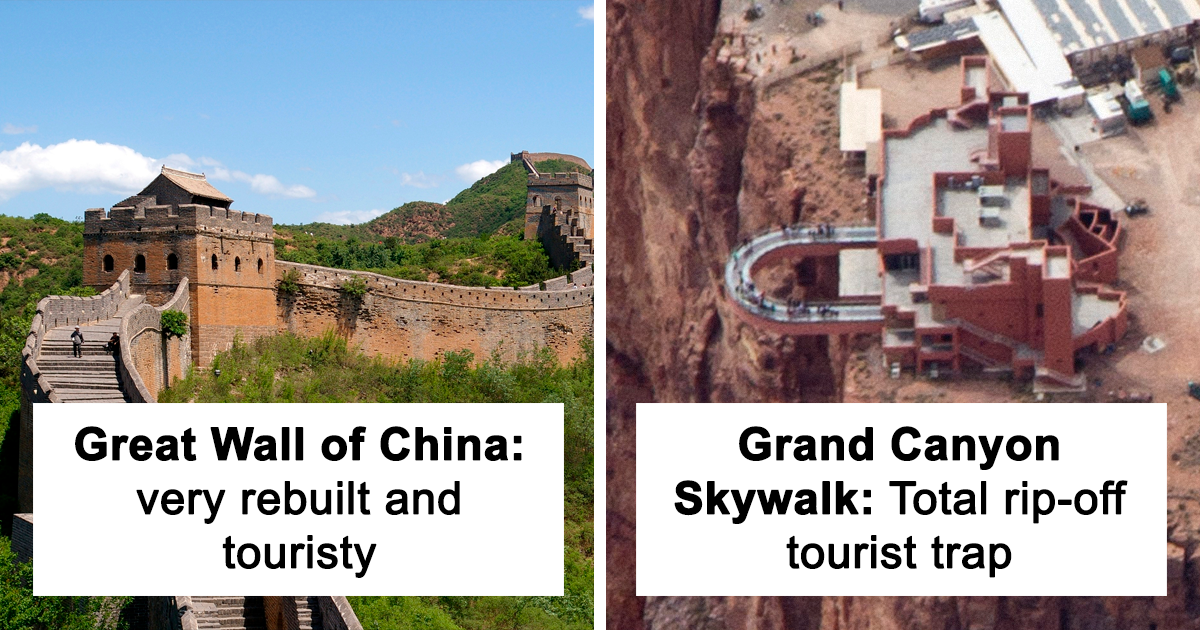
There are two kinds of travel disappointment. The first is normal: your hotel pillow has the emotional support of a folded napkin, your flight is delayed, and your suitcase decides to vacation in another country. The second is more specific: you finally reach a world-famous attraction, elbow through a crowd, dodge five souvenir stands, spend too much money on a lukewarm snack, and think, “Wait… this is it?”
That is the magic, tragedy, and mild comedy of tourist traps. They are not always terrible. Many are famous for a reason. But some places become so over-marketed, overcrowded, overpriced, or misunderstood that the real-life experience cannot compete with the postcard. The photo looks cinematic; the visit feels like standing in line for a phone background.
Inspired by travelers sharing their most disappointing tourist attractions around the world, this guide looks at why certain bucket-list places leave visitors underwhelmed, which famous spots often get called overrated, and how to enjoy major destinations without falling face-first into the gift shop.
What Makes a Tourist Trap Disappointing?
A tourist trap is not simply a popular place. The Grand Canyon is popular, and it still has the ability to make adults whisper like they just entered nature’s cathedral. A disappointing tourist trap usually has a few warning signs: big expectations, little payoff, inflated prices, aggressive vendors, endless crowds, and an experience designed more for quick spending than genuine discovery.
Sometimes the attraction itself is fine, but the surrounding environment ruins it. A historic square becomes a funnel of plastic souvenirs. A famous street turns into a parade of chain restaurants. A once-charming waterfront becomes a maze of identical T-shirt shops selling “local” hoodies manufactured somewhere very far from local.
Other times, disappointment comes from scale. A monument may be historically meaningful but physically tiny. Visitors arrive expecting cinematic thunder and instead meet a rock, a statue, or a painting smaller than their imagination. Nobody wants to admit they crossed an ocean to squint.
30 Tourist Traps Around the World Travelers Often Call Disappointing
These examples are not a command to avoid every famous landmark. Think of them as expectation management with a boarding pass. Some are still worth seeing, but they are best visited with strategy, patience, and snack money that has not been emotionally manipulated by a souvenir kiosk.
1. Times Square, New York City
Times Square is bright, loud, chaotic, and very committed to selling you things. First-time visitors often expect New York glamour and instead find costumed characters, chain restaurants, packed sidewalks, and enough LED screens to tan your soul. Go once for the spectacle, then escape to a neighborhood where New Yorkers actually eat dinner.
2. Hollywood Walk of Fame, Los Angeles
The idea is glamorous: stars, cinema history, old Hollywood magic. The reality can be crowded sidewalks, souvenir shops, traffic, and tourists staring at pavement while wondering why their favorite celebrity’s star is next to a discount luggage store. The nearby movie history is real, but the experience can feel surprisingly unglamorous.
3. The Mona Lisa, Paris
The Mona Lisa is a masterpiece, but seeing it can feel like attending a press conference for a small painting. Visitors often describe a crowded room, phones in the air, and only a few seconds to look before the human wave carries them away. The Louvre itself is magnificent; visiting only for the Mona Lisa is like going to a buffet for one grape.
4. The Leaning Tower of Pisa, Italy
The tower is beautiful and genuinely strange, but the experience is often dominated by crowds taking the same forced-perspective “holding up the tower” photo. After ten minutes, the real attraction becomes watching strangers perform architectural pantomime in a field.
5. The Little Mermaid Statue, Copenhagen
She is iconic, historic, and charming. She is also small. Many travelers make the trek to the waterfront expecting drama and find a modest bronze figure surrounded by people taking quick photos. It is worth a look if you are nearby, but maybe do not build an entire vacation mood board around her.
6. Plymouth Rock, Massachusetts
Plymouth Rock is symbolically important, but visually it is a rock behind a structure. Visitors expecting a dramatic monument sometimes meet a stone that looks like it could use a publicist. The better experience is learning the broader history of Plymouth, Indigenous communities, and early colonial America.
7. Manneken Pis, Brussels
Few attractions create such a powerful “that’s it?” reaction. The famous statue of a little boy urinating is small, often crowded, and surrounded by people trying to photograph it from awkward angles. Brussels has excellent food, architecture, and comic art; do not let one tiny fountain become the whole trip.
8. Las Ramblas, Barcelona
Las Ramblas has history and energy, but many travelers now associate it with crowds, overpriced restaurants, souvenir stands, and pickpocket warnings. The smarter move is to use it as a short stroll, then explore Barcelona’s markets, side streets, architecture, and quieter neighborhoods.
9. Venice in Peak Summer
Venice is one of the most beautiful cities on Earth. It is also one of the easiest places to experience as a human traffic cone in July or August. Cruise crowds, narrow lanes, heat, and high prices can turn romance into a slow shuffle. Visit early, late, or off-season, and sleep overnight if possible.
10. Trevi Fountain, Rome
The fountain is stunning. The crowd around it can feel like a competitive sport. Visitors often arrive hoping for a peaceful coin toss and instead enter a dense arena of selfie sticks, tour groups, and expensive snacks nearby. Go at sunrise if you want magic without being gently shoulder-checked by someone’s backpack.
11. Spanish Steps, Rome
The Spanish Steps are elegant and historically significant, but at the end of the day, they are still steps. Crowds gather, rules limit sitting, and the surrounding area can be pricey. Rome has ruins, churches, fountains, and food that can change your personality. Do not spend too much emotional energy on stairs.
12. Stonehenge, England
Stonehenge is ancient, mysterious, and archaeologically important. Yet some visitors feel underwhelmed because regular access keeps people at a distance to protect the site. If you expect to wander freely among the stones, you may be disappointed. If you go for history and landscape, it lands better.
13. Oxford Street, London
Oxford Street promises shopping excitement but can deliver shoulder-to-shoulder crowds, traffic, chain stores, and sensory overload. London’s charm is often stronger in its markets, museums, parks, pubs, and neighborhoods than on its busiest retail corridor.
14. Changing the Guard, Buckingham Palace
It sounds regal. In practice, it can involve standing in a huge crowd for a partial view of a ceremony you mostly hear rather than see. If pageantry is your thing, plan carefully. If not, London offers countless royal sites without the sidewalk compression.
15. Fisherman’s Wharf, San Francisco
Fisherman’s Wharf has sea lions, bay views, and family-friendly energy, but it also has tourist pricing, souvenir overload, and restaurants that may feel more mass-market than memorable. Enjoy the waterfront, then make time for San Francisco’s neighborhoods, parks, bakeries, and local food scenes.
16. Bourbon Street, New Orleans
Bourbon Street can be fun if your goal is neon chaos in a plastic cup. But travelers looking for the soul of New Orleans may be disappointed by the noise, crowds, smells, and party atmosphere. The city’s music, food, architecture, and culture shine far beyond this famous strip.
17. Niagara Falls Tourist District
The falls themselves are spectacular. The surrounding tourist zones can feel like nature got trapped inside an arcade. Wax museums, chain restaurants, and inflated prices may distract from the real wonder: millions of gallons of water doing something your shower could never.
18. The Empire State Building Observatory
The view is excellent, but some travelers prefer seeing the Empire State Building from another observation deck rather than standing on it. New York has multiple skyline viewpoints, and the best one depends on whether you want the famous building in your photo or under your shoes.
19. Dubai Mall and Fountain Crowds
Dubai does spectacle well, but visitors expecting cultural depth from the mall-and-fountain circuit may find it polished, crowded, and heavily commercial. The experience is impressive in scale, but it can feel more like luxury consumption than discovery.
20. Cancun’s Most Commercial Hotel Zones
Cancun has beautiful water and easy vacation logistics, but some areas are built so tightly around tourism that travelers feel removed from local culture. For a richer trip, combine beach time with cenotes, regional food, Mayan history, and smaller towns.
21. Santorini at Cruise-Ship Rush Hour
Santorini’s views are real-life wallpaper, but cruise-ship timing can transform narrow lanes into a slow-moving suitcase parade. The trick is to stay overnight, wander early, and remember that the island is more than one sunset viewpoint.
22. Bali’s Most Overcrowded Photo Spots
Bali remains culturally rich and naturally beautiful, but some viral locations now function like outdoor photo studios. Gates, swings, beach clubs, and temple viewpoints can involve queues longer than the spiritual reflection they were supposed to inspire.
23. The Blarney Stone, Ireland
Kissing a famous stone upside down is either a charming tradition or a personal hygiene trust fall. The castle grounds can be lovely, but the main ritual may feel rushed, crowded, and stranger than expected.
24. Juliet’s Balcony, Verona
Romantic? In theory. Historically complicated? Very. Crowded? Often. Juliet’s Balcony attracts lovers, literature fans, and selfie-seekers, but many visitors are surprised by how manufactured and congested the experience feels.
25. The Dead Sea Resort Experience
Floating in the Dead Sea is unforgettable, but some travelers complain about expensive resorts, limited infrastructure, crowded access points, or environmental concerns. The natural phenomenon is powerful; the tourist setup can vary widely.
26. Caribbean Cruise Port Shopping Areas
Some cruise ports feel less like destinations and more like jewelry stores with palm trees. When thousands of passengers arrive at once, the experience can become rushed, crowded, and repetitive. Booking a local guide or exploring beyond the port can make a major difference.
27. The Las Vegas Strip
Las Vegas is designed to overwhelm, and it succeeds with Olympic confidence. Some visitors love the lights, shows, restaurants, and absurdity. Others find the Strip expensive, artificial, smoky, and exhausting. It is less a city street than a theme park for adult impulses.
28. Immersive Art Pop-Ups
Not all immersive experiences are bad, but many travelers have complained about paying premium prices to stand in projected rooms that feel more like a screensaver than a museum. Before booking, read recent reviews and check whether the exhibit offers real interpretation or just dramatic lighting.
29. Famous Food Streets With Aggressive Menus
Any city can have a “must-eat” street that slowly becomes a trap: laminated menus in six languages, hosts waving tourists inside, giant photo boards, and prices that rise with proximity to the landmark. Great food is often nearby, just not always directly under the biggest sign.
30. Overcrowded Theme Parks on Peak Days
Theme parks can be magical until the lines, heat, app reservations, add-on fees, and food prices turn joy into project management. The rides may be great, but the value depends heavily on timing, crowd levels, and how many churros your budget can survive.
Why We Still Fall for Tourist Traps
Tourist traps work because humans are sentimental collectors. We want proof. We want the photo, the ticket stub, the “I was there” moment. Social media intensifies that urge by flattening places into recognizable images. If everyone has a picture at the same fountain, balcony, beach swing, or neon intersection, skipping it can feel like failing an invisible travel exam.
There is also comfort in famous places. They are easy to find, easy to book, and easy to explain. Nobody asks why you visited the Eiffel Tower. But if you spend three hours exploring a quiet neighborhood bakery, you may have to describe the joy of a perfect pastry like you are defending a thesis.
The problem is not visiting famous attractions. The problem is letting fame do all the planning. A landmark can be the appetizer, not the full meal. See the big thing, take the photo, then walk two blocks farther than everyone else.
How to Avoid Disappointment at Famous Attractions
Go Early, Late, or Off-Season
Crowds can turn a beautiful place into a group project nobody volunteered for. Sunrise visits, evening tickets, weekday slots, and shoulder-season travel often make famous attractions feel completely different.
Research the Actual Experience, Not Just the Image
Before booking, look up recent visitor reviews, official access rules, ticket requirements, and crowd patterns. A place may look peaceful in a professional photo because the photographer arrived at 5:30 a.m. with the dedication of a raccoon near an open trash can.
Follow the “One Landmark, One Local Experience” Rule
For every major attraction, add one local-feeling activity: a neighborhood market, a small museum, a public park, a family-run restaurant, or a guided walk led by someone who lives there. This balances the big-name stop with something more personal.
Beware of Restaurants With Tourist-Trap Signals
Red flags include giant menus, pushy hosts, food photos for every dish, suspiciously broad cuisine, and a location directly facing a famous monument. The best meal of your trip is rarely served by someone waving you in from the sidewalk while holding a laminated lasagna poster.
The Bigger Issue: Overtourism
Disappointing tourist traps are not just a traveler problem. They are also a destination problem. When too many visitors concentrate in the same streets, viewpoints, and historic centers, local life gets squeezed. Housing costs rise, public spaces become crowded, infrastructure strains, and small businesses may shift from serving residents to serving short-term visitors.
That is why cities such as Barcelona, Venice, Amsterdam, and other major destinations have debated or introduced tourism controls, taxes, rental limits, crowd-management systems, and visitor rules. These policies are not always popular, but they reflect a real tension: tourism brings money, yet unmanaged tourism can damage the very places people came to admire.
Responsible travel does not mean feeling guilty for going somewhere famous. It means spending thoughtfully, respecting local rules, avoiding nuisance behavior, supporting local businesses, and remembering that a destination is not a stage set built for our vacation photos.
Experiences Related to Disappointing Tourist Traps Around the World
The funniest thing about disappointing tourist traps is that they often become better stories than perfect attractions. Nobody returns from a flawless museum visit and says, “Gather around, I must tell you about the excellent signage.” But everyone remembers the time they paid too much for a sad sandwich near a landmark, waited 90 minutes for a ten-second view, or realized the famous statue was roughly the size of a determined garden gnome.
One common experience travelers share is the “expectation gap.” Before the trip, the attraction exists in your mind as a cinematic highlight: golden light, open space, meaningful silence, maybe a violin playing somewhere for no clear reason. Then reality arrives wearing cargo shorts. There are tour buses, security lines, construction barriers, and 600 people trying to take the same photo. The landmark may still be impressive, but the moment has to fight for oxygen.
Another familiar experience is the “souvenir corridor.” You leave a famous site and immediately enter a commercial tunnel of magnets, mugs, keychains, hats, and mysterious snacks shaped like the attraction. Some souvenirs are fun; travel should have room for goofy purchases. But when every exit leads through a retail maze, the place can start to feel less like heritage and more like a checkout line with architecture.
Food disappointment is another classic. Restaurants closest to major attractions often pay high rents and rely on constant visitor turnover, not loyal regulars. That does not guarantee bad food, but it raises the risk of overpriced, forgettable meals. Many seasoned travelers learn to walk at least a few streets away before eating. The difference between “tourist pasta” and “grandma is in the kitchen and she means business” can be about twelve minutes on foot.
There is also the emotional weirdness of visiting solemn places that have become selfie stops. Memorials, historic tragedy sites, sacred spaces, and culturally important landmarks require more awareness than a beach viewpoint. Many travelers have described discomfort when visitors pose too cheerfully, climb where they should not, speak loudly, or treat serious places like props. The best rule is simple: ask whether your behavior would still feel appropriate if no camera were involved.
Still, disappointing tourist traps can teach us how to travel better. They remind us to slow down, question hype, read beyond top-ten lists, and leave room for surprise. Some of the best travel moments happen after the famous stop: the quiet café behind the cathedral, the side street with local music, the small museum with no line, the neighborhood park where daily life continues without caring about your itinerary.
In the end, tourist traps are not always traps because they are fake. Many are real places with real history, beauty, or cultural weight. They become traps when we expect them to deliver a complete travel experience by themselves. A landmark can open the door, but curiosity has to walk through it.
Conclusion
The world’s most disappointing tourist traps usually disappoint for the same reasons: too many people, too much hype, too many fees, and too little connection to the place itself. But famous attractions do not have to ruin a trip. With better timing, realistic expectations, local detours, and a willingness to skip the most obvious restaurant on the square, travelers can still enjoy iconic places without feeling like they were gently robbed by a postcard.
So go ahead and see the landmark if it matters to you. Take the photo. Buy the magnet if it makes you happy. Just remember to look up from the crowd, walk beyond the souvenir stands, and give the destination a chance to be more than its most overused image.
Note: This article is written as original SEO content based on real traveler discussions, tourism reporting, review-pattern studies, and widely reported examples of overcrowded or overhyped attractions.