Most conversations disappear from memory somewhere between “How have you been?” and “Did you validate the parking?” Then, without warning, someone asks one perfectly ordinary questionand the emotional floor collapses.
That is the painful idea behind the online discussion about “the one question” that broke people. The questions were not necessarily cruel. Many were gentle, curious, or compassionate. Their power came from landing on a truth the person had spent years avoiding, minimizing, or carefully storing in a mental box labeled “Absolutely Not Opening This Today.”
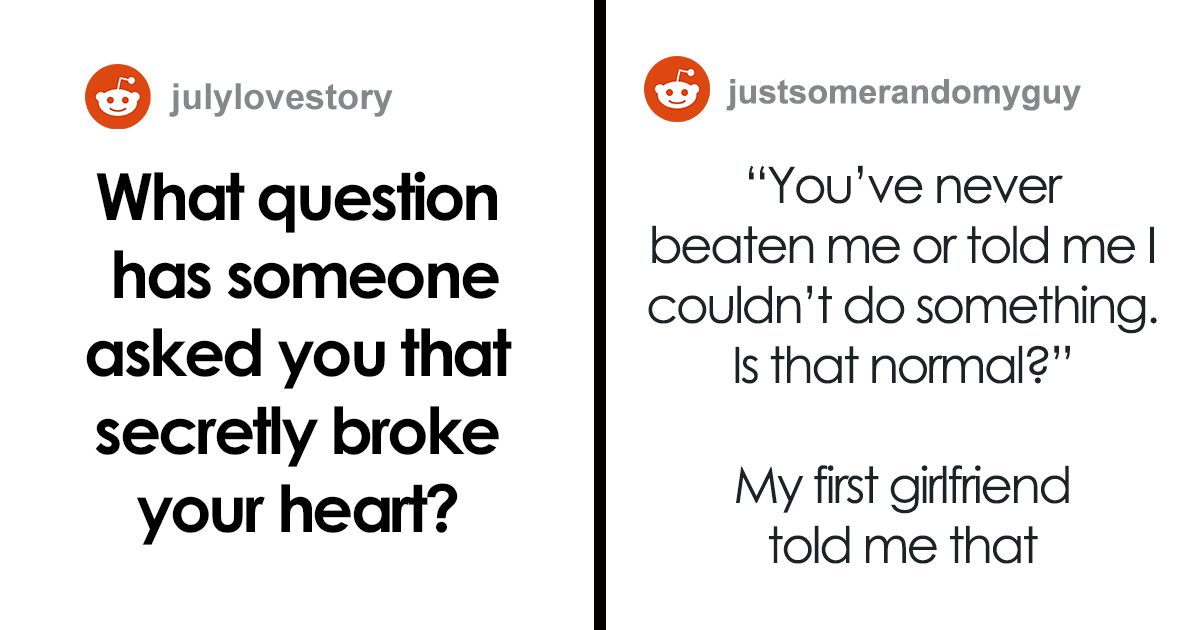
One widely shared response involved a woman asking her boyfriend whether it was normal that he had never hit her or prevented her from doing things. Her question revealed how thoroughly abuse had distorted her understanding of an ordinary relationship. It also left him confronting the pain she had survived before they met.
Questions can work like memory cues. A sentence, smell, song, place, or familiar expression may bring back not only an event but also the emotions attached to it. Harvard Health notes that the right cue can suddenly reconnect the separate pieces of a memory, while the APA defines emotional memory as remembering events that reproduce part of the original emotional experience.
Below are 30 paraphrased questions inspired by recurring themes in public discussions about family, grief, relationships, identity, and healing. They are not ranked. Emotional devastation, fortunately, has never required a leaderboard.
30 Questions That Opened an Emotional Trapdoor
-
“Is it normal that you never hurt me?”
For someone raised around violence or control, safety can initially feel suspicious. The heartbreaking part is realizing that kindness seems unusual because mistreatment once felt ordinary.
-
“Who takes care of you?”
Some people become the dependable friend, responsible sibling, emergency contact, unpaid therapist, and human spare tire. Being asked who supports them can expose how alone they have quietly become.
-
“When was the last time you felt safe?”
A person may answer with a date from childhoodor discover that no answer appears. That silence can reveal how long their body has been living in survival mode.
-
“Why do you apologize for everything?”
Constant apologizing is sometimes presented as politeness, but it can grow from learning that peace depends on staying small, agreeable, and permanently ready to accept blame.
-
“Did anyone ever tell you it wasn’t your fault?”
This question can undo years of misplaced guilt. Hearing it from another person may be the first time someone considers that surviving a terrible experience did not make them responsible for it.
-
“What did you need as a child?”
Food and shelter may have been provided, yet affection, reassurance, protection, patience, or simple attention might have been missing. Naming those needs can feel like meeting a forgotten younger self.
-
“Who taught you that love had to hurt?”
People sometimes confuse jealousy with devotion, control with concern, and emotional chaos with passion. This question separates real care from the painful behaviors once marketed as love.
-
“Are you proud of yourself?”
A high achiever may list awards, promotions, degrees, and heroic feats of answering emails after 9 p.m.yet still struggle to say yes without adding a qualification.
-
“What are you grieving that nobody recognizes?”
Grief does not belong only to death. People grieve friendships, fertility, health, homes, careers, lost time, family relationships, and futures that will never happen.
-
“Who are you when you aren’t helping someone?”
For chronic caregivers, usefulness can become an identity. When nobody needs rescuing, they may encounter a frightening question: Do I still have value when I am resting?
-
“Do you think people would stay if they knew the real you?”
This question touches shame, secrecy, and the fear of rejection. It asks whether love feels secureor conditional on maintaining an edited, audience-friendly version of oneself.
-
“When did you start calling survival ‘strength’?”
Being strong can be admirable. It can also become a compliment people receive because nobody offered them another option. Endurance is not always empowerment; sometimes it is evidence of abandonment.
-
“Would your younger self feel safe with you?”
The question invites self-reflection without demanding perfection. It asks whether the adult you became now offers the patience, protection, and gentleness you once needed.
-
“Why are you still punishing yourself?”
Regret can quietly turn into a lifelong sentence. Some people deny themselves joy, intimacy, or success because they believe suffering proves they understand what they did wrong.
-
“Was that actually your dream?”
A career, marriage, lifestyle, or definition of success may have been inherited from parents or social expectations. Realizing you climbed the wrong ladder is exhausting, especially when everyone applauded the climb.
-
“What would you say if they could hear you now?”
When someone has died or disappeared from your life, this question summons unfinished conversations: apologies, anger, gratitude, explanations, and one final ordinary “I miss you.”
-
“When did home stop feeling like home?”
Sometimes the answer is a divorce, a death, an eviction, a betrayal, or the day a family member became frightening. A familiar address can remain while the feeling of home vanishes.
-
“Who did you become so people would love you?”
The funny one, the quiet one, the successful one, the peacemaker, the perfect childthese roles may begin as protection and eventually become cages decorated with compliments.
-
“What part of yourself did you hide to keep the peace?”
People conceal opinions, ambitions, identities, boundaries, anger, and needs when honesty feels dangerous. Keeping the peace can require starting a private war against oneself.
-
“Do you remember the last normal day?”
Before a diagnosis, accident, breakup, death, or disaster, there was usually an ordinary day nobody recognized as precious. Remembering it can make the distance between “before” and “after” painfully clear.
-
“Why didn’t anyone protect you?”
This question often produces anger before tears. It shifts attention from what a child supposedly should have done to what the responsible adults failed to do.
-
“What happens if you finally rest?”
For people who manage anxiety through constant activity, rest may feel less like relaxation and more like an appointment with every emotion they have postponed.
-
“Are you happy, or are you just not in crisis?”
Relief is valuable, but it is not identical to joy. After years of instability, the absence of disaster can feel so luxurious that a person forgets to ask what fulfillment might look like.
-
“What are you afraid will happen if you say no?”
The answer may involve rejection, anger, punishment, disappointment, or abandonment. The question reveals that weak boundaries are often not weakness at all; they are learned safety strategies.
-
“When did you stop believing you deserved better?”
People rarely wake up and enthusiastically select misery. Their expectations are usually lowered one compromise, criticism, disappointment, or betrayal at a time.
-
“Why didn’t you tell me you were struggling?”
Someone may stay silent because they do not want to become a burden, do not expect help, or cannot explain a pain they barely understand themselves.
-
“What do you miss about the person you used to be?”
Illness, trauma, caregiving, parenthood, depression, and major loss can change identity. Missing your former self does not mean rejecting the present; it means acknowledging what change cost.
-
“What compliment do you wish you could believe?”
Some people can accept criticism with express shipping but treat praise like a suspicious package. The answer often reveals the exact quality they most fear they do not possess.
-
“If nobody were disappointed, what would you choose?”
Removing imagined judgment can uncover desires buried beneath duty. The answer may involve leaving, staying, creating, resting, changing careers, or simply choosing a quieter life.
-
“What do you need right now?”
This appears to be the simplest question of all. Yet people who have spent years anticipating everyone else’s needs may discover they no longer recognize their own.
Why Can One Simple Question Cause Such a Strong Reaction?
The Question Connects the Present to the Past
An emotional trigger does not have to look dramatic from the outside. The U.S. Department of Veterans Affairs explains that people, places, sounds, smells, and other reminders can reactivate memories and emotional responses. Cleveland Clinic similarly describes emotional triggers as situations or cues that produce sudden reactions connected to earlier pain, trauma, or stress.
A question can serve as that cue. “When did you last feel safe?” may instantly connect a calm conversation to a childhood home, an abusive relationship, or a frightening hospital room. The speaker hears twelve words; the listener’s brain opens twelve years of archived material.
It Gives a Name to an Unspoken Experience
Many people know that something feels wrong long before they have language for it. A thoughtful question can identify neglect, shame, grief, fear, or loneliness that was previously experienced only as tension, exhaustion, or a vague belief that everyone else received an instruction manual for life.
Research on shame consistently connects it with negative self-evaluation and lower self-esteem. Studies also suggest that self-compassion and supportive reflection may reduce some of shame’s harmful effects.
It Challenges the Story That Made Survival Possible
People often create explanations that help them survive difficult circumstances: “It wasn’t that bad,” “I deserved it,” “I’m simply too sensitive,” or “My needs do not matter.” These stories can preserve relationships and provide a temporary sense of control.
Then someone asks, “Why didn’t anyone protect you?” The old explanation suddenly becomes harder to maintain. The question hurts because the new interpretation may be more truthfuland because accepting it means grieving what should have happened.
The CDC reports that adverse childhood experiences can have lasting effects on health, relationships, emotional well-being, and adult stability. Safe, stable, nurturing relationships are important protective factors, which helps explain why questions about childhood safety can carry so much emotional weight.
It Touches the Need to Belong
Questions about being lovable, acceptable, or worth staying for reach a deeply social fear. Peer-reviewed research has found that interpersonal rejection can evoke hurt, anger, shame, loneliness, jealousy, and anxiety. Humans may own air fryers and send reaction GIFs now, but the nervous system still treats belonging as serious business.
How to Respond When a Question Breaks Someone Open
When somebody suddenly cries, freezes, becomes quiet, or says, “I don’t know why that affected me,” the goal is not to become an emergency amateur psychologist. The first job is to remain present.
Avoid demanding an immediate explanation. Try a calm response such as, “We can pause,” “You don’t have to answer,” or “I’m here.” Give the person control over whether the conversation continues. Emotional safety matters more than satisfying curiosity.
Do not minimize the reaction by saying, “It was only a question.” The words may have been small, but the memory behind them was not. NIMH notes that reactions to traumatic experiences vary widely, and previous trauma, continuing stress, and limited social support can increase the likelihood of severe or lasting distress.
When the person wants to talk, listen without racing toward a cheerful conclusion. Grief and emotional pain are not customer-service tickets that must be closed before dinner. The APA emphasizes that grief is closely connected with memory, emotion, identity, and a person’s understanding of the future.
Experiences Behind “The One Question”: Why These Moments Stay With Us
Imagine a woman sitting with a friend after another exhausting week. She has organized the office birthday collection, driven her father to an appointment, checked her brother’s résumé, and remembered which coworker cannot eat gluten. Her friend casually asks, “Who takes care of you?”
She laughs first. That is often the opening act. Then she tries to name someone and cannot. The question does not create her loneliness; it reveals it. She realizes that being needed has protected her from noticing whether she is known.
Elsewhere, a man tells his partner a funny childhood story about hiding in a closet whenever his parents argued. His partner does not laugh. She asks, “Were you scared?” He begins to say no, because no has been the official family answer for twenty years. Then he remembers the shoes lined up beside his face and how carefully he breathed so nobody would hear him.
Another person is asked, “Are you happy, or are you just not in crisis?” She has a stable job, a quiet apartment, and no current catastrophe. By every practical measurement, life has improved. Yet the question reveals that she built her entire future around escaping pain, not approaching joy. She knows what she does not want. She has never been asked what she does.
A widower may be doing perfectly well at a family gathering until a child asks, “What would Grandma say about this?” The room changes instantly. He remembers her laugh, her predictable complaint about the food, and the way she always slipped the child extra dessert. Grief arrives through an ordinary doorway because ordinary moments are exactly where loved ones used to live.
Mayo Clinic and Harvard Health both note that reminders can unexpectedly flood a grieving person with emotion. A song, restaurant, holiday, object, or familiar story may reconnect the present with the relationship that was lost.
Then there is the employee whose manager asks, “What would you choose if nobody were disappointed?” The employee has spent years pursuing a respected career that produces excellent health insurance and an increasingly impressive collection of stress headaches. The answer comes immediately: “I would leave.”
The tears are not necessarily proof that leaving is the correct choice. They are evidence that the desire has been waiting for permission to speak.
Some questions break people because they contain compassion. A survivor may be prepared for judgment but unprepared for tenderness. “Why didn’t anyone protect you?” is painful precisely because it assumes protection was deserved. “What did you need?” is powerful because it treats those needs as legitimate. “You know it wasn’t your fault, right?” can challenge an entire private justice system built around self-blame.
These moments do not always produce immediate transformation. Sometimes the person changes the subject, drives home, and remembers the question six months later while washing a coffee mug. Emotional insights have terrible respect for office hours.
Writing may help some people explore what surfaced. Harvard Health reports that journaling about grief and loss can be meaningful, although deeply traumatic experiences may be safer to examine with an experienced therapist.
Professional support is especially important when memories, grief, anxiety, avoidance, sleep problems, or intense emotional reactions interfere with work, relationships, or everyday functioning. Mayo Clinic advises seeking help when grief remains severe and makes returning to daily life difficult.
The question that breaks someone is not always the question that destroys them. Sometimes it is the first crack in a wall they no longer need. Through that opening may come anger, grief, understanding, boundaries, self-compassion, and eventually a life shaped by something more generous than survival.
Conclusion
The most emotionally powerful questions are rarely elaborate. They are often short enough to fit inside a text message: “Are you okay?” “Who helps you?” “What do you need?” Their impact comes from reaching the truth beneath a rehearsed answer.
The 30 questions above show how a few ordinary words can uncover childhood wounds, hidden grief, relationship patterns, shame, loneliness, and forgotten dreams. They also demonstrate the importance of asking carefully. A meaningful question is not a crowbar. It is an invitationand the person receiving it must be free to answer, pause, cry, laugh nervously, or decline.
Perhaps that is why these stories resonate so strongly. Most people carry at least one experience that has never been given the right question. When somebody finally asks it with kindness, the answer may hurt. It may also be the beginning of being understood.
SEO Tags
Note: The 30 examples are original paraphrased composites based on recurring themes in public discussions rather than verbatim reproductions of individual comments. The psychological context was synthesized from educational and research materials published by Bored Panda, the American Psychological Association, CDC, VA National Center for PTSD, NIMH, NIH and PubMed, Mayo Clinic, Cleveland Clinic, Harvard Health, Verywell Mind, the University of West Alabama, and peer-reviewed PMC publications.