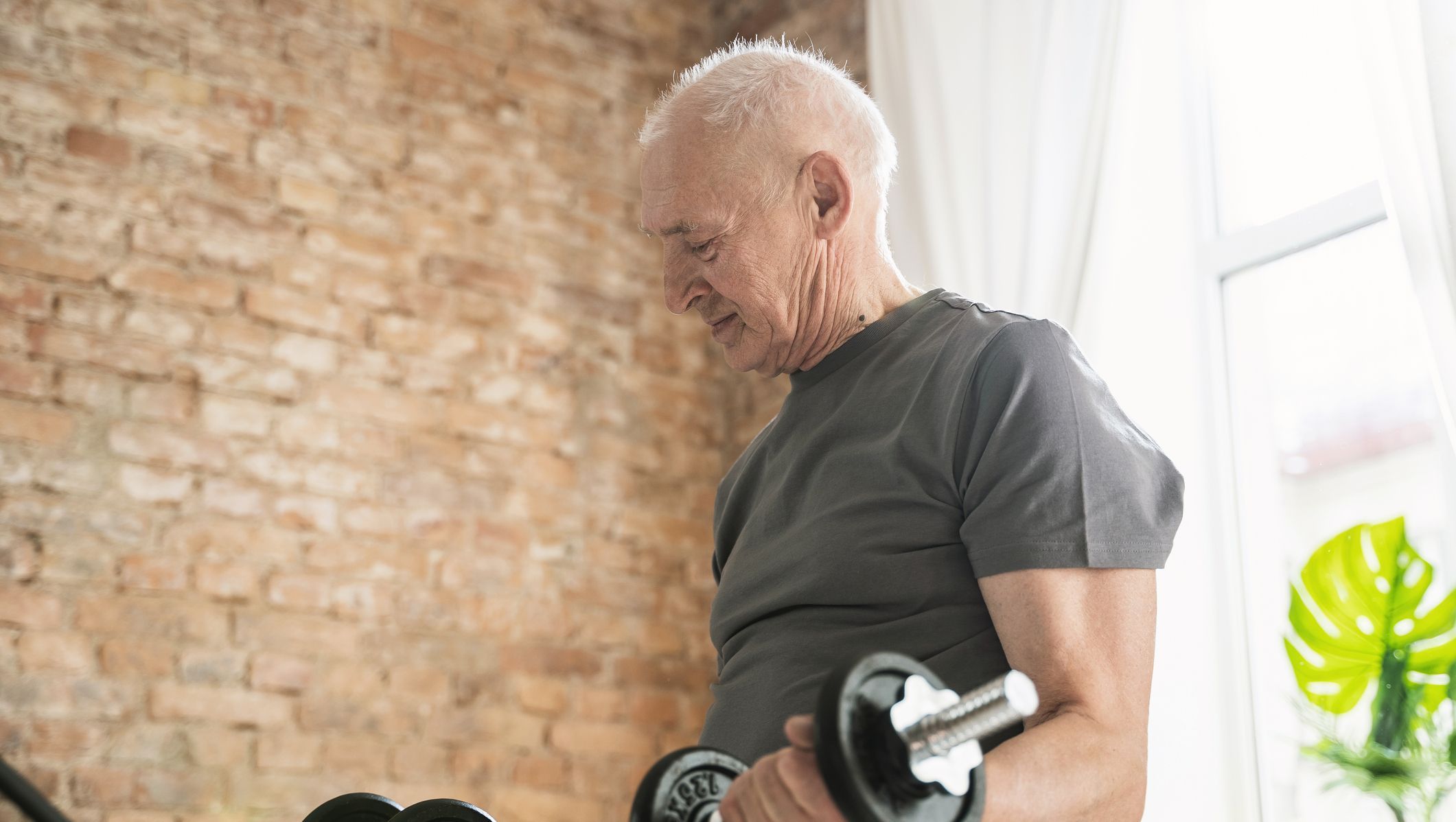
Turning 50 doesn’t mean you have to make peace with feeling creaky, wobbly, or weirdly winded after carrying groceries up the stairs. It does mean your body starts negotiating harder. Muscle mass naturally declines with age, recovery can get pickier, and joints may file small but noisy complaints. The good news? A smart, simple strength routine can do a lot to quiet that chaos.
If you want a practical way to build strength at home without turning your living room into a boot camp, a 20-minute dumbbell workout is a solid place to start. It’s short enough to fit into a real life, long enough to be effective, and flexible enough for beginners, returners, and anyone whose fitness history includes phrases like “I used to be active” or “I walk the dog, does that count?”
This workout is designed for adults over 50 who want to improve strength, support balance, protect mobility, and make everyday tasks feel easier. Think less “crush your PR” and more “stand up from the couch without making a sound effect.” That’s functional fitness, and frankly, it’s underrated.
Why Strength Training After 50 Matters So Much
Strength training after 50 isn’t just about building visible muscle. It helps preserve the lean muscle you already have, supports bone health, improves balance, boosts confidence, and makes daily movement less taxing. That matters whether you want to garden longer, travel comfortably, keep up with grandkids, or simply stop treating a laundry basket like an Olympic event.
A well-designed home dumbbell workout also trains the body in ways that matter outside the workout itself. Squats help with sitting and standing. Rows support posture. Hinges teach you how to lift safely. Overhead presses improve upper-body capacity for reaching and carrying. Marching with weight challenges balance and core control at the same time. In other words, these exercises pull double duty: they make you stronger and more capable in regular life.
That’s why a full-body dumbbell workout works so well for people over 50. Instead of isolating one tiny muscle and asking it to suffer for vanity, you train movement patterns that help you age with more strength, stability, and independence.
What You Need for This At-Home Dumbbell Workout
You do not need a garage gym, a motivational neon sign, or a playlist that sounds like a nightclub having a crisis. You need:
- One or two dumbbells
- A sturdy chair or bench
- A little floor space
- Supportive shoes
- A timer
If you’re brand-new to resistance training, start lighter than your ego prefers. The right weight should feel manageable at the beginning and challenging by the end of the interval without making your form unravel. For many adults over 50, that might mean light dumbbells at first. That is not a sign of weakness. It is a sign that you enjoy functioning joints and plan to keep them.
If you have osteoporosis, uncontrolled blood pressure, severe joint pain, recent surgery, dizziness, chest pain, or a medical condition that affects exercise safety, get clearance from your healthcare professional before starting a new strength training program.
The 20-Minute Dumbbell Workout for Adults Over 50
This routine is built for efficiency and simplicity. You’ll do a short warm-up, then two rounds of six moves, followed by a brief cool-down.
Workout Format
- Warm-up: 3 minutes
- Main circuit: 12 minutes total
- Finisher: 3 minutes
- Cool-down: 2 minutes
Main circuit timing: 45 seconds of work, 15 seconds to transition, 6 exercises, 2 rounds.
If you prefer reps instead of timed intervals, aim for about 8 to 12 controlled reps per move. Use a slower pace rather than swinging the weights around like you’re trying to launch them into orbit.
Step 1: Warm Up for 3 Minutes
Move through the following without rushing:
- March in place for 45 seconds
- Shoulder rolls and arm circles for 30 seconds
- Sit-to-stand from a chair for 45 seconds
- Hip hinge practice with hands on thighs for 30 seconds
- Gentle torso rotation and ankle rolls for 30 seconds
The goal is to raise your heart rate gradually, wake up the joints, and remind your body that yes, we are doing things now.
Step 2: Main Circuit Round 1 and Round 2
1) Goblet Squat to Chair
Hold one dumbbell at your chest. Stand in front of a chair with feet about shoulder-width apart. Sit your hips back, lower until you lightly tap the chair, then stand tall.
Why it works: This move builds lower-body strength in the quads, glutes, and core while reinforcing safe sit-to-stand mechanics.
Form tip: Keep your chest up and push the floor away as you stand.
Modification: Do bodyweight sit-to-stands if needed.
2) Dumbbell Romanian Deadlift
Hold a dumbbell in each hand in front of your thighs. Soften your knees, push your hips back, and lower the dumbbells along your legs until you feel a stretch in the back of the thighs. Stand up by squeezing your glutes.
Why it works: This strengthens the glutes, hamstrings, and lower back support muscles, all of which help with lifting, posture, and balance.
Form tip: Think “hinge,” not “bend.” Your back should stay long and neutral.
Modification: Use one dumbbell or reduce range of motion.
3) Bent-Over Dumbbell Row
With a slight bend in the knees and a forward hinge at the hips, pull the dumbbells toward your ribs, then lower slowly.
Why it works: Rows strengthen the upper back, lats, rear shoulders, and arms, which can improve posture and make pulling tasks easier.
Form tip: Avoid shrugging. Pull elbows back, not up toward your ears.
Modification: Use one hand on a chair for support and row one arm at a time.
4) Seated Dumbbell Overhead Press
Sit tall on a sturdy chair with one dumbbell in each hand at shoulder height. Press the weights overhead, then lower with control.
Why it works: This builds shoulder and triceps strength while reducing balance demands for beginners.
Form tip: Keep ribs down and avoid leaning back dramatically. This is a press, not a backbend performance.
Modification: Press one arm at a time or use lighter weights.
5) Dumbbell Farmer March
Stand tall holding dumbbells at your sides. March in place slowly, lifting one knee at a time while keeping your torso steady.
Why it works: This challenges grip, core stability, posture, and balance all at once.
Form tip: Stay tall and controlled. No stomping, no leaning, no drama.
Modification: Hold one dumbbell and lightly touch a chair with the free hand.
6) Hammer Curl to Press
Hold dumbbells at your sides with palms facing in. Curl them to shoulder height, then rotate and press overhead. Lower slowly.
Why it works: This combines arm and shoulder training into one efficient move, which is exactly what a 20-minute workout should do.
Form tip: Keep your elbows close during the curl and move with control.
Modification: Do only the curl or only the press.
Step 3: 3-Minute Finisher
Do these three moves for 45 seconds each, with 15 seconds between them:
- Bodyweight glute bridge: Lie on your back, knees bent, feet flat, and lift hips.
- Dead bug arms-only or marching bridge: Focus on core control.
- Chair sit-to-stand burnout: Smooth, controlled reps, no flopping.
This finisher adds a little extra work for the hips, core, and legs without pushing impact too high.
Step 4: Cool Down for 2 Minutes
- Walk slowly around the room for 30 seconds
- Gentle chest stretch for 20 seconds per side
- Standing quad or calf stretch for 20 seconds per side
- Deep breathing for 20 to 30 seconds
Cool-down time may not be glamorous, but your body appreciates not being treated like an appliance that can go from “power mode” to “off” with no transition.
How Often Should You Do This Workout?
A good starting point is 2 to 3 nonconsecutive days per week. That spacing gives your muscles time to recover and adapt. You can add walking, cycling, mobility work, or balance exercises on the days in between.
Here’s a simple weekly setup:
- Monday: 20-minute dumbbell workout
- Tuesday: 20 to 30 minutes of walking
- Wednesday: Balance and mobility work
- Thursday: 20-minute dumbbell workout
- Friday: Easy cardio or stretching
- Saturday: Optional third strength day or longer walk
- Sunday: Recovery
When the workout starts to feel easier, progress gradually. You can increase weight, add a third round to the circuit, slow the lowering phase, or reduce rest slightly. Do not change everything at once. Your joints are not fond of surprise plot twists.
Common Mistakes to Avoid in a Home Workout Over 50
- Starting too heavy: If form disappears by rep three, the dumbbells are running the show.
- Skipping the warm-up: Your body is not a toaster. It needs a few minutes.
- Holding your breath: Exhale during the effort, inhale on the easier part.
- Rushing reps: Controlled movement is more valuable than fast, sloppy movement.
- Ignoring pain: Muscle effort is expected. Sharp or joint pain is a red flag.
- Doing the same exact workout every day: Recovery matters, especially after 50.
The best at-home strength training plan is the one you can repeat consistently. You do not need perfect conditions. You need a routine that feels doable even on a busy Tuesday when your motivation is hiding behind the coffee maker.
What People Often Experience With This Kind of Workout After 50
The first experience many adults over 50 have with a dumbbell workout like this is surprise. Not because it’s flashy, but because it exposes exactly where strength has quietly slipped. A chair squat can feel humbling. A farmer march can reveal that balance isn’t quite as automatic as it used to be. A row may light up muscles in the upper back that have apparently been on an extended vacation since 2009.
That early wake-up call is not a bad thing. In fact, it’s often the moment people realize they don’t need a punishing workout to make progress. They need a smart one. Within the first couple of weeks, people commonly notice small but meaningful wins: standing up feels smoother, stairs feel less rude, and carrying groceries stops feeling like a full-body betrayal. Some even report better posture, which is great news for anyone tired of catching their reflection and wondering when they started resembling a folded lawn chair.
There’s also a confidence shift that happens when the workout becomes familiar. At first, the timer feels bossy, the dumbbells feel heavy, and every transition seems slightly chaotic. But after a few sessions, the exercises start to feel more natural. You know where to place your feet. You know how to hinge without rounding your back. You stop overthinking every movement and begin trusting your body again. That matters more than people realize, especially if they’ve spent years feeling like fitness spaces were built for younger, faster, bendier humans.
Another common experience is that progress shows up in normal life before it shows up in the mirror. You may notice it when you lift a suitcase into the car, get up from the floor more easily, or walk longer without fatigue. You might sleep better. You might feel steadier. You might discover that your lower back complains less because your hips and core are finally doing their share of the work. That kind of progress is not always glamorous, but it is deeply useful.
Of course, there can be a learning curve. Some people deal with mild soreness at first, especially in the legs and upper back. That’s common when your muscles are being asked to do their jobs a little more seriously. The key is to distinguish regular training soreness from pain that feels sharp, joint-based, or wrong. Most adults do best when they start modestly, keep the form clean, and leave a little room in the tank instead of trying to prove a point to the furniture.
Emotionally, this kind of routine can be surprisingly powerful. There’s something deeply satisfying about being able to say, “I can take care of my strength at home with a pair of dumbbells and 20 minutes.” It removes the friction. No commute. No machines to decode. No awkward locker room energy. Just you, a simple plan, and the steady evidence that your body can still adapt, improve, and get stronger.
Perhaps the biggest experience people describe is this: strength training after 50 doesn’t make them feel younger in a magical, time-travel way. It makes them feel more capable now. And honestly, that may be better. Feeling capable means trusting your legs, relying on your balance, and moving through daily life with less hesitation. It means strength becomes less about appearance and more about freedom. That’s not a downgrade. That’s the whole point.
Final Thoughts
If you’re over 50 and wondering whether a short home strength routine can really make a difference, the answer is yes especially if you keep showing up. A 20-minute dumbbell workout won’t solve everything overnight, but it can help you build muscle, improve stability, support bone health, and make daily life feel more manageable. That’s a pretty good return on 20 minutes.
Start lighter than you think you need. Focus on form. Progress gradually. And remember: the goal is not to train like a 25-year-old influencer with suspiciously unlimited energy. The goal is to be strong, steady, and capable in your own life. That’s the kind of fitness that ages well.