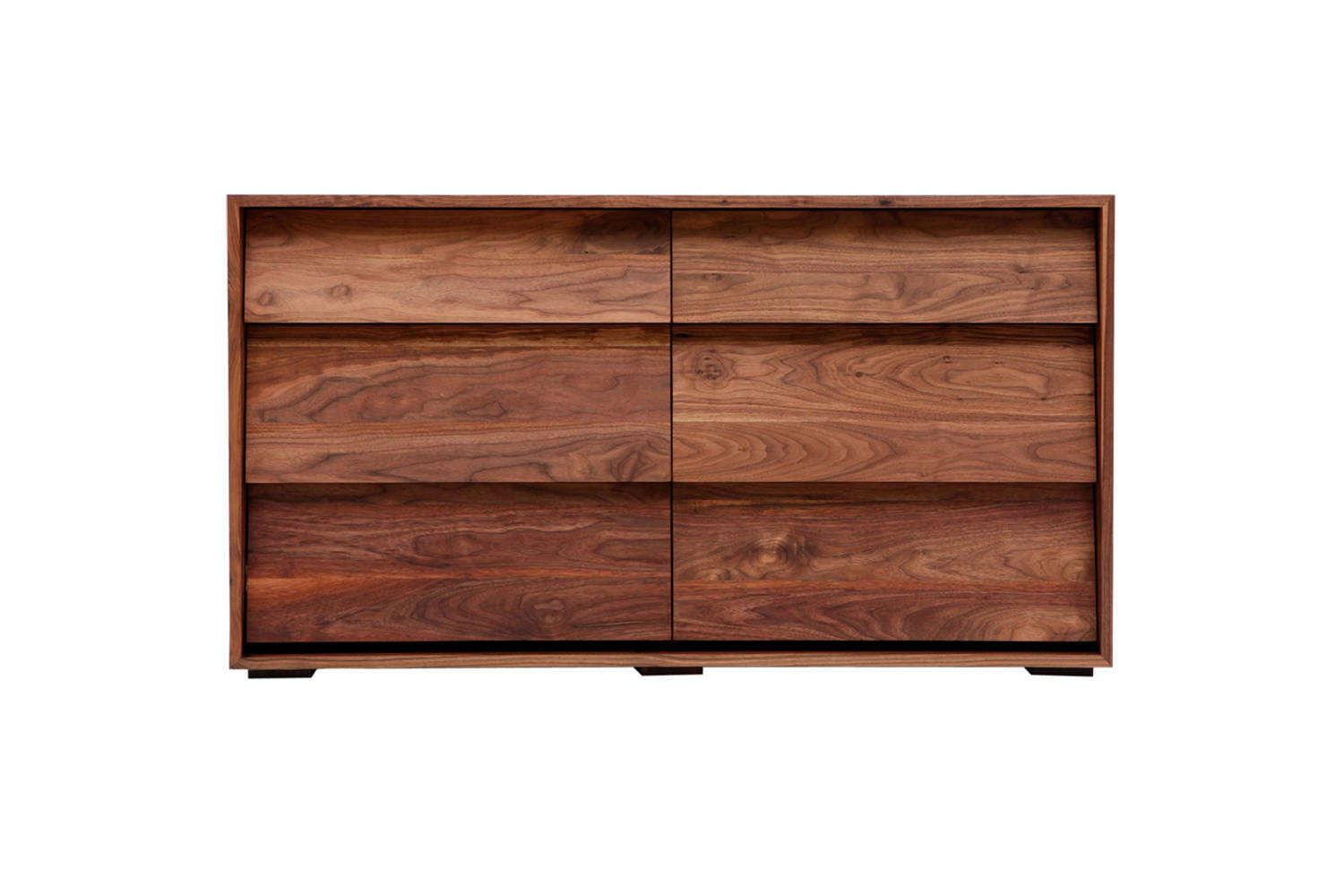
The Oliver Small Dresser by ARTLESS is what happens when practical bedroom storage puts on a beautifully tailored walnut suit. It has six drawers, a restrained modern profile, and enough natural wood character to make an otherwise ordinary wall look intentionally designed.
Despite its name, this is not a miniature dresser intended to squeeze between a bed and a radiator. Measuring approximately 56 inches wide, 20 inches deep, and 30 inches high, it is “small” mainly in relation to the larger pieces in the Oliver collection. Think compact designer dresser, not dollhouse furniture.
This guide explores its construction, storage capacity, styling possibilities, room requirements, maintenance needs, and real-world ownership experience. It also answers the most important question: Is the Oliver Small Dresser genuinely useful, or is it simply a very attractive place to hide socks?
What Is the Oliver Small Dresser?
The Oliver Small Dresser is a six-drawer storage piece produced by ARTLESS, a Los Angeles furniture company known for minimalist forms and substantial materials. Its visual identity comes from a solid-wood outer frame, walnut drawer fronts, slightly angled drawer faces, and a broad, uninterrupted top.
The design avoids unnecessary decoration. There are no elaborate moldings, ornamental feet, or shiny handles demanding attention from across the room. Instead, the wood grain, proportions, and recessed drawer arrangement do the talking. Fortunately, they speak in a calm indoor voice.
Key Specifications
| Overall width | Approximately 56 inches |
|---|---|
| Overall depth | Approximately 20 inches |
| Overall height | Approximately 30 inches |
| Number of drawers | Six: two smaller upper drawers and four larger drawers |
| Primary materials | Solid walnut frame and drawer fronts with Baltic birch plywood drawer boxes |
| Drawer hardware | Self-closing drawer glides |
| Floor protection | Leather floor glides |
| Approximate weight | 200 pounds |
| Production | Made in the United States and commonly listed as made to order |
Walnut is the finish most consistently associated with the Oliver Small Dresser. Some dealers may offer an additional wood option, such as black oak, but finishes and production choices should always be confirmed before ordering.
Why the Design Stands Out
Minimal furniture sounds easy to design until you realize there is nowhere to hide a bad proportion. When a dresser has few decorative details, every line matters. The width of the frame, the angle of the drawer fronts, and the spacing between components must look deliberate.
The Oliver succeeds because its simplicity does not feel empty. Its thick frame gives the piece architectural presence, while the walnut grain prevents the broad surfaces from appearing flat or sterile. Variations in color and grain mean each dresser can look slightly different, which is part of the appeal of real wood rather than a defect requiring a strongly worded email.
Warm Minimalism Rather Than Cold Minimalism
The dresser fits naturally into modern, midcentury-inspired, Scandinavian, organic-modern, and transitional interiors. Its clean geometry satisfies minimalists, while the walnut adds enough warmth for rooms that include linen, wool, ceramic, leather, or woven textures.
It can also calm a more colorful bedroom. Against green, navy, clay, mustard, or muted pink walls, walnut acts as a visual anchor. In a neutral space, it introduces contrast without becoming a dramatic statement piece that insists every pillow coordinate with it.
How Much Storage Does It Provide?
The drawer arrangement is one of the most practical features of the Oliver Small Dresser. Two smaller drawers occupy the upper row, while four larger drawers provide the main storage below. This creates natural zones for accessories and clothing instead of forcing every item into identical compartments.
Using the Two Smaller Drawers
The upper drawers are well suited to socks, underwear, jewelry trays, watches, belts, scarves, chargers, grooming supplies, or other small items that tend to wander around a bedroom after dark. Drawer dividers can keep these categories from merging into one mysterious collection of cables and single socks.
Using the Four Larger Drawers
The larger drawers can hold T-shirts, pajamas, workout clothes, folded pants, lightweight sweaters, linens, or seasonal accessories. Assigning one purpose to each drawer makes the dresser easier to maintain. For example, the first large drawer might hold everyday shirts, the second sleepwear, the third exercise clothing, and the fourth out-of-season pieces.
Bulky winter sweaters and heavy denim may be better stored on closet shelves or hangers. Filling drawers beyond their comfortable capacity makes even excellent hardware feel less impressive and turns getting dressed into an upper-body workout.
Storage Beyond the Bedroom
Although it is marketed as a dresser, the Oliver can perform several jobs. In a dining room, its drawers could organize table linens, candles, serving utensils, and occasional dinnerware. In a living room, it can function as a refined media or storage cabinet. In a home office, it can hold documents, equipment, and supplies while looking considerably more civilized than a metal filing cabinet.
Its 30-inch height also creates a useful display surface. However, the 20-inch depth makes it more substantial than a typical hallway console, so narrow entryways should be measured carefully.
Is It Really a Small Dresser?
The word “small” deserves some friendly interrogation. A 56-inch-wide dresser is compact compared with long eight-drawer models, but it is not especially narrow. It will work well in many bedrooms, yet it may overwhelm a tiny room with only a few feet of open wall space.
The 30-inch height creates a comfortable horizontal surface for a mirror, lamp, artwork, jewelry box, or daily dressing tray. The 20-inch depth provides meaningful drawer capacity but also projects farther into the room than shallow apartment furniture.
Measure More Than the Empty Wall
Start by measuring the wall where the dresser will sit. Then check nearby doors, closet openings, outlets, vents, windows, baseboard heaters, and walking paths. Leave enough space to open each drawer fully without colliding with the bed or requiring the user to stand sideways like a crab.
Next, measure the delivery route. The dresser weighs roughly 200 pounds, so confirm doorway widths, elevator dimensions, stair turns, hallway corners, and building access. A dresser that fits the bedroom but cannot navigate the staircase is technically still furniture, just not furniture in the correct room.
How to Style the Oliver Small Dresser
The wide walnut top is visually strong enough to support a decorative arrangement, but it does not need to become a storage shelf for every object you have touched since breakfast. A few pieces with varied heights usually create a better result.
Pair It With a Mirror
A large round mirror softens the dresser’s straight lines, while a rectangular mirror reinforces its architectural shape. The mirror can be centered for a formal look or offset slightly to leave room for a lamp and small arrangement of objects.
Create a Balanced Display
Try placing a lamp or tall vase on one side, a low tray or stack of books near the center, and a smaller sculptural object on the opposite side. Leave part of the walnut surface empty. Negative space allows the grain to remain visible and makes the room feel less crowded.
Add Art Without Visual Noise
One oversized artwork can create a calm focal point. A gallery arrangement also works, but it should relate to the dresser’s width rather than floating awkwardly above it. In small bedrooms, a limited color palette and concealed cords can help prevent the wall from looking busy.
Use the Top as a Practical Station
A shallow tray can collect a wallet, watch, keys, fragrance, or jewelry at the end of the day. This prevents tiny objects from spreading across the surface like they are establishing independent territories.
Organizing the Drawers Efficiently
Good storage furniture cannot rescue a bad storage system forever. Before filling the Oliver Small Dresser, empty the clothing or accessories you plan to store and group similar items together. Edit pieces that no longer fit, are rarely worn, or have been waiting several years for an extremely specific theme party.
Give every drawer a clear assignment. Use adjustable dividers or small boxes in the upper drawers, and fold clothing vertically where practical so each item remains visible. Stacks often hide the garments at the bottom, which is how perfectly good T-shirts enter witness protection.
Place frequently used items in the easiest drawers to reach. Reserve the lowest drawers for seasonal clothing, extra bedding, or items used less often. Review the contents every six months so the dresser does not quietly become a museum of expired coupons and mystery buttons.
Safety and Installation Considerations
Every dresser should be secured according to the manufacturer’s instructions and appropriate wall conditions. The U.S. Consumer Product Safety Commission recommends anchoring furniture with drawers, doors, or shelves to help prevent tip-over incidents.
Use a compatible anti-tip restraint installed into a suitable wall stud or approved anchor point. Do not assume that the dresser’s weight makes anchoring unnecessary. Open drawers change the center of gravity, and children may treat furniture as climbing equipment despite receiving no invitation to do so.
Keep toys, remote controls, and other tempting objects off the top in homes where children live or visit. Avoid placing a heavy television on the dresser unless both the furniture and television are properly secured and the placement is approved for the intended use.
Because the dresser is heavy, professional or white-glove delivery is worth considering. Floor glides can help protect the flooring, but a 200-pound case piece should still be lifted or moved with proper equipment rather than dragged across hardwood.
How to Care for Walnut Furniture
Routine care should be gentle. Dust the dresser with a clean, soft cloth, following the direction of the wood grain. For light cleaning, use a barely damp cloth and dry the surface immediately. Excessive moisture, aggressive scrubbing, and household cleaners containing harsh solvents can damage a wood finish.
Use coasters beneath drinks and felt pads beneath lamps, trays, ceramics, or decorative objects. Wipe spills promptly, and avoid setting hot items directly on the top. Even sophisticated walnut furniture is not emotionally prepared for a steaming hair tool.
Direct sunlight can gradually alter the color of natural wood. If the dresser receives strong daily sun, use curtains, shades, or periodically adjust decorative objects so the exposed surface changes evenly. Do not apply oils, waxes, or polishes until you have confirmed which products are compatible with the factory finish.
Who Should Consider the Oliver Small Dresser?
This piece is best suited to buyers who value solid-wood furniture, American production, understated design, and long-term use. It makes sense for a primary bedroom, guest room, upscale apartment, or multipurpose space where the furniture must provide storage without looking purely utilitarian.
It is also a strong candidate for someone building a slower, more intentional interior. Walnut pairs easily with many materials, so the dresser can remain relevant while rugs, bedding, lighting, and wall colors change around it.
Who Might Prefer Another Option?
Budget-focused shoppers may find the designer price difficult to justify. Frequent movers may not enjoy handling a 200-pound dresser, and extremely small bedrooms may need a narrower or taller chest that uses less wall space.
Buyers who prefer highly uniform surfaces should remember that natural walnut includes grain and color variation. Those differences are part of the material’s character, but they will not look exactly like a printed sample or every online photograph.
Living With the Oliver Small Dresser: A Realistic Ownership Experience
The following experience is a practical ownership scenario based on the dresser’s documented dimensions, materials, weight, and storage design rather than a claim of personal hands-on testing.
The first noticeable part of owning the Oliver Small Dresser would probably be delivery day. This is not a flat-pack box that one person casually carries upstairs during a lunch break. At approximately 200 pounds, it demands a clear path, capable movers, and a final location chosen before it enters the room. Suddenly, measuring the stair landing feels much more exciting than it did the previous evening.
Once positioned, the dresser would immediately feel more substantial than its “small” name suggests. At 56 inches wide, it has enough visual presence to anchor a bedroom wall. The 30-inch height would make the top easy to use without creating the looming effect of a tall chest. Its 20-inch depth would provide useful storage, although a narrow bedroom might lose more walking space than expected.
The walnut would likely become the main attraction during the first few days. In daylight, grain patterns and tonal changes would be more visible than in product photographs. In evening light, the wood could appear deeper and warmer. This ability to change with the room is one reason natural wood furniture often feels less static than a painted or laminated piece.
Organizing the six drawers would reveal the value of the mixed layout. The two smaller upper drawers could eliminate the usual bedside clutter by holding watches, chargers, underwear, socks, and small accessories. The four larger drawers would provide enough separation to keep everyday shirts, sleepwear, exercise clothing, and seasonal items from forming one textile avalanche.
After a week, the self-closing glides would probably become one of the most appreciated details. Drawer hardware rarely receives compliments until it is noisy, uneven, or determined to remain partly open. Smooth closing supports the dresser’s calm design and helps everyday use feel appropriately polished for a premium piece.
The broad top could be both a benefit and a temptation. A lamp, mirror, tray, and small vase would make it a useful dressing station. Add unopened mail, shopping receipts, loose cables, five bottles, and a heroic collection of coins, however, and the elegant surface would disappear by Thursday. The best ownership habit would be treating the top as a designed area rather than an emergency landing strip.
After several months, maintenance would likely remain simple if spills were handled promptly and protective pads were used. Regular dusting and gentle cleaning would preserve the finish without turning furniture care into a weekend hobby. Rotating objects occasionally could help reduce uneven exposure to sunlight.
The biggest long-term advantage would be adaptability. The Oliver Small Dresser could begin in a bedroom, move into a guest room, and later become dining-room or living-room storage. Its simple form does not lock it into one decorative trend or one stage of life. The biggest disadvantage would be moving it: solid construction is delightful until the next staircase appears.
Overall, the ownership experience would likely feel quiet rather than flashy. The dresser would not perform technological tricks, illuminate the room, or remind you to buy more socks. It would simply provide dependable storage, satisfying materials, and a strong visual foundationthe kind of performance good furniture is supposed to deliver.
Final Verdict
The ARTLESS Oliver Small Dresser combines six-drawer storage with solid walnut construction and a warm minimalist appearance. Its two smaller upper drawers and four larger drawers make organization intuitive, while its broad top can support a mirror, lamp, artwork, or carefully edited display.
It is compact within a designer furniture collection, but buyers should not mistake it for a tiny dresser. Its 56-inch width, 20-inch depth, substantial weight, premium price, and made-to-order nature require thoughtful planning. Measure the room and delivery path, confirm current finishes and terms, and arrange proper wall anchoring.
For buyers seeking an inexpensive temporary chest, there are easier choices. For someone who appreciates natural walnut, American-made furniture, subtle detailing, and long-term versatility, the Oliver Small Dresser offers a compelling balance of beauty and usefulness. It will store your clothes, elevate the room, and remain blissfully uninterested in passing trends.