A powder room is the tiniest room in the house with the biggest attitude problem. It sits there with one sink, one toilet, and roughly enough floor space for a polite turn-around, yet somehow it expects to impress every guest who visits. Mine was not impressing anyone. It was clean, functional, and deeply committed to being forgettable.
So I decided it was time for a powder room makeover: not a giant renovation with walls coming down and contractors saying mysterious things like “we’ll have to open that up,” but a smart, stylish refresh that made the room feel intentional. The goal was simple: create a small bathroom that looked finished, felt welcoming, and didn’t make guests wonder whether I had given up halfway through decorating the house.
This makeover became a lesson in small-space design, budget choices, lighting, wallpaper, storage, and the surprising emotional power of a good mirror. Here’s exactly how I approached my powder room transformation, what worked, what I would do differently, and how you can use the same ideas in your own half bath.
Why a Powder Room Makeover Is Worth It
A powder room, also called a half bath, usually includes only a toilet and sink. Because there is no shower or tub, the room deals with less moisture than a full bathroom. That makes it one of the best places to experiment with wallpaper, bolder paint colors, decorative lighting, and statement finishes.
Another benefit is scale. Since the room is small, even high-impact materials can be used in smaller quantities. A dramatic wallpaper that might overwhelm a living room can look amazing in a powder room. A unique faucet, sculptural mirror, or moody wall color can create a boutique-hotel effect without requiring a boutique-hotel budget. Basically, it is the one room where your inner design diva can wear sequins to breakfast.
The Before: A Small Room With Big Potential
Before the makeover, my powder room had the classic symptoms of “builder-basic fatigue.” The walls were plain. The lighting was too harsh. The mirror was practical but not pretty. The vanity did its job, but only in the way a folding chair technically counts as seating.
The room was not terrible, which almost made it harder to justify changing. But that is exactly the trap many homeowners fall into. A powder room does not need to be broken to deserve attention. If the space feels flat, cramped, outdated, or disconnected from the rest of the home, a makeover can make a major difference.
My Main Powder Room Problems
- The lighting made everyone look like they were being questioned in a detective drama.
- The wall color had no personality and made the room feel unfinished.
- The mirror was too small and visually weak for the wall.
- There was not enough attractive storage for hand towels and extra toilet paper.
- The room lacked a focal point.
Step 1: Choosing a Design Direction
Before buying anything, I chose a clear design direction. This step matters because powder rooms are small enough that random choices become obvious fast. A faucet, mirror, wallpaper, and light fixture may all look beautiful separately, but together they can accidentally create a theme called “clearance aisle with commitment issues.”
I wanted the room to feel warm, slightly dramatic, and polished without being too formal. The style landed somewhere between modern traditional and cozy boutique. I chose a soft neutral base, warm metal accents, natural texture, and one bold wall treatment to give the room a memorable identity.
Design Words That Guided the Makeover
Whenever I felt tempted by a random cute accessory, I came back to three words: warm, refined, and welcoming. These words helped me avoid impulse purchases and kept the small bathroom design cohesive.
Step 2: Creating a Statement Wall
The biggest visual decision in my powder room makeover was the wall treatment. In small bathrooms, walls do much of the heavy lifting. You can choose paint, wallpaper, beadboard, shiplap, tile, limewash, picture-frame molding, or a combination of materials.
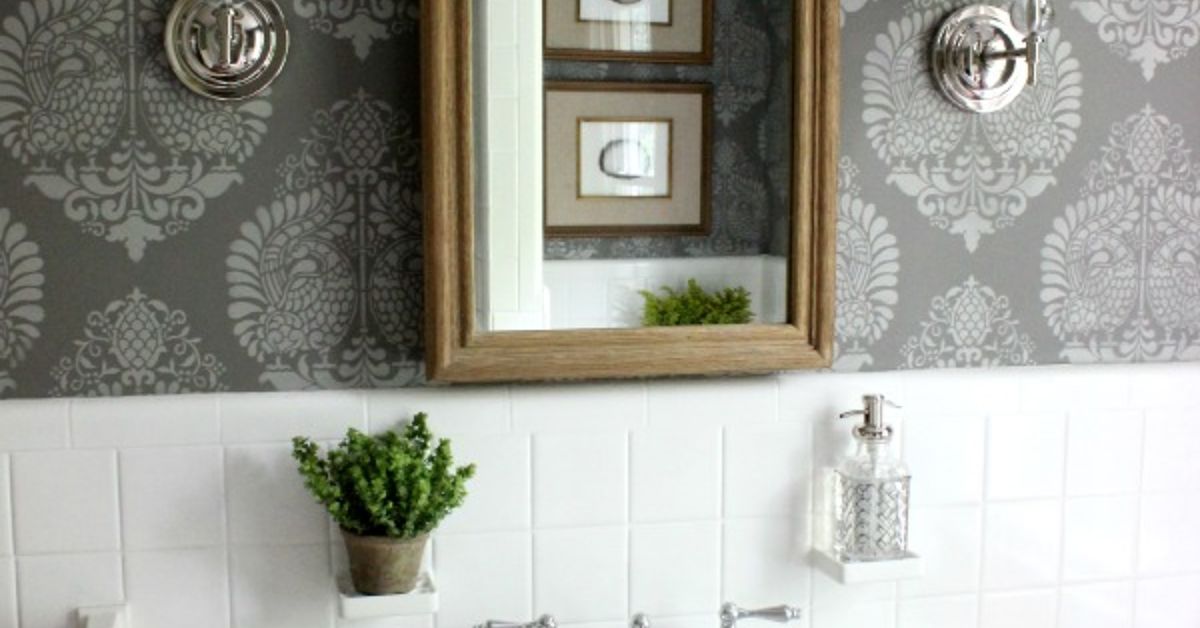
I chose wallpaper because powder rooms are perfect for pattern. Since there is no shower steam, wallpaper tends to be a more practical choice here than in a full bath. A botanical print, geometric pattern, grasscloth-style texture, or moody mural can instantly make the room feel designed.
For my space, I went with a medium-scale pattern. Tiny prints can look busy, while very large prints can feel bold and artistic. The middle ground gave the room movement without making the walls scream, “Look at me, I own a glue brush.”
Wallpaper Tips for a Powder Room
- Order samples first and view them in morning, afternoon, and evening light.
- Choose peel-and-stick wallpaper for renter-friendly or lower-commitment projects.
- Use traditional pasted wallpaper for a more permanent, polished finish.
- Consider wallpapering the ceiling if you want a dramatic jewel-box effect.
- Balance bold wallpaper with simpler fixtures and accessories.
Step 3: Picking the Right Paint Finish
Even in a half bath, paint needs to be practical. Powder rooms still deal with handwashing, splashes, cleaning products, and occasional humidity. I avoided flat paint because it is harder to clean. Satin, eggshell, or a bathroom-friendly matte finish is usually a better choice for walls, while semi-gloss works well for trim.
I used a washable finish in a warm neutral tone for the non-wallpapered areas. The color connected the wallpaper to the vanity and kept the room from feeling too chopped up. In small spaces, color flow matters. If every surface fights for attention, the room can feel smaller.
Step 4: Upgrading the Vanity
The vanity is the workhorse of a powder room. It needs to look good, hold essentials, and fit the room without blocking movement. For very small powder rooms, a pedestal sink, wall-mounted sink, floating vanity, or console vanity can make the floor look more open. For slightly larger half baths, a furniture-style vanity adds warmth and storage.
I chose a compact vanity with closed storage. Open vanities can look airy, but I wanted a place to hide extra soap, cleaning wipes, and backup toilet paper. Nobody needs to see the emergency roll pyramid. Some mysteries are best left behind cabinet doors.
How to Choose a Powder Room Vanity
- Measure the width, depth, and door swing before shopping.
- Leave enough clearance around the toilet and sink for comfortable use.
- Choose drawers if you want easy access to small items.
- Choose doors if plumbing takes up most of the cabinet interior.
- Use a floating vanity to make the room feel more spacious.
Step 5: Changing the Mirror
A powder room mirror is not just a place to check your hair. It changes the perceived size, brightness, and style of the room. My old mirror was too small and too plain. Replacing it with a larger framed mirror instantly made the wall feel finished.
I chose a rounded rectangle mirror because it softened the straight lines of the vanity and wallpaper. Round mirrors also work beautifully in powder rooms, especially above narrow vanities. If your bathroom has lots of angles, curves can make it feel more relaxed. If the room already has many rounded shapes, a rectangular mirror can add structure.
Step 6: Fixing the Lighting
Lighting can make or break a powder room. Harsh overhead lighting creates shadows and makes the room feel cold. A good powder room lighting plan should be flattering, layered, and decorative.
I replaced the old fixture with a warm metal vanity light that coordinated with the faucet and cabinet hardware. The new light had softer bulbs and a shape that felt more intentional. In a small room, the light fixture is almost like jewelry. Choose one that complements the design instead of disappearing into the wall.
Powder Room Lighting Ideas
- Install sconces on both sides of the mirror for balanced light when space allows.
- Use a vanity light above the mirror if side sconces will not fit.
- Choose warm white bulbs for a softer, more inviting glow.
- Add a dimmer switch if possible for flexible mood lighting.
- Avoid bulbs that are too cool or too bright unless you enjoy airport-restroom energy.
Step 7: Coordinating Fixtures and Hardware
Faucets, towel rings, toilet paper holders, cabinet pulls, and lighting finishes should look connected. They do not have to match perfectly, but they should feel like they belong in the same conversation.
I used warm brass accents throughout the space. Brass added warmth against the wallpaper and vanity. Matte black, polished nickel, chrome, and oil-rubbed bronze can also look beautiful depending on the style of the room. The key is repetition. If you introduce a finish once, repeat it at least one or two more times so it feels intentional.
Step 8: Adding Smart Storage
Powder rooms do not need as much storage as full bathrooms, but they still need a plan. Guests should be able to find hand soap, a towel, and extra toilet paper without opening six doors and accidentally discovering your mop bucket.
I added a small basket inside the vanity, a tray on the counter, and a slim wall shelf above the toilet. The shelf holds a candle, a small framed print, and a decorative container with extra hand towels. This keeps the room functional without cluttering the tiny countertop.
Easy Storage Ideas for a Half Bath
- Use a lidded basket for extra toilet paper.
- Add a wall shelf above the toilet for decor and essentials.
- Place a small tray near the sink for soap and lotion.
- Use a vanity organizer to separate cleaning supplies.
- Hang a towel ring instead of a towel bar to save wall space.
Step 9: Styling the Room Without Clutter
Decorating a powder room is a balancing act. Too little decor and the room feels unfinished. Too much decor and guests have to move a ceramic bird family just to wash their hands. I kept accessories simple and useful.
My final styling included a framed art piece, a small vase with greenery, a candle, hand soap in a reusable dispenser, and one soft hand towel. These little details made the room feel complete without turning it into a gift shop display.
Step 10: Making the Room Feel Bigger
A powder room makeover is not only about style. It is also about visual space. Even if the square footage does not change, smart design can make the room feel more open.
The larger mirror reflected light. The compact vanity improved movement. The wallpaper drew the eye upward. The lighter trim kept the edges crisp. Together, these choices made the room feel bigger, even though not a single wall moved. My tape measure was unimpressed, but my eyes were delighted.
Small Powder Room Tricks That Work
- Use a large mirror to bounce light around the room.
- Choose a vanity that fits the scale of the space.
- Keep the floor as visible as possible.
- Use vertical lines, tall art, or wallpaper to draw the eye up.
- Limit the color palette to avoid visual clutter.
Budget Breakdown: Where to Save and Where to Splurge
A powder room makeover can be surprisingly affordable if you make smart decisions. I saved money by keeping the existing plumbing layout and avoiding major demolition. Moving plumbing is where budgets often start doing circus tricks.
I spent more on the wallpaper and mirror because those pieces changed the room the most. I saved on accessories, shelves, and hardware by choosing simple, classic options. If your budget is tight, focus on the updates with the most visual impact: paint, mirror, lighting, faucet, and wall treatment.
Worth the Splurge
- Quality wallpaper or a beautiful paint finish
- A flattering light fixture
- A well-sized mirror
- A durable faucet
Easy Places to Save
- Decorative trays and baskets
- Hand towels
- Wall art
- Cabinet knobs and pulls
- Small shelves
Common Powder Room Makeover Mistakes to Avoid
The first mistake is choosing style over scale. A huge vanity, oversized mirror, or bulky light fixture can make a small powder room feel cramped. Measure everything and leave comfortable clearance.
The second mistake is ignoring lighting temperature. A beautiful fixture with the wrong bulb can ruin the mood. Warm white lighting usually feels more flattering and comfortable in a guest bath.
The third mistake is using too many competing finishes. A small room does not need five metals, three wood tones, and a surprise acrylic shelf. Pick a few finishes and repeat them.
The fourth mistake is forgetting function. Pretty is wonderful, but the room still needs a towel, soap, trash can, and extra supplies. A powder room should be charming, not confusing.
My Favorite Part of the Makeover
The wallpaper became my favorite part because it gave the room personality immediately. Before, the powder room looked like a leftover space. After, it felt like a deliberate design moment. Guests noticed it, and more importantly, I noticed it every day.
That is the real power of a makeover. It is not only about impressing visitors. It is about making your home feel more like you. A small room can still carry a lot of character.
Extra Experience: What Living With My Powder Room Makeover Taught Me
After finishing my powder room makeover, I expected to feel happy because the room looked better. What surprised me was how much more useful the room became. The changes were not just cosmetic. They improved the way the space functioned every single day.
The first lesson was that storage should be planned before decor. At the beginning, I was excited about wallpaper, lighting, and mirrors. Very glamorous. Very design-show montage. But the real test came after the room was finished. Where would the extra toilet paper go? Where would I keep cleaning supplies? Would the hand towel be easy to reach? These small questions matter because a powder room gets used quickly and often. A beautiful room that does not work well becomes annoying fast.
The second lesson was that small upgrades feel bigger in small rooms. Replacing a mirror in a large bathroom might feel like a nice update. Replacing a mirror in a powder room can change the entire personality of the space. The same goes for hardware, lighting, and paint. Because the room is compact, every detail has more visual power. That is great news if you are working with a limited budget.
The third lesson was that bold choices are easier to live with in a powder room than in larger spaces. I might hesitate to use patterned wallpaper in a bedroom or living room, but in a half bath it feels fun instead of overwhelming. The room is visited in short bursts, so it can handle more drama. A powder room is like the statement earrings of the house: small, noticeable, and allowed to have a little sparkle.
The fourth lesson was to test everything in the actual room. I looked at paint samples in the store and thought I knew what I wanted. Then I brought them home and the lighting changed everything. One color looked calm online but turned oddly gray in my powder room. Another looked too warm on the sample card but perfect next to the wallpaper. Always test colors, wallpaper, and metal finishes in the real space before committing.
The fifth lesson was that guests appreciate thoughtful details. A clean hand towel, a nice soap dispenser, a small wastebasket, and visible extra toilet paper may not sound exciting, but they make the room feel comfortable. Nobody wants to conduct a cabinet investigation during dinner at someone else’s house.
If I could do one thing differently, I would finalize the lighting earlier. I chose the wallpaper first, then the mirror, then the faucet, and only later did I search for the light fixture. That made the process harder because the fixture had to coordinate with everything else. Next time, I would choose the mirror and lighting together so the proportions and finishes work as a pair.
Overall, this makeover reminded me that a small space does not need a small vision. With the right plan, a powder room can become one of the most memorable rooms in the house. It does not need a huge budget or a dramatic renovation. It needs smart choices, consistent finishes, practical storage, and one design feature that makes you smile every time you open the door.
Conclusion
My powder room makeover proved that even the smallest room in the house can deliver serious style. By focusing on wallpaper, lighting, mirror size, vanity scale, storage, and warm finishing touches, I turned a plain half bath into a polished and welcoming space. The best powder room ideas are not only beautiful; they are practical. They help guests feel comfortable, make daily routines easier, and give your home one more corner that feels thoughtfully designed.
If your own powder room feels boring, outdated, or unfinished, start with one high-impact change. Paint the walls. Add wallpaper. Swap the mirror. Upgrade the light fixture. Replace the faucet. Small changes can snowball into a room that feels completely new. And the best part? Because a powder room is compact, you can be braver than usual. Go ahead. Let the tiny bathroom have a big personality.
Note: This article was created for web publication and synthesized from current powder room design, small bathroom remodeling, paint, lighting, storage, and decorating best practices.