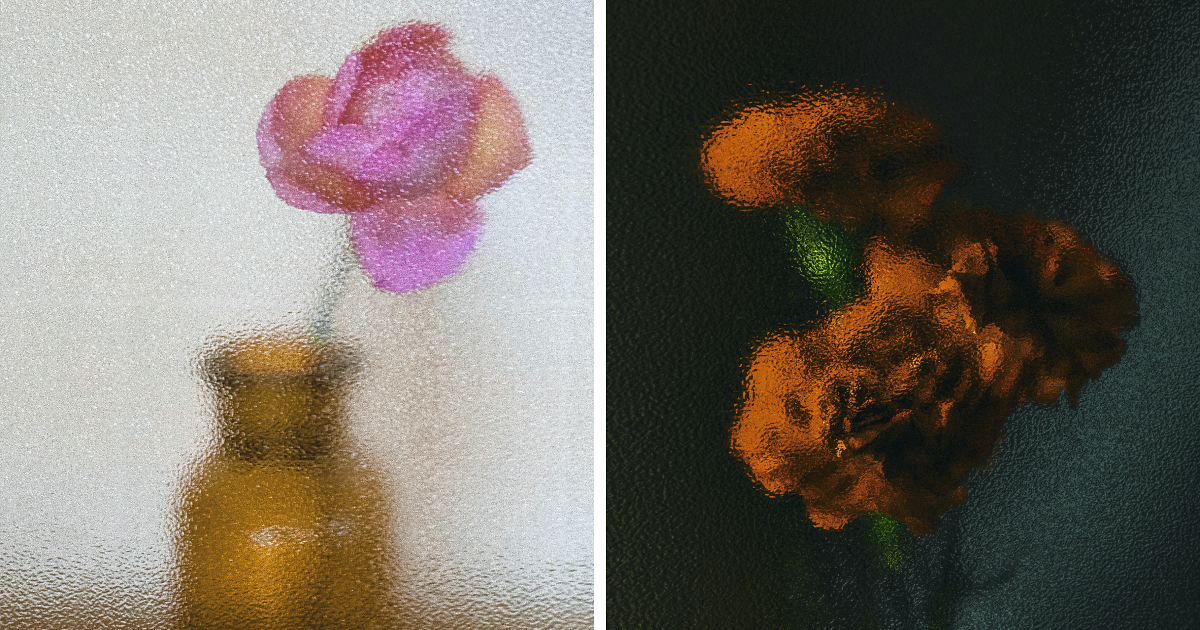
Stillness is rarfting light, aging petals, fingerprints on glass, faint reflections, and entire stories waiting behind curtains. In this photographic series, I explored that quiet territory through 11 images of flowers seen behind windows.
“`
Finding Stillness in a World That Never Stops Talking
Modern life is loud even when nobody is speaking. Phones vibrate, traffic hums, notifications reproduce like extremely organized rabbits, and somewhere nearby a household appliance is beeping for reasons known only to itself. Against that constant motion, stillness can feel almost rebellious.
My long-term photography project began with a simple observation: flowers placed behind glass seemed different from flowers photographed in the open. A window transformed them. Reflections overlapped their petals, curtains softened their outlines, and condensation made familiar shapes appear dreamlike. The glass became more than a physical surface. It created emotional distance while inviting a closer look.
These photographs are not botanical records. They are visual meditations on quiet photography, everyday beauty, memory, and the passage of time. Each image asks the viewer to pause instead of scroll, observe instead of identify, and feel before deciding what the picture is supposed to mean.
Why Flowers Behind Windows Became My Subject
Flowers are usually photographed at their most glamorous. They appear freshly cut, perfectly arranged, misted with suspiciously photogenic droplets, and illuminated as though they have hired a personal publicist. I became more interested in what happened after the performance.
A flower behind a window may be blooming, fading, leaning toward the light, or dropping petals onto a forgotten sill. It exists in a private space, yet the glass allows a fragment of that space to become visible. That contradiction fascinated me. The subject was both presented and protected, revealed and concealed.
Windows also introduced visual layers that could not be fully controlled. The flowers shared the frame with passing clouds, buildings across the street, silhouettes of trees, and occasionally my own reflection looking far less mysterious than I had hoped. These overlapping elements gave the photographs a sense of suspended time.
Stillness Is Not the Same as Emptiness
A quiet photograph does not need to be vacant. Stillness can come from balance, restraint, repetition, soft light, limited color, and the absence of obvious action. It may appear in the curve of a stem, the space surrounding a vase, or the pause between a subject and its reflection.
The goal was not to remove life from the frame. It was to photograph life at a lower volume.
The 11 Photos and the Stories Within Them
1. The White Chrysanthemum at Dawn
The first photograph shows a pale chrysanthemum near a window just before sunrise. Its petals are visible, but not sharply defined. A thin layer of moisture on the glass turns the edges into soft halos.
I chose not to increase the contrast during editing. The image needed uncertainty. It feels like the moment between sleeping and waking, when a room is recognizable but has not yet returned to its daytime responsibilities. The chrysanthemum appears calm, although its reflection gives it a second, ghostlike form.
This picture taught me that stillness often depends on what a photographer chooses not to emphasize.
2. Tulips Beneath a Half-Closed Curtain
In the second image, several tulips stand behind a cream-colored curtain. Only portions of their stems and petals are visible. The curtain is not an obstruction to be corrected; it is part of the emotional structure of the photograph.
The scene suggests privacy. It feels as if the flowers belong to a room that is temporarily unoccupied, perhaps because someone has stepped away to make tea or dramatically stare into the middle distance. The partial view allows the imagination to complete the arrangement.
By leaving generous negative space around the tulips, the composition gives the viewer room to breathe. The image does not shout, “Look at these flowers!” It quietly mentions that flowers happen to be present.
3. The Fading Rose
The third photograph is not conventionally cheerful. A rose has begun to dry, its outer petals curling inward and darkening at the edges. Behind it, the glass reflects a bright patch of sky.
I wanted to photograph the flower honestly rather than disguise its age. Wilting is often treated as a failure in floral photography, but here it becomes the subject. The rose is not ruined. It has simply moved into another stage of its brief existence.
The image captures an essential quality of still-life photography: objects can appear motionless while revealing time. The dried petal is evidence that change has already occurred and will continue after the shutter closes.
4. Blue Vase, Gray Afternoon
This photograph was made during a rainy afternoon when the entire street seemed to have been converted to grayscale. Behind the window sat a blue ceramic vase holding three narrow stems.
The blue was the only strong color in the scene, yet it remained subdued by the dim light. Raindrops created tiny distortions across the frame, turning the buildings reflected in the glass into wavering blocks.
I waited until the rain settled into a steady rhythm. A faster, more dramatic storm would have made the image about weather. This softer rain made it about waiting. The result feels less like a photograph of a vase and more like a visual version of an exhale.
5. Daisies and the Passing Cloud
The fifth image almost did not happen. I had framed a cluster of daisies against a dark interior when a cloud reflection drifted across the window. For several seconds, the flowers appeared to float inside the sky.
Nothing in the photograph is digitally combined. The layered effect comes from the glass, the angle of view, and a little cooperation from the atmosphere. Photography is generous that way. Occasionally, the world performs its own special effects and does not even charge a subscription fee.
This image became one of the most important in the series because it blurred the boundary between inside and outside. The daisies belonged to the room, but their reflections placed them somewhere much larger.
6. A Single Stem in Frosted Glass
The sixth photograph is the most minimal. One stem rises behind frosted glass, reduced almost entirely to shape and tone. The flower itself is indistinct, and its color is barely visible.
Without sharp detail, the viewer notices posture. The stem bends slightly to one side, creating a fragile diagonal line through the composition. The image demonstrates that visual storytelling does not always require information. Sometimes a suggestion can carry more emotional weight than a perfect description.
The frosted surface also removes context. We do not know what kind of room lies behind it or who placed the flower there. That absence of explanation makes the photograph feel universal.
7. Red Geraniums in Evening Light
Red geraniums can be visually assertive. They do not enter a photograph quietly; they arrive as if they have already been introduced to everyone at the party. To preserve the calm mood of the series, I photographed them after sunset, when their color had deepened into muted crimson.
The window reflected several small streetlights, creating soft points of brightness around the flowers. These lights could have become distracting, but their repetition gave the frame a slow rhythm.
The photograph is still, yet it contains a subtle sense of anticipation. It resembles a stage moments before a performance, except the performers are potted plants and have declined to learn their lines.
8. The Empty Vase and One Fallen Petal
The eighth photograph contains no standing flower. An empty glass vase rests on a windowsill beside a single fallen petal. The composition may appear simple, but it became one of the most emotionally complex pictures in the project.
The missing bouquet is as important as the objects that remain. The viewer understands that something was once present. This transforms the empty space into evidence.
Photographing absence is difficult because the camera records what is visible. Yet objects can point toward what is no longer there. The vase, waterline, and petal create a quiet narrative about departure without identifying who left or why.
9. Wildflowers Behind Rain-Streaked Glass
For the ninth photograph, a loose arrangement of wildflowers appears behind long trails of rainwater. Unlike the earlier rainy image, this one contains more visual movement. The droplets pull downward while the stems reach upward, creating opposing directions.
That tension makes the stillness more noticeable. The flowers are stationary, but everything surrounding them suggests motion. Quiet photographs often become stronger when a small amount of movement is allowed into the frame.
The image also embraces imperfection. The bouquet is uneven, several leaves overlap, and one blossom faces away from the camera. It looks arranged by a human rather than a committee of extremely serious flowers.
10. The Shadow of a Lily
The tenth photograph focuses on a shadow rather than the flower itself. A lily sits outside the main frame, but late-afternoon light projects its silhouette onto a curtain behind the window.
The shadow exaggerates the flower’s shape, making the petals appear larger and slightly strange. By excluding most of the physical lily, the image asks the viewer to respond to an echo.
This photograph changed how I understood the project. I had been searching for stillness in visible objects, but here stillness existed in the relationship between light, surface, and time. A few minutes later, the sun moved and the shadow disappeared. The photograph preserved something that had never been solid enough to hold.
11. Flowers at Night, Reflected Twice
The final photograph was made after dark. A small bouquet stands behind a window illuminated by a warm lamp. The glass reflects the flowers once, while a mirror inside the room repeats them again.
The arrangement appears to occupy several spaces simultaneously. One version is physical, one belongs to the window, and another exists deeper within the room. The repeated forms become progressively softer until they dissolve into darkness.
I selected this image to close the series because it captures the central idea behind all 11 photographs. Stillness is not a single condition. It is layered. It may contain memory, reflection, distance, aging, and quiet movement. What looks simple at first may become more complex the longer we remain with it.
How I Created a Quiet Mood in the Photographs
I Let the Glass Participate
Windows are often treated as technical problems. They create glare, reflections, color shifts, and unwanted evidence that the photographer is wearing a particularly unremarkable jacket. In this project, those supposed flaws became part of the visual language.
I changed my position slightly until reflections supported the subject rather than overwhelming it. Sometimes a darker angle revealed the flowers clearly. In other situations, a bright reflection created the dreamy atmosphere I wanted.
I Used Soft, Directional Light
Most of the photographs were made during early morning, late afternoon, rainy weather, or the blue hour after sunset. These conditions produced gentle transitions between light and shadow.
Harsh midday light often made the glass too dominant and flattened subtle colors. Softer light allowed petals, curtains, and reflections to merge naturally. It also helped preserve the contemplative mood associated with minimalist photography.
I Simplified the Frame
Capturing the essence of stillness required removing visual competition. I paid attention to bright signs, passing vehicles, strong architectural lines, and other elements that pulled the eye away from the flowers.
Simplification did not mean making every image empty. It meant deciding which details deserved to remain. A stain on the glass might add history. A giant reflected parking sign announcing a discount on motor oil probably did not.
I Waited Before Pressing the Shutter
The most useful technique in the entire project involved no camera setting at all. I waited.
By remaining in one place, I began noticing changes in reflections, light, and background activity. A cloud moved. A curtain shifted. A passing figure briefly appeared as a silhouette. Waiting allowed the composition to reveal itself instead of forcing an immediate result.
What Quiet Photography Can Teach Us
Photography is often associated with decisive moments, dramatic events, rare landscapes, and impressive technical achievements. Those things matter, but the camera is equally capable of honoring small observations.
A quiet photograph teaches patience because its value may not be immediately obvious. It encourages viewers to spend time with subtle relationships: a pale flower against a darker room, the repetition of droplets, or the space between two stems.
This kind of slow photography can also change how we move through ordinary places. Once I began looking for flowers behind windows, I noticed windowsills everywhere. I saw chipped vases in laundromats, plants leaning through apartment curtains, bouquets in cafés before opening time, and dried stems in houses that appeared temporarily abandoned.
The project did not make the world quieter. It made me more capable of noticing quiet within it.
My Personal Experiences While Photographing Stillness
Working on this series changed my relationship with both photography and time. Before beginning it, I often walked quickly, searching for obvious subjects. I looked for dramatic light, expressive faces, unusual events, and scenes that seemed immediately worthy of a photograph. Stillness taught me to stop hunting and begin observing.
One morning, I spent nearly half an hour standing across from a window containing a single potted flower. Nothing spectacular happened. No bird landed beside it. No mysterious person appeared behind the curtain. The flower did not suddenly reveal that it had been the narrator all along.
Yet the scene kept changing. A passing cloud lowered the contrast. Sunlight briefly illuminated one petal. A bus moved through the reflection, covering the flower with a streak of blue before disappearing. When I finally took the photograph, it represented only a fraction of what I had observed. The real experience was the waiting.
I also became more comfortable with uncertainty. Glass rarely behaves like a polite, cooperative background. It reflects whatever it pleases. During one session, I repeatedly tried to eliminate my reflection, only to discover that a faint human silhouette made the image more emotionally interesting. It suggested someone standing outside a private world, unable to enter but willing to look.
Another memorable experience involved photographing an aging bouquet in a small storefront. I returned several times over two weeks. Each visit revealed a new arrangement created not by a florist but by gravity. Stems leaned farther, petals gathered on the sill, and the water gradually darkened. The bouquet’s decline became a slow performance.
At first, I worried that photographing wilting flowers might feel gloomy. Instead, I found the process unexpectedly comforting. Nothing in the scene pretended to be permanent. The flowers were beautiful precisely because their condition was temporary.
The project also introduced me to strangers. Shop owners occasionally noticed me outside and asked what I was doing. Saying, “I am photographing the emotional relationship between flowers and glass,” tends to create a memorable pause in conversation. Fortunately, most people became curious rather than alarmed.
One café owner invited me inside and explained that the vase in the window had belonged to her mother. Another person told me that he placed fresh flowers beside his apartment window every week because his wife had loved seeing them from the street. These encounters reminded me that apparently ordinary objects can carry private histories invisible to the camera.
I learned not to demand a masterpiece from every walk. Some days produced no usable photographs. The light was wrong, reflections were chaotic, or the arrangements felt lifeless. Those outings were not failures. They trained my attention and helped me understand what the project needed.
Most importantly, photographing stillness gave me permission to work slowly. The series did not require distant travel, expensive staging, or rare conditions. It required presence. A window, a flower, and changing light were enough.
Now, even when I am not carrying a camera, I catch myself pausing beside windows. I notice the geometry of curtains, the softness created by dust, and the way indoor objects mingle with reflected skies. The world continues moving at its usual unreasonable speed, but these small scenes offer temporary places to rest.
Conclusion: Stillness Is Something We Learn to See
These 11 photos capturing the essence of stillness are connected not by a single flower, location, or technique, but by a way of paying attention. Each photograph began with an ordinary subject and became meaningful through light, reflection, restraint, and time.
Stillness does not require complete silence or perfect emptiness. It can exist beside a busy street, inside a rainy reflection, or behind a window covered with fingerprints. It appears when we slow down enough to recognize the relationships already present.
The camera cannot stop time, despite its excellent marketing over the years. What it can do is preserve evidence that we paused. In a culture built around speed, that pause may be one of photography’s most valuable gifts.